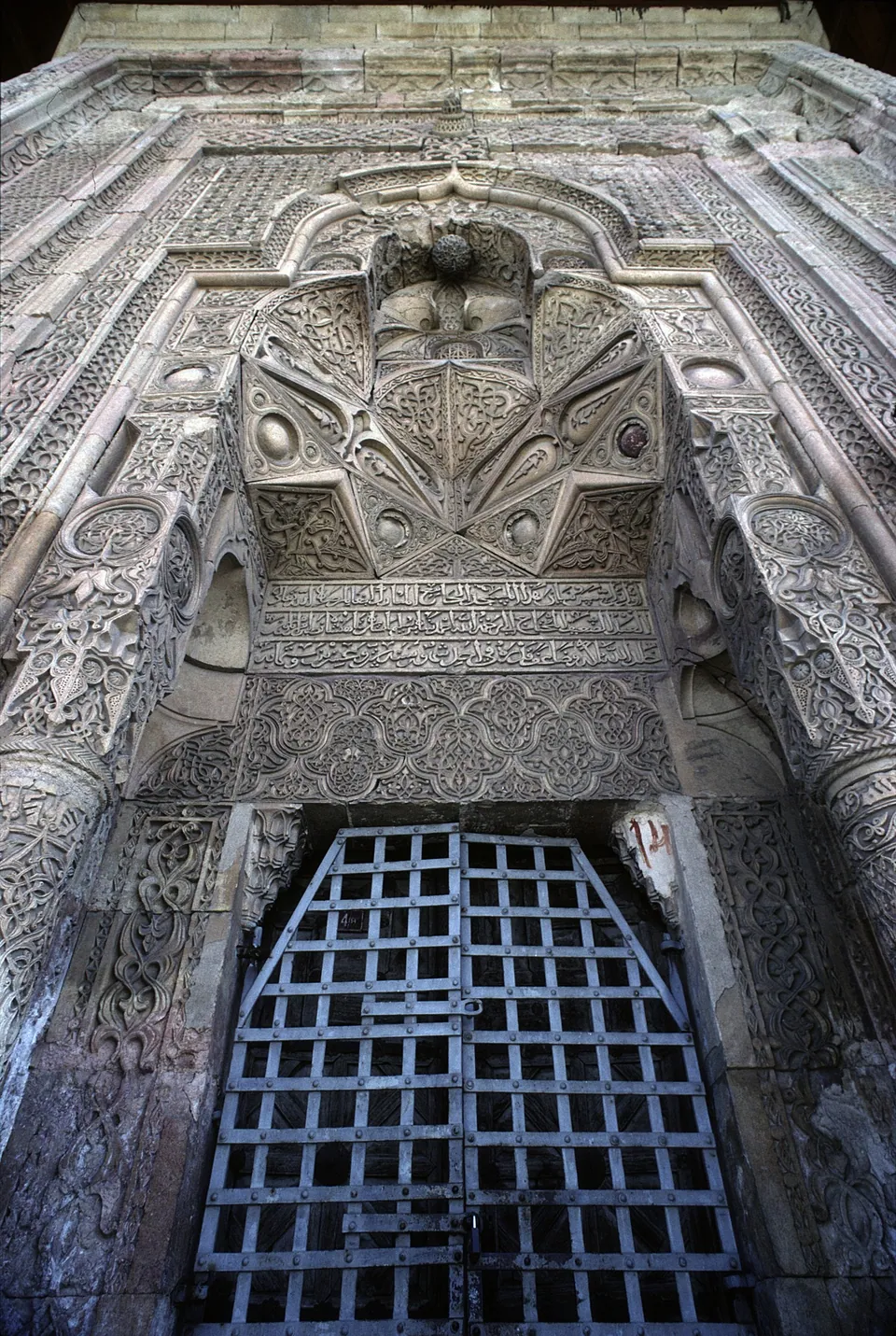
Nº 0449 · Mosque and hospital
Great Mosque and Hospital of Divriği
A mosque, hospital and tomb in Divriği, carved with motifs of which no two are alike.
Why it matters
The stone carvings contain tens of thousands of motifs, and no two are alike, according to Kültür Envanteri. The complex is on the World Heritage List, inscribed in 1985.
Kültür Envanteri dates the complex to 1228, under the Mengücek Beylik in the Anatolian Seljuk period. It says Ahmed Şah and his wife Turan Melek commissioned it and names Ahlatlı Hürrem Şah as chief architect. The complex has a mosque, a darüşşifa (hospital) and a tomb.
2 min read
The full story
A mosque and a hospital in a mountain town
Divriği stands at about 1,250 metres in Sivas province. A Byzantine town that came under Turkish control after the Battle of Manzikert in 1071, it was ruled in the twelfth century by the Mengujekids, a dynasty allied with the Seljuks of Konya and later divided into branches at Divriği and Erzincan. The art historian Doğan Kuban has suggested that their patronage drew skilled craftsmen from elsewhere, which would help to explain the complex’s mixed style.
In this story
- A mosque and a hospital in a mountain town
- Four doorways, no repeated motif
- Water, stone and later repairs

The story continues in the app
- Date
- 1228
- Chief architect
- Ahlatlı Hürrem Şah
- Patrons
- Ahmed Şah and Turan Melek
- World Heritage
- Inscribed 1985, reference 358
Connections
In collections
Go further
- Divriği Ulu Cami ve Darüşşifası, Kültür EnvanteriA page on the complex.
Sources
- Divriği Ulu Cami ve Darüşşifası, Kültür Envanteri
- Türkiye on the World Heritage List, Republic of Türkiye Ministry of Culture and Tourism
- Divriği Great Mosque and Hospital, Wikipedia
- UNESCO: le miracle de Divriği, joyau seldjoukide, Le Petit Journal Istanbul
- Great Mosque and Hospital of Divriği, UNESCO World Heritage Centre
- Sivas’ta Divriği Ulu Camii ve Darüşşifası bugün açılıyor, Ensonhaber (6 May 2024)

