Nº 0113 · Airliner
Douglas DC-3
Two engines, 21 seats, and no subsidy needed.
Why it matters
It was the most successful airliner of the formative years of air transport, and the first to fly profitably without government subsidy, according to the National Air and Space Museum. By 1938, NASM says, 95 percent of airline traffic in the United States flew on DC-3s.
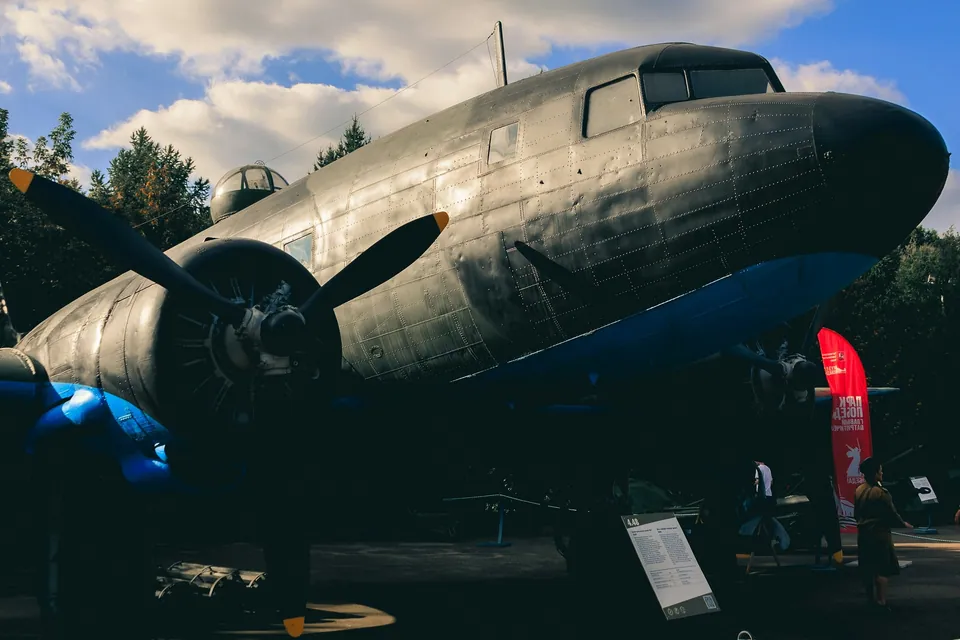
Douglas Aircraft developed it in Santa Monica, California, from the smaller DC-2, with a team led by chief engineer Arthur E. Raymond; the first version, the Douglas Sleeper Transport, first flew on 17 December 1935. American Airlines began services in June 1936, and the standard day version seated 21 passengers. Its military versions flew through the Second World War and the Berlin Airlift. The aircraft photographed flew more than 56,700 hours with Eastern Air Lines before its last commercial flight, San Salvador to Miami, on 12 October 1952.
What to notice
- An engineA radial engine and a three-blade propeller on each wing.
- The Eastern emblemThe Eastern Air Lines emblem, a red eagle, on a blue band.
- The cabin windowsOne row of small square cabin windows along a polished metal fuselage.
3 min read
The full story
A sleeper for American
In 1933 United Air Lines began flying the Boeing 247, a fast all-metal twin, and Boeing would not sell the type to other airlines until United’s order for 60 had been filled. TWA turned to Douglas Aircraft in Santa Monica, which answered with the single DC-1 of 1933 and the production DC-2 of 1934.
In this story
- A sleeper for American
- A wider cabin
- Berths, seats, then troops
- After the airlines

The story continues in the app
- Engines
- Two radial engines, about 1,000 to 1,200 hp each
- Dimensions
- Span about 29 m, length 19.7 m
- Seats
- 21 in the standard airline layout
- Built
- More than 13,000, civil and military
- In collection
- National Air and Space Museum (A19530075000)
Connections
Nearby in the archive
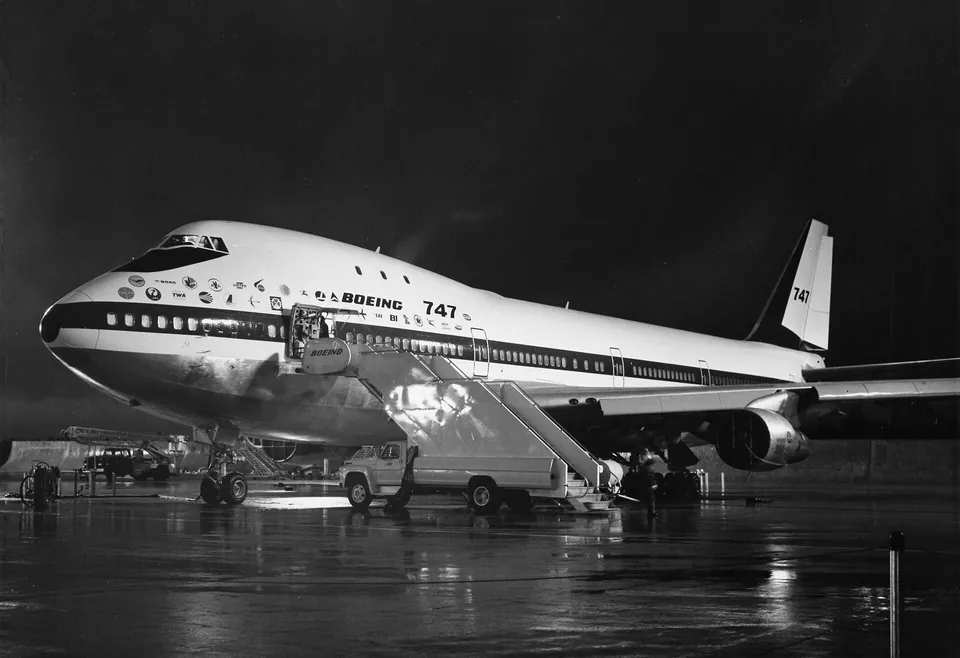 Boeing 747Boeing · 1969 · the next step in the scale of airline travel
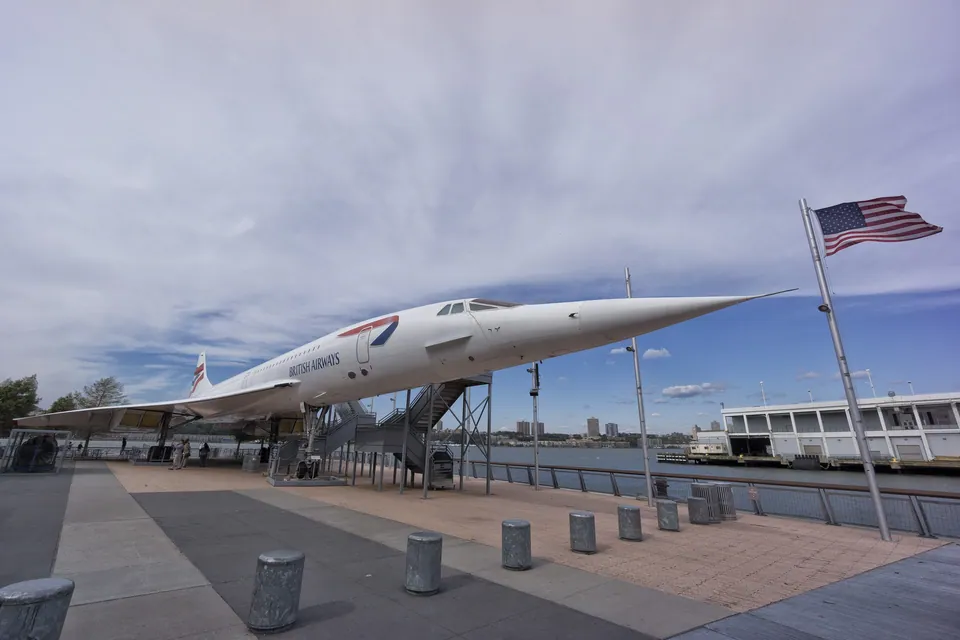 ConcordeSud Aviation and BAC · 1969 · another airliner now in a museum hall
In collections
Go further
- The Plane That Changed the World: A Biography of the DC-3, Douglas J. Ingells (1966)A book-length history of the aircraft from the DC-1 to its airline and military service.
- Grand Old Lady: Story of the DC-3, Carroll V. Glines and Wendell F. Moseley (1959)An early account, later reissued as The Legendary DC-3, covering airline, wartime and relief flying.
- Douglas DC-3, object A19530075000, National Air and Space MuseumThe museum record for the Eastern Air Lines aircraft, with a long history of the type, dimensions and production figures.
- Triumph of the Gooney Bird, Mark Strauss, Air & Space Quarterly (2023)A short illustrated piece on why the design earned money for airlines and where it still flies.
- DC Delivery: Moving the Douglas DC-3, Stephanie Stewart and Kristen Horning, National Air and Space Museum (2020)Museum staff describe taking the aircraft down, restoring it and moving it by road.
Sources
- Douglas DC-3, A19530075000, National Air and Space Museum
- Triumph of the Gooney Bird, National Air and Space Museum
- DC Delivery: Moving the Douglas DC-3, National Air and Space Museum
- Wikipedia (English), Wikimedia Foundation