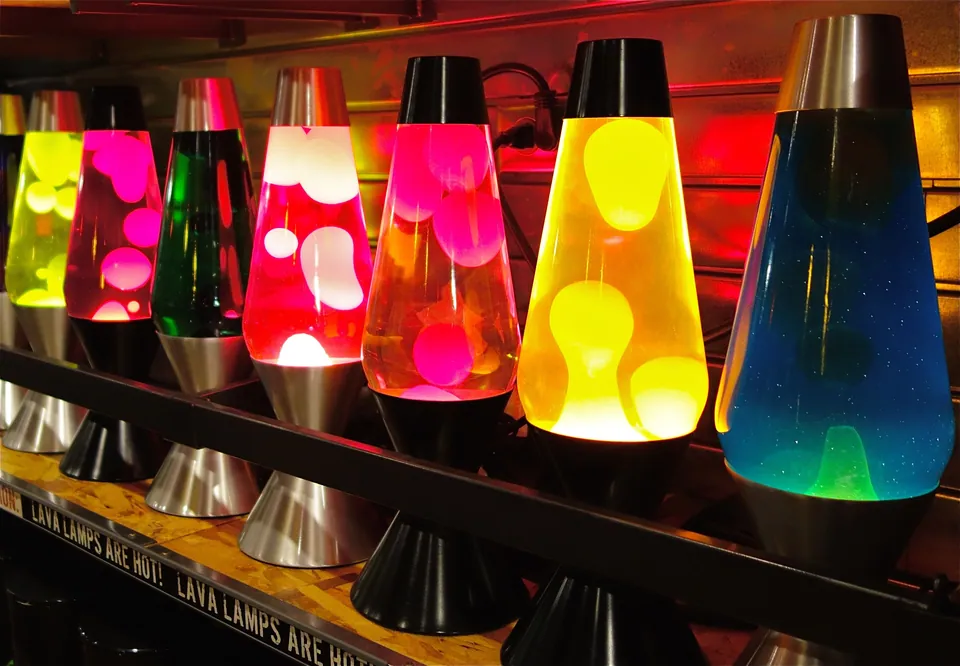
Nº 0156 · Decorative lamp
Astro Lamp
Wax rises, cools and sinks, lit from below.
Why it matters
Edward Craven Walker saw a homemade egg timer of two liquids that do not mix in a pub, and made it into a lamp in which heated wax rises and falls inside a glass bottle. He launched it in 1963, and Mathmos, the company that grew from his Crestworth, still makes his lamps in Poole, Dorset.
Walker and his wife Christine launched the Astro in 1963, working from London offices and a workshop in a Poole boatyard. A bulb in the base heats a wax-based liquid inside a water-based one; the warm wax becomes less dense and rises, then cools and sinks, and a wire coil at the bottom helps the blobs join again. Walker took the shape of the vessel from a Tree Top orange squash bottle. The lamp photographed is an Astro as sold in the 1990s, when the company had become Mathmos.
What to notice
- The waxA blob of red wax rises through the violet liquid.
- Light from belowThe bulb underneath makes the wax at the bottom glow yellow.
- The baseA silver cone base holds the bulb that heats the bottle.
3 min read
The full story
A pub egg timer
Edward Craven Walker, born in Singapore in 1918, flew Mosquitos on photographic reconnaissance during the Second World War. Some time after it, in a New Forest pub, he noticed a homemade egg timer in which a blob of one liquid rose through another as it warmed. The device is credited to Donald Dunnet, who in December 1950 had applied for a British patent on “a display device using liquid bubbles in another liquid”. It was published in 1954.
In this story
- A pub egg timer
- Two liquids and a coil
- Sold from a postal van
- Camden Market and after

The story continues in the app
- Materials
- Glass bottle, metal base and cap, wax and water-based liquids
- Heat
- An incandescent bulb in the base
- Patent
- US 3,387,396, filed 1965, assigned to Crestworth
- Maker
- Crestworth, Poole, now Mathmos
- In collection
- Science Museum Group (a Mathmos lamp of 2010 to 2015)
Connections
Nearby in the archive
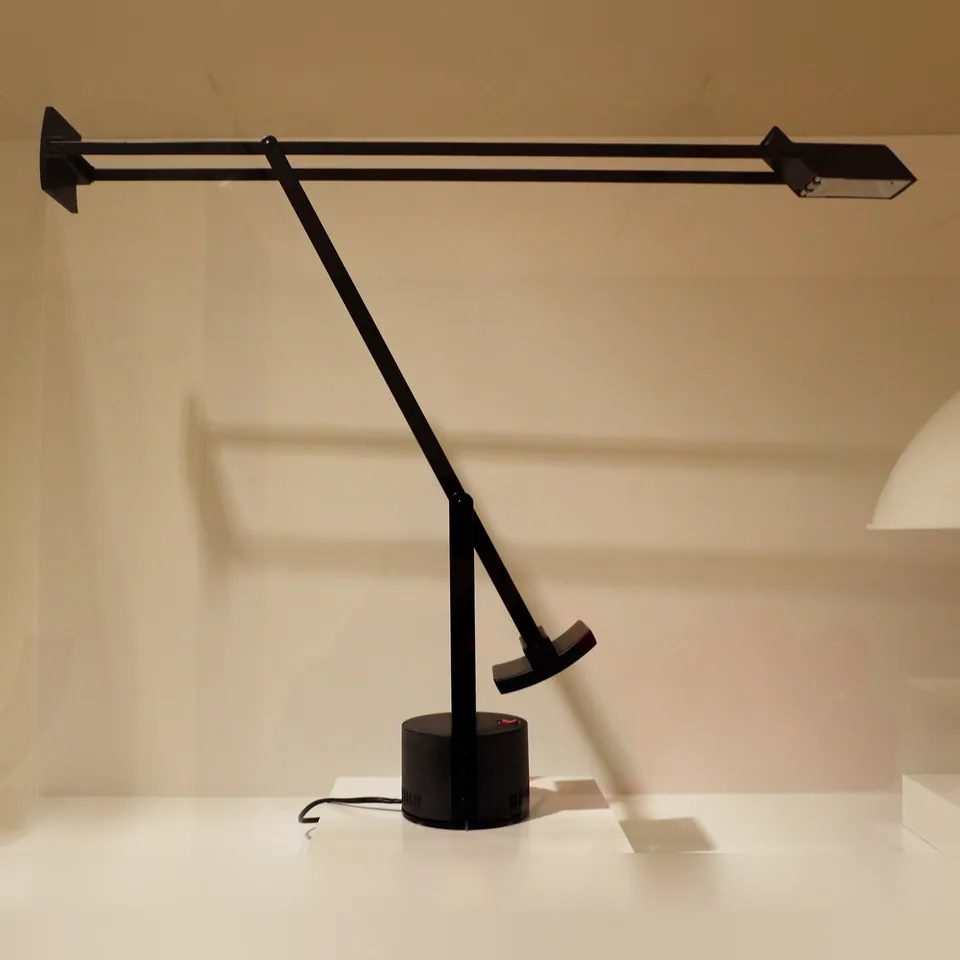 TizioSapper · 1972 · a lamp of the next decade, built for work
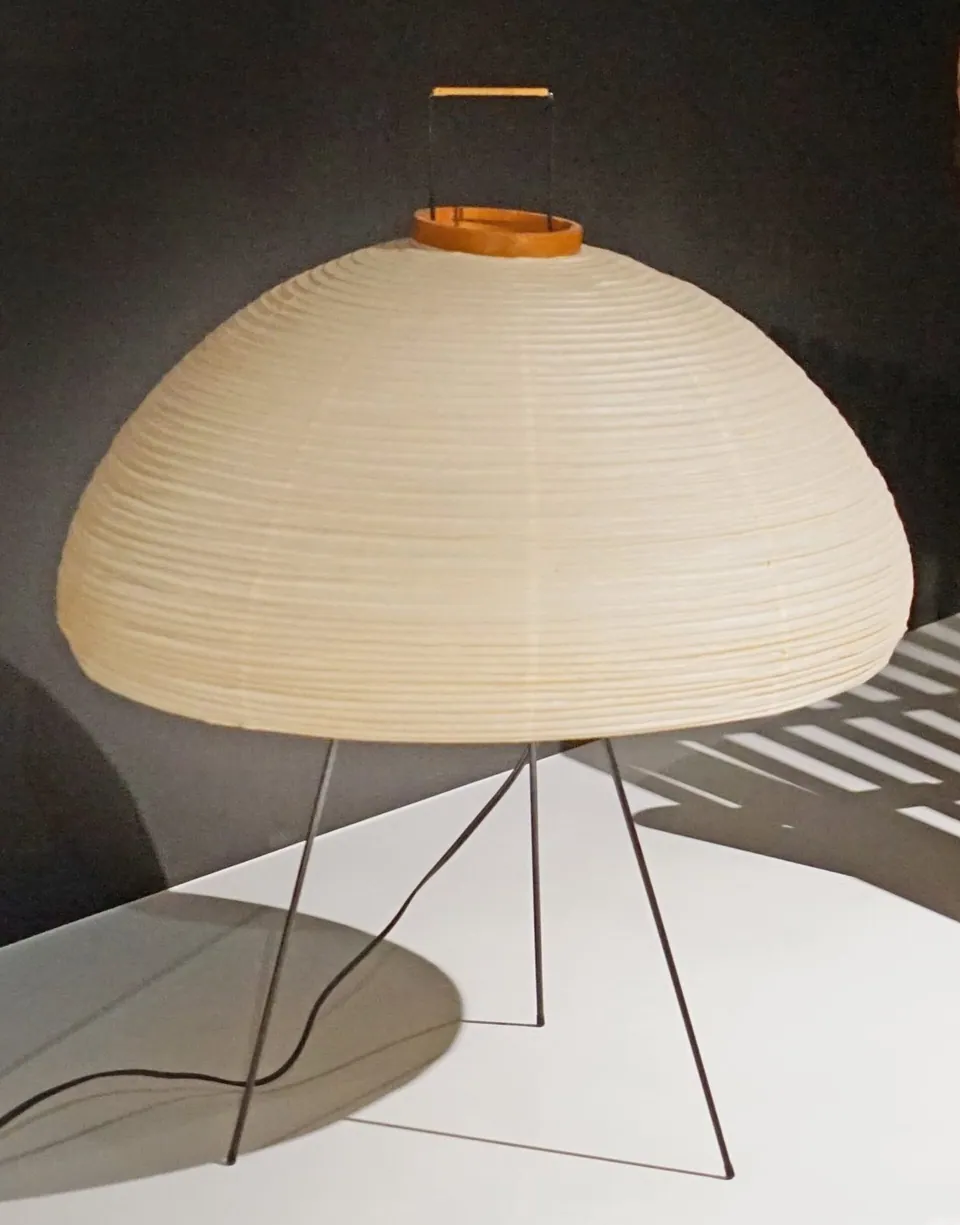 AkariNoguchi · 1951 · another lamp that is also an object to look at
In collections
Go further
- The History of the Lava Lamp, Abigail Tucker, Smithsonian Magazine (2013)A short history written for the lamp’s fiftieth year, with Cressida Granger on how it was first sold.
- ‘Ingrained in the fabric of British society’: the iconic lava lamp turns 60, Lisa Bachelor, The Observer (2023)An account of the Camden Market revival and the Poole factory, drawing on Christine Craven Walker’s notes.
- Lava lamp creators mark 50 years of 1960s icon, Zoe Kleinman, BBC News (2013)Christine Baehr and Cressida Granger describe the early selling, the expired patent and how the lamps are made.
- Lava lamp, object 2021-561/691, Science Museum GroupThe museum record for the Astro Baby from Stephen Hawking’s office, with photographs and measurements.
- US 3,387,396, Display Devices, David George Smith, assigned to Crestworth Ltd (1968)The patent text and drawings, which describe the liquids, the wire coil and the sealed bottle.
Sources
- Mathmos Timeline 1963 to date, Mathmos
- Lava lamp, 2021-561/691, Science Museum Group
- US 3,387,396, Display Devices, Google Patents
- The biography of Edward Craven Walker, TAGWERC
- Wikipedia (English), Wikimedia Foundation

