Nº 0497 · Village
New Gourna Village
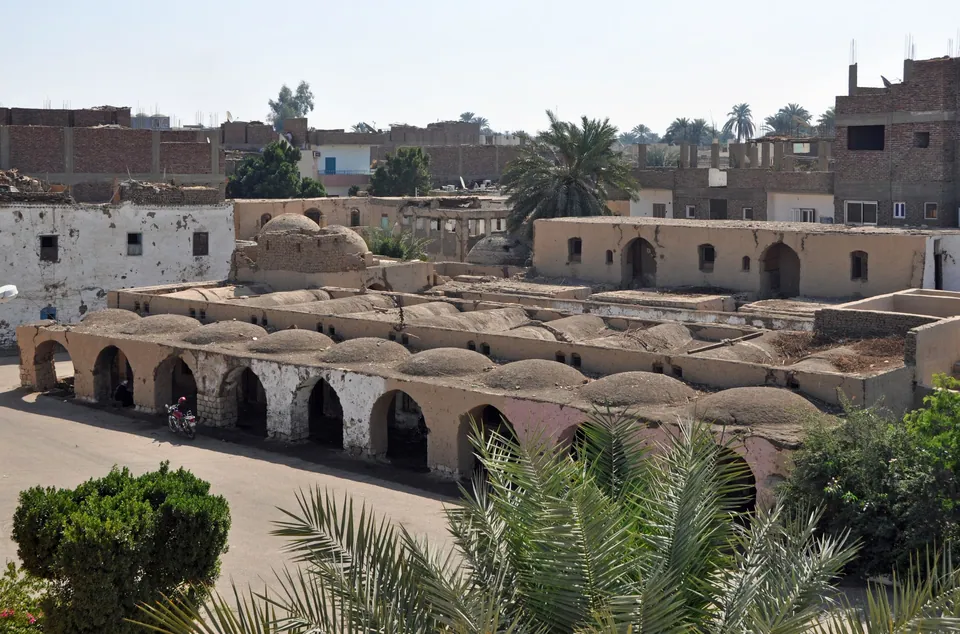
A village built of local mud brick to rehouse a community near Pharaonic sites.
Why it matters
New Gourna is Hassan Fathy’s most famous project, according to the American University in Cairo, which holds his drawings. A UNESCO-sponsored restoration is working from those drawings.
The American University in Cairo gives the construction period of New Gourna as 1946 to 1949. Fathy built the village from local materials and traditional mud brick, to rehouse a community that had lived near Pharaonic archaeological sites. The village has deteriorated significantly in recent decades.
3 min read
The full story
A village on the necropolis
Gourna stood on the west bank of the Nile opposite Luxor, at the foot of the Theban necropolis. By 1945 it had grown to about 7,000 inhabitants, who lived mainly by looting the ancient tombs, according to Van Andel’s 2018 article in DASH. The Egyptian Department of Antiquities decided to move the village. JSTOR Daily adds that officials also saw the residents as an obstacle to tourism development.
In this story
- A village on the necropolis
- Badana, courtyard and mud brick
- Why people stayed
- Return and restoration

The story continues in the app
- Architect
- Hassan Fathy
- Built
- 1946–1949
- Material
- Local mud brick
- Archive
- Hassan Fathy Collection, American University in Cairo
Connections
In collections
Go further
- AUC contributes Hassan Fathy archives for restoration of New Gourna, American University in Cairo (2017)On the restoration and the archive.
Sources
- AUC contributes Hassan Fathy archives for restoration of New Gourna, American University in Cairo
- Hassan Fathy and New Gourna, JSTOR Daily
- Lost in Gourna, Daidalos
- New Gourna Village, Luxor (EG): Hassan Fathy (van Andel, DASH 12/13, 2018), TU Delft Open Journals
- A–D: New Gourna Village, Architecture in Development

