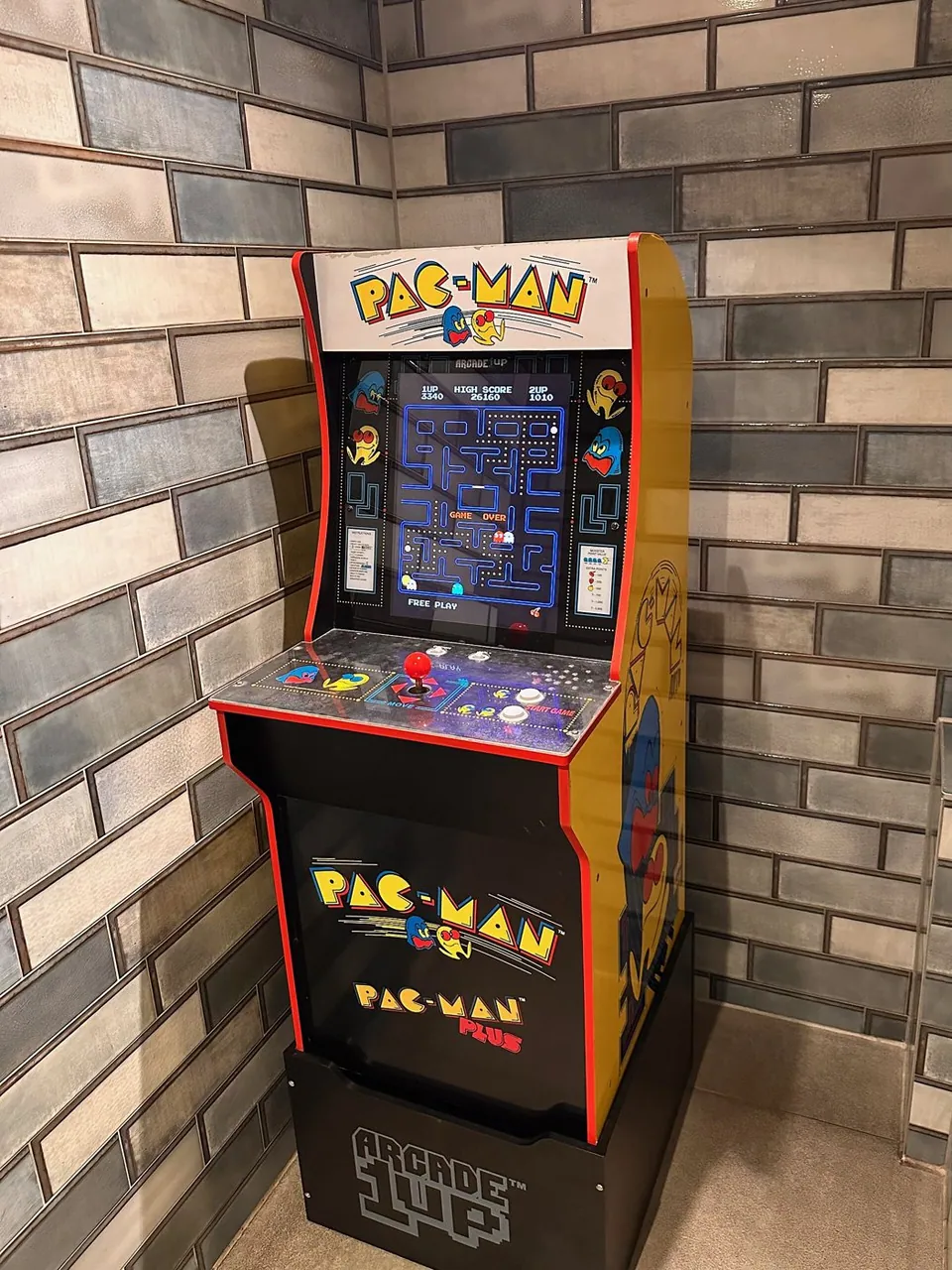
Nº 0311 · Arcade game
Pac-Man
The first game designed for everyone in the room.
Why it matters
A maze, four ghosts with four personalities and one rule reversal. Iwatani wanted a game women would play in a room full of shooters; he got the most recognisable design object of the decade.
Released in Japan in May 1980 as Puck Man, the game earned over a billion dollars in quarters in its first year in the United States. It entered the Museum of Modern Art in 2012 as one of the first fourteen video games acquired for the design collection, chosen for the elegance of its code and the behaviour of its ghosts.
2 min read
The full story
A game about eating
Toru Iwatani joined Namco in 1977 and began work on the game early in 1979. Arcades at the time were ruled by shooting games such as Space Invaders and Asteroids, and most of their customers were boys. MoMA’s gallery label records that Iwatani wanted a non-violent game for the teenage couples and groups who were starting to come in. He built it around eating. The first title, Puck Man, comes from paku-paku, a Japanese sound word for munching.
In this story
- A game about eating
- Four ghosts, four rules
- Slow start in Tokyo
- Level 256 and after

The story continues in the app
- Platform
- Namco Pac-Man board, Z80
- Display
- 224 × 288 px, vertical
- In collection
- MoMA, New York · since 2012
- Status
- Real · software, many manifestations
Connections
Nearby in the archive
In collections
Go further
- Pac-Man: Birth of an Icon, Arjan Terpstra and Tim Lapetino (2021)A book-length history of the arcade game, published by Titan Books.
- Toru Iwatani, Pac-Man, 1980, The Museum of Modern ArtThe collection record, with the gallery label from the 2013 exhibition Applied Design.
- Video Games: 14 in the Collection, for Starters, Paola Antonelli (2012)The curator’s announcement of the acquisition, setting out how MoMA judges and preserves a video game.
- The Pac-Man Dossier, Jamey Pittman (2009)A detailed account of how the ghosts choose their targets, how the timing works and why level 256 breaks.
- Pac-Man, World Video Game Hall of Fame, The Strong National Museum of PlayThe 2015 induction entry, a short summary of the game’s origin and its reach into popular culture.
Sources
- MoMA collection record, The Museum of Modern Art
- Bandai Namco archive, Bandai Namco

