Nº 0231 · Seating element
Pratone
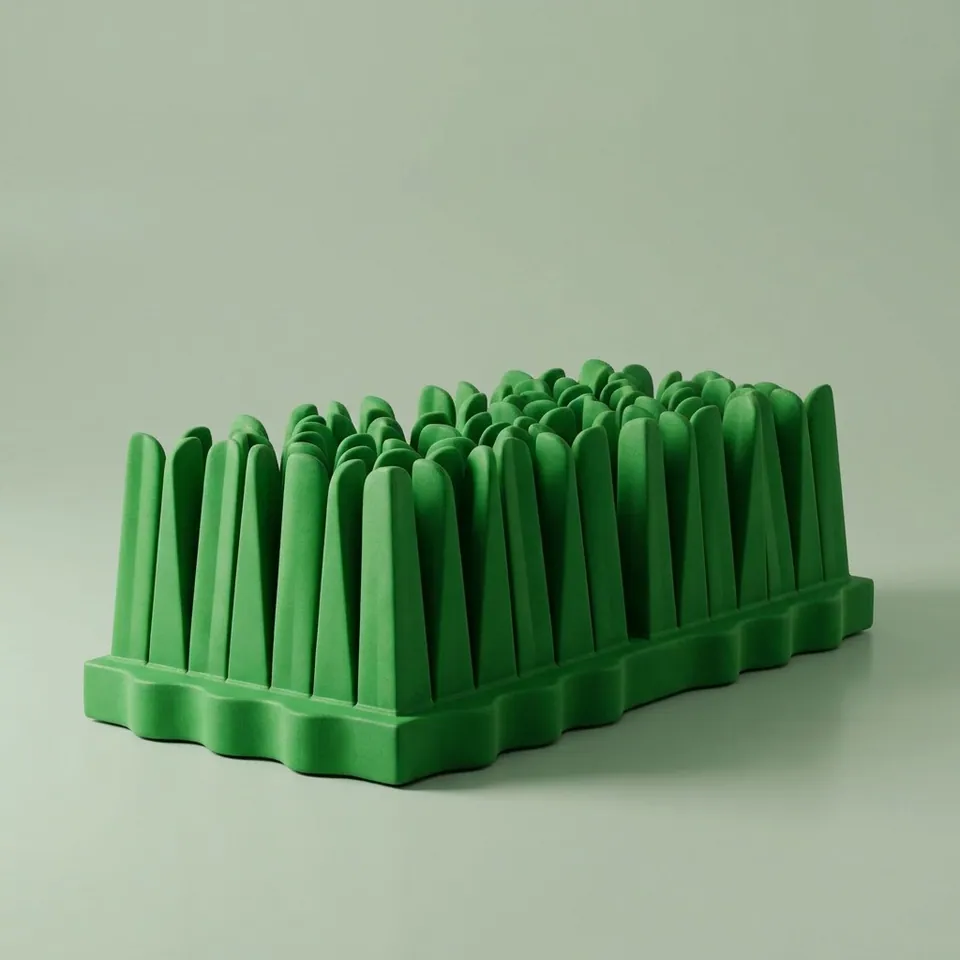
Forty-two foam blades of grass, 95 cm tall.
Why it matters
The Pratone has no seat, back or arms: you sink between soft blades and the body finds its own position. The Vitra Design Museum reads it as an ironic comment on the longing for nature of the 1960s and a Pop Art play on scale and material.
Gruppo Strum, architects in Turin, designed the Pratone in 1970 for the Sintesis Idee 70 competition, and Gufram began making it in small batches in 1971 with technical advice from the artist Piero Gilardi. Forty-two blades of polyurethane foam, each 95 cm high, rise from a base 140 cm square, and the whole is coated in Gufram’s elastic Guflac finish. It was shown at MoMA in 1972 in Italy: The New Domestic Landscape, and a cut-out image of it appeared on the catalogue cover. Gufram still makes it by hand in a numbered edition.
What to notice
- The bladesTall rounded blades of foam stand close together like oversized grass.
- The name on the basePRATONE, big meadow, is spelled out in the side of the base.
- The wavy baseThe low base follows a wavy outline, coated in the same green as the blades.
2 min read
The full story
Architects of the nightclub
Giorgio Ceretti, Pietro Derossi and Riccardo Rosso were Turin architects who worked together from the mid 1960s, later under the name Gruppo Strum. They treated architecture and design as a form of social and political participation, and made their name with interiors for nightlife: the Piper Club in Turin in 1966 and L’Altro Mondo in Rimini in 1967, rooms where art, music and youth culture met.
In this story
- Architects of the nightclub
- A lawn in foam
- Cover of the MoMA catalogue
- Two hundred numbered meadows

The story continues in the app
- Materials
- Polyurethane foam coated in Guflac, a latex rubber finish
- Dimensions
- 42 blades 95 cm high on a base 140 × 140 cm; about 52 kg in the original version
- Maker
- Gufram, Turin area, from 1971
- In collection
- Vitra Design Museum (MIT-1060)
- Shown
- Italy: The New Domestic Landscape, MoMA, New York, 1972
Connections
- Gruppo Strum
- Gufram
- Radical design
- Information Age
- Furniture design
- Polyurethane foam
- Plastic
- Turin
Nearby in the archive
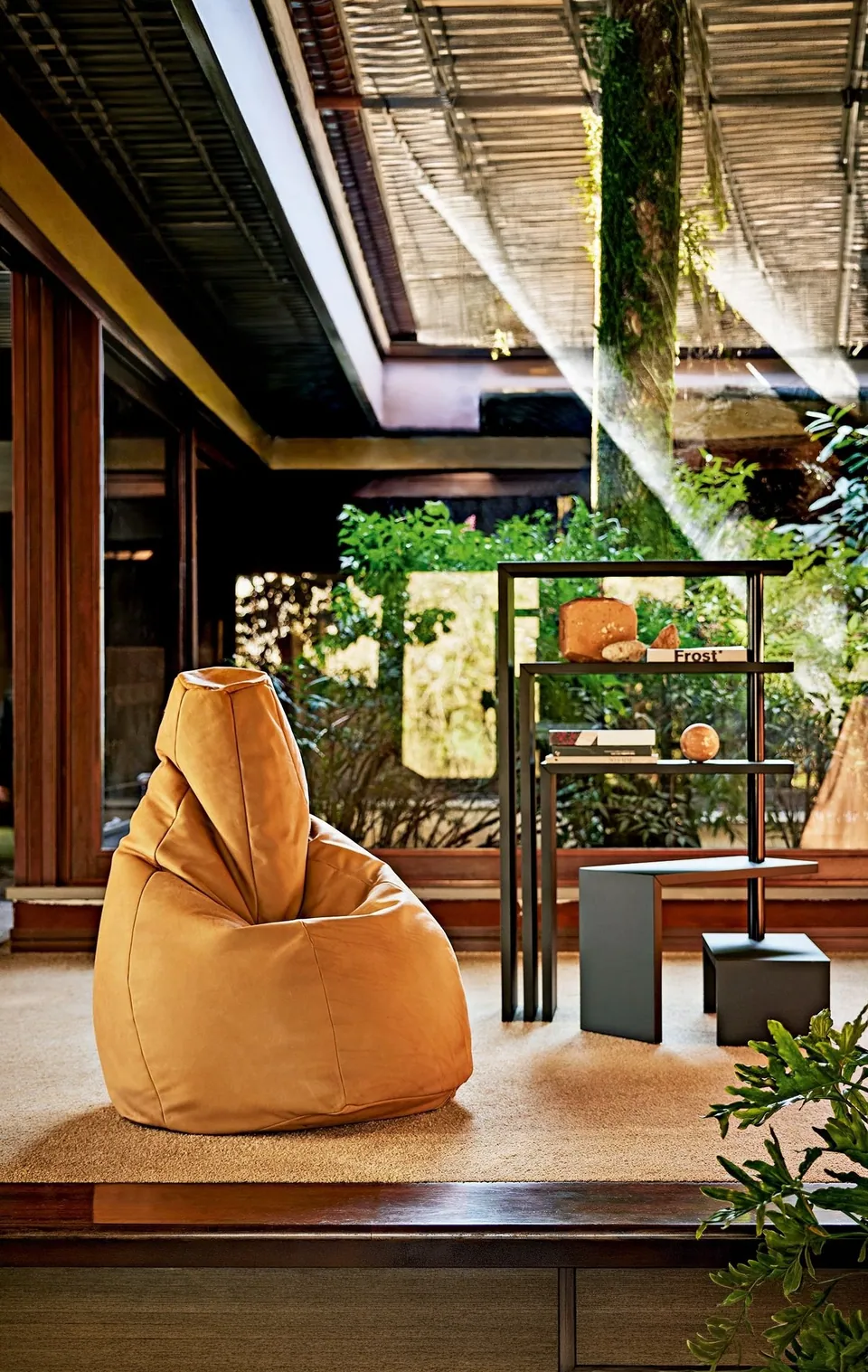 SaccoGatti, Paolini, Teodoro · 1968 · a seat with no fixed shape
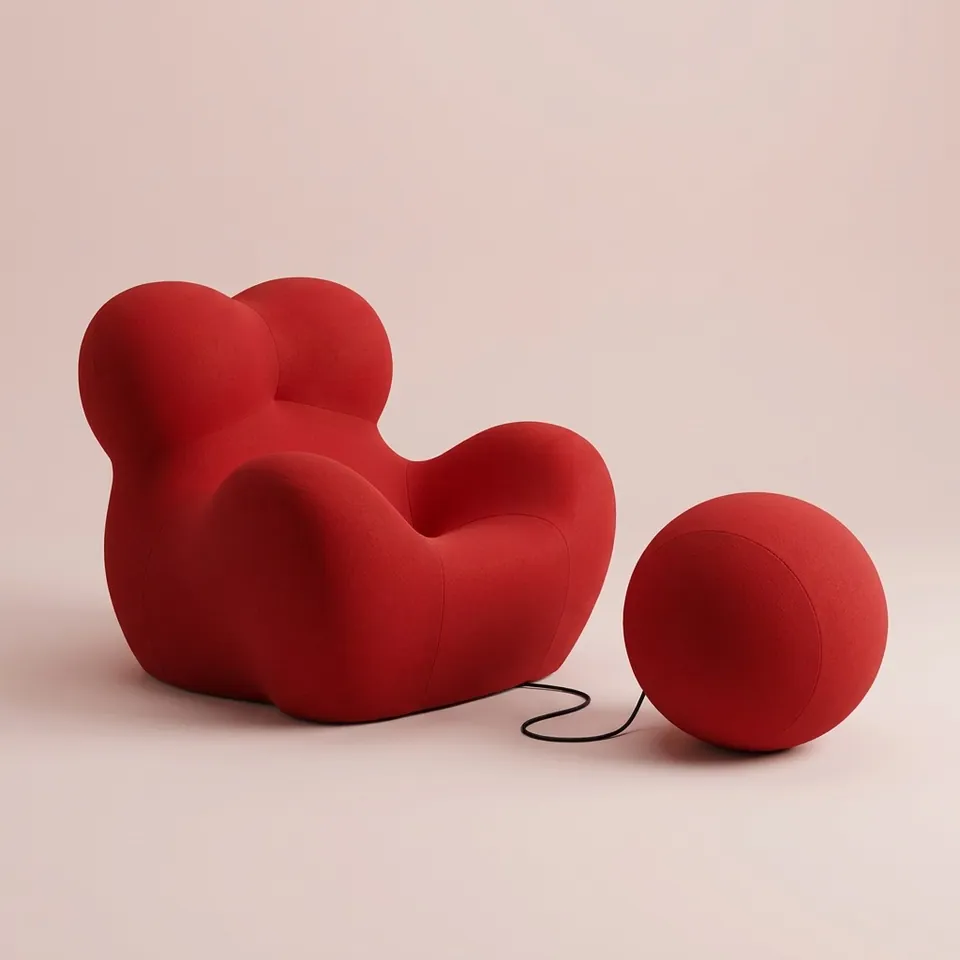 Up 5Pesce · 1969 · foam furniture as argument
In collections
Go further
- Italy: The New Domestic Landscape, Emilio Ambasz (ed.), Museum of Modern Art (1972)The catalogue of the 1972 MoMA exhibition, with the cut-out cover on which the Pratone appears.
- Pratone / Big Meadow, MIT-1060, Vitra Design MuseumThe museum record, with measurements, weight, materials and a short reading of the piece.
- Emilio Ambasz’s ‘Italy, The New Domestic Landscape’ (1972), Drawing MatterA look at the exhibition’s printed matter, including the catalogue cover and Gruppo Strum’s pamphlets.
- In memory of Pietro Derossi: look back at the late architect and designer’s radical legacy, Myrto Katsikopoulou, Designboom (2025)An obituary that places the Pratone among Strum’s nightclubs and later architecture.
- Pratone, GuframThe maker’s page on how the piece is finished by hand today and on its later versions.
Sources
- Pratone / Big Meadow, MIT-1060, Vitra Design Museum
- Gruppo Strum (Giorgio Ceretti, Pietro Derossi, Riccardo Rosso), artist page, Vitra Design Museum
- Pratone, Gufram
- Italy: The New Domestic Landscape, MoMA, New York, 1972, Gufram
- Emilio Ambasz's Italy, The New Domestic Landscape (1972), Drawing Matter
- Remembering Pietro Derossi, Designboom