Nº 0198 · Typewriter
Sholes and Glidden Type-Writer
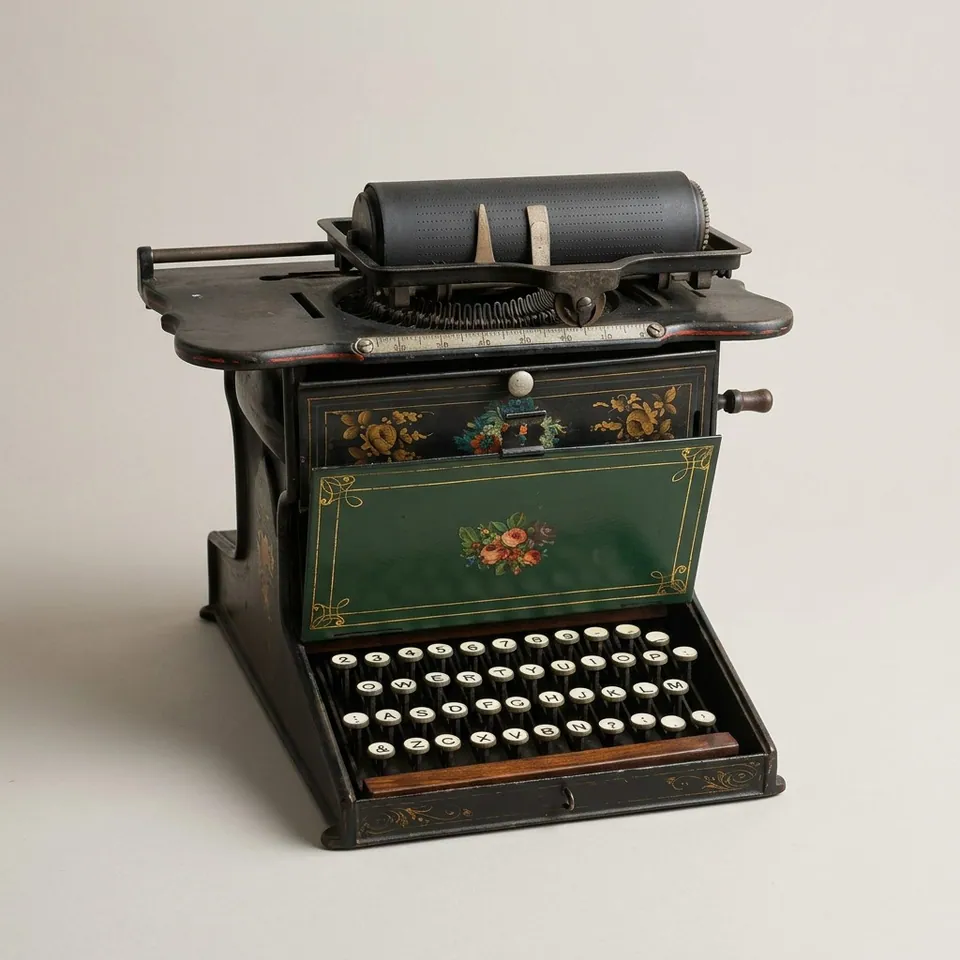
The first QWERTY keyboard, sold by a firearms maker.
Why it matters
It was the typewriter that E. Remington and Sons, until then a maker of firearms and sewing machines, put into production, and its letter order, with a row beginning Q W E R T Y, is the one most English keyboards still use. Why Sholes settled on that order is disputed: one account says it kept common letter pairs apart so the type bars would not jam, another links it to telegraph operators transcribing Morse.
Christopher Latham Sholes developed it in Milwaukee with Carlos Glidden and Samuel W. Soule, backed by James Densmore, and a patent was granted on 23 June 1868. About 30 test models came before the keyboard order was fixed. Remington of Ilion, New York, signed a contract in 1873 and put the machine on sale in July 1874. It typed capital letters only, and the type bars struck the platen from below, so the typist could not see the line being written.
What to notice
- The keyboardRound keys in rows; one row of letters begins Q W E R T Y.
- The platenA round platen on the carriage; the type bars strike it from below, out of sight.
- The painted caseA black japanned case painted with leaves, roses and gold scrolls.
3 min read
The full story
A numbering machine, repurposed
In 1866 Christopher Latham Sholes, a Wisconsin printer and newspaper publisher, was working with another printer, Samuel W. Soule, on a machine for numbering tickets and the pages of books. They built it in Charles F. Kleinsteuber’s machine shop in Milwaukee. Carlos Glidden, an amateur inventor who used the same shop, suggested that the device might print letters as well. In July 1867 Sholes read a Scientific American report on the Pterotype, a writing machine by John Pratt, and decided he could make a simpler one.
In this story
- A numbering machine, repurposed
- Rebuilt at a gun factory
- A slow start
- The keyboard outlived the machine

The story continues in the app
- Materials
- Wood, brass, iron and ceramic (Henry Ford example)
- Dimensions
- About 36 × 46 × 40 cm; about 15 kg (Henry Ford example)
- Maker
- E. Remington and Sons, Ilion, New York
- In collection
- The Henry Ford (00.711.10) · Smithsonian NMAH · Wisconsin Historical Museum
- Status
- Real · on sale from July 1874; capital letters only
Connections
- Christopher Latham Sholes
- Carlos Glidden
- Samuel W. Soule
- E. Remington and Sons
- Age of Industry
- Industrial design
- Iron
- Wood
- Milwaukee
- Ilion
Nearby in the archive
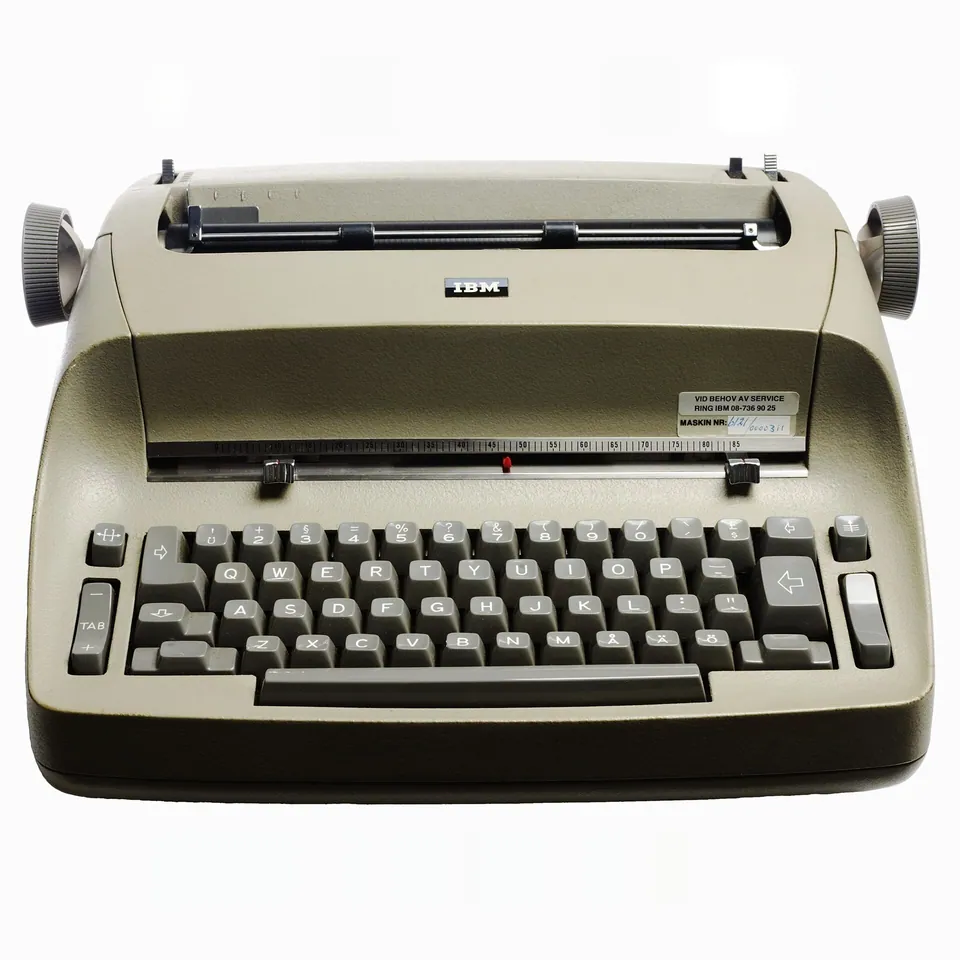 IBM SelectricIBM · 1961 · a typewriter with a ball in place of type bars
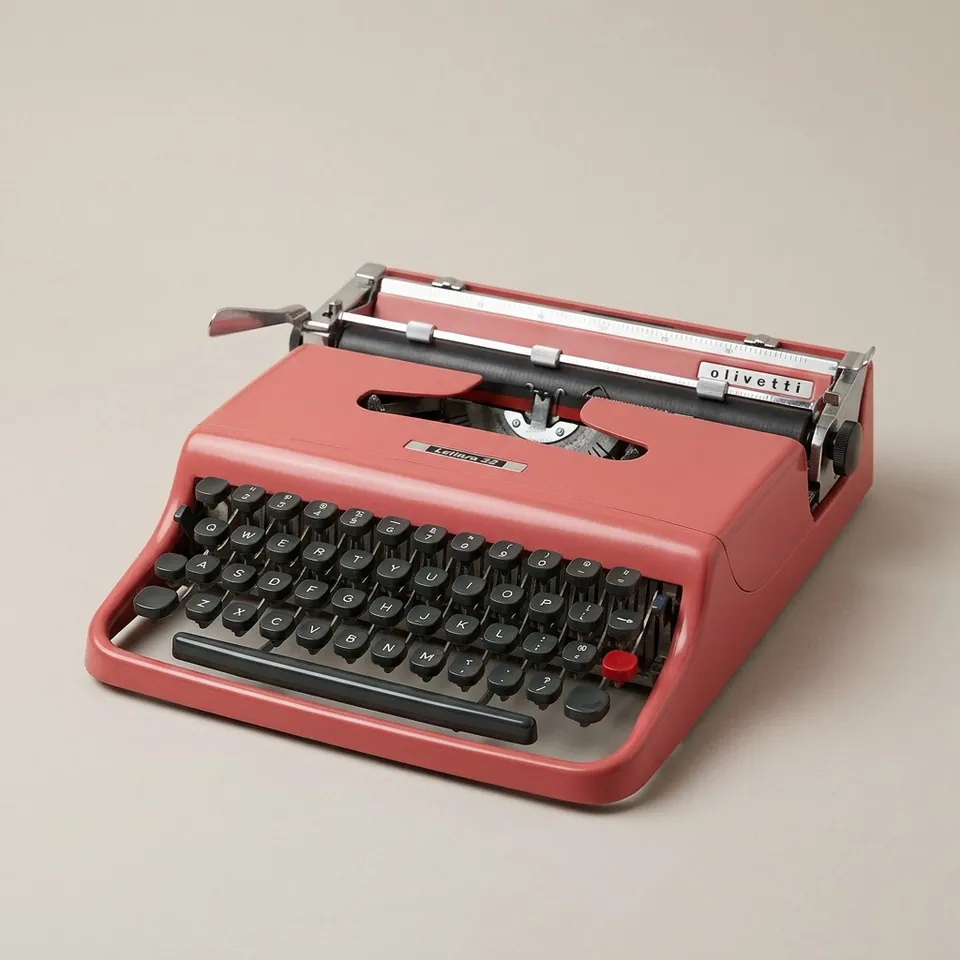 Lettera 22Nizzoli · 1950 · the typewriter made small enough to carry
In collections
Go further
- The Wonderful Writing Machine, Bruce Bliven Jr. (1954)A narrative history of the typewriter and the business that grew up around it, published by Random House.
- On the Prehistory of QWERTY, Koichi Yasuoka and Motoko Yasuoka (2011)A Kyoto University paper that traces the keyboard order through its early changes and links it to telegraph apparatus.
- Where Did the QWERTY Keyboard Come From?, Nick Yetto, Smithsonian Magazine (2023)A short account of the Milwaukee prototypes and the two competing explanations for the letter order.
- Sholes & Glidden Desk Typewriter, Model No. 1, 1873-1876, The Henry FordThe museum record for object 00.711.10, with photographs, materials, measurements and weight.
- #249 Sholes & Glidden ‘Type Writer’, American Society of Mechanical Engineers (2011)The engineering landmark entry, which sets out the mechanical features the society judged significant.
Sources
- Sholes & Glidden Desk Typewriter, Model No. 1, 1873-1876, 00.711.10, The Henry Ford
- Sholes & Glidden Typewriter, Smithsonian National Museum of American History
- The Origins of the QWERTY Keyboard, Smithsonian Magazine
- On the Prehistory of QWERTY, Koichi Yasuoka and Motoko Yasuoka, 2011, Kyoto University
- Wikipedia (English), Wikimedia Foundation

