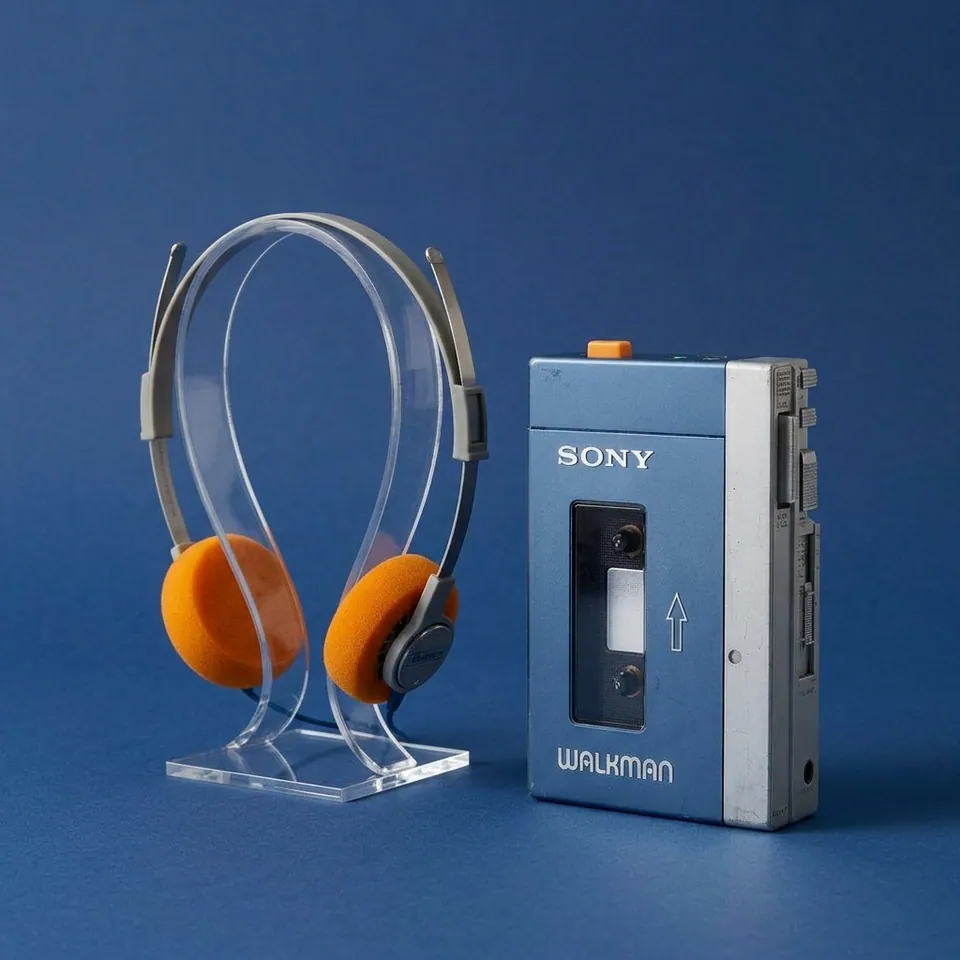
Nº 0068 · Cassette player
Walkman TPS-L2
Stereo sound that went where you went.
Why it matters
Sony took a recorder, removed the recording and added stereo playback and light headphones, and music became something you carried. The V&A and Cooper Hewitt describe it as the first portable music player.
Sony put it on sale in Japan on 1 July 1979, at ¥33,000. It began as a modified Pressman recorder, after Masaru Ibuka asked for a stereo player of his own. Abroad it first had other names: Soundabout in the United States, Stowaway in Britain, Freestyle in Sweden.
What to notice
- The cassette windowA window onto the cassette in the blue case.
- The orange buttonThe orange HOTLINE button lowers the music so two listeners can talk.
- The headphonesThe MDR-3L2 headphones came in the box.
3 min read
The full story
A request before a flight
In 1978 Sony added the TC-D5 to its Densuke line of portable recorders. It played in stereo, but it was heavy and cost 100,000 yen. Masaru Ibuka, Sony’s co-founder, carried one on overseas flights with a pair of headphones. Before a trip to the United States he asked Norio Ohga for something simpler: a Pressman, Sony’s small mono recorder, that only played back and did so in stereo. Ohga telephoned Kozo Ohsone, who ran the tape recorder division.
In this story
- A request before a flight
- Old mechanism, new headphones
- A bus to Yoyogi Park
- A word in the dictionary

The story continues in the app
- Dimensions
- About 13 × 9 × 3 cm
- Case
- Metal, blue and silver
- Price
- ¥33,000 in 1979
- In collection
- V&A · Computer History Museum
- Status
- Real · production ended
Connections
Nearby in the archive
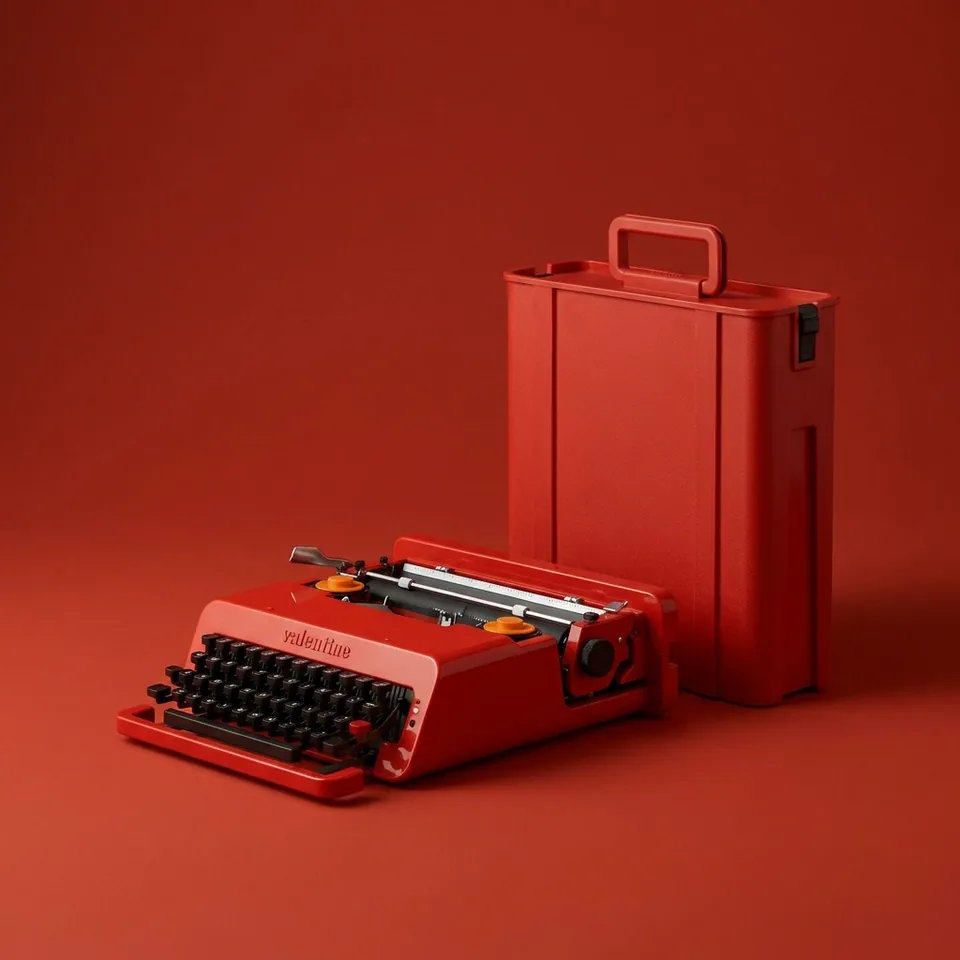 ValentineSottsass · 1969 · a machine taken out of the office
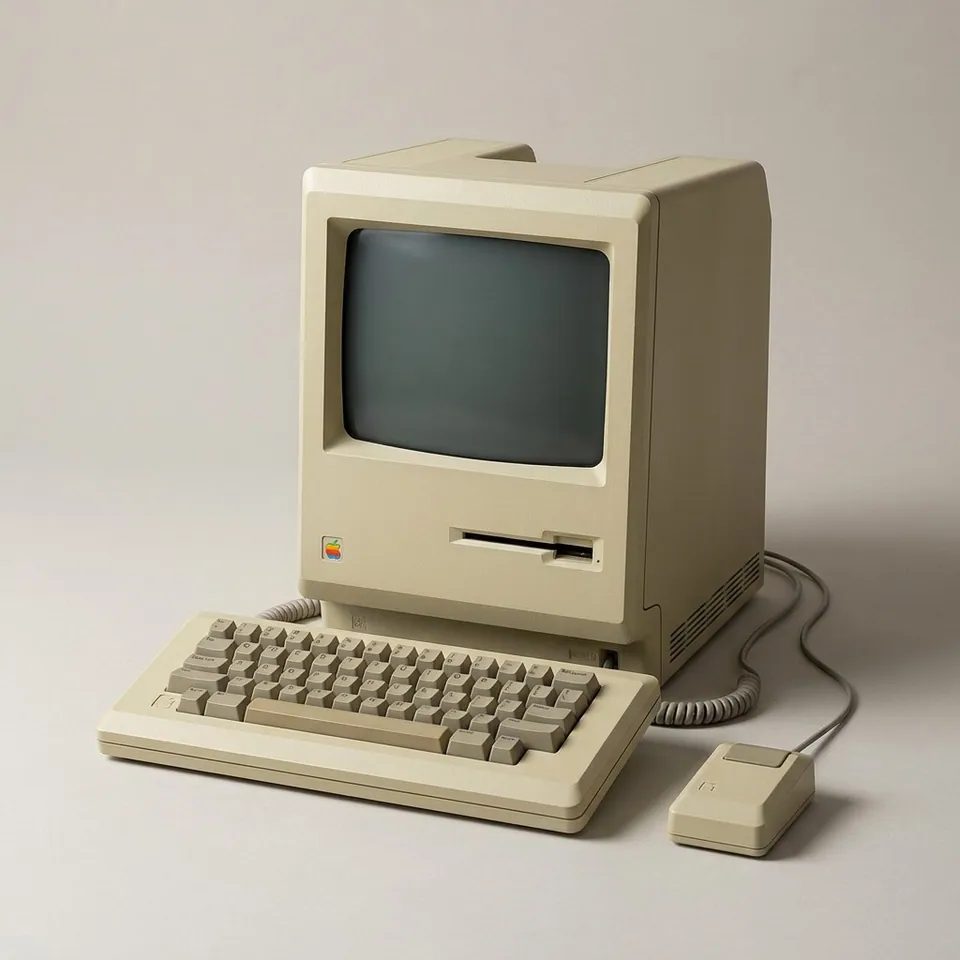 Macintosh 128KApple · 1984 · a computer with a handle
In collections
Go further
- Personal Stereo, Rebecca Tuhus-Dubrow (2017)A short cultural history of the Walkman, from its first buyers to the arguments about private listening in public.
- Doing Cultural Studies: The Story of the Sony Walkman, Paul du Gay, Stuart Hall, Linda Janes, Hugh Mackay and Keith Negus (1997)An Open University textbook that uses the Walkman as its single case study in how a product is designed, sold and used.
- The Walkman Effect, Shuhei Hosokawa, Popular Music (1984)The early academic essay on what walking through a city with private music does to the listener.
- Sony History, Chapter 6: Just Try It, Sony Group CorporationSony’s own account of the development, the naming, the Yoyogi Park launch and the first summer of sales.
- Stowaway TPS-L2, object CD.95:1,2-2016, Victoria and Albert MuseumThe museum record for a British-market example, with photographs and a summary of how the design came about.
Sources
- Stowaway TPS-L2, CD.95:1,2-2016, Victoria and Albert Museum
- Sony Walkman, Design Museum
- TPS-L2 Walkman Cassette Player and MDR-3L2 Headphones, Cooper Hewitt, Smithsonian Design Museum
- Walkman, Wikipedia

