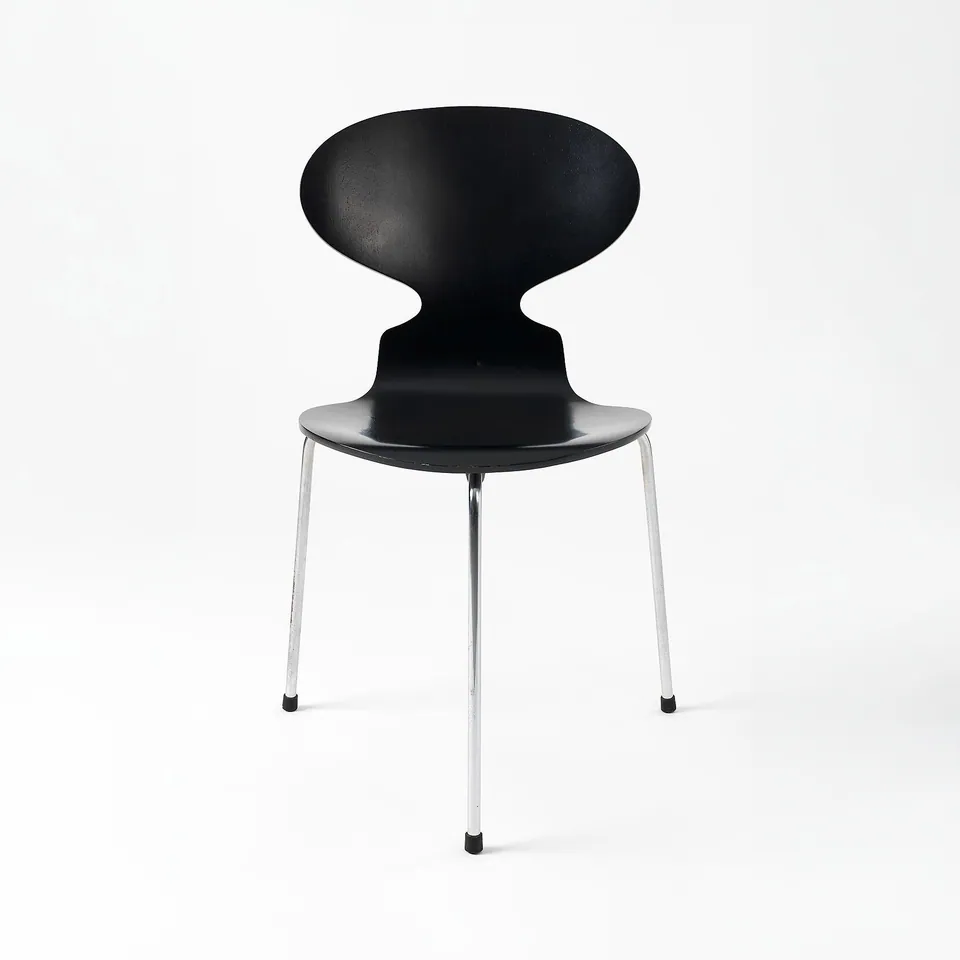
Nº 0159 · Stacking chair
Ant Chair
Seat and back from one sheet of plywood.
Why it matters
Its seat and back are one sheet of plywood curved in two directions, which the Arne Jacobsen Foundation calls the first chair of its kind. The narrow waist sits where the curve is tightest and the shell must be strongest, so the outline follows the structure.
Jacobsen designed the chair in 1952 for the canteen of Novo Terapeutisk Laboratorium, now Novo Nordisk, in Frederiksberg, and Fritz Hansen launched it that October; the canteen order persuaded the firm to produce it. The first version stood on three legs of chrome-plated tubular steel, fixed to the shell with rubber shock mounts, and a four-legged model, No. 3101, followed later. Asked about the three legs in 1953, Jacobsen replied: "Why should a chair have four legs when three are enough?" The black three-legged chair photographed belongs to the Nasjonalmuseet in Oslo.
What to notice
- The waistThe shell narrows sharply between back and seat, where it bends most.
- Three legsThree thin chrome legs: two at the front corners, one at the back centre.
- A footEach steel leg ends in a small black plastic foot.
3 min read
The full story
A chair for small kitchens
Arne Jacobsen and Fritz Hansen had worked together since the 1930s, when the firm made his furniture for the Bellevue Theatre. By the early 1950s he was looking at a problem that also occupied Charles and Ray Eames, Eero Saarinen and Alvar Aalto: a small, practical chair suited to factory production. The Arne Jacobsen foundation records that he kept the Eameses’ 1946 LCM chair in his studio in those years.
In this story
- A chair for small kitchens
- Modelled in clay
- Criticism and a fourth leg
- First of the shell chairs

The story continues in the app
- Materials
- Varnished moulded plywood, chrome-plated tubular steel, rubber shock mounts, plastic feet
- Model
- No. 3100, three legs; No. 3101, four legs
- Maker
- Fritz Hansen, Denmark
- In collection
- Vitra Design Museum · Nasjonalmuseet · Designmuseum Danmark
- Status
- Real · still in production
Connections
- Arne Jacobsen
- Fritz Hansen
- Postwar era
- Furniture design
- Plywood
- Wood
- Steel
- Frederiksberg
Nearby in the archive
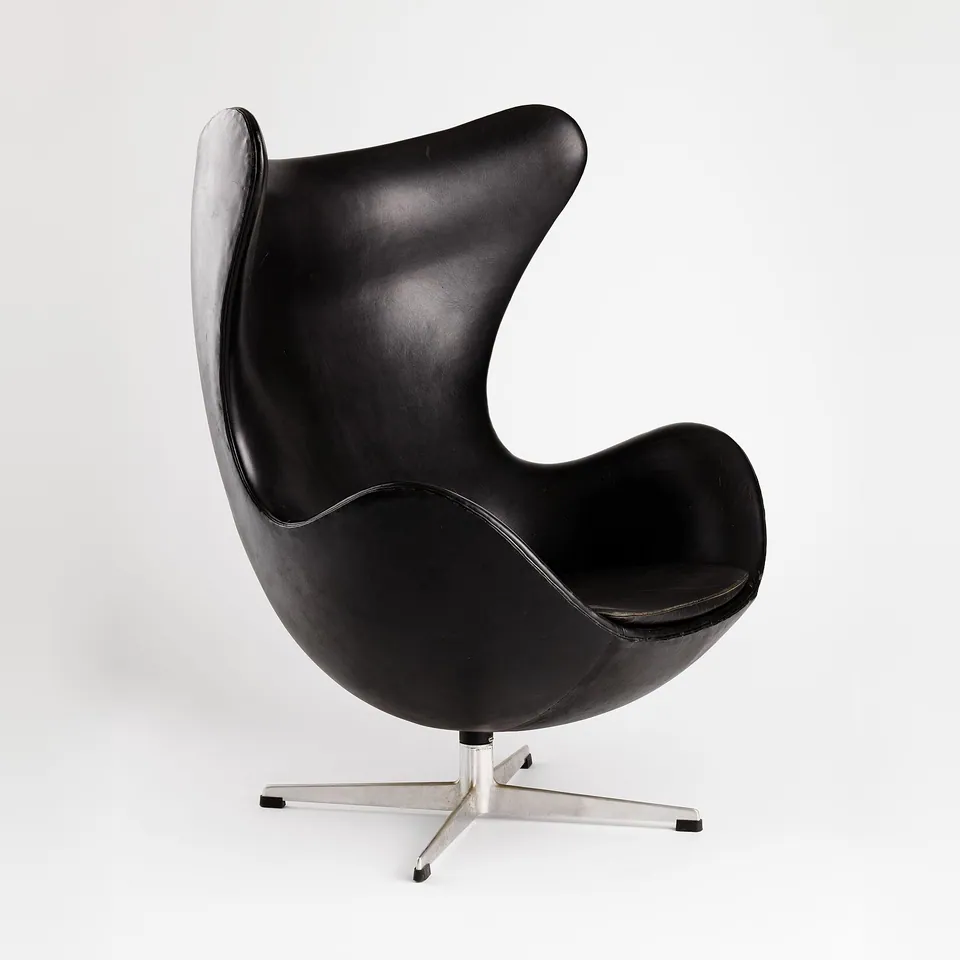 EggJacobsen · 1958 · the same designer and maker, upholstered
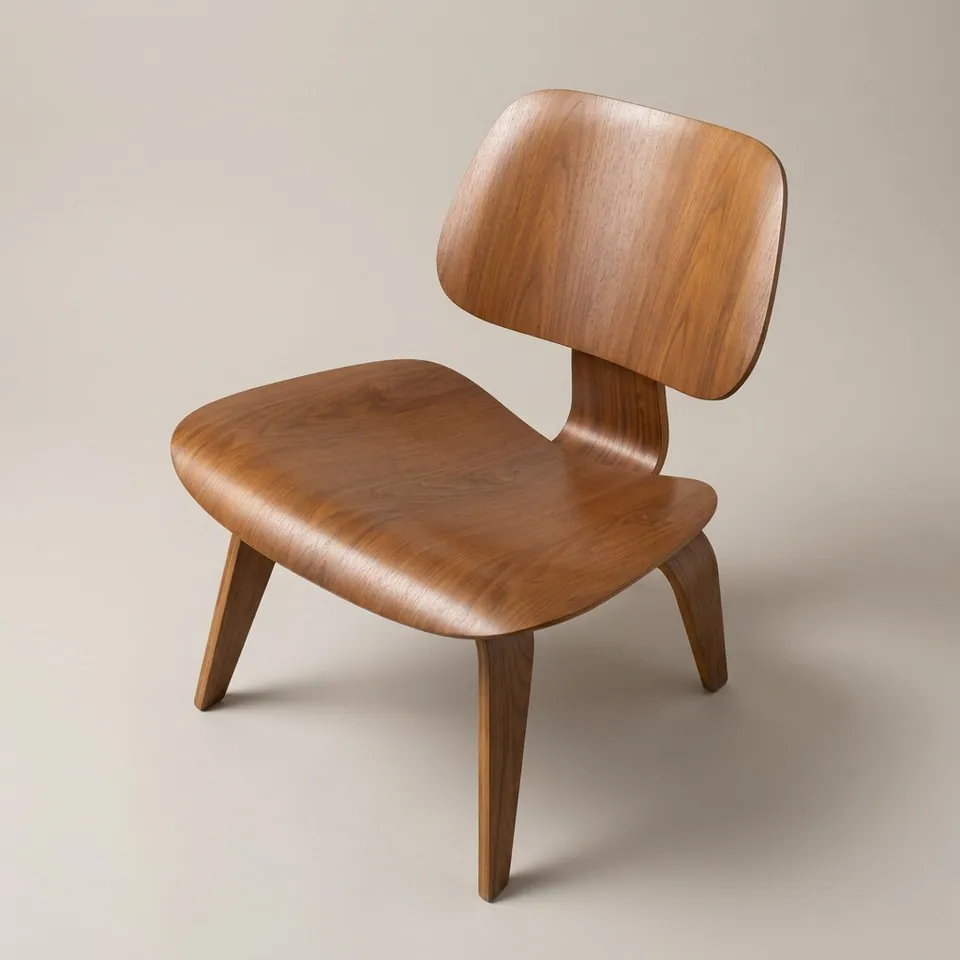 LCW (Lounge Chair Wood)Eames · 1945 · moulded plywood in separate parts
In collections
Go further
- Arne Jacobsen, Carsten Thau and Kjeld Vindum (2001)The standard monograph on Jacobsen’s buildings and furniture, first published in Danish in 1998 and in English in 2001.
- The Ant, Arne Jacobsen DesignThe foundation’s entry on the chair, with archive photographs of the Novo canteen and the 1957 Berlin exhibition.
- The original shell chair, Arne Jacobsen DesignA short essay that quotes Jacobsen’s 1953 newspaper interview and follows the shell chairs from the Ant to the Lily.
- No. 3100 / The Ant, MSK-1015-1, Vitra Design MuseumThe museum record for a three-legged example, with its materials listed part by part.
- Myren, OK-1978-0223B, NasjonalmuseetThe Oslo record for the chair pictured here, with its measurements, production year and acquisition date.
Sources
- No. 3100 / The Ant, MSK-1015-1, Vitra Design Museum
- The Ant, Arne Jacobsen Foundation
- Ant: chair with focus on strength and comfort, Fritz Hansen
- Ant chair, OK-1978-0223B, Nasjonalmuseet
- Wikipedia (English), Wikimedia Foundation

