Nº 0083 · Digital music player
iPod
A thousand songs, scrolled through with one thumb.
Why it matters
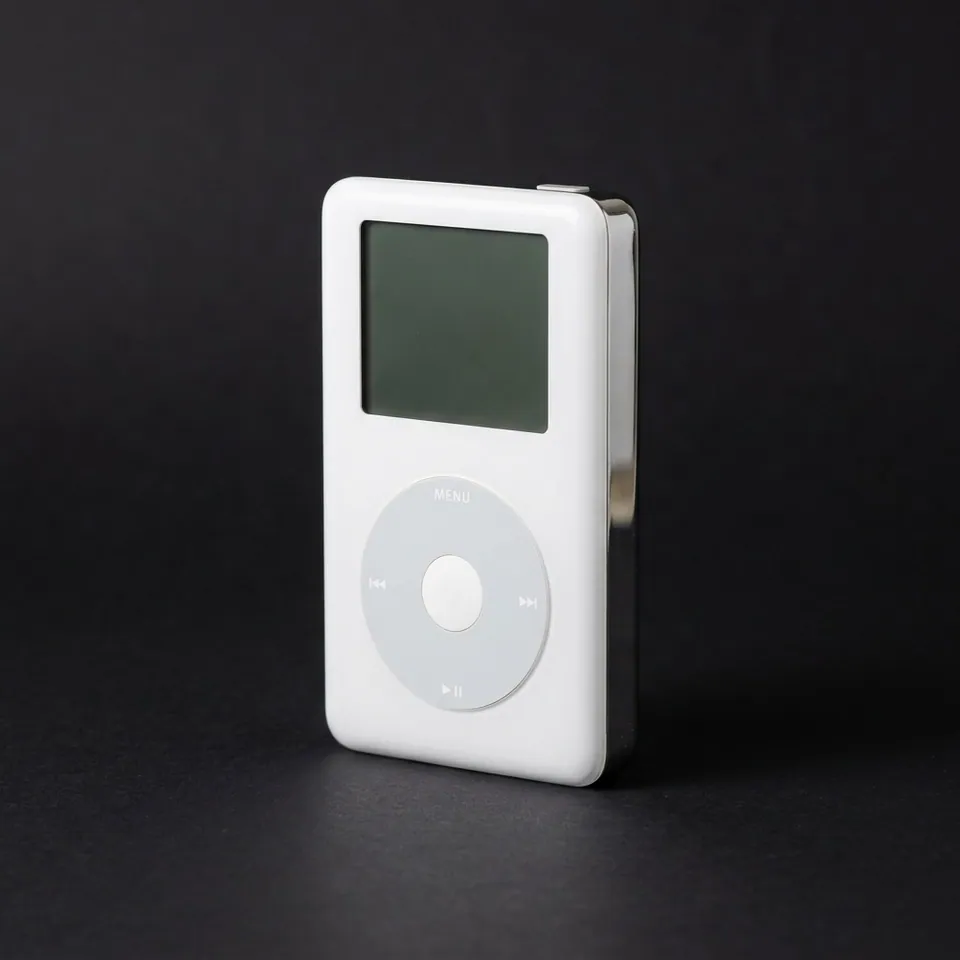
Apple announced it in 2001 as a 5 GB hard drive player that held 1,000 songs, with a scroll wheel for moving through long lists with one thumb. It put a whole music library into a pocket, and the Science Museum Group keeps a boxed example in its sound and vision collection.
Apple announced the iPod on 23 October 2001 and shipped it on 10 November, for US$399. It worked only with Macs, over FireWire, and weighed 6.5 oz, about 185 g. Jon Rubinstein started the project in January 2001, Tony Fadell led the hardware, and Apple's industrial design team under Jonathan Ive designed the case. A white front sits on a polished stainless steel back.
What to notice
- The scroll wheelA mechanical wheel turns under the thumb, with four buttons in the ring around it.
- The screenA small monochrome screen, 160 by 128 pixels, lit from behind.
- The steel backPolished stainless steel wraps the back and shows at the sides.
3 min read
The full story
Ten months, start to shelf
Steve Jobs gave the task of building a music player to Jon Rubinstein, Apple's senior vice president of hardware. As Macworld's history of the project tells it, Rubinstein had two ingredients in mind from the start. One was a FireWire connection, to move songs quickly from the computer. The other was a 1.8 inch, 5 GB hard drive from Toshiba, which could make Apple's machine smaller than any other hard drive player then on sale.
In this story
- Ten months, start to shelf
- A wheel for long lists
- Mac owners first
- The name lasted until 2022

The story continues in the app
- Storage
- 5 GB hard drive, about 1,000 songs
- Dimensions
- About 10 × 6 × 2 cm, 185 g
- Price
- US$399 in 2001
- In collection
- Science Museum Group · Computer History Museum
- Status
- Real · production ended
Connections
Nearby in the archive
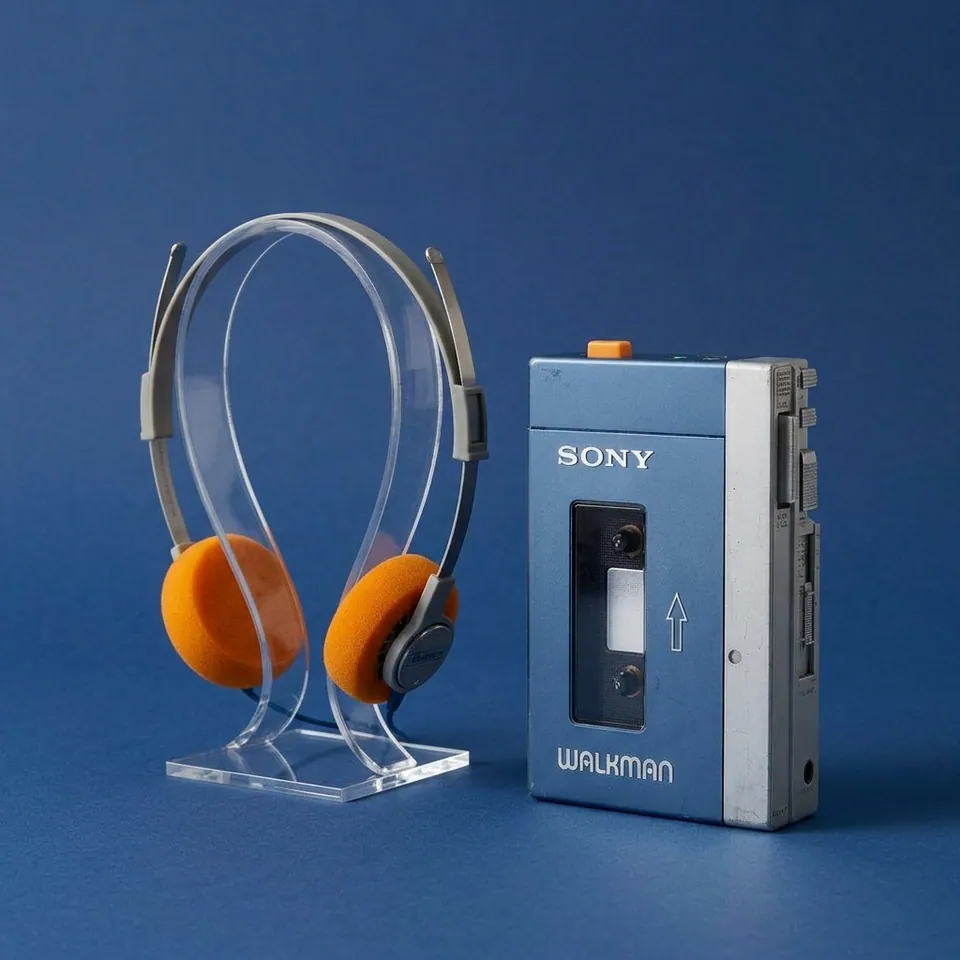 Walkman TPS-L2Sony · 1979 · music carried on the body
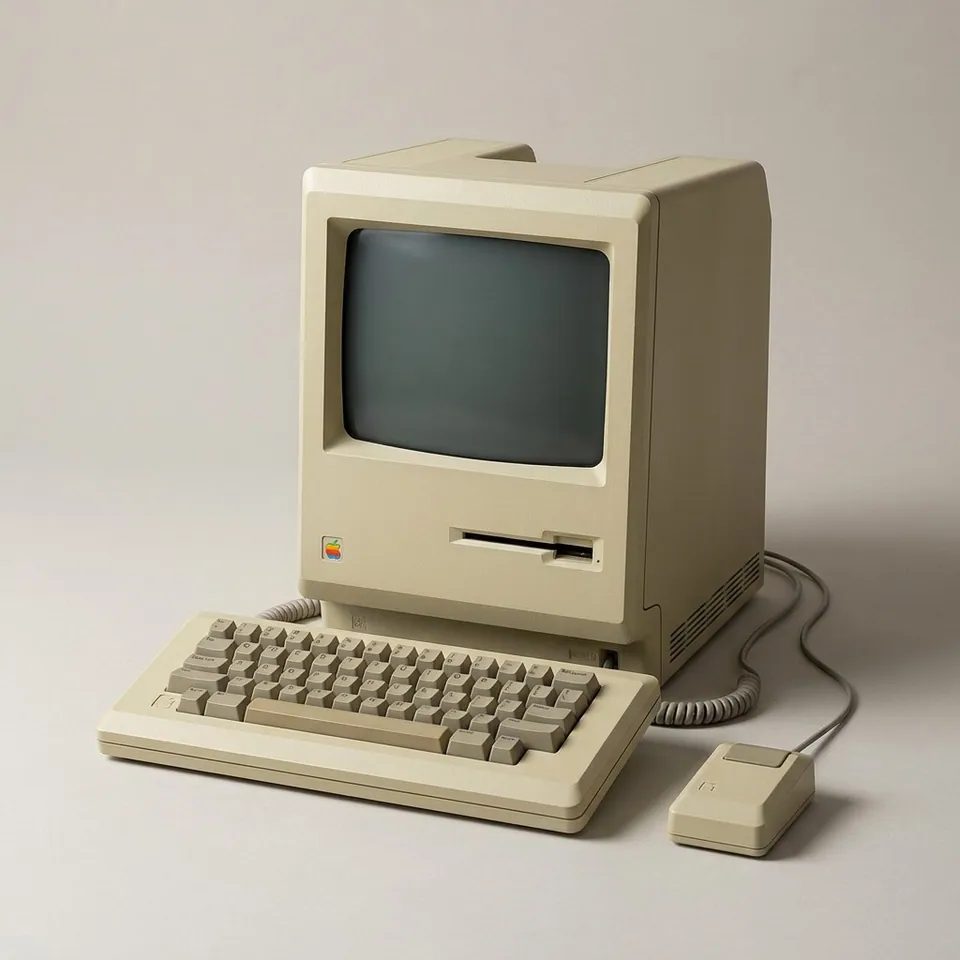 Macintosh 128KApple · 1984 · the same company, seventeen years earlier
In collections
Go further
- The Perfect Thing: How the iPod Shuffles Commerce, Culture, and Coolness, Steven Levy (2006)A journalist's book on how the iPod was made and what it did to listening, written with access to the people at Apple who built it.
- The iPod: How Apple's legendary portable music player came to be, Benj Edwards, Macworld (2011)A ten-year retrospective that follows the project month by month and names the suppliers and engineers involved.
- Apple Presents iPod, Apple (2001)The original press release of 23 October 2001, with the full specification and price.
- Personal MP3 Player iPod 2001, object 2007-43, Science Museum GroupThe museum record for a boxed first-generation iPod, with photographs and measurements.
- The music lives on, Apple (2022)Apple's announcement that the last iPod would be sold only while supplies lasted, with its own short history of the line.
Sources
- Apple Presents iPod, Apple Newsroom
- Personal MP3 Player iPod 2001, 2007-43, Science Museum Group
- iPod (First Generation), 102766569, Computer History Museum
- The birth of the iPod, Macworld
- IPod classic, Wikipedia