Nº 0163 · Folding bicycle
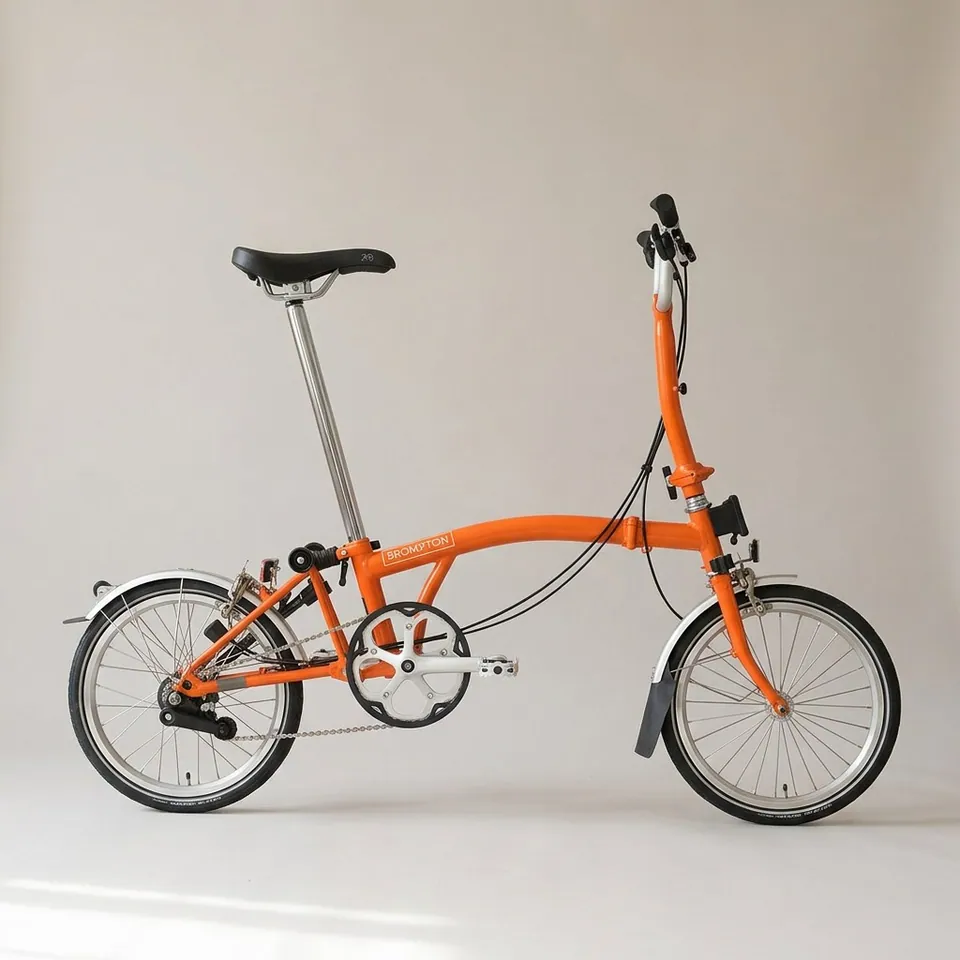
Brompton folding bicycle
Folds in about 20 seconds to a small parcel.
Why it matters
Ritchie set out to make a compact bicycle for the city, one that folds in about 20 seconds into a package small enough to carry. The folding design of his 1979 patent has stayed fundamentally the same, and Cooper Hewitt, Smithsonian Design Museum, collected an example in 2016.
Andrew Ritchie began designing it in 1975 in his London flat, founded Brompton Bicycle in 1976 and filed his patent in 1979. A first batch, planned as 50 bicycles in 12 months, took 20 months; production stopped in 1982 and restarted in 1986 in a railway arch in Brentford, reaching mass production by early 1988. The frame joints are brazed, not welded, and each brazer at the factory trains for two years and stamps their initials on the parts. To fold it, the rear and front wheels swing round, the handlebars fold down and the seat post drops.
What to notice
- The main hingeA hinge in the curved main tube lets the frame fold in half.
- Small wheelsWheels of 16 inches, the size used on every model.
- FoldedFolded, the wheels sit side by side under the frame, with the handlebars down beside them.
2 min read
The full story
A gardener's spare bedroom
Andrew Ritchie took an engineering degree at Cambridge in 1968, worked as a computer programmer and then spent some years as a self-employed landscape gardener in London. In 1975 a chance meeting with a backer of the Bickerton, a new British folding bicycle that was portable but unsteady to ride, set Ritchie thinking about a folding design of his own.
In this story
- A gardener's spare bedroom
- Hinges and a rubber block
- Slow money, steady buyers
- A million from London

The story continues in the app
- Materials
- Brazed steel tube frame, titanium mudguards, rubber and Kevlar tyres (Cooper Hewitt example)
- Folded
- About 56 × 55 × 25 cm
- Wheels
- 16 inch (ETRTO 349) on every model
- In collection
- Cooper Hewitt, New York (2016-19-1)
- Status
- Real · still in production
Connections
Nearby in the archive
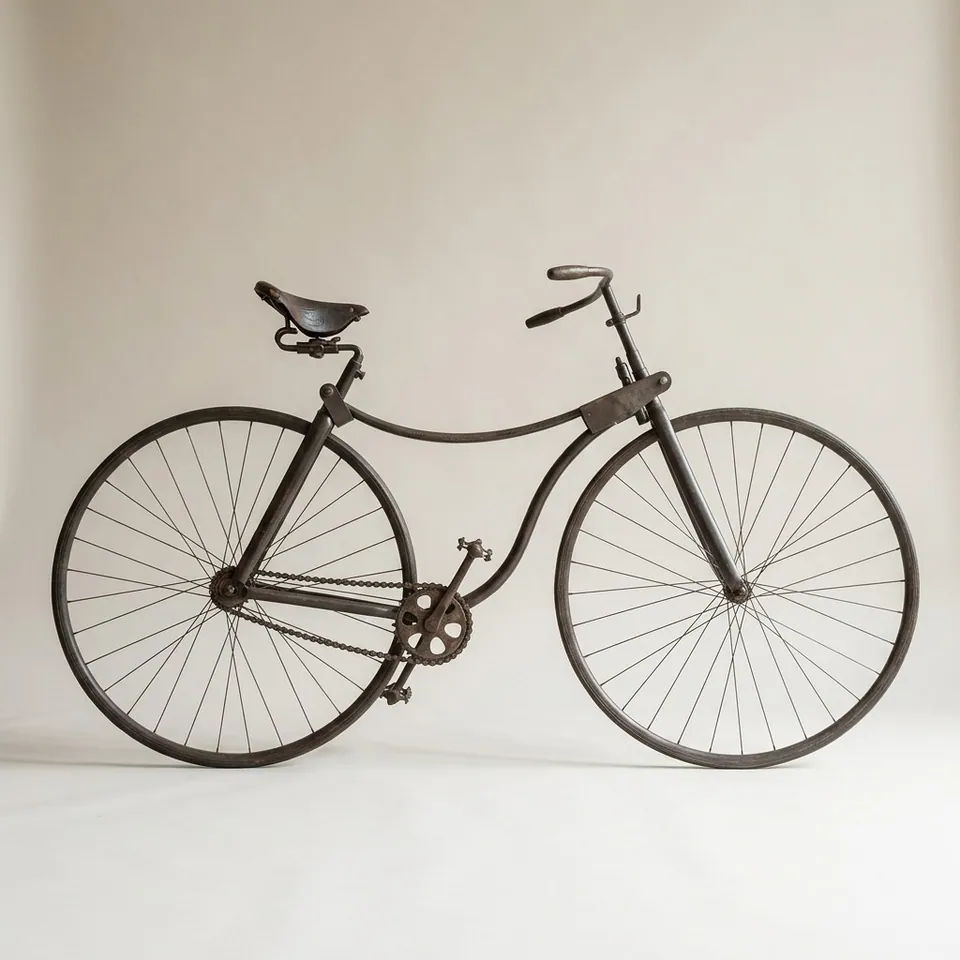 Rover safety bicycleStarley · 1885 · the chain-driven layout the Brompton still keeps
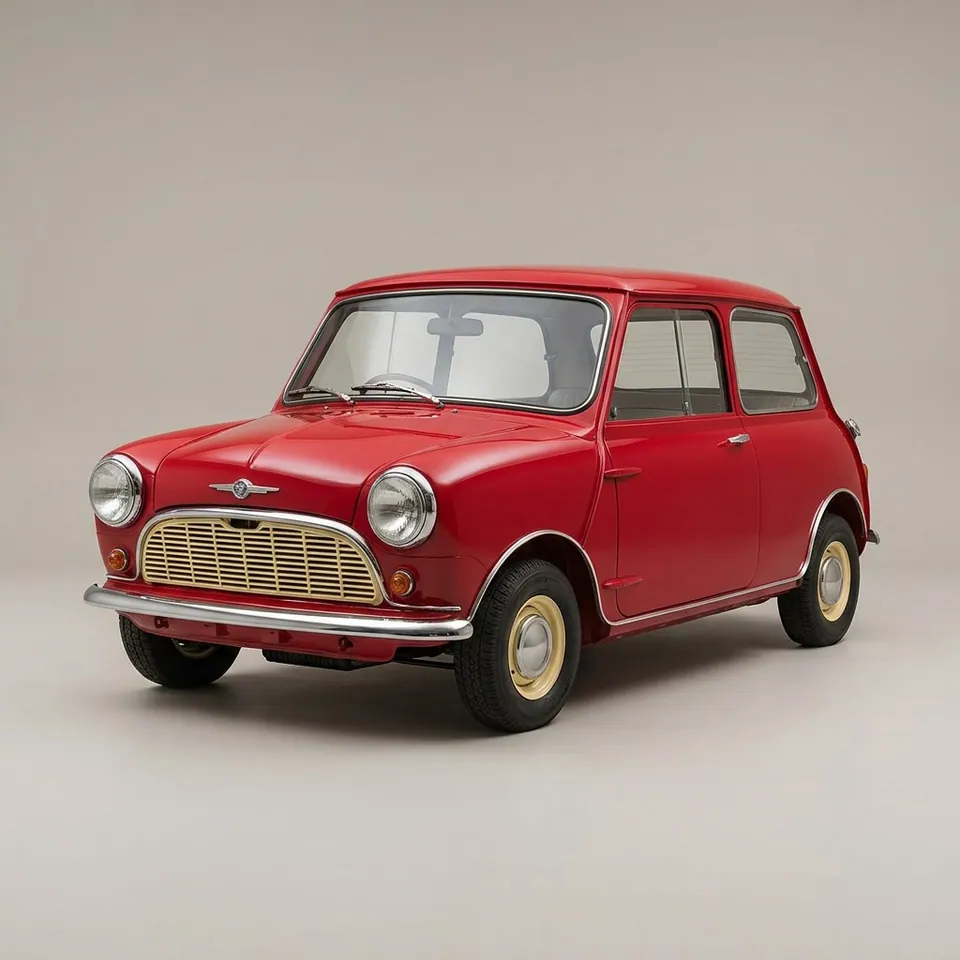 MiniIssigonis · 1959 · another British design packed into the least space
In collections
Go further
- Brompton Bicycle, David Henshaw (2010)The standard history of the bicycle and the company, from the first prototypes to the modern factory.
- The Brompton: Engineering for Change, Will Butler-Adams and Dan Davies (2022)The chief executive’s own account of how the bicycle is made and how the firm grew after 2002.
- David Henshaw: Brompton Bicycle, Cycling UKAn extract from Henshaw’s book on the first batch of 50 bicycles and what went wrong with it.
- Into the Fold, Bill Shaffer, Cooper Hewitt (2017)The museum’s short essay on its 2016 example, with the folding sequence and the brazing of the frame.
- One Millionth Brompton, Brompton BicycleThe maker’s page on the millionth bicycle and the details it borrows from the earliest ones.
Sources
- Brompton Folding Bicycle, 2016-19-1, Cooper Hewitt, Smithsonian Design Museum
- Into the Fold, Cooper Hewitt, Smithsonian Design Museum
- David Henshaw: Brompton Bicycle (book extract), Cycling UK
- Wikipedia (English), Wikimedia Foundation