Nº 0162 · Bicycle
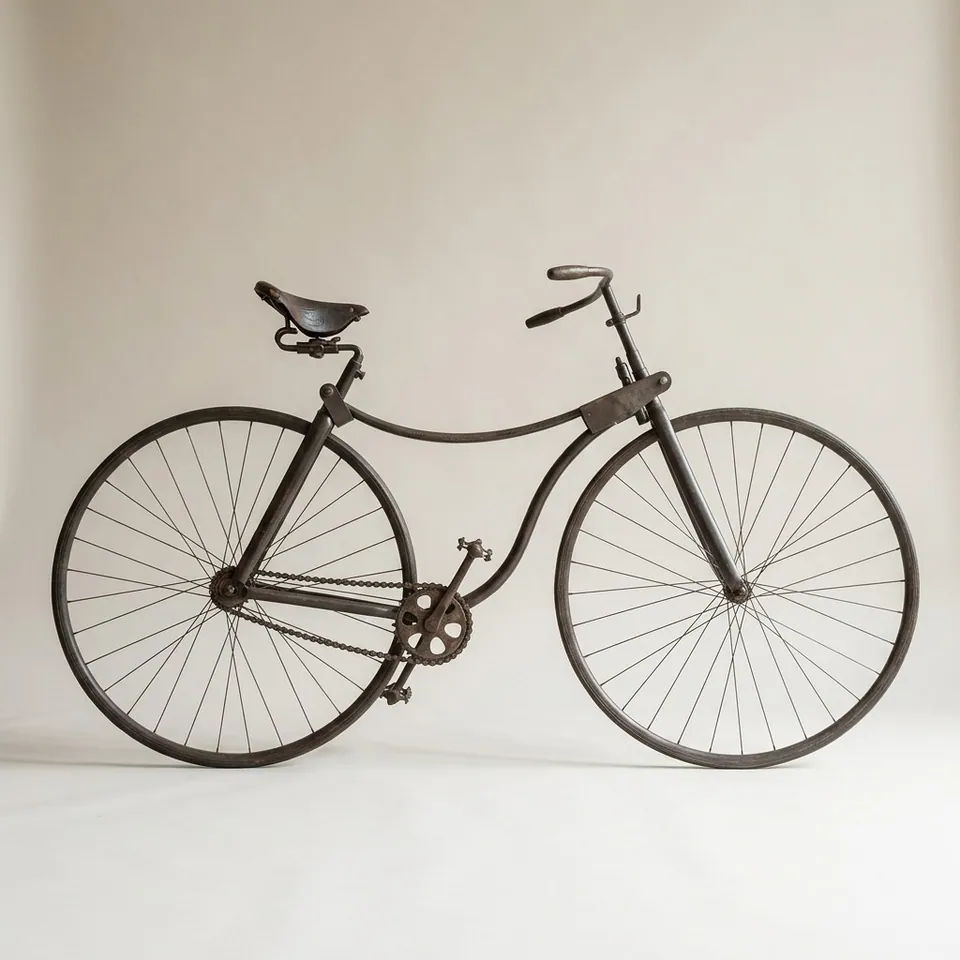
Rover safety bicycle
A chain to the back wheel, two equal wheels.
Why it matters
Starley drove the rear wheel by chain, so the front wheel no longer had to be huge and the rider sat low between two wheels of near equal size. The Science Museum says the Rover has all the basic features of standard modern bicycles, and that cycling became enormously popular among both men and women after the safety bicycle.
John Kemp Starley designed it in Coventry, and it was built there in 1885 under the Rover name by Starley and Sutton, the firm he ran with William Sutton. In the late 1870s designers had been trying to lower the rider, to make cycling safer than on the high-wheeler. The Science Museum’s example has two curved tubes for a frame, solid rubber tyres on both wheels, a front fork fixed to the handlebars and a sprung saddle on a column above the rear wheel. Its saddle is not original: Brooks remade it in 1961.
What to notice
- The chainA chain from the pedals drives the rear wheel, so both wheels can be much the same size.
- The saddleA sprung saddle on a column above the rear wheel, remade by Brooks in 1961.
- Handlebars and forkThe front fork is fixed directly to the handlebars.
3 min read
The full story
Down from the high wheel
In the early 1880s a bicycle usually meant the high-wheeler. The rider sat above a tall front wheel and turned it directly with the pedals. A bad patch of road could throw the rider over the handlebars, a fall cyclists called taking a header. Makers tried many ways of bringing the saddle nearer the ground. Henry Lawson’s bicyclette of 1879 already drove its rear wheel by chain, though it kept a large wheel in front.
In this story
- Down from the high wheel
- Bridle rods to sloped forks
- Safer than any tricycle
- Rower, rovar, Rover

The story continues in the app
- Materials
- Metal, leather, wood and rubber
- Dimensions
- 1100 × 650 × 1950 mm, 16.8 kg (Science Museum example)
- Maker
- Starley and Sutton, Coventry, under the Rover name
- In collection
- Science Museum, London (1901-6)
- Status
- Real · saddle remade in 1961
Connections
Nearby in the archive
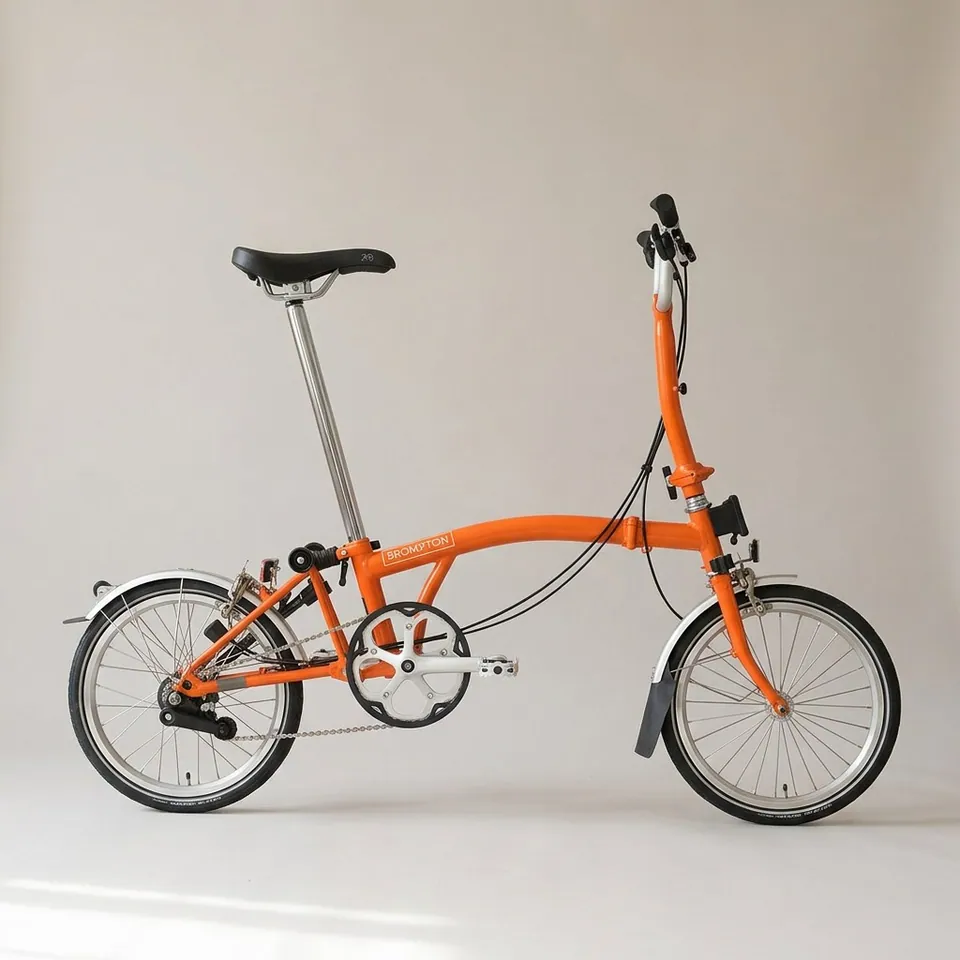 Brompton folding bicycleRitchie · 1976 · a bicycle rethought again, to fold small
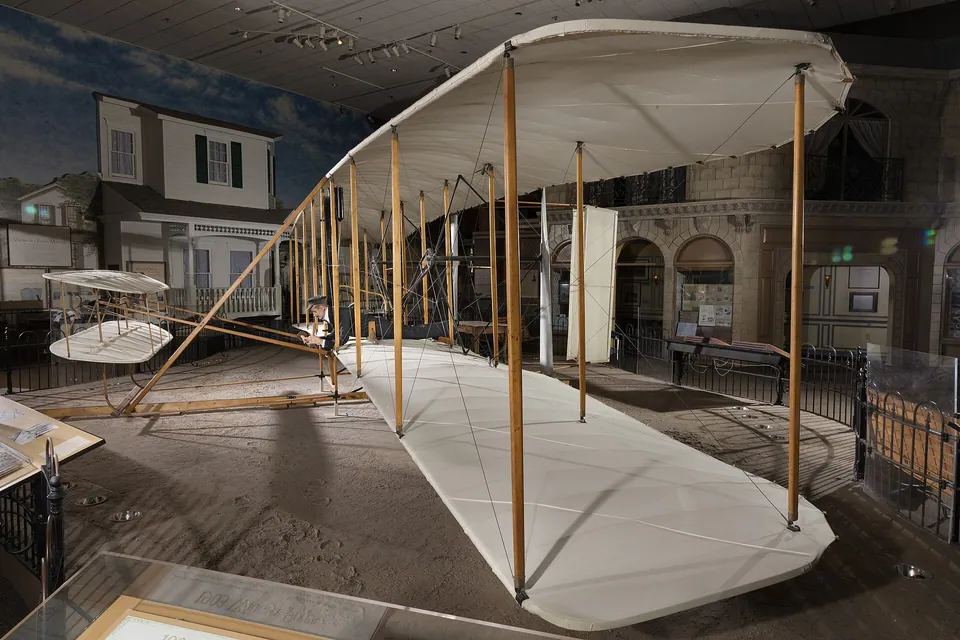 Wright FlyerWright brothers · 1903 · built by two bicycle makers in Dayton
In collections
Go further
- Bicycle: The History, David V. Herlihy (2004)A full illustrated history of the bicycle from the 1810s onward, with the safety bicycle and the 1890s boom at its centre.
- Bicycle Design: An Illustrated History, Tony Hadland and Hans-Erhard Lessing (2014)A technical history that follows each part of the bicycle, from frames and chain drives to tyres and gears.
- Rover ‘Safety’ Bicycle, 1885, object 1901-6, Science Museum GroupThe museum record for the example shown here, with photographs, materials, measurements and a description of the frame.
- Rover Safety Cycle, Coventry Transport MuseumThe museum’s short entry on its 1888 Rover, including the price asked for the bicycle in 1886.
- John Kemp Starley, Grace’s Guide to British Industrial HistoryA timeline of Starley’s life with the passages on the early Rovers from Bartleet’s Bicycle Book.
Sources
- Rover ‘Safety’ Bicycle, 1885, 1901-6, Science Museum Group
- Wikipedia (English), Wikimedia Foundation