Nº 0143 · Cipher machine
Enigma machine
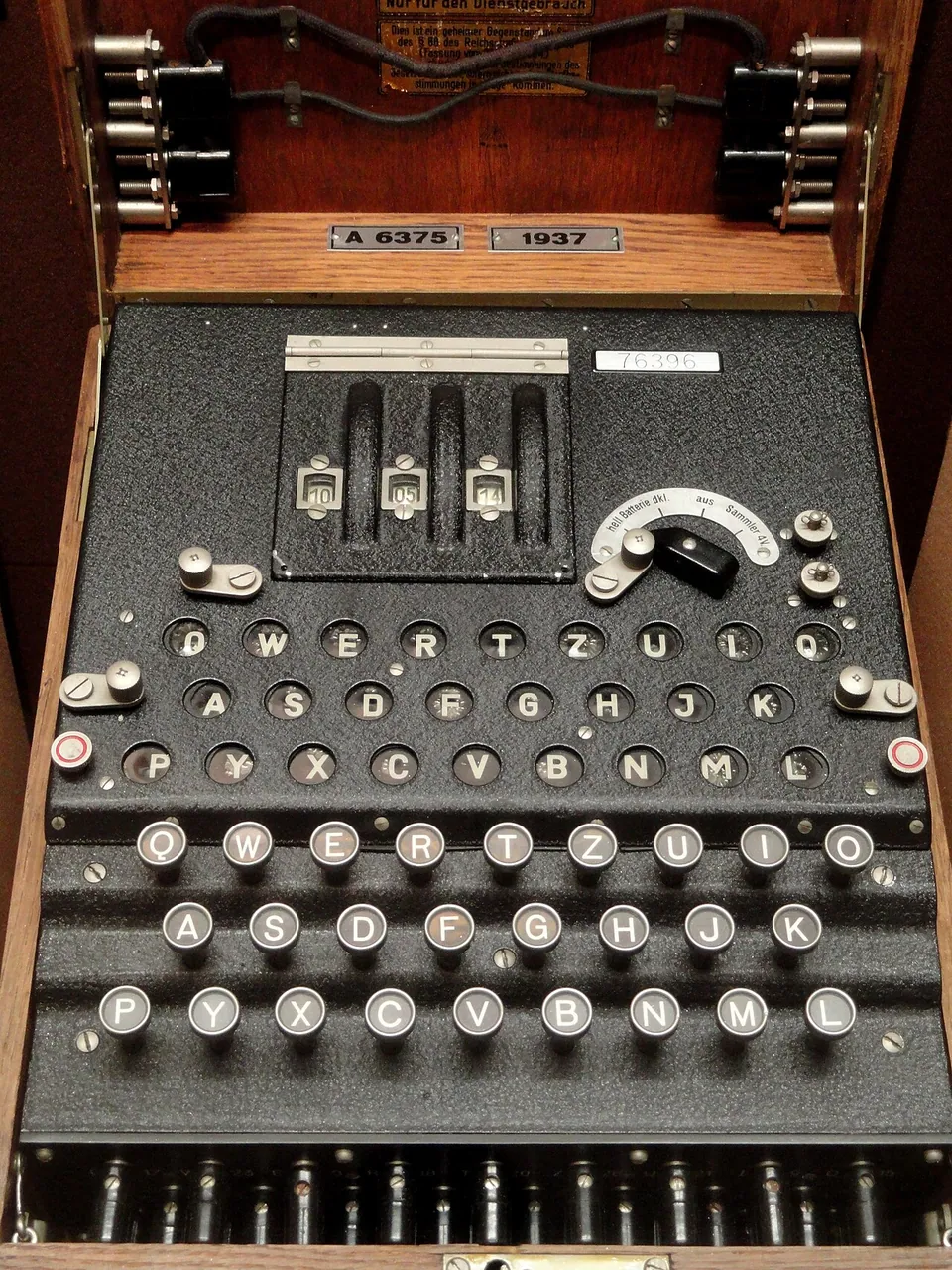
Three rotors, and no letter enciphered as itself.
Why it matters
Enigma began as a commercial product and became standard German military equipment; the Science Museum Group says over 40,000 were in use by 1945. Its weaknesses, among them that no letter could be enciphered as itself, let Polish and then British codebreakers read a large share of German wartime traffic.
Arthur Scherbius filed the patent for his cipher machine on 23 February 1918, and the name Enigma was first used in 1923, the year the first commercial machine appeared. The German Navy adopted a version in 1926, and the army’s Enigma I entered service on 1 June 1930. Each key press sends current through three rotors chosen from five, a fixed reflector and a plugboard, and lights a lamp for the enciphered letter. Marian Rejewski of the Polish Cipher Bureau reconstructed the military machine in late 1932, and in July 1939 the Poles shared their methods with British and French intelligence.
What to notice
- The rotor windowsThree small windows in the lid show one letter or number of each rotor beneath.
- The lampboardA second set of letters above the keys, laid out like the keyboard, lights up to give the cipher letter.
- The keyboardBelow the lamps, three rows of round keys in the German QWERTZU order.
3 min read
The full story
A machine for merchants
Arthur Scherbius, an electrical engineer, applied for a German patent on a cipher device on 23 February 1918. The German patent office notes that the American Edward Hebern had already applied to patent a rotor machine, and that other engineers had similar ideas. He offered the invention to the German military during the First World War and was turned down, so it was sold to businesses instead. The first commercial model, the Handelsmaschine of 1923, printed its output on paper like a typewriter. It was heavy and bulky, and no example is known to survive.
In this story
- A machine for merchants
- Twenty-six wires, scrambled
- Midnight keys, Morse traffic
- Secret until 1974

The story continues in the app
- Materials
- Light alloy chassis, bakelite, oak case
- Dimensions
- About 28 × 34 × 15 cm, about 12 kg
- Made
- Over 40,000 in use by 1945
- In collection
- Science Museum, London · National Cryptologic Museum
- Status
- Real · several hundred Enigma I survive
Connections
Nearby in the archive
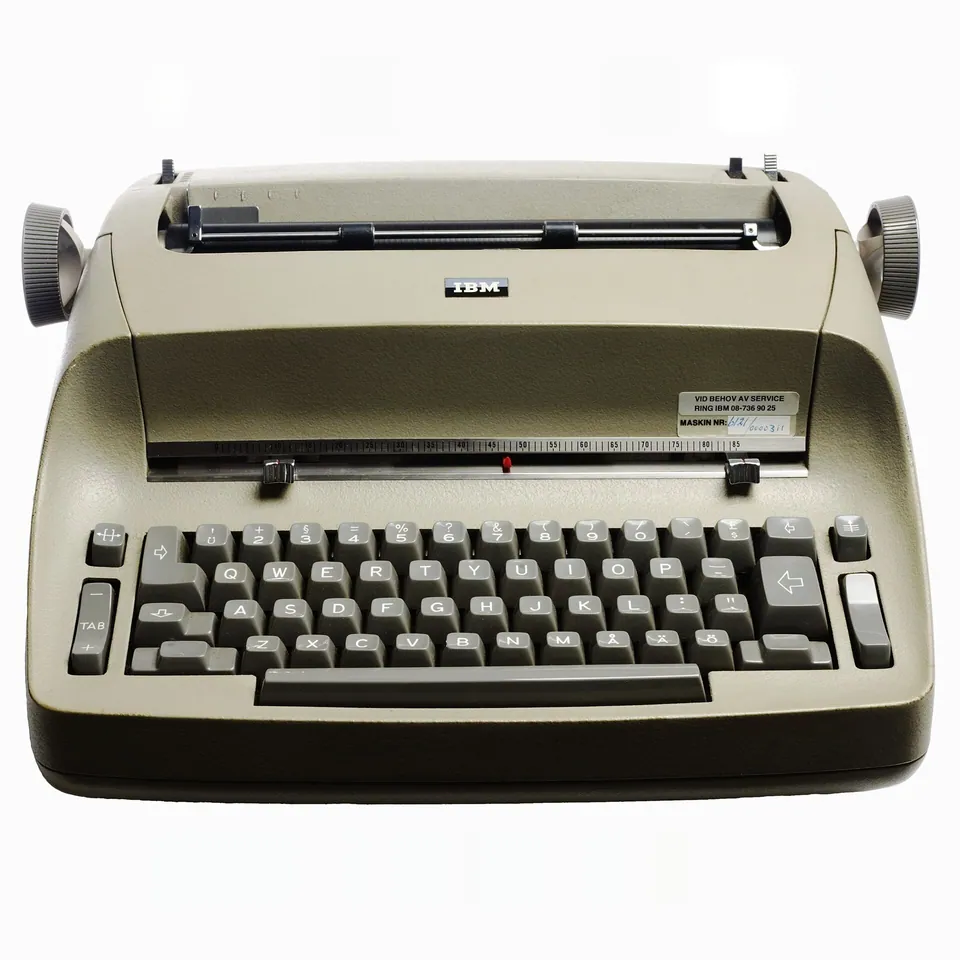 IBM SelectricIBM · 1961 · another keyboard driving a mechanism, for plain text
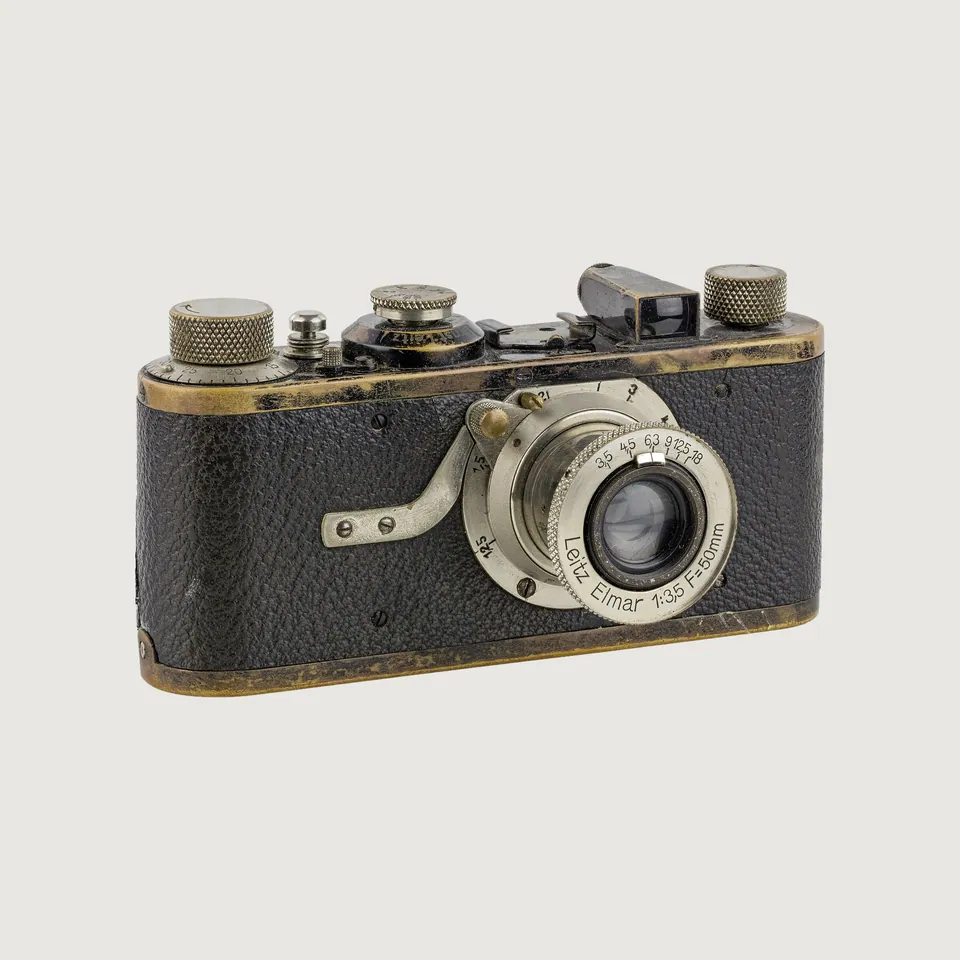 Leica ILeitz · 1925 · German precision instrument of the same years
Go further
- X, Y & Z: The Real Story of How Enigma Was Broken, Dermot Turing (2018)An account of the Polish mathematicians and French intelligence officers whose work came before Bletchley Park.
- Enigma cipher machine, Crypto MuseumAn index to every Enigma model, with wiring details, production figures drawn from German archives and a company history.
- Enigma, Bletchley ParkThe museum’s short history of how the machine was attacked, from the Polish work of 1932 to the first British break in January 1940.
- Three-ring Enigma cypher machine, object 1980-1200, Science Museum GroupThe museum record for a 1934 machine given by GCHQ, with photographs, materials and measurements.
- The Turing-Welchman Bombe, The National Museum of ComputingThe story of the Bombe and of the volunteers who rebuilt a working one between 1997 and 2007.
Sources
- Three-ring Enigma cypher machine in oak wood transit case, 1980-1200, Science Museum Group
- Enigma I, Crypto Museum
- Enigma history, Crypto Museum
- Enigma (Meilensteine), Deutsches Patent- und Markenamt
- Wikipedia (English), Wikimedia Foundation