Nº 0167 · Mosque
Great Mosque of Djenné
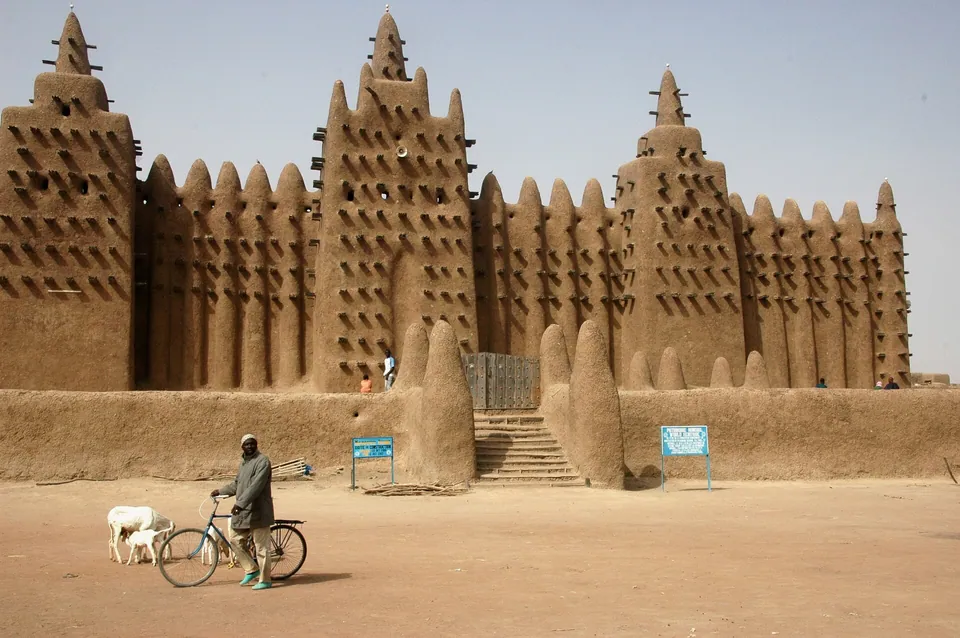
Its palm beams are permanent scaffolding for replastering.
Why it matters
It is a large public building of sun-dried earth that stands because its community renews the plaster every year, and its form is built around that work: the bundles of palm wood left sticking out of the walls are the scaffolding. It is built in the Sudano-Sahelian style of the Niger valley, and Djenné is on the UNESCO list as the Old Towns of Djenné.
The present building was completed in 1907 and is the third mosque on the site; the first is dated to the 13th or early 14th century, though the exact year is uncertain. Ismaila Traoré, head of the town’s mason guild, directed the rebuilding. The walls are sun-dried earth bricks in earth mortar under an earth plaster, and the mosque stands on a raised platform about 75 m square beside the Monday market. Years of replastering had added more than 500 tonnes of material to the walls and roof, and from the end of 2008 the Aga Khan Trust for Culture worked with the guild to restore them.
What to notice
- The towersThree tower-like minarets rise from the front wall, each ending in a tapering cone.
- The palm beamsBundles of palm wood stick out of the walls in rows; the masons stand on them to replaster.
- The platformSteps climb between tapering earth piers to the raised platform the mosque stands on.
3 min read
The full story
A third mosque
Djenné stands on the flood plain of the Bani river, and by the 15th and 16th centuries it was one of the centres from which Islam spread through West Africa. The chronicle Tarikh al-Sudan says the town’s ruler, Sultan Kunburu, converted and gave up his palace as the site of the first mosque. Historians place that building somewhere in the 13th or early 14th century.
In this story
- A third mosque
- Earth, palm and ostrich eggs
- Plaster every year
- Five hundred tonnes

The story continues in the app
- Materials
- Sun-dried earth brick, earth mortar and plaster; palm-wood beams
- Dimensions
- Platform about 75 m square; roughly 16 m high
- Maker
- Ismaila Traoré and the Djenné mason guild, 1907
- Conservation
- Aga Khan Trust for Culture with the mason guild, from 2008
- Status
- Real · a mosque in use; Old Towns of Djenné, UNESCO 1988
Connections
Nearby in the archive
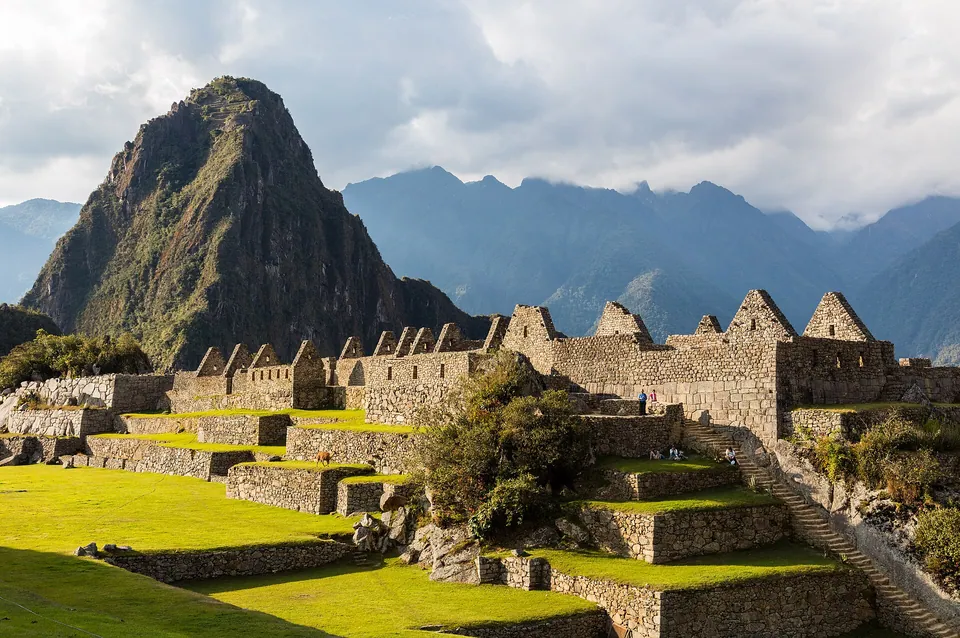 Machu PicchuInca builders · c. 1420 · walls made from the ground the site stands on
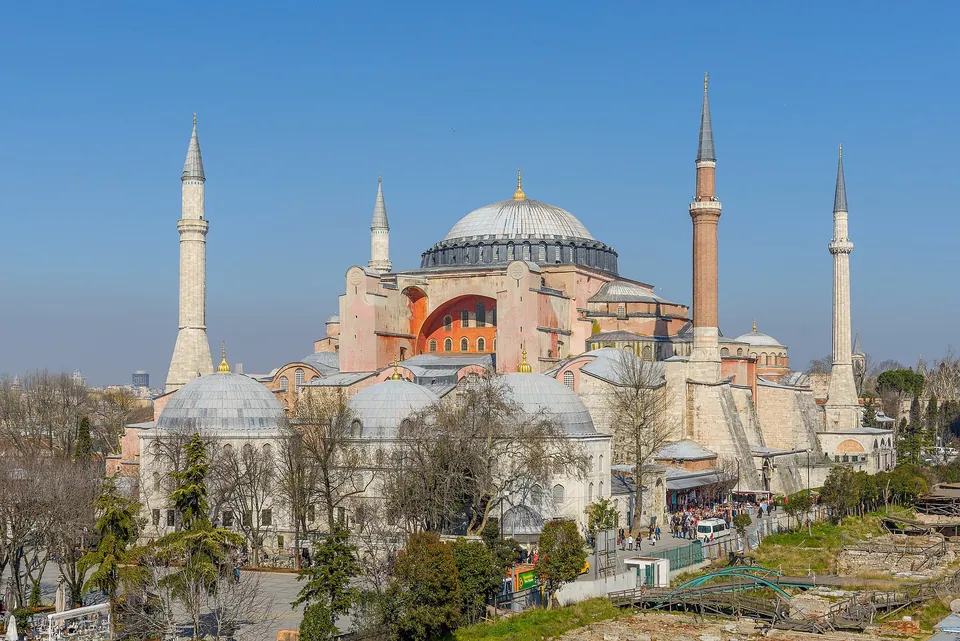 Hagia SophiaAnthemius and Isidore · 537 · another great prayer hall, in brick and stone
In collections
Go further
- The Masons of Djenné, Trevor H. J. Marchand (2009)An anthropologist’s account of the town’s mason guild and how its building knowledge is passed on.
- The History of the Great Mosques of Djenné, Jean-Louis Bourgeois, African Arts (1987)The journal article that traces the three mosques on the site and argues that the 1907 design is African.
- Earthen Architecture Programme, Mali, Aga Khan Development NetworkThe Aga Khan Trust for Culture’s own summary of what it found in 2006 and the repairs begun in 2008.
- Old Towns of Djenné, UNESCO World Heritage CentreThe World Heritage record for the town, with the statement of value, maps and conservation reports.
- Site: Djenne and Timbuktu Mosque, Zamani Project, University of Cape TownA survey team’s page on the mosque, with its measurements of the building and notes on its upkeep.
Sources
- Great Mosque of Djenné, record 1721.3/89563, Aga Khan Visual Archive, MIT Libraries
- Mali, Earthen Architecture Programme, Aga Khan Development Network
- Site: Djenne and Timbuktu Mosque, Zamani Project, University of Cape Town
- Wikipedia (English), Wikimedia Foundation

