Nº 0223 · Cutlery
Flat Model cutlery
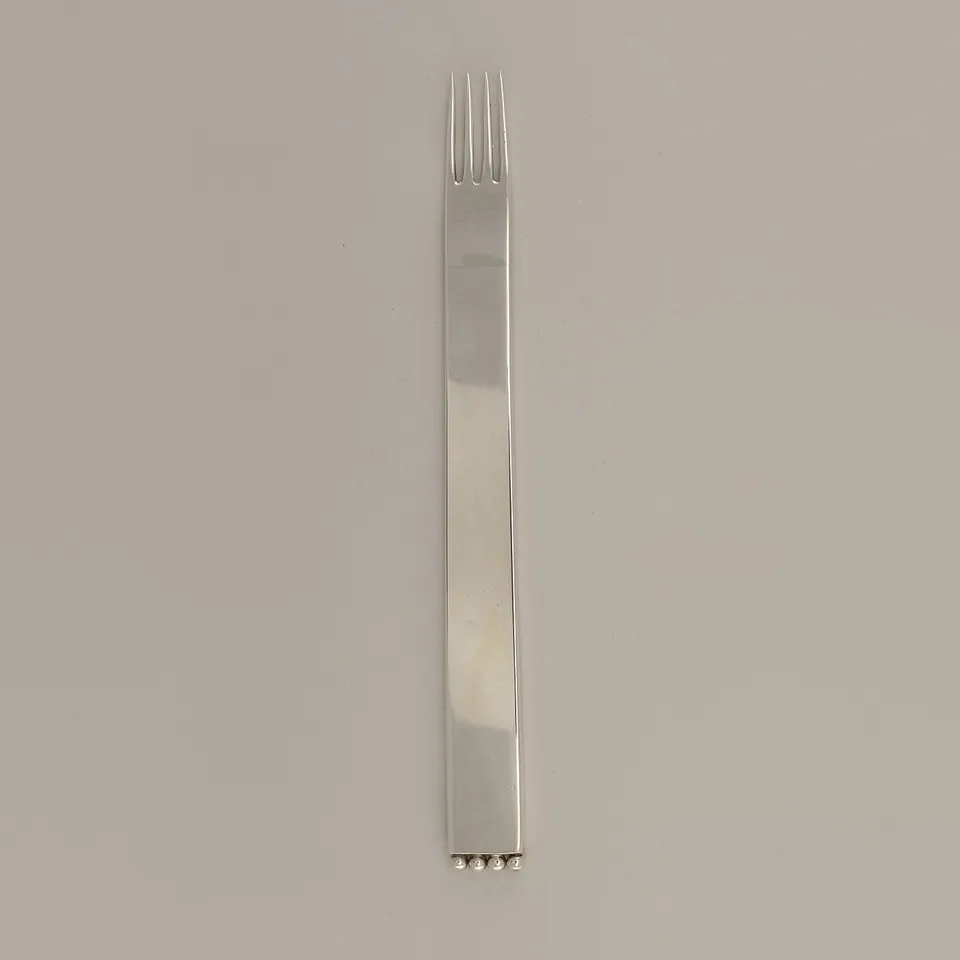
Flat silver, four beads, nothing else.
Why it matters
The Flat Model is ornamented only by the four beads at the end of each handle, and Cooper Hewitt describes it as the most radically modern flatware of its time. Cooper Hewitt also records it as the first model the Wiener Werkstätte produced, in the workshop’s opening year of 1903.
Josef Hoffmann founded the Wiener Werkstätte in Vienna in 1903 with Koloman Moser and the patron Fritz Waerndorfer, and designed this cutlery for its silver workshop; Cooper Hewitt records that the three founders had it made for their own use. Each piece is a flat rectangle of silver, tapering slightly towards the head, with four small hollow beads fixed at the end of the handle. The MAK in Vienna holds design sheets dated 1904 for the service made for Lili and Fritz Waerndorfer, which included a fish server, soda water and lemonade spoons, a cake server and an egg spoon. The fork shown, a dessert fork at Cooper Hewitt, is stamped WW with Austrian hallmarks.
What to notice
- Four tinesFour thin, straight tines cut from the flat head, hardly cupped.
- The flat handleA long flat band of silver with straight edges and no decoration along its length.
- Four beadsA row of four small hollow beads across the end of the handle, its only ornament.
3 min read
The full story
Cutlery for three founders
The Wiener Werkstätte was founded in Vienna in 1903 by Josef Hoffmann, then a young architect, the painter and designer Koloman Moser and the textile industrialist Fritz Waerndorfer, who supplied the money. They took the English Arts and Crafts movement as their model. The enterprise began in a small flat and before the year was out had moved into a three-storey workshop building in the Neustiftgasse.
In this story
- Cutlery for three founders
- Cut from sheet silver
- On the Waerndorfer table
- Pencil line to museum case

The story continues in the app
- Materials
- Silver; the MAK table fork has a niello monogram
- Dimensions
- Table fork 21.5 cm long (MAK GO 2009-27)
- Maker
- Wiener Werkstätte, Vienna
- Marks
- WW monogram and Austrian hallmarks; the MAK fork also JH and FK
- In collection
- MAK, Vienna (fork and design sheets) · Cooper Hewitt (dessert fork)
Connections
- Josef Hoffmann
- Wiener Werkstätte
- Age of Industry
- Metalwork
- Gold and silver
- Vienna
Nearby in the archive
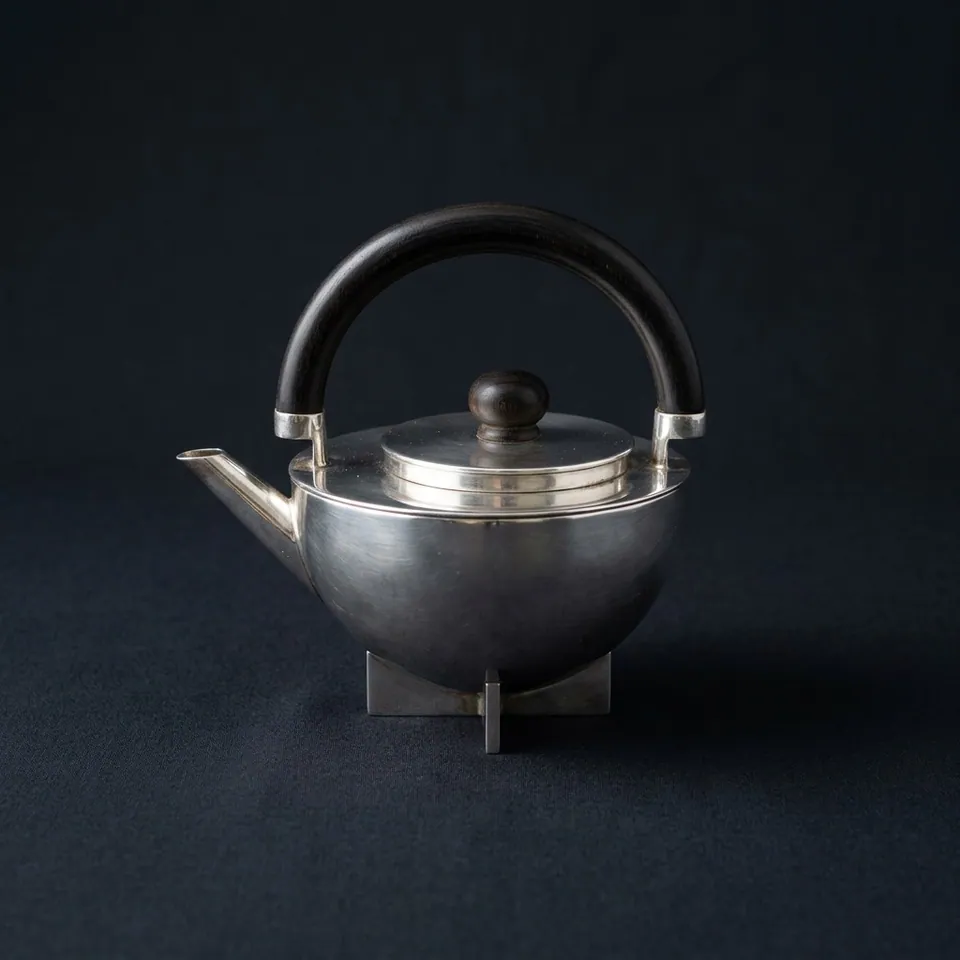 Tea infuser MT 49Marianne Brandt · 1924 · later table silver built from plain geometric forms
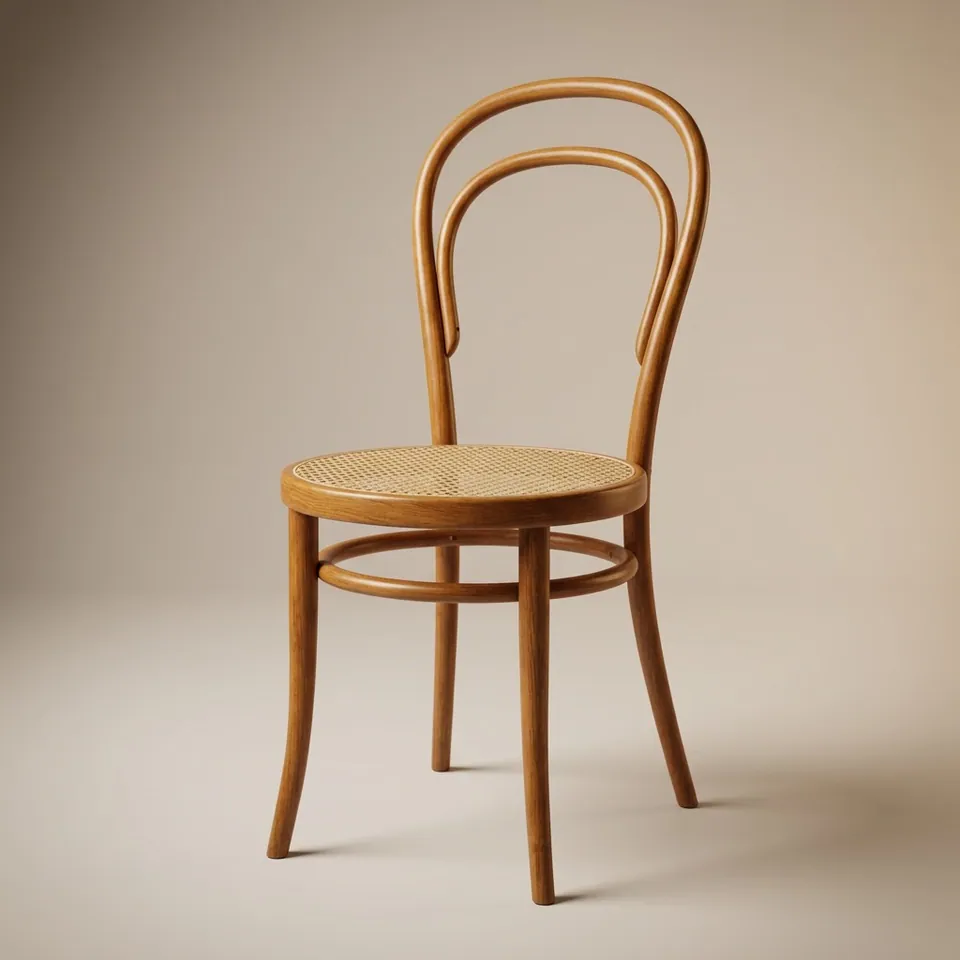 Thonet No. 14Gebrüder Thonet · 1859 · an earlier plain design from a Viennese firm
In collections
Go further
- Josef Hoffmann: Bestecke für die Wiener Werkstätte, Waltraud Neuwirth (1982)A specialist study of the cutlery Hoffmann designed for the Wiener Werkstätte, cited by auction houses and museums for the Flat Model.
- Josef Hoffmann 1870-1956: Progress Through Beauty, Christoph Thun-Hohenstein, Matthias Boeckl, Rainald Franz and Christian Witt-Dörring (eds) (2021)The MAK’s guide to Hoffmann’s whole output, from buildings to table silver.
- Wiener Werkstätte: Design in Vienna 1903-1932, Werner J. Schweiger (1984)A history of the workshop from its founding to its closure, with its metalwork in context.
- Cutlery for Lili and Fritz Waerndorfer, MAK, ViennaThe museum record for the Waerndorfer set, listing its twenty-one kinds of utensil and the makers’ marks.
- Flaches Modell (Flat Model) Dessert Fork, Cooper Hewitt, Smithsonian Design MuseumThe catalogue entry for the New York fork, with its provenance and close photographs.
Sources
- Flaches Modell (fork), Josef Hoffmann, Wiener Werkstätte, GO 2009-27, MAK Museum of Applied Arts, Vienna
- Besteck für Lili und Fritz Waerndorfer, flaches Modell: design sheets, KI 12086, MAK Museum of Applied Arts, Vienna
- Flaches Modell (Flat Model) Dessert Fork, 1903, Cooper Hewitt, Smithsonian Design Museum
- Wikipedia (English), Wikimedia Foundation

