Nº 0125 · Printed book
Kelmscott Chaucer
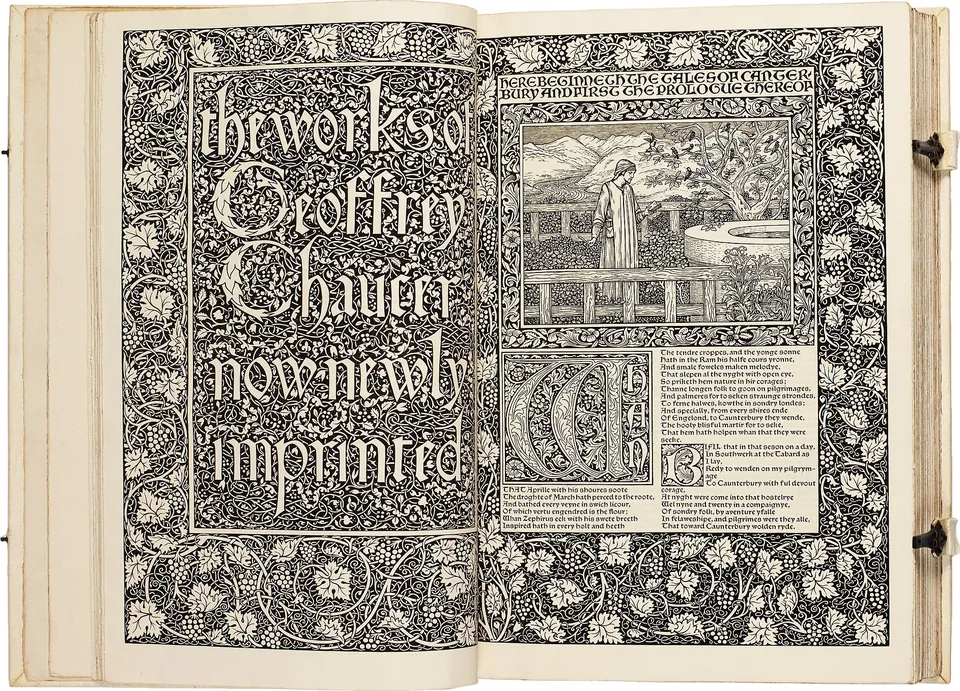
87 woodcut pictures, set in Morris’s own borders.
Why it matters
Morris designed its type, borders and initials himself, set it by hand and printed it on handmade paper, taking early printed books as his model. Reviewers at the time compared its importance with the Gutenberg Bible.
William Morris printed it at his Kelmscott Press in Hammersmith, London, and finished it on 8 May 1896, five months before his death. Edward Burne-Jones drew the 87 pictures, which William Harcourt Hooper cut in wood, and F. S. Ellis edited the text. It is set in Morris’s Chaucer type, a smaller cut of his Troy type, in an edition of 425 copies on paper and 13 on vellum. The copy shown is at the Cantor Arts Center, Stanford.
What to notice
- The titleThe title is cut as white letters on a black ground thick with vine leaves.
- The pictureA Burne-Jones picture, a figure with a book in a fenced garden, in its own frame.
- The initialA large initial W, cut with leaves, opens the Prologue.
3 min read
The full story
A type cut down to fit
Morris and Burne-Jones had been friends since their student days at Oxford. Morris set up the Kelmscott Press in Hammersmith at the start of 1891, and by June of that year he was talking of a Chaucer in a black-letter type he had yet to draw. In January 1892 two trial pages were set in his new Troy type. The letters were too big for so long a text.
In this story
- A type cut down to fit
- Pencil, ink, wood, paper
- Sold before it was printed
- After the press closed

The story continues in the app
- Materials
- Handmade paper or vellum, woodcut pictures and ornament
- Dimensions
- About 43 × 30 cm (V&A copy)
- Edition
- 425 on paper, 13 on vellum
- Type
- Morris’s Chaucer type, with Troy for headings
- In collection
- V&A · Cantor Arts Center, Stanford
Connections
- William Morris
- Edward Burne-Jones
- Kelmscott Press
- Arts and Crafts
- Age of Industry
- Book design
- Paper
- Parchment
- London
Nearby in the archive
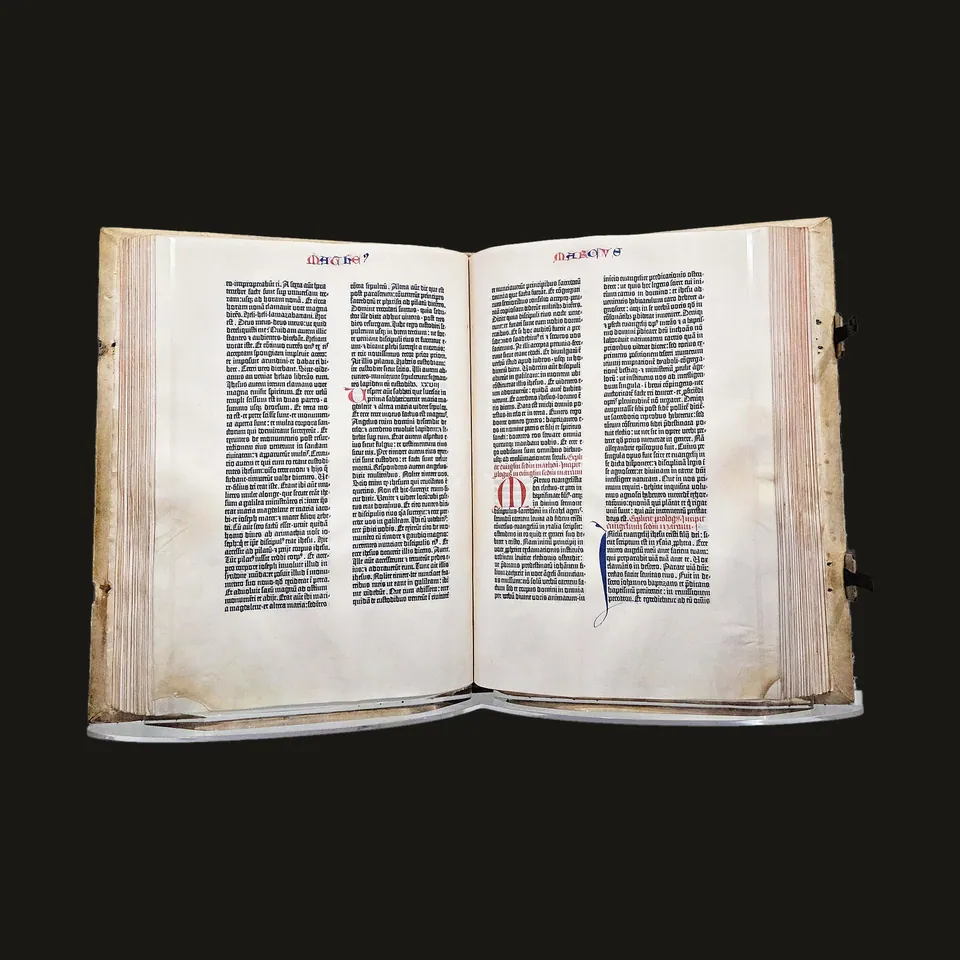 Gutenberg BibleGutenberg · c. 1455 · the kind of book Morris took as his model
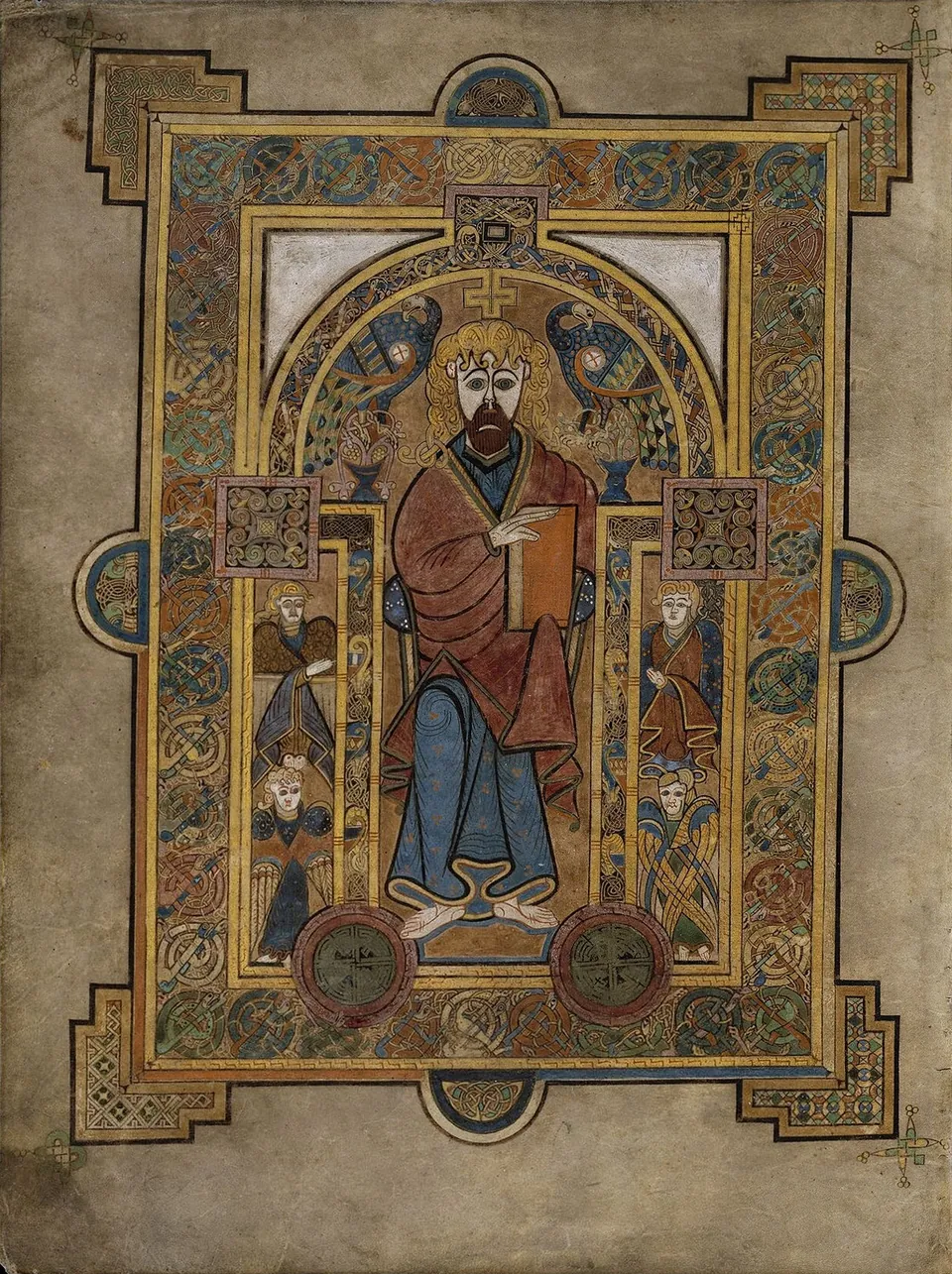 Book of KellsUnknown scribes · c. 800 · another book ruled by its ornament
In collections
Go further
- William Morris, Edward Burne-Jones, and the Kelmscott Chaucer, Duncan Robinson (1982)A short study of how the two men worked together on the book.
- The Kelmscott Press: A History of William Morris’s Typographical Adventure, William S. Peterson (1991)The standard history of the press, with a full account of how the Chaucer was planned, printed and sold.
- The Art and Craft of Printing, William MorrisMorris’s own note on his aims, with Sydney Cockerell’s dated account of every Kelmscott book, including the Chaucer.
- The works of Geoffrey Chaucer now newly imprinted (digitised copy), Boston Public Library, Internet ArchiveA complete scan of one of the 425 paper copies, which can be read page by page.
- William Morris & the book, Liam Sims, Cambridge University Library Special Collections (2021)Shows the library’s vellum copy and the surviving punches, matrices and paper moulds from the press.
Sources
- The works of Geoffrey Chaucer (newly imprinted), L.757-1896, Victoria and Albert Museum
- Kelmscott Press, Cadbury Research Library, University of Birmingham
- The Kelmscott Chaucer, The Victorian Web
- Wikipedia (English), Wikimedia Foundation

