Nº 0116 · Violin
Messiah Stradivarius
Named for the violin everyone expected and nobody saw.
Why it matters
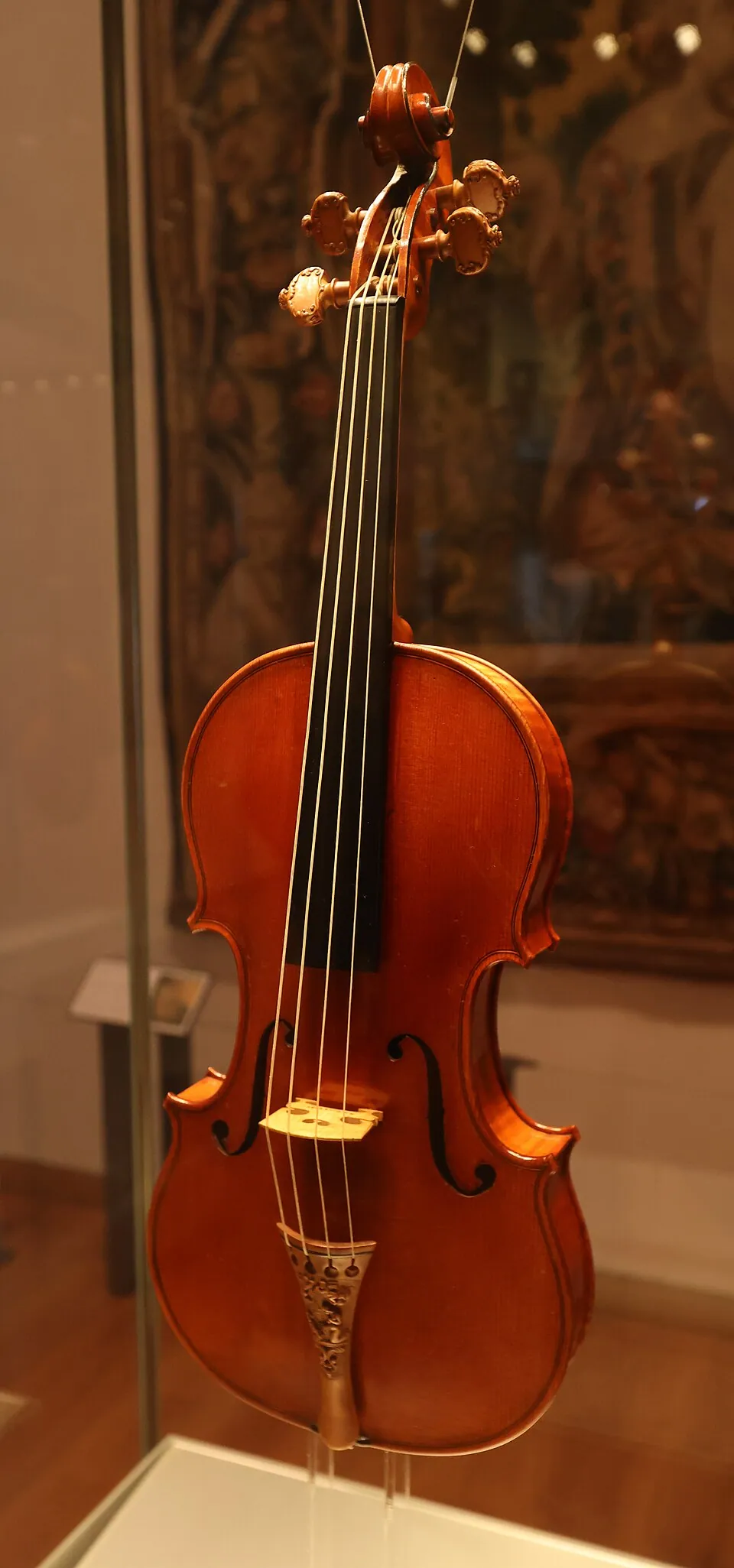
Almost unworn varnish, crisp carving and intact painted edge-work on the scroll show the surface of an early 18th-century Cremonese instrument close to how it left the workshop, the Ashmolean notes. Tree-ring dating published in 2004 supported the attribution to Stradivari, after the many copies made by its owner J.-B. Vuillaume had raised doubts.
Antonio Stradivari made the violin in Cremona in 1716, and it passed from his family to Count Cozio di Salabue in 1775. The dealer Luigi Tarisio owned it from 1827 to 1854 and kept it out of sight; the violinist Delphin Alard is said to have compared it to the Messiah, always expected and never appearing. Vuillaume acquired it in 1855 and displayed it in a glass case. The neck was lengthened and the pegs, bridge and tailpiece replaced in the 19th century, and Alfred and Arthur Hill gave the violin to the Ashmolean in 1939.
What to notice
- The edge of the top at the waistA thin dark line of purfling follows the edge of the top around the corners.
- The varnishLight orange-brown varnish on the spruce top, almost unworn after three centuries.
- The bridge between the f-holesThe bridge, a 19th-century replacement, stands between the f-holes and carries the four strings.
2 min read
The full story
Left unsold in Cremona
The label inside reads 1716, when Antonio Stradivari was about 72 and at work in Cremona. Most of his violins went to courts and noble houses across Europe. This one did not leave the family. It was among the instruments still unsold when he died in 1737.
In this story
- Left unsold in Cremona
- Edges nobody has rubbed
- Talked about, then copied
- A reference kept in Oxford

The story continues in the app
- Materials
- Two-piece maple back, two-piece spruce top, light orange-brown varnish
- Dimensions
- About 59 cm long overall; back 35.6 cm
- Maker
- Antonio Stradivari, Cremona
- In collection
- Ashmolean Museum, Oxford, WA1940.112; given by Alfred and Arthur Hill, 1939
- Status
- Real · museum collection
Connections
Nearby in the archive
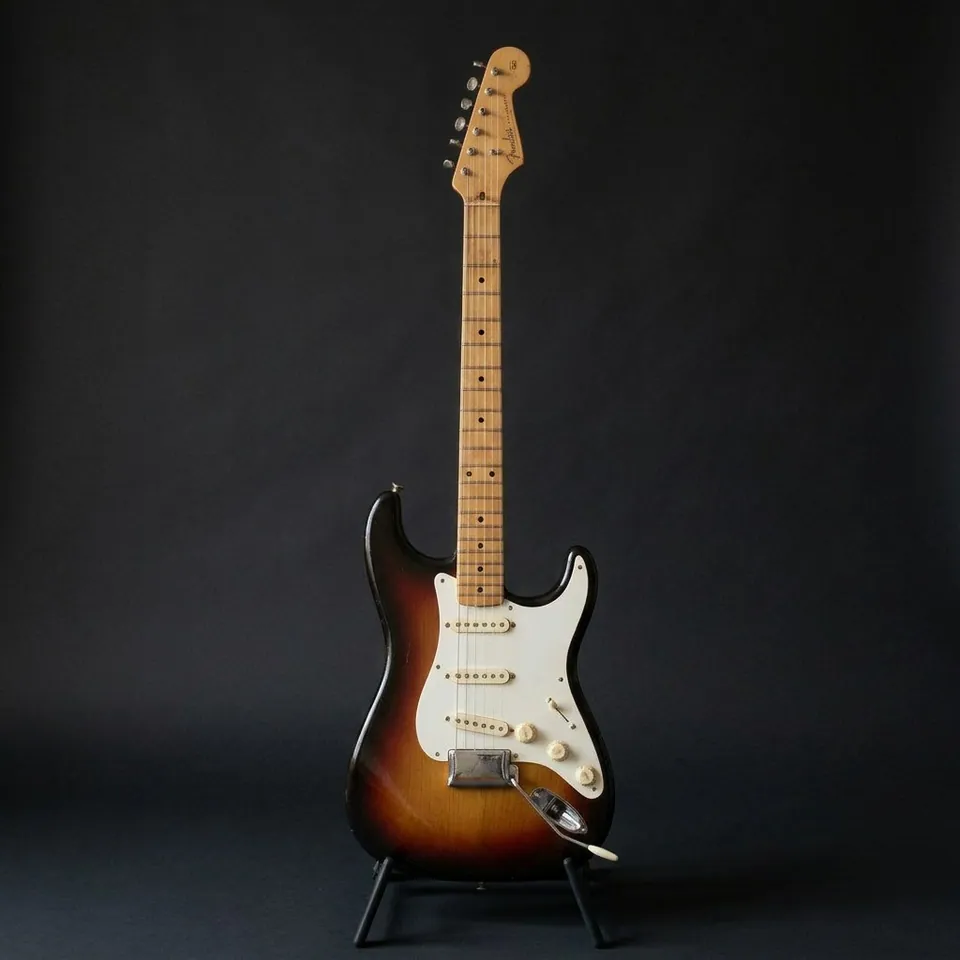 Fender StratocasterFender, Fullerton and Tavares · 1954 · a string instrument made for the factory
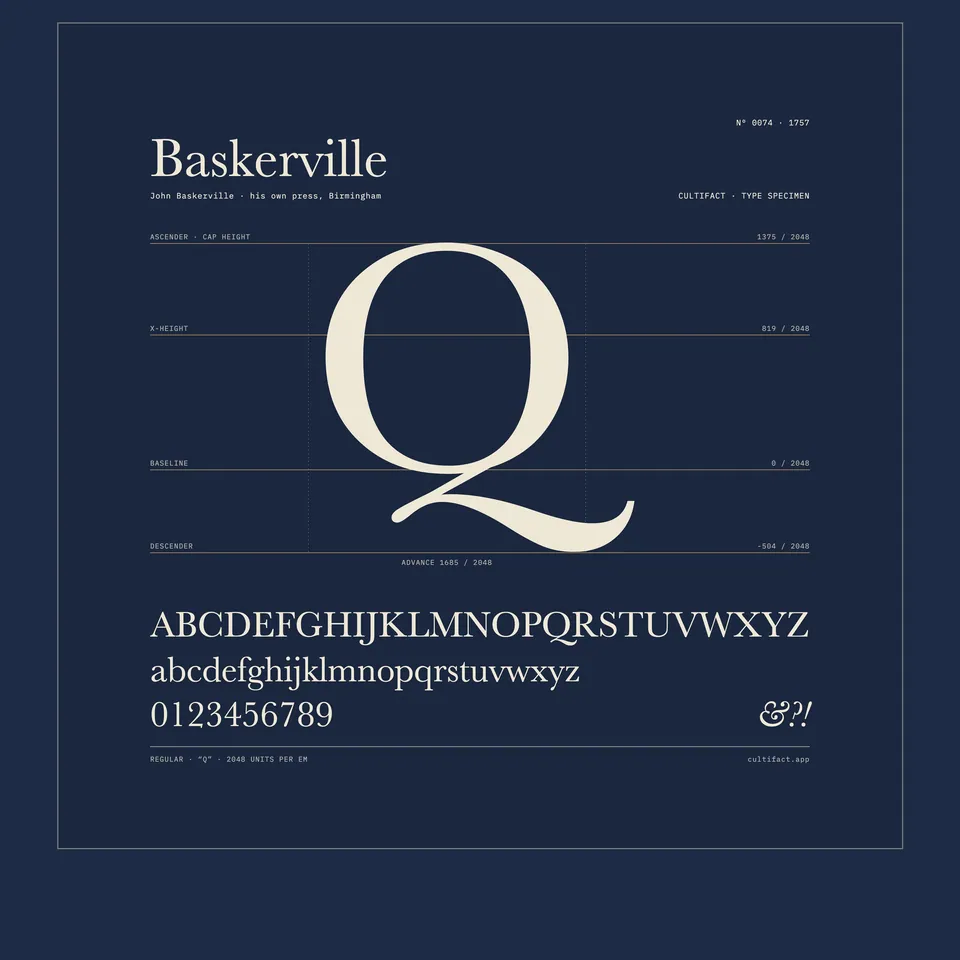 BaskervilleBaskerville · 1757 · another eighteenth-century craft in the atlas
In collections
Go further
- The Salabue Stradivari: A History and Critical Description of the Famous Violin Commonly Called "Le Messie", W. E. Hill & Sons (1891)The dealers’ own monograph, written just after they opened the violin, with its provenance, Count Cozio’s memorandum and a close description.
- Antonio Stradivari, His Life and Work (1644-1737), W. Henry Hill, Arthur F. Hill and Alfred E. Hill (1909)The standard early study of the maker, by the family that later gave the violin to Oxford, scanned in full.
- The Messiah Violin by Antonio Stradivari, WA1940.112, Ashmolean Museum, University of OxfordThe museum record, with photographs and a short account of the violin’s condition and later alterations.
- Antonio Stradivari, Cremona, 1716, the 'Messiah, Messie, Salabue', Tarisio, Cozio ArchiveAn owner-by-owner provenance with measurements and a summary of the arguments over authenticity.
- A dendroarchaeological re-examination of the "Messiah" violin and other instruments attributed to Antonio Stradivari, Henri D. Grissino-Mayer, Paul R. Sheppard and Malcolm K. Cleaveland (2004)The tree-ring study that dated the wood of the top and supported the attribution.
Sources
- Messiah violin, by Stradivari (WA1940.112), Ashmolean Museum, University of Oxford
- Antonio Stradivari, Cremona, 1716, the Messiah, Messie, Salabue, Tarisio, Cozio Archive
- A dendroarchaeological re-examination of the Messiah violin and other instruments attributed to Antonio Stradivari (Journal of Archaeological Science 31, 2004), University of Arizona
- Wikipedia (English), Wikimedia Foundation
- Messiah Stradivarius, Wikipedia

