Nº 0216 · Stacking armchair
Monobloc chair
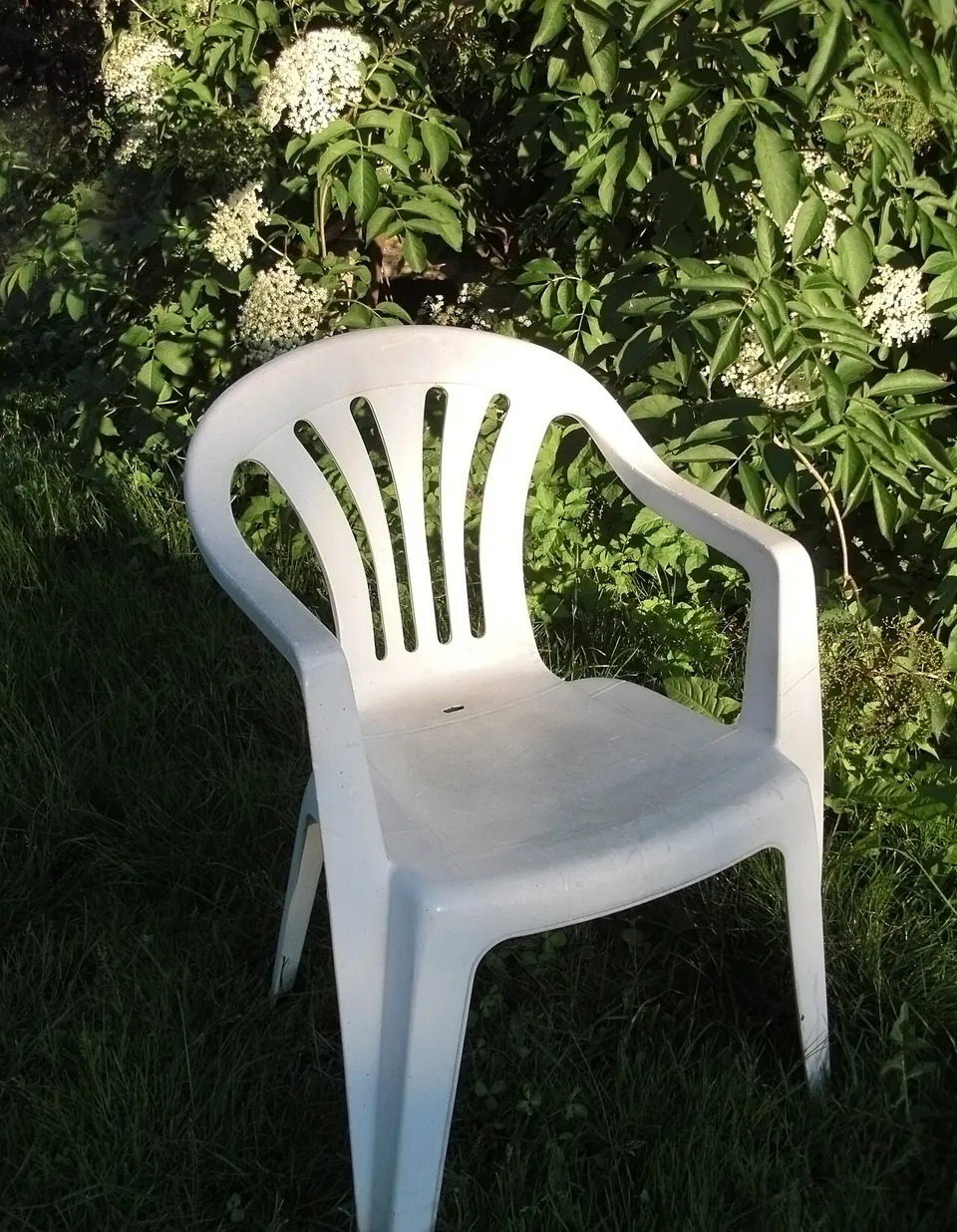
Seat, back, arms and legs moulded in one piece.
Why it matters
The monobloc made a whole chair in one injection of polypropylene, so it could be produced in minutes and, later, by many firms at once. The V&A notes that hundreds of millions have been made by many firms and that the generic chair has no recognisable designer.
The Fauteuil 300 of 1972, by the engineer Henry Massonnet at his firm Stamp in the Ain, is counted among the first chairs moulded in polypropylene in a single step, in under two minutes; Kunstpalast Düsseldorf names Pierre Paulin as his collaborator. Kunstpalast records that up to 1,500 could be made in 24 hours and that it first sold for 300 francs. Earlier plastic chairs, such as the Bofinger chair and Magistretti’s Selene, were moulded from fibreglass, and the V&A says the origin of the anonymous chair sold today is uncertain. The chair in this photograph is a generic monobloc, not a Fauteuil 300.
What to notice
- The slotted backSlots are cut through the back, in the same single moulding.
- The armThe back curves round into the arms with no joint or screw.
- Splayed legsThe legs splay outward so that one chair stacks inside the next.
3 min read
The full story
One material, one piece
Designers had wanted a chair made from a single material since the 1920s, first in sheet metal and laminated wood. Plastics brought the idea within reach. Helmut Bätzner’s Bofinger chair of 1964 to 1965 and Vico Magistretti’s Selene of 1968 were each one piece, but the V&A records that both were pressed from fibreglass by compression moulding. Joe Colombo’s Universale, designed between 1965 and 1967, was an early attempt at injection moulding.
In this story
- One material, one piece
- Two minutes in the mould
- From 300 francs to almost nothing
- A chair without an author

The story continues in the app
- Materials
- Polypropylene, injection moulded in one piece
- Dimensions
- 72.5 × 53.4 × 59 cm (Fauteuil 300, Kunstpalast)
- Maker
- Stamp, Ain, France, from 1972; later many makers
- In collection
- Kunstpalast, Düsseldorf · V&A (a 2016 chair)
- Status
- Real · made worldwide by many firms
Connections
- Henry Massonnet
- Pierre Paulin
- Stamp
- Information Age
- Furniture design
- Plastic
- Nurieux-Volognat
Nearby in the archive
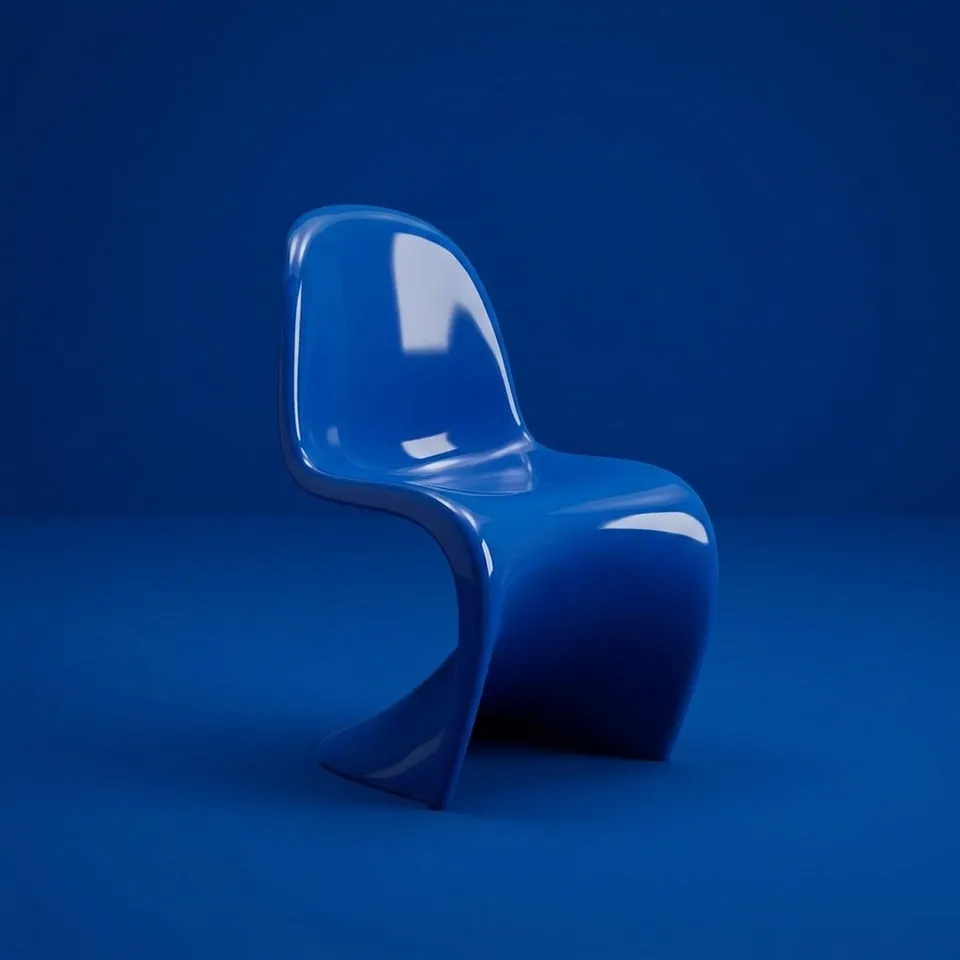 Panton ChairPanton · 1967 · an earlier one-piece plastic chair
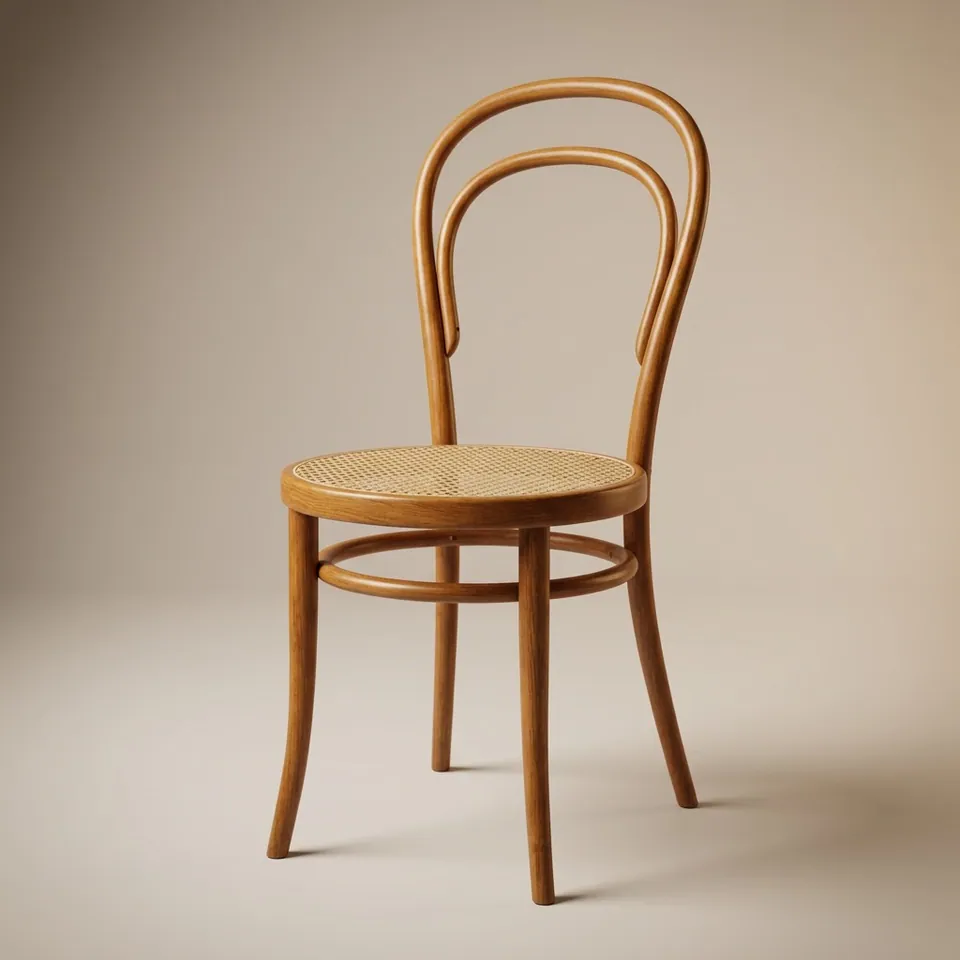 Thonet No. 14Thonet · 1859 · an earlier chair made for mass production
In collections
Go further
- Monobloc, Hauke Wendler (2022)A photobook from eight years of research into the chair, with stills from the film and pictures sent in by people around the world.
- 220°C Virus Monobloc: The Infamous Chair, Arnd Friedrichs (2010)A picture-led study of the chair and of what artists and designers have done with it, published by Gestalten.
- Monobloc, Hauke Wendler (2021)A 90-minute documentary that follows the chair through Europe, North America, Brazil, India and Uganda; this is the distributor’s page.
- Monobloc: A Chair for the World, Vitra Design Museum (2017)The museum’s page for its 2017 exhibition, which traces the type from the 1920s to the Fauteuil 300 and later reworkings.
- HS-011, object W.35-2016, Victoria and Albert MuseumThe record for a generic monobloc made in China in 2016, with the curators’ account of the type’s uncertain origins.
Sources
- Monobloc-Stuhl (Fauteuil 300), 1972, Kunstpalast, Düsseldorf
- HS-011 (Monobloc chair), W.35-2016, Victoria and Albert Museum
- The history of Monobloc plastic chairs on view at Vitra Schaudepot, Inexhibit
- Monobloc: A Chair for the World at Vitra Design Museum, Surface
- Wikipedia (English), Wikimedia Foundation