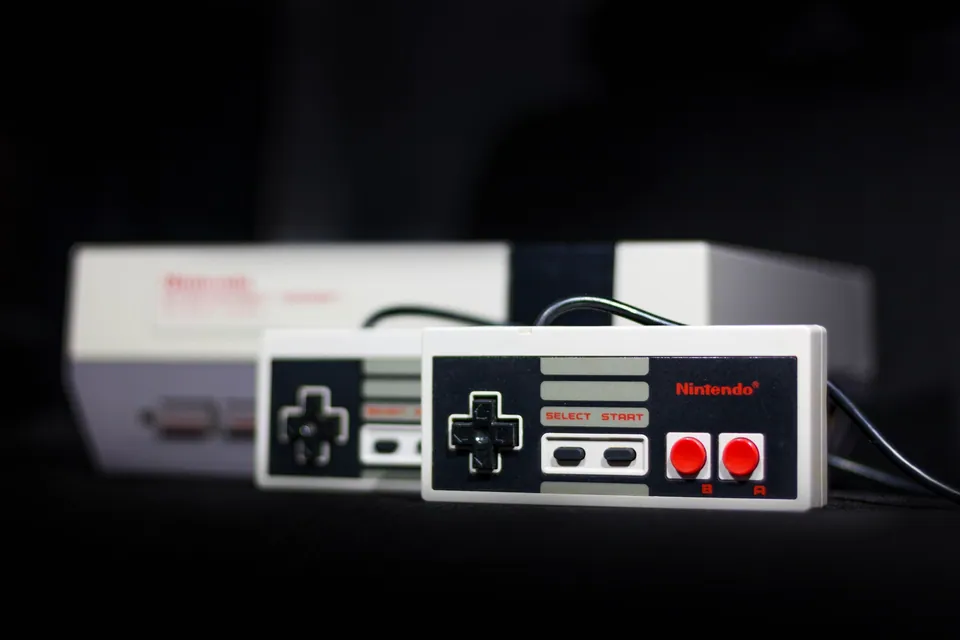
Nº 0200 · Home video game console
Nintendo Entertainment System
The Famicom, rebuilt as a grey front-loader.
Why it matters
It was vital in bringing video games into the home. Its licensing standards and games such as Super Mario Bros revived the market, according to the V&A. For its American launch Nintendo repositioned the console as a toy, as the Video Game History Foundation records.
It was developed from the Family Computer, or Famicom, released in Japan on 15 July 1983 under Masayuki Uemura, head of Nintendo R&D2. For the United States it got a new boxy case, a front-loading cartridge slot in place of the Famicom’s top slot, and the 10NES lockout chip; Lance Barr and Don James of Nintendo of America are credited with the redesign. After prototypes shown at trade fairs in 1985, it went on sale in a New York test market in October 1985 and across the country in September 1986. Launch-era accessories included the Zapper light gun and the robot R.O.B.
What to notice
- The cartridge flapA hinged flap across the front covers the slot; cartridges go in from the front.
- Power and resetTwo grey buttons, POWER and RESET, set into the lower front.
- The controller portsTwo ports, numbered 1 and 2, in a black panel.
2 min read
The full story
Yamauchi’s cheap cartridge machine
In the early 1980s Nintendo made arcade cabinets and the pocket Game & Watch. Under its president, Hiroshi Yamauchi, the engineer Masayuki Uemura led the design of a home console that took its games on cartridges. Yamauchi involved himself in the details, down to the red of the case. The Family Computer went on sale in Japan on 15 July 1983 at 14,800 yen, well under the 20,000 yen rumoured for rival machines.
In this story
- Yamauchi’s cheap cartridge machine
- From computer to toy
- Control Decks and Game Paks
- Sixty-one million consoles

The story continues in the app
- Materials
- ABS plastic, PVC and metal (V&A example)
- Dimensions
- 9 × 25.6 × 20 cm (V&A example)
- Processor
- Ricoh 2A03, 1.79 MHz (NTSC)
- Launch
- New York test market, October 1985
- In collection
- V&A (B.598-2016) · Smithsonian NMAH (2012.0216.01)
Connections
- Masayuki Uemura
- Lance Barr
- Don James
- Nintendo
- Nintendo of America
- Information Age
- Industrial design
- Game design
- Plastic
- Kyoto
Nearby in the archive
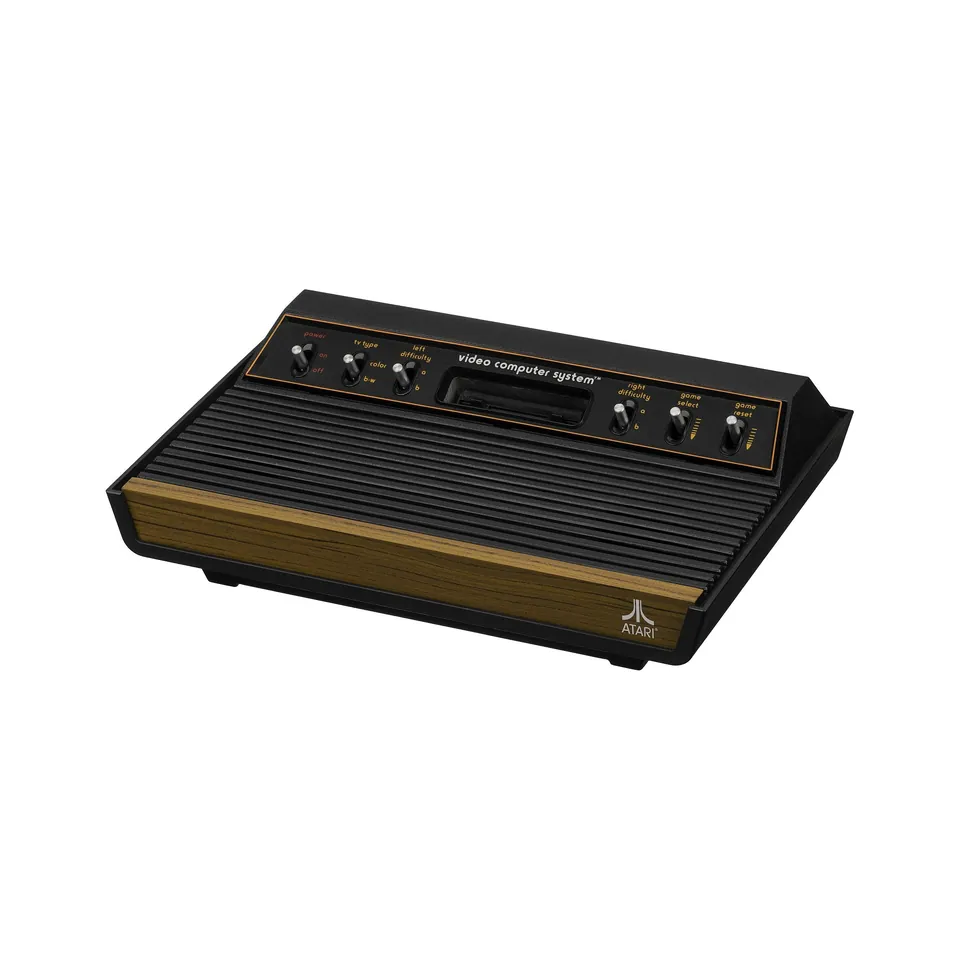 Atari Video Computer SystemAtari · 1977 · the cartridge console that came before
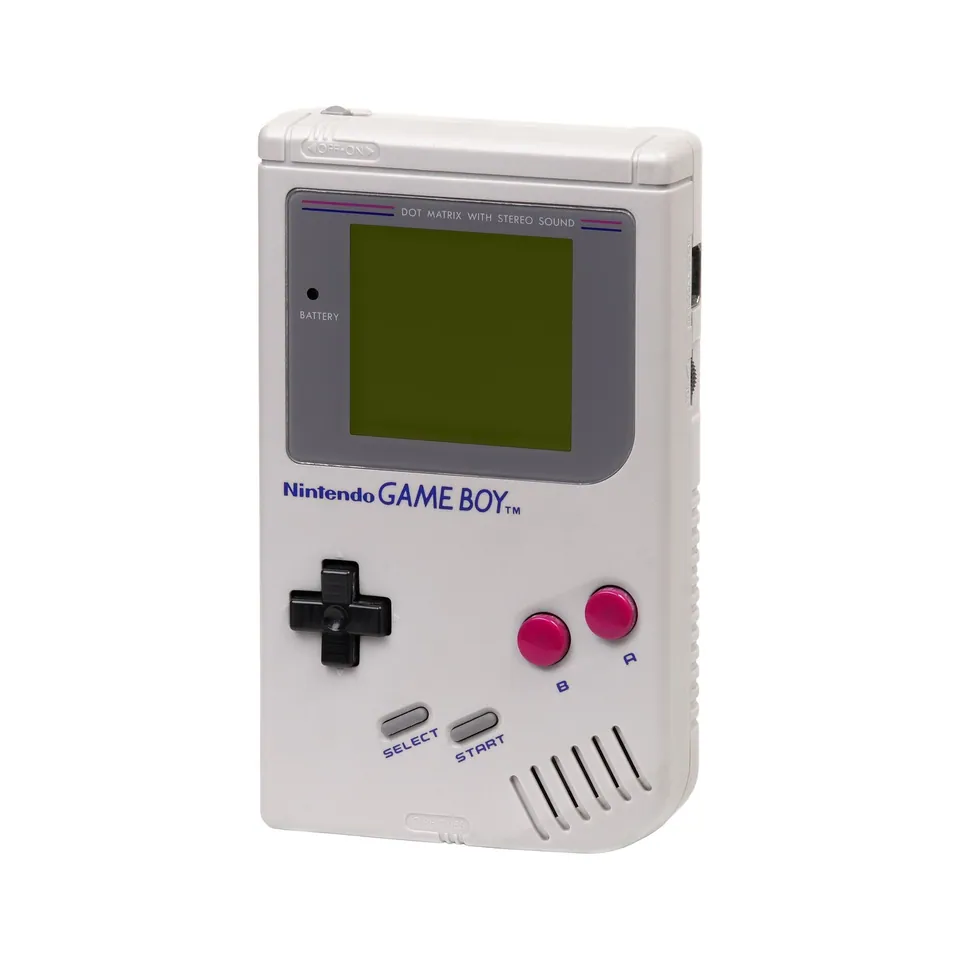 Game BoyNintendo · 1989 · the same company, in the hand
In collections
Go further
- I Am Error: The Nintendo Family Computer / Entertainment System Platform, Nathan Altice (2015)An MIT Press study of the Famicom and NES as hardware, showing how the chips shaped the games written for them.
- The NES Launch Collection, Frank Cifaldi, Video Game History Foundation (2017)Brochures, prototypes and photographs that follow the console through 1985, from the Advanced Video System to the New York launch.
- Nintendo Entertainment System, B.598-2016, Victoria and Albert MuseumThe museum record for a 1985 console, with materials, measurements and a short account of its place in the market.
- Dedicated Video Game Sales Units, Nintendo Co., Ltd.Nintendo’s investor page with its official hardware and software sales totals for each console.
Sources
- Nintendo Entertainment System, B.598-2016, Victoria and Albert Museum
- The NES Launch Collection, Frank Cifaldi, 27 February 2017, Video Game History Foundation
- Nintendo Entertainment System Video Game Console, 2012.0216.01, Smithsonian National Museum of American History
- Wikipedia (English), Wikimedia Foundation

