Nº 0073 · Handheld game console
Game Boy
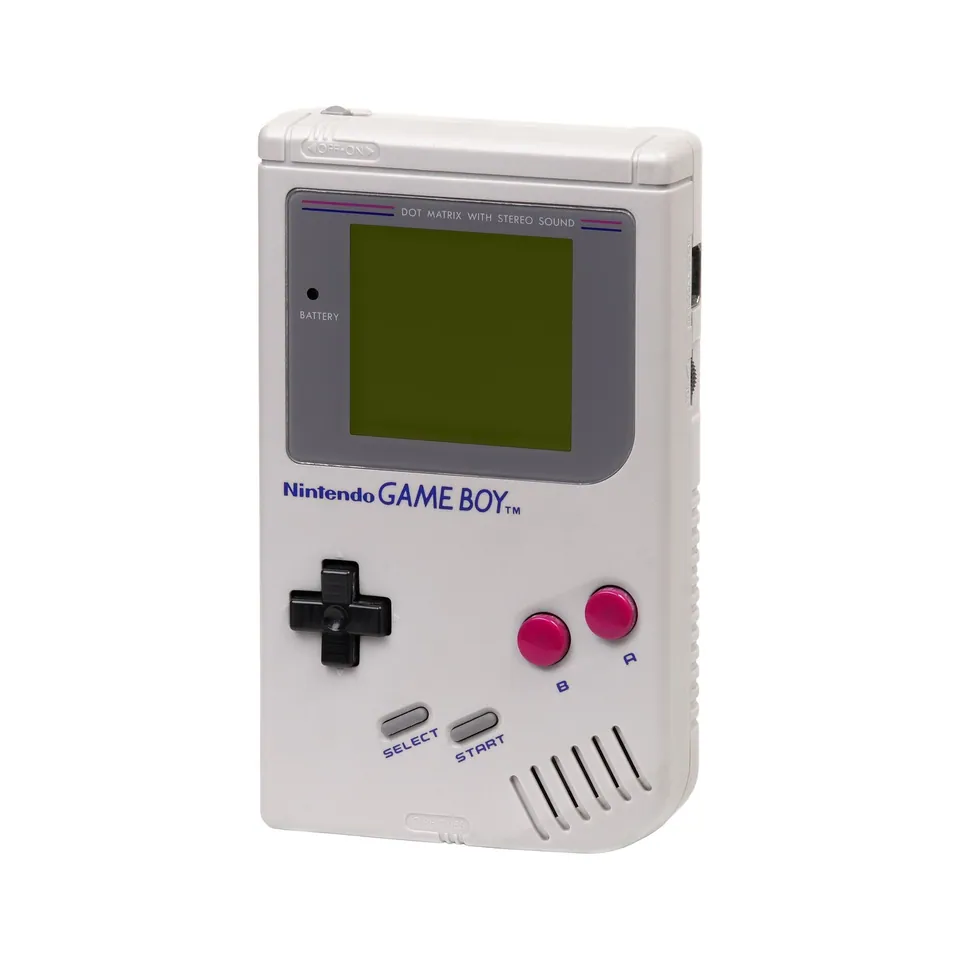
A grey handheld that ran on four batteries.
Why it matters
Its long battery life and low price beat colour rivals that were technically more advanced, Smithsonian Magazine argues. The Science Museum Group calls it a landmark handheld console.
Nintendo released the Game Boy in Japan on 21 April 1989 and in North America later that year. It was developed by Nintendo Research and Development 1 under Gunpei Yokoi, with Satoru Okada leading development, and it followed Nintendo’s Game & Watch handhelds. Games came on interchangeable cartridges, and the model code DMG stands for Dot Matrix Game, the project’s name. Yokoi’s stated approach was to use mature, cheap technology in new ways rather than chase the newest parts.
What to notice
- The battery indicatorA small indicator marked Battery sits to the left of the screen, inside the grey surround.
- The screenA greenish screen that shows four shades, no colour.
- The cross padThe cross-shaped pad, which Smithsonian Magazine credits to Yokoi.
- The side dialOne of two thumbwheels on the sides; the Science Museum lists one for volume, one for contrast.
3 min read
The full story
A cheaper screen, on purpose
By the late 1980s Nintendo’s Research and Development 1 group in Kyoto had spent most of a decade on Game & Watch, pocket machines that each played a single game. Gunpei Yokoi, who ran the group, wanted a successor. His deputy, Satoru Okada, argued for something closer to a portable home console, with games on interchangeable cartridges. Okada has since said that the first idea was a cheap, simple device in the Game & Watch mould, and that he pushed for the more capable design.
In this story
- A cheaper screen, on purpose
- Four shades of green
- Tetris in the box
- Fourteen years on sale

The story continues in the app
- Screen
- Monochrome dot matrix LCD, 160 × 144 pixels
- Power
- Four AA batteries
- Dimensions
- About 148 × 90 × 32 mm
- In collection
- Science Museum Group · Smithsonian, National Museum of American History
- Status
- Real · production ended 2003
Connections
Nearby in the archive
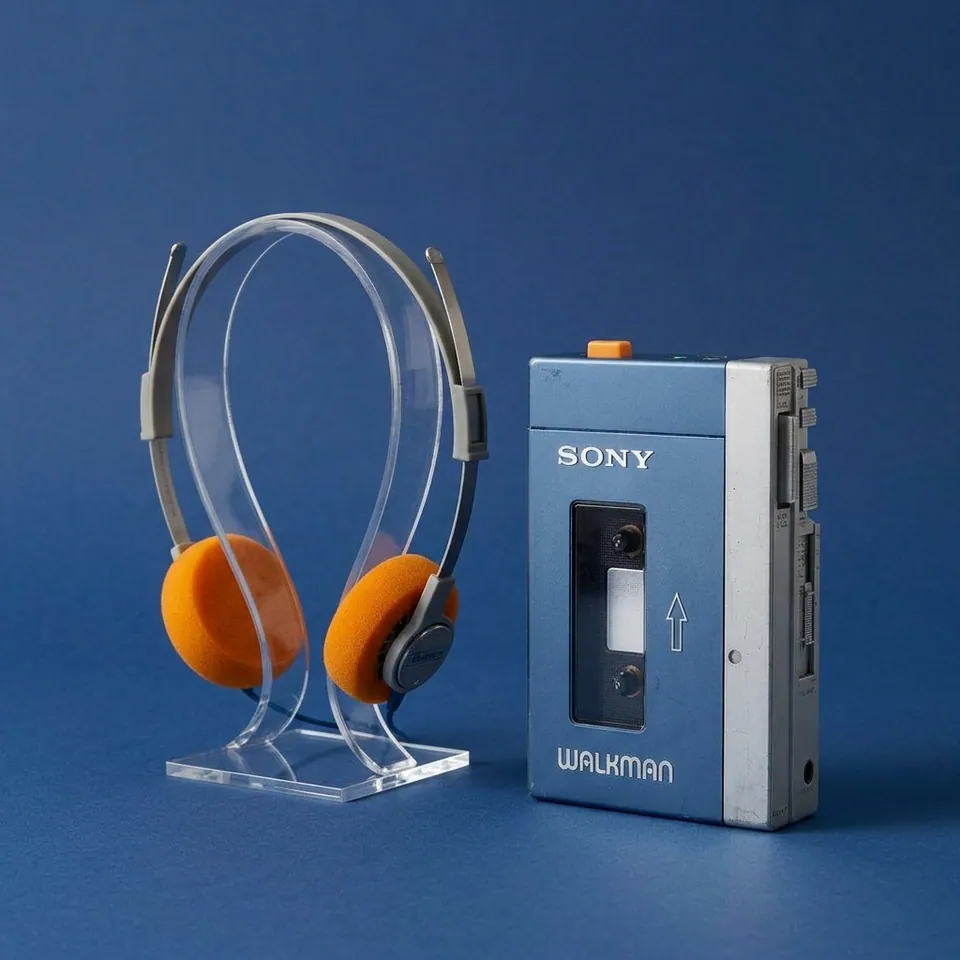 Walkman TPS-L2Sony · 1979 · Japanese electronics for the pocket, ten years earlier
 TetrisPajitnov · 1984 · the game sold with it outside Japan
In collections
Go further
- Game Boy World 1989, XL Edition, Jeremy Parish (2016)A game-by-game survey of everything released for the Game Boy in Japan and the United States in its first year.
- Thirty Years Ago, Game Boy Changed the Way America Played Video Games, David Kindy (2019)A Smithsonian museum specialist explains why cartridges and battery life beat the colour rivals.
- Nintendo Game Boy, object 2009-5025/1, Science Museum GroupThe museum record for a 1989 DMG-01, with photographs, measurements and a short description.
- Nintendo Game Boy, National Toy Hall of Fame, The Strong National Museum of PlayThe 2009 induction entry, which sets out what the museum sees as the reasons for its success.
- Dedicated Video Game Sales Units, Nintendo Co., Ltd.Nintendo’s investor page with its official hardware and software sales totals for each console.
Sources
- Nintendo Game Boy, 2009-5025/1, Science Museum Group
- Thirty Years Ago, the Game Boy Changed the Way America Played Video Games, Smithsonian Magazine
- Game Boy, iFixit
- Wikipedia (English), Wikimedia Foundation
- Game Boy, Wikipedia