Nº 0101 · Temple, now a church
Pantheon
Its dome is as high as it is wide.
Why it matters
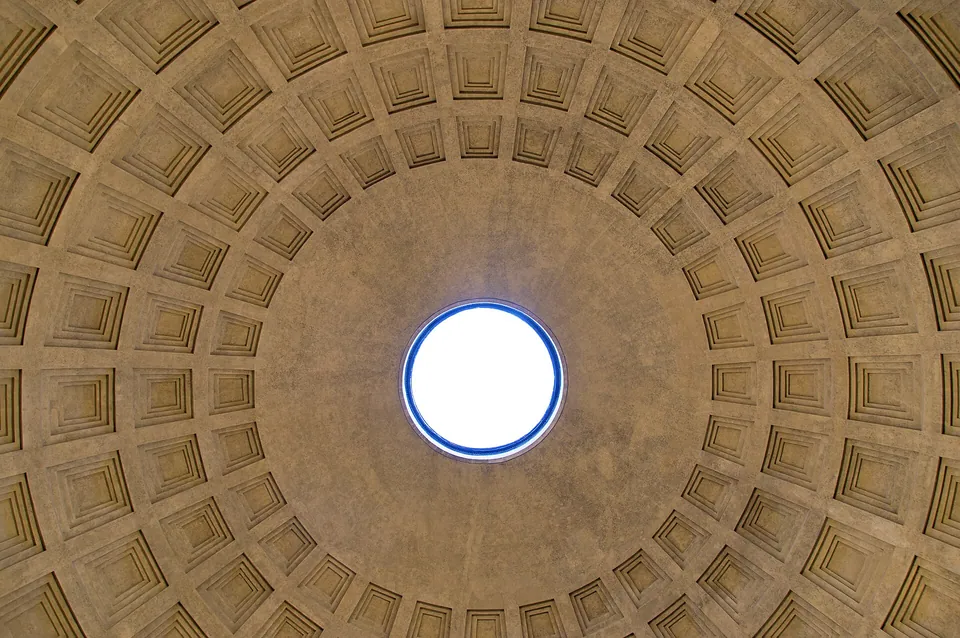
A concrete dome about 43 m across covers a single round room, and the height from the floor to the oculus equals that diameter. The only daylight comes through the open oculus at the top, and the concrete grows lighter towards the crown, which Britannica credits with making such a span possible.
The present building replaced a temple built by Marcus Agrippa, and the inscription on the portico still names him. Brick stamps show that work began under Trajan, about 112 to 114, and it was finished under Hadrian and probably dedicated about AD 126. The architect is not known. It was consecrated as a church in 609, and Raphael is buried inside.
What to notice
- The oculusThe oculus, about 9 m across, is open to the sky and is the only window.
- The coffersRings of sunken square coffers, each smaller than the ring below, rise towards the top.
- The portico columnsGrey granite columns, each about 11.9 m tall, brought from Egypt.
3 min read
The full story
Agrippa’s name, another’s building
The bronze letters across the front say that Marcus Agrippa, consul for the third time, built it. He did build a Pantheon on this spot, in the 20s BC. The historian Cassius Dio, writing long afterwards, records that Agrippa wanted to name it after Augustus and set up his statue inside. Augustus refused both honours, and a statue of Julius Caesar went in instead.
In this story
- Agrippa’s name, another’s building
- Concrete that grows lighter
- Court, church and quarry
- Rain on the floor

The story continues in the app
- Materials
- Roman concrete and brick; granite columns in the portico
- Dimensions
- Dome about 43 m across; oculus about 9 m
- Patron
- Begun under Trajan, finished under Hadrian
- Location
- Piazza della Rotonda, Rome
- Status
- Real · a church in use
Connections
- Antiquity
- Architecture
- Concrete
- Brick
- Stone
- Rome
Nearby in the archive
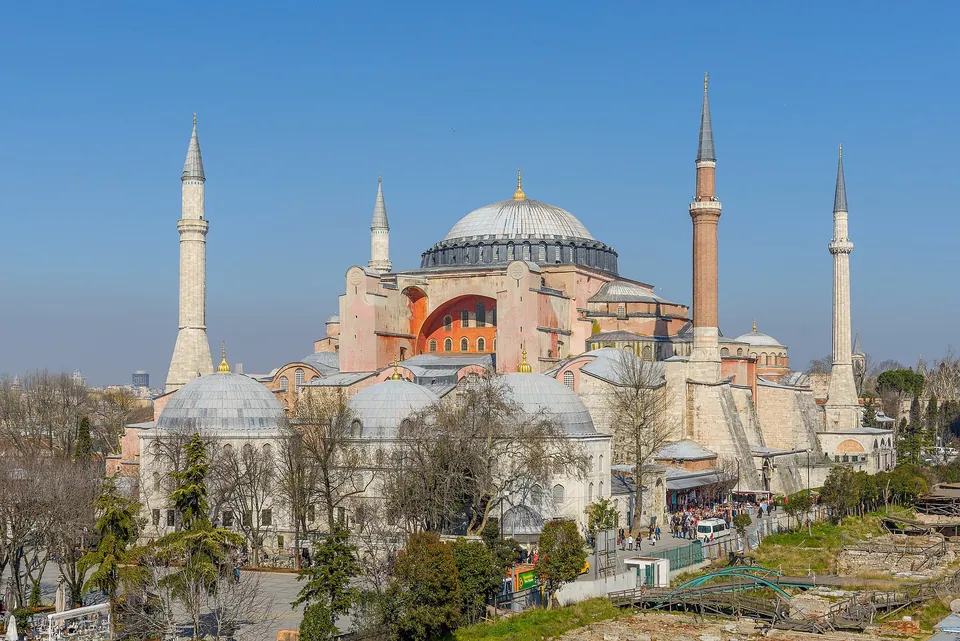 Hagia SophiaAnthemius and Isidore · 537 · a later dome over one great room
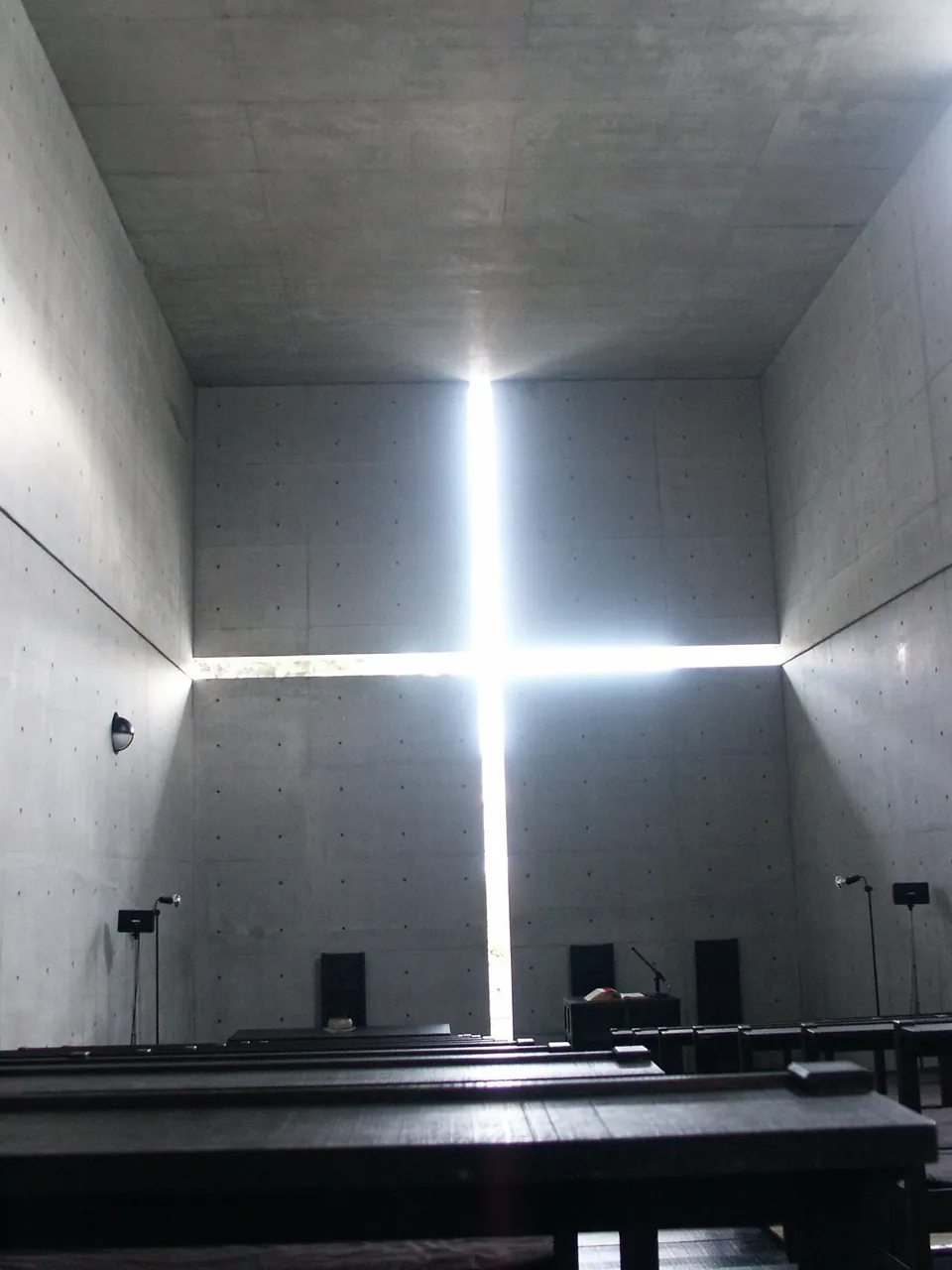 Church of the LightAndo · 1989 · daylight through a single opening
In collections
Go further
- The Pantheon: Design, Meaning, and Progeny, William L. MacDonald (1976)A short, illustrated study of the design, the construction and the long line of domed buildings that copy it.
- The Pantheon: From Antiquity to the Present, Tod A. Marder and Mark Wilson Jones (editors) (2015)Twelve essays by specialists that follow the building from Agrippa to the modern period, including the new dating.
- The Pantheon (Rome), Paul A. Ranogajec, Smarthistory (2015)A clear account of what recent research has changed about the date, the patron and the purpose.
- The Pantheon: From Antiquity to the Present (book review), Rabun Taylor, American Journal of Archaeology (2017)A scholar’s review that sums up the arguments over the brick stamps, the porch and how the dome was centred.
- Cassius Dio, Roman History, Book 53, LacusCurtius, University of ChicagoThe ancient text, in English, that tells of Agrippa’s Pantheon and gives Dio’s guess about its name in chapter 27.
Sources
- Review of The Pantheon: From Antiquity to the Present, edited by Tod A. Marder and Mark Wilson Jones, American Journal of Archaeology
- Pantheon, Encyclopaedia Britannica
- History of the Pantheon in Rome and curiosities to discover, pantheonroma.com
- Wikipedia (English), Wikimedia Foundation

