Nº 0148 · Drum machine
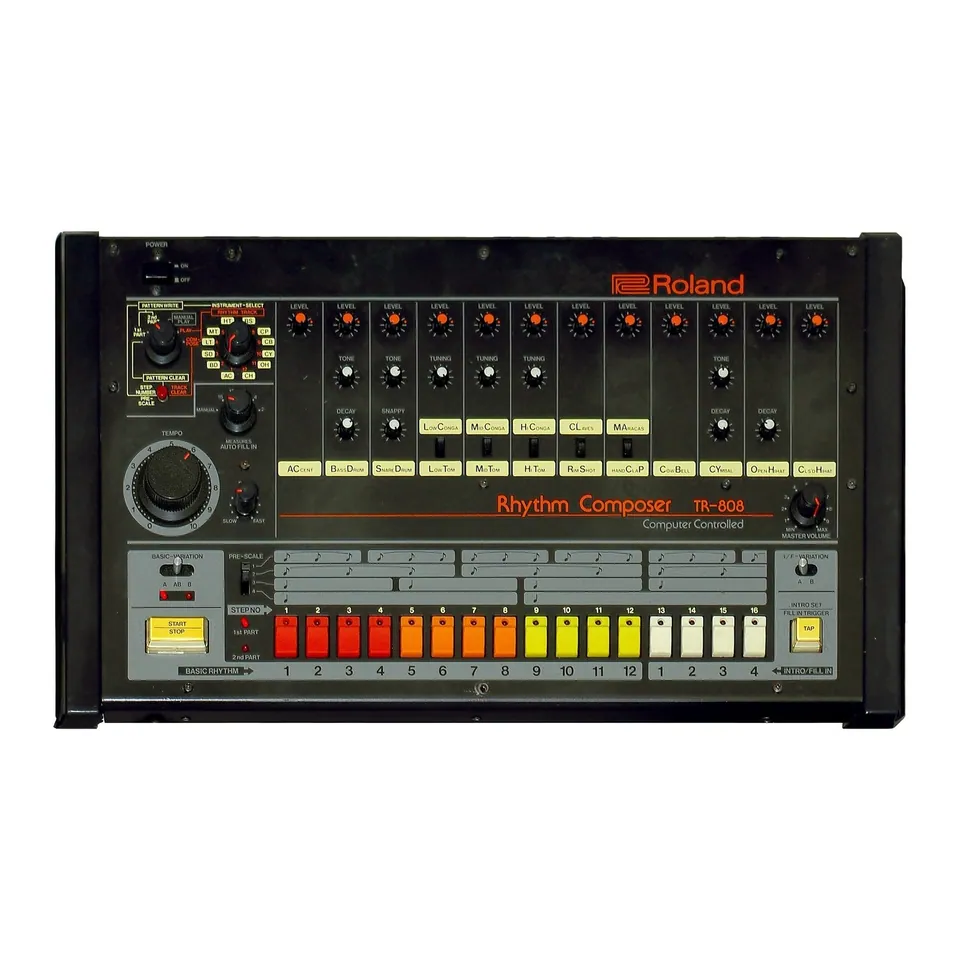
Roland TR-808 Rhythm Composer
Drums built from circuits, not recordings.
Why it matters
Tadao Kikumoto chose to make the drum sounds with analog circuits rather than recorded samples, to keep the cost down, and the result sounded like no acoustic kit. In 2019 Japan’s National Museum of Nature and Science registered it as Future Technology Heritage, the first electronic musical instrument on that list.
Roland launched the TR-808 in 1980. Ikutaro Kakehashi, Roland’s founder, and Don Lewis started the project, and Kikumoto led the engineering from the earlier CR-78; he says the decay control on the bass drum was his own idea. Players could write their own patterns on 16 step buttons, where earlier machines mostly offered presets, and each voice has its own level knob. The Henry Ford holds a 1981 example, serial 238792, about 48 cm wide.
What to notice
- The step buttonsSixteen step buttons in groups of four: red, orange, yellow and white.
- Bass drum controlsLevel, tone and decay for the bass drum; Kikumoto says the decay was his idea.
- The nameRhythm Composer, Computer Controlled, lettered in orange and grey.
3 min read
The full story
A cheaper way to drum
Until 1980 a drum machine was mostly a box that sat on a home organ and played preset rhythms, a waltz or a bossa nova, for the player to follow. Roland, which Ikutaro Kakehashi had founded in Osaka in 1972, already sold one that could be programmed, the CR-78. Kakehashi and Don Lewis, an American musician who worked with him, now asked the engineers for something aimed at professionals: an inexpensive machine with realistic drum sounds.
In this story
- A cheaper way to drum
- Sixteen buttons, one bar
- Too strange for studios
- What an 808 means now

The story continues in the app
- Voices
- 12 analog drum and percussion voices
- Materials
- Black plastic and metal (The Henry Ford example)
- Dimensions
- About 48 × 30 cm (19 × 11.75 in)
- Heritage
- Future Technology Heritage, Japan, 2019
- In collection
- The Henry Ford, Dearborn (1981 example)
Connections
Nearby in the archive
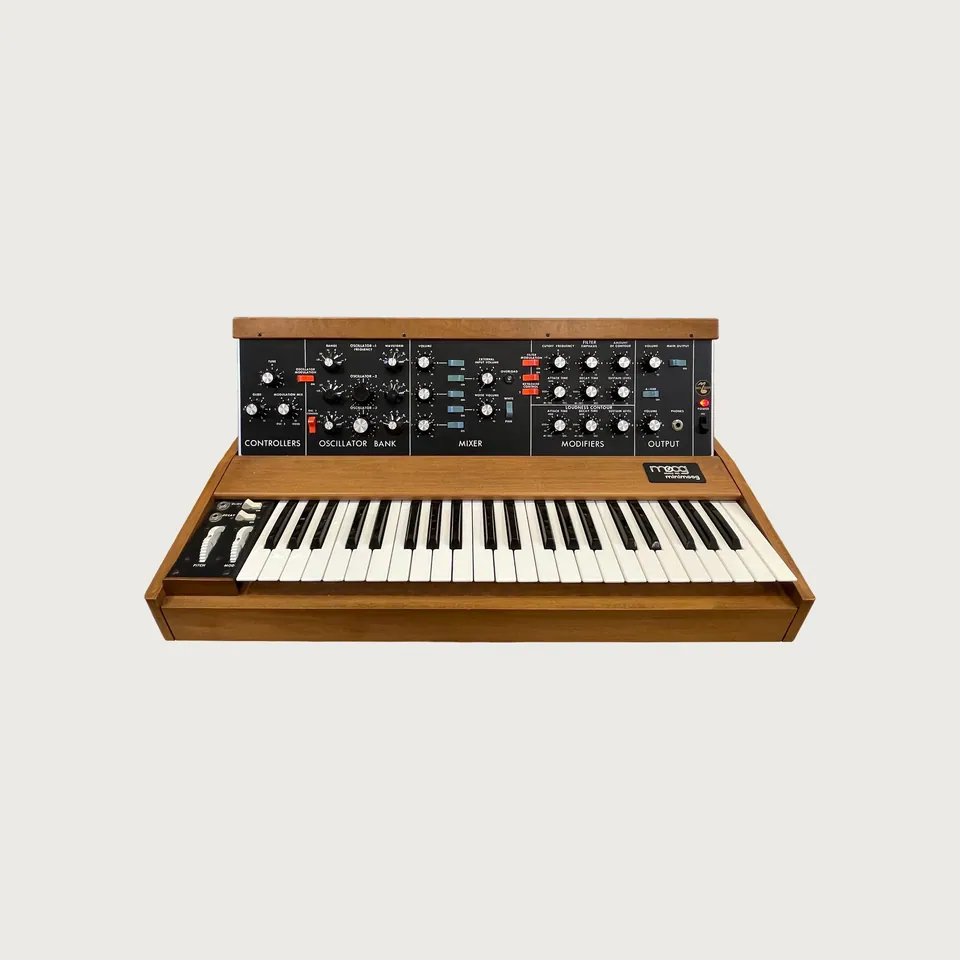 Minimoog Model DMoog · 1970 · analog circuits played from a keyboard
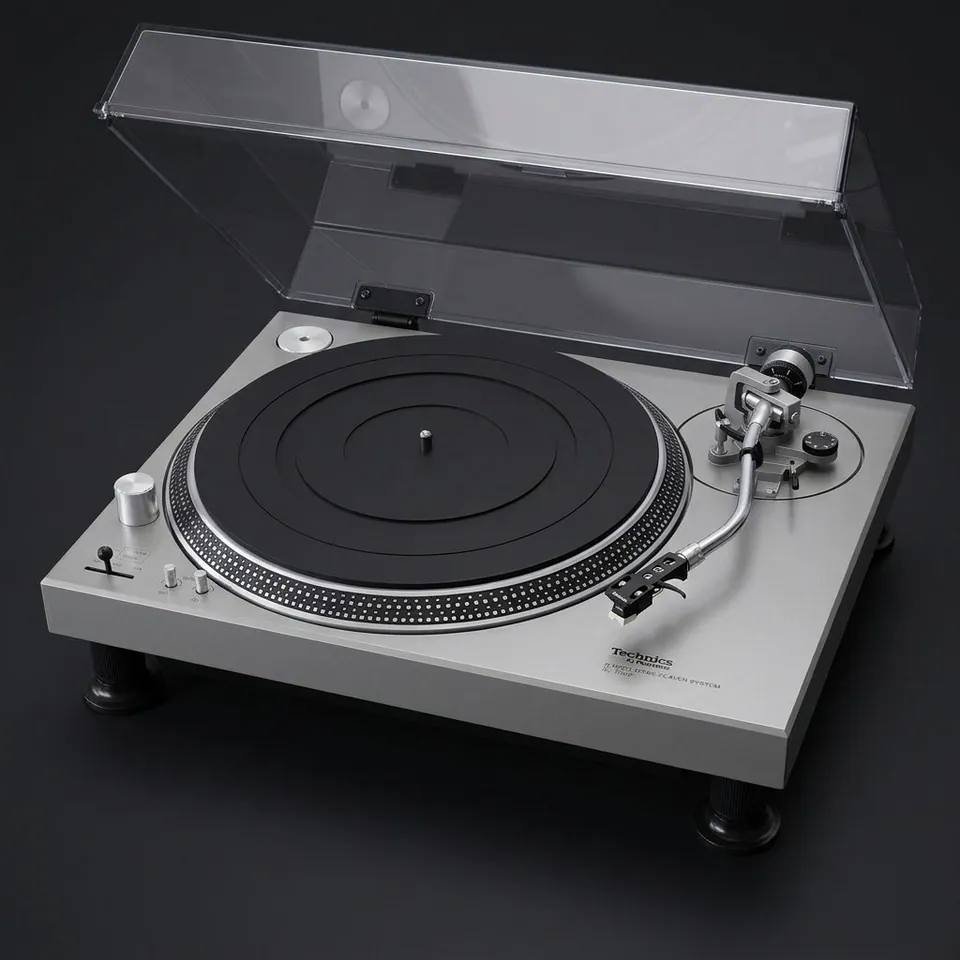 Technics SL-1200Technics · 1972 · another Osaka machine for music
In collections
Go further
- Beat Box: A Drum Machine Obsession, Joe Mansfield (2014)A collector’s pictorial history of drum machines, which sets the 808 among the machines before and after it.
- The 808 Heard Round the World, Chris Norris, The New Yorker (2015)An essay for the machine’s thirty-fifth year on how producers reshaped its bass drum, from Planet Rock to trap.
- The Roland TR-808: the drum machine that revolutionised music, Ben Beaumont-Thomas, The Guardian (2014)Juan Atkins, the Egyptian Lover and Graham Massey of 808 State describe first finding and using the machine.
- Roland TR-808 Rhythm Composer, 1981, object 2018.146.1, The Henry FordThe museum record for a 1981 example, with photographs, materials and measurements.
- The TR-808 Story, Roland CorporationThe maker’s own account of the machine, its engineers and the records made with it.
Sources
- TR-808 registered as Future Technology Heritage (2019), Roland Corporation
- Tadao Kikumoto: an exclusive conversation, Roland Corporation
- Roland TR-808 Rhythm Composer, 1981, The Henry Ford
- Wikipedia (English), Wikimedia Foundation