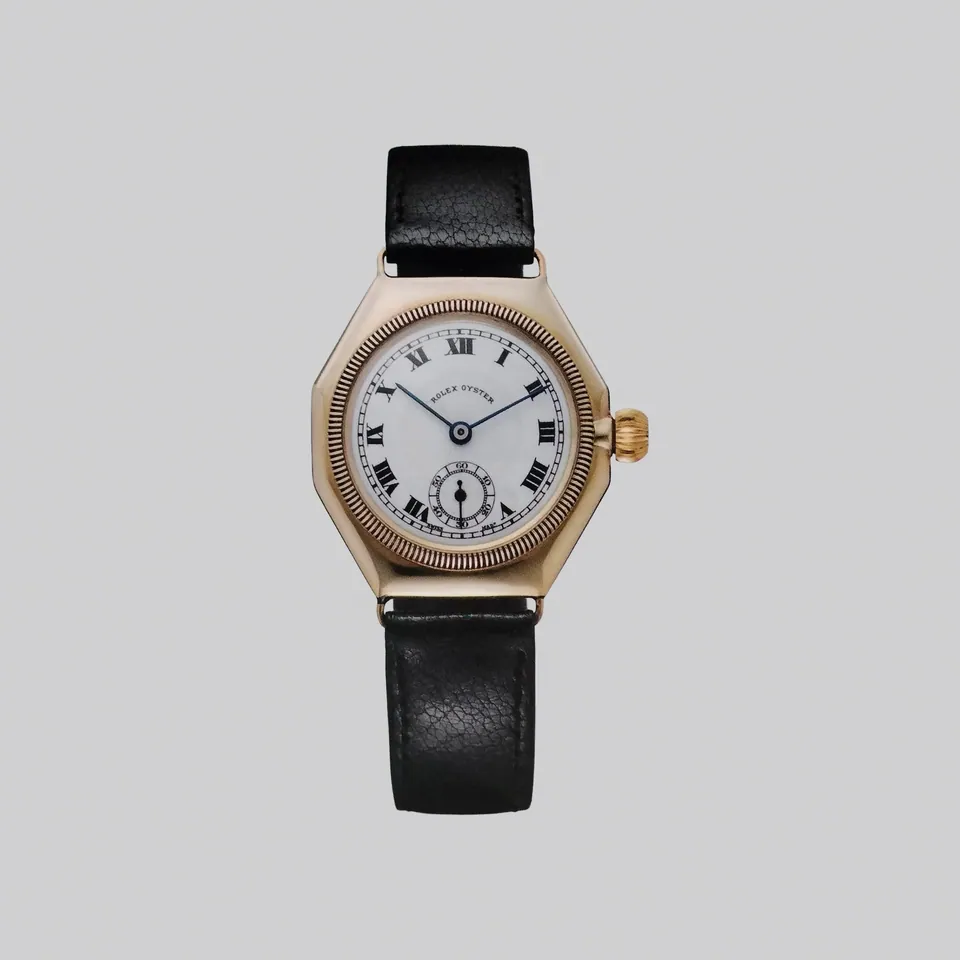
Nº 0108 · Wristwatch
Rolex Oyster
A case that screws shut against water.
Why it matters
The bezel, case back and winding crown all screw down onto the middle case, sealing the movement against water and dust. Rolex kept the name and the sealed case for its self-winding Oyster Perpetual of 1931.
Rolex registered the name Oyster in July 1926, after a Swiss patent for a screw-down crown, filed by Paul Perregaux and Georges Perret, passed to Hans Wilsdorf. In October 1927 the swimmer Mercedes Gleitze wore an Oyster on a ribbon round her neck during a second Channel attempt, abandoned after about ten hours, and the watch was reported to be undamaged. Rolex then ran a full-page advertisement about it on the front of the Daily Mail. The watch photographed, dated from 1929, is in the Deutsches Uhrenmuseum, Furtwangen.
What to notice
- The crownThe winding crown screws down onto the case to seal it.
- The bezelA finely ribbed bezel, one of the three parts that screw together.
- The octagonal caseAn eight-sided case around a round dial marked Rolex Oyster.
3 min read
The full story
A patent from La Chaux-de-Fonds
Hans Wilsdorf was a merchant, not a watchmaker. From 1905 his London firm, Wilsdorf and Davis, sold wristwatches whose movements came from the Aegler factory in Bienne, and by the 1920s it traded from Geneva as Rolex. Dust and damp were the enemies of a watch worn on the wrist. In 1922 Wilsdorf applied for a British patent on a double “hermetic” case and sold watches built that way.
In this story
- A patent from La Chaux-de-Fonds
- A clutch in the crown
- Ten hours in the Channel
- Winding without the crown

The story continues in the app
- Case
- Screw-down bezel, case back and crown
- Patent
- Swiss CH 114948, screw-down crown, granted 1926
- Maker
- Montres Rolex S.A., Geneva
- In collection
- Science Museum Group (1926) · Deutsches Uhrenmuseum (1929)
- Status
- Real · the Oyster name still in use
Connections
Nearby in the archive
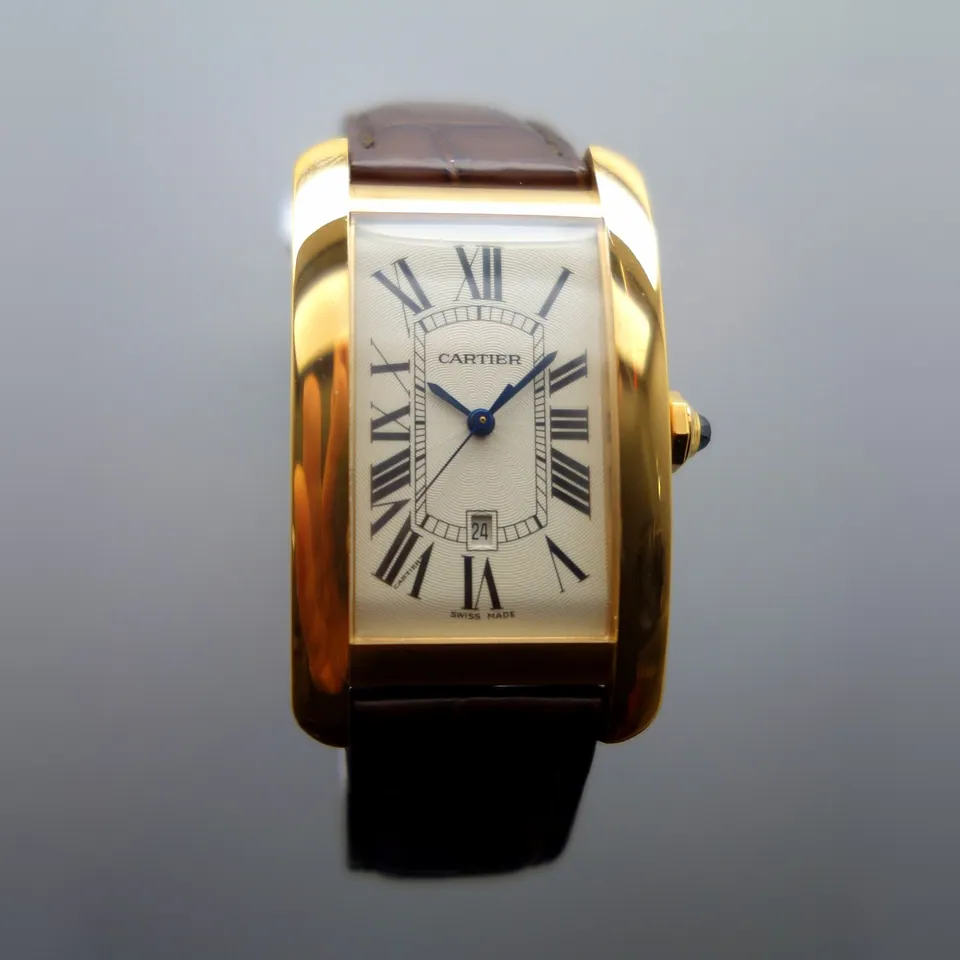 Cartier TankCartier · 1917 · a wristwatch of the same years, shaped instead of sealed
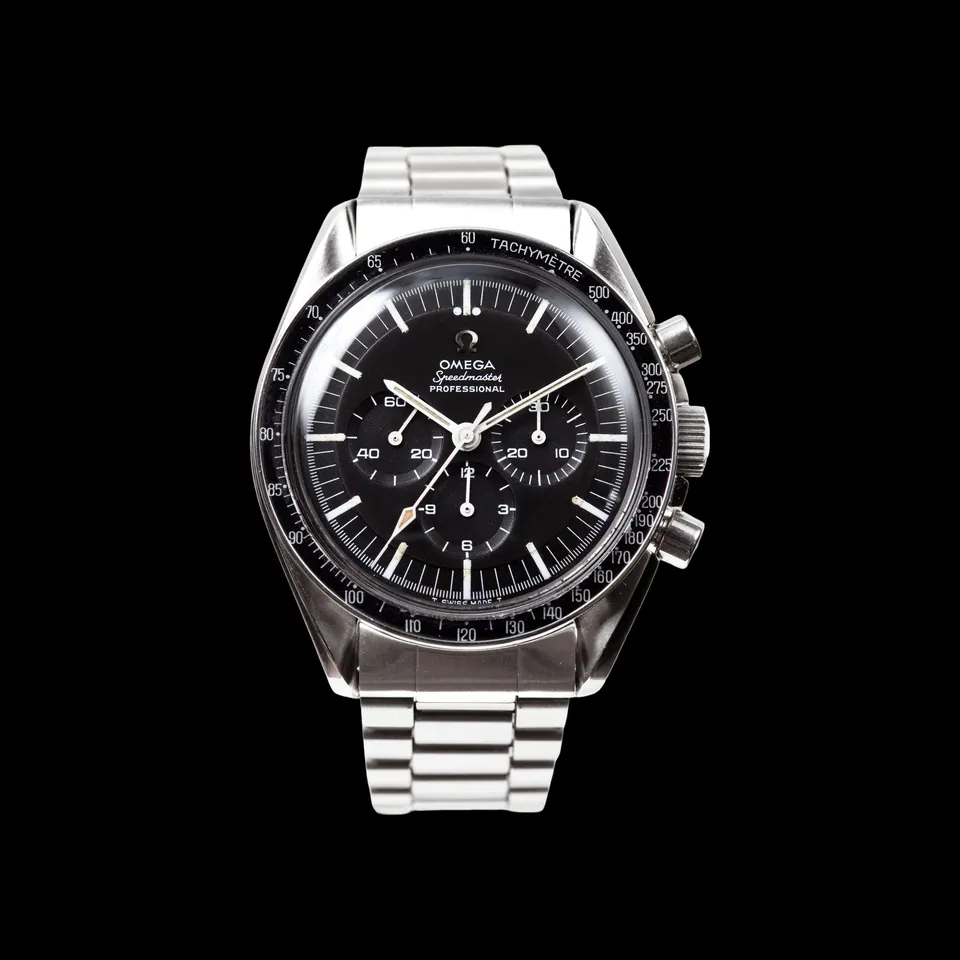 Speedmaster ProfessionalOmega · 1957 · a later steel watch built for hard use
In collections
Go further
- The Best of Time: Rolex Wristwatches, James M. Dowling and Jeffrey P. Hess (1996)An unauthorised history of the firm and its watches, cited by later researchers for its evidence on the earliest Oysters.
- In the Wake of Mercedes Gleitze, Doloranda Pember (2019)A biography of the swimmer written by her daughter.
- The Rolex Oyster, David Boettcher (2017)A close reading of the Swiss and British patents that dates the first Oysters to the winter of 1926 to 1927.
- Rolex “Oyster” waterproof wrist-watch, object 1966-373, Science Museum GroupThe museum record for a steel Oyster case of 1926, given by Montres Rolex S.A.
- Rolex “Oyster Perpetual” wristwatch, 1931, object 1966-374, Science Museum GroupThe record for the self-winding successor, with a glass back that shows the rotor.
Sources
- Rolex “Oyster” waterproof wrist-watch, 1966-373, Science Museum Group
- Rolex “Oyster Perpetual” wristwatch, 1931, 1966-374, Science Museum Group
- The Rolex Oyster, VintageWatchStraps
- Waterproof Rolex worn by first British woman to swim the Channel up for auction, ITV News Meridian
- Wikipedia (English), Wikimedia Foundation
- Wikimedia Commons
- Oyster Story, Rolex

