Nº 0213 · Fastener
Safety pin
One piece of wire: pin, spring and catch.
Why it matters
Hunt made a pin whose own spring holds its point inside a catch, so it fastens without pricking the wearer. MoMA put safety pins among its humble masterpieces in 2004.
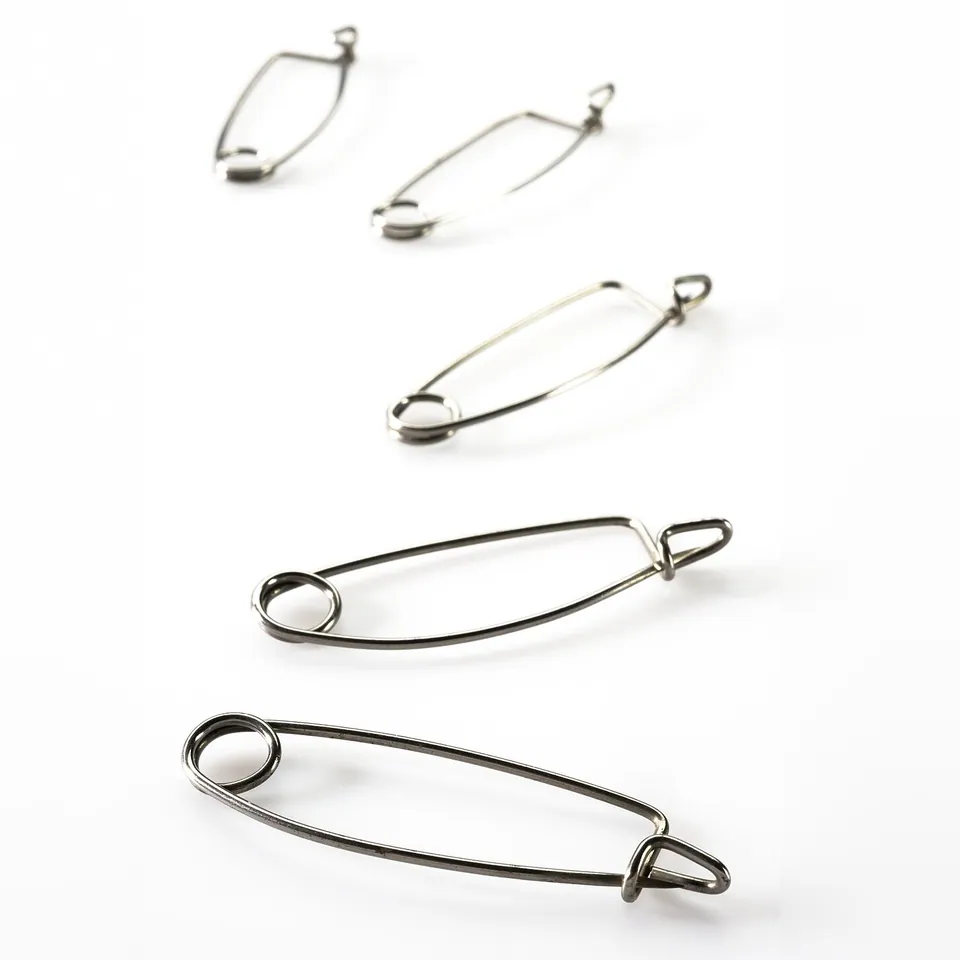
Walter Hunt, a New York mechanic, patented the Dress-Pin on 10 April 1849, describing it as one piece of wire or metal that combines a spring with a clasp or catch. He argued that it had no joint to break and no pivot to wear. He is reported to have made it to pay off a debt of 15 dollars, and he sold the rights for 400 dollars. The pins in these photographs are later museum examples, plated steel pins made in Europe between 1880 and 1920, and a Down Bros. trade card of shield pattern pins.
What to notice
- The coilA turn of wire at one end works as the spring.
- The catchThe point springs into a hooked catch and is shielded there.
- A pressed headLater shield pattern pins add a pressed metal head over the catch.
2 min read
The full story
A debt and a length of wire
Walter Hunt was born in upstate New York in 1796, farmed at Lowville, and took out his first patent in 1826 before moving to New York City. By 1849 he had designed a rope-making machine, a fountain pen and a working sewing machine, and he was short of money. The National Inventors Hall of Fame records that the pin came from twisting an ordinary piece of wire while he worried over a debt of 15 dollars.
In this story
- A debt and a length of wire
- Spring, bar and catch
- Sold before it was printed
- From nursery to lapel

The story continues in the app
- Materials
- One piece of wire or metal (patent); plated steel in the pins shown
- Patent
- US 6,281, Dress-Pin, 10 April 1849
- Pictured
- Steel safety pins, Europe, 1880 to 1920
- In collection
- Science Museum Group, London (A86030)
- Status
- Real · no 1849 original known in a public collection
Connections
- Walter Hunt
- Industrial Revolution
- Industrial design
- Steel
- New York
Nearby in the archive
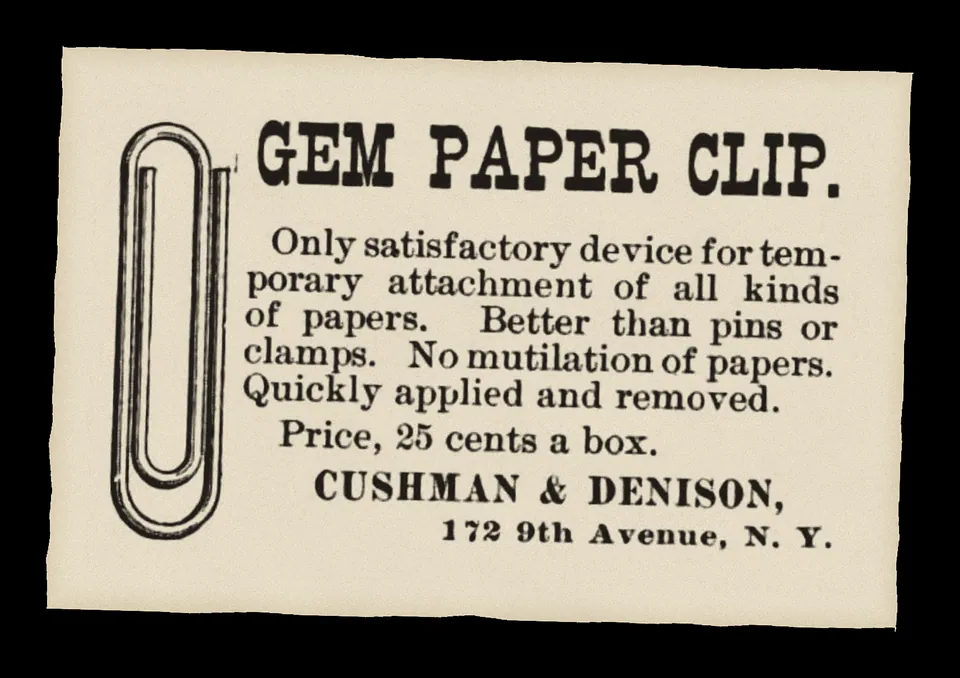 Gem paper clipMaker unknown · 1892 · another fastener bent from one wire
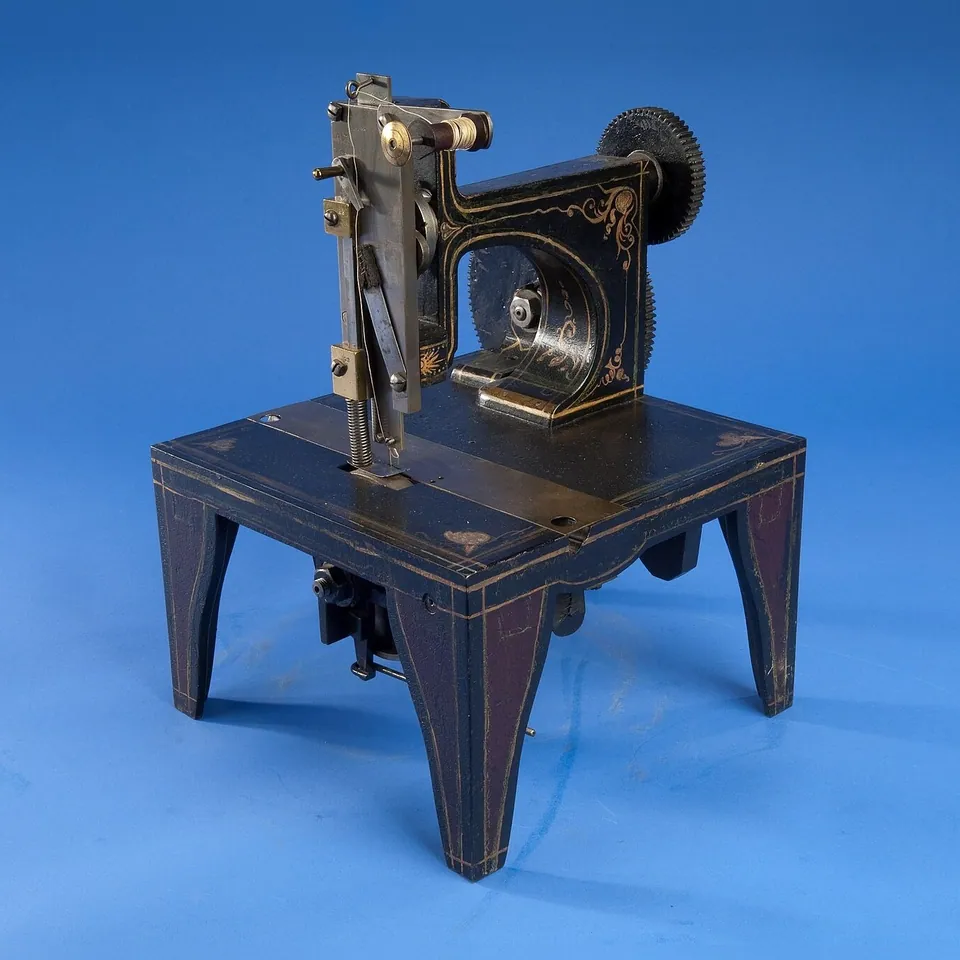 Singer sewing machineSinger · 1851 · Hunt had built a lockstitch sewing machine years before
In collections
Go further
- Necessity’s Child: The Story of Walter Hunt, America’s Forgotten Inventor, Joseph Nathan Kane (1997)The only full biography of Hunt, published by McFarland, covering the pin, the sewing machine and his other patents.
- US Patent 6,281, Dress-Pin, Walter Hunt (1849)The full specification and drawings, with Hunt’s own account of what the pin does and what he claimed.
- Walter Hunt, Safety Pin, National Inventors Hall of FameThe 2006 inductee entry, with a short life of Hunt and the story of the 15 dollar debt.
- Bunch of steel safety pins, Europe, 1880 to 1920, object A86030, Science Museum GroupThe museum record for the pins pictured here, with photographs, measurements and a note on their use by hospital nurses.
- Humble Masterpieces: Everyday Marvels of Design, Paola Antonelli (2005)One hundred small everyday objects chosen by the curator who organised the 2004 exhibition of the same name at MoMA.
Sources
- US Patent 6,281, Dress-Pin, Walter Hunt, 10 April 1849, United States Patent Office (Google Patents)
- Bunch of steel safety pins, Europe, 1880 to 1920, A86030, Science Museum Group
- Band-Aid and safety pin history, National Inventors Hall of Fame
- Humble Masterpieces, press release, March 2004, The Museum of Modern Art
- Wikipedia (English), Wikimedia Foundation