Nº 0207 · Rocking chair
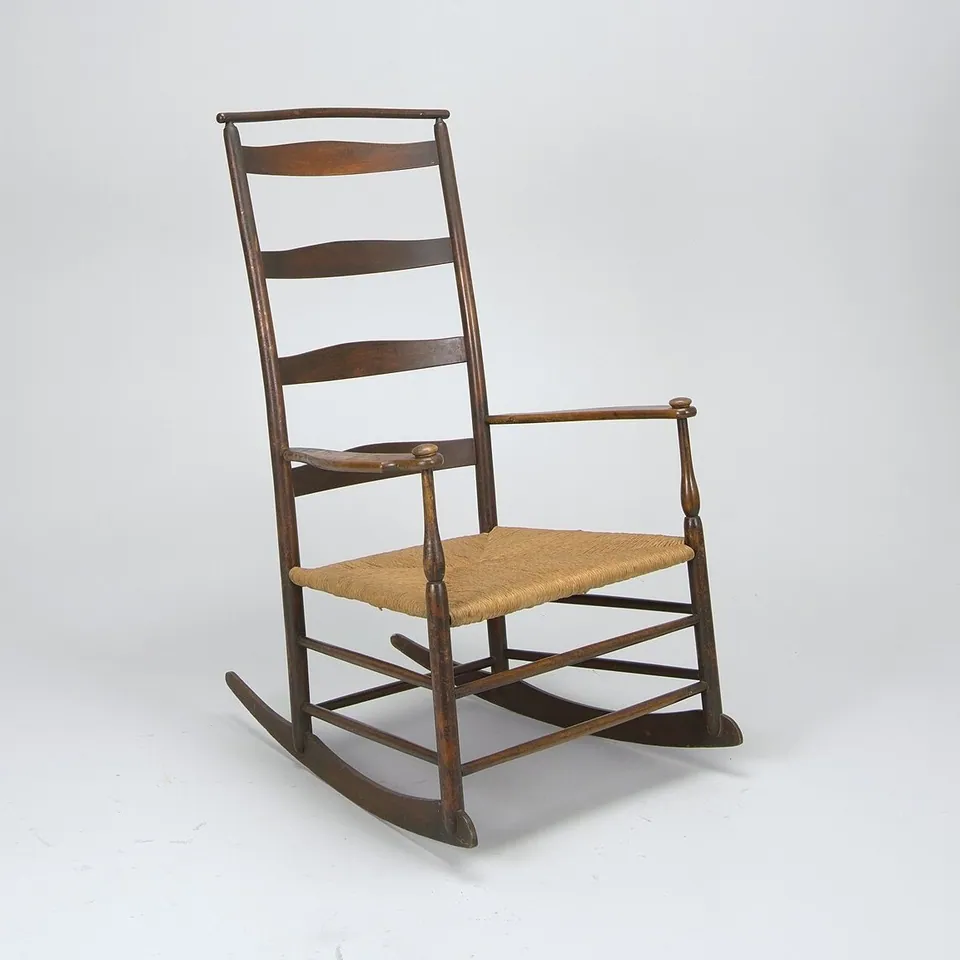
Shaker No. 7 rocking chair
Eight numbered sizes from a Shaker chair factory.
Why it matters
By the 1870s the Shakers at Mount Lebanon ran chairmaking as a factory, with standard sizes and interchangeable parts, and sold the chairs by catalogue and through stores. The New Britain Museum of American Art compares the operation to gun-making in the Connecticut Valley, yet the chair kept the plain slat-back form of earlier Shaker chairs.
The South Family of the Shaker village at Mount Lebanon, New York, built a chair factory in 1872 and sold chairs in eight numbered sizes, No. 0 to No. 7, the largest. For each number the front and rear posts, stretchers and back slats were interchangeable, and illustrated catalogues followed from 1874. The brethren made the wooden parts and the sisters wove the seat tapes. The earliest dated No. 7, now at the Shaker Museum, was bought in 1873 by Mary Marvin Olcott of Albany.
What to notice
- Four back slatsFour wide, gently curved slats between two tall back posts.
- The cushion railA turned rail across the top of the back posts, for a cushion or shawl.
- Arm and knobA flat arm on a turned front post that ends in a small round knob.
- Stretchers and rockersTurned stretchers tie the legs together above two long rockers.
3 min read
The full story
A factory for Elder Robert
Shakers at New Lebanon, New York, were making chairs within two years of founding their community in 1787, first for their own rooms and then for sale. By about 1850 chairmaking had become a business of the village’s Second Family, and in 1852 one of its members patented a tilting foot for the back legs of side chairs. The South Family was separated from the Second in 1863, with Brother Robert Wagan as its trustee.
In this story
- A factory for Elder Robert
- Parts by the number
- By post and in stores
- Imitators and a gold transfer

The story continues in the app
- Sizes
- Eight, No. 0 to No. 7; No. 7 is the largest
- Materials
- Maple or cherry frame; woven tape or rush seat
- Maker
- South Family chair factory, Mount Lebanon, New York
- Marks
- Gold Shaker trademark decal; stamped MT. LEBANON, N.Y.
- In collection
- Shaker Museum, Chatham · Cooper Hewitt · MFA Boston · American Folk Art Museum
Connections
Nearby in the archive
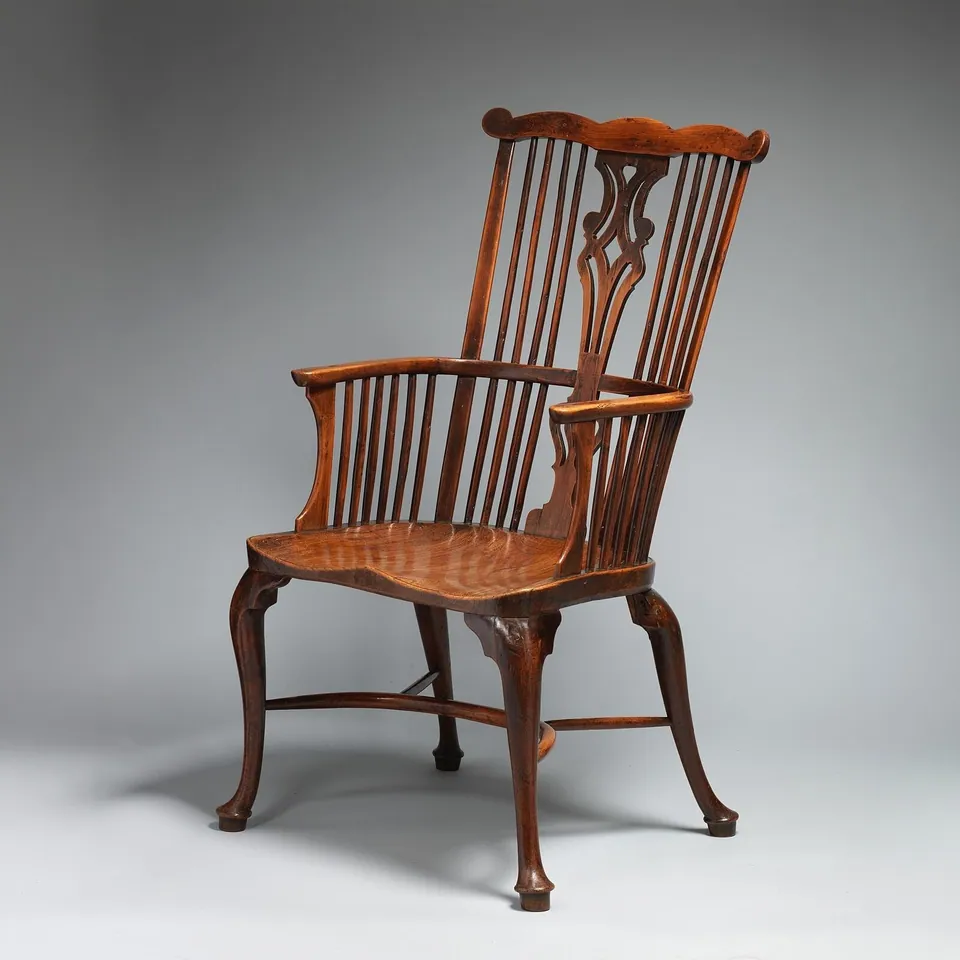 Windsor chairMakers unknown · c. 1720 · an older chair type of turned wood
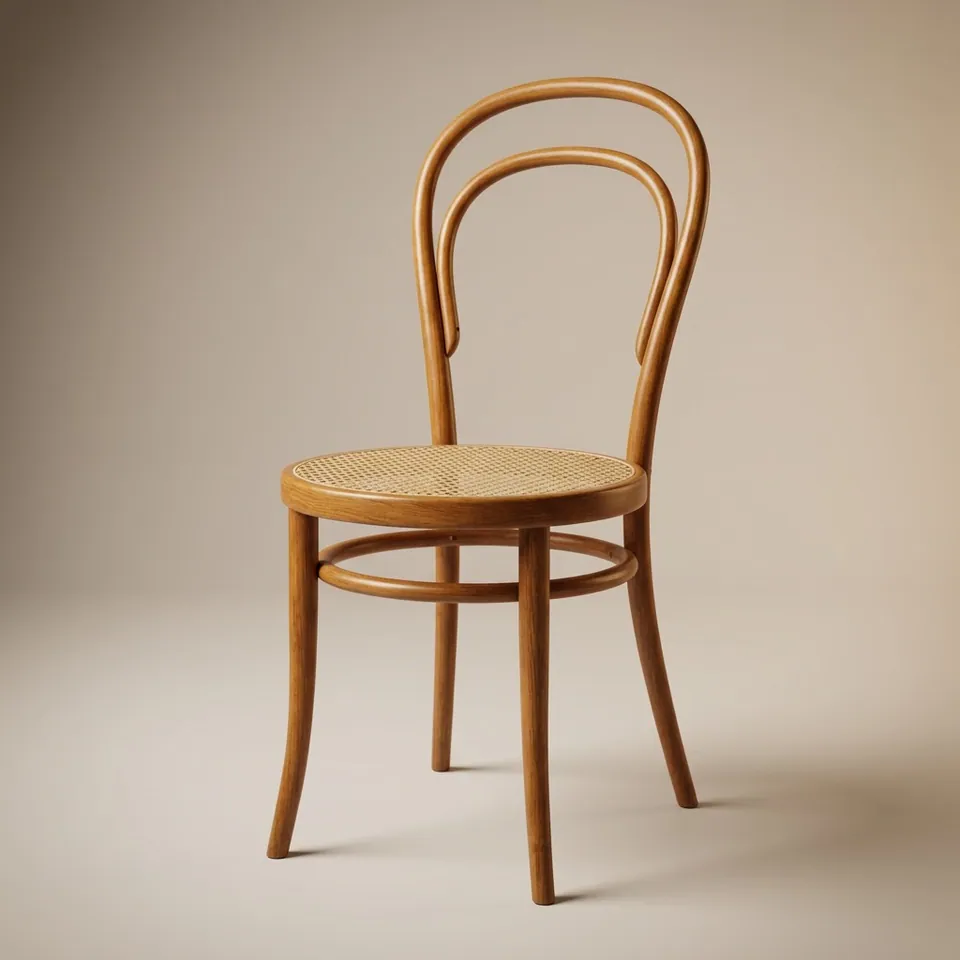 Thonet No. 14Thonet · 1859 · a chair made in series from a few standard parts
In collections
Go further
- The Shaker Chair, Charles R. Muller and Timothy D. Rieman (1984)The standard study of Shaker chairmaking, first published by the Canal Press, with the documents of the Mount Lebanon chair business.
- “Anything will sell that is carried into the market”: Shaker chairs and advances in promoting Shaker goods, Shaker Museum (2020)The museum’s account of the 1872 factory, Robert Wagan’s catalogues and the Centennial display, quoted from Shaker journals.
- Shakers combat knock-offs with trademark, Shaker Museum (2016)How imitation chairs led to the gold trademark transfer, with the labels and the die the Shakers tried first.
- Chair, Rocking, object 1974.18304.1, Shaker MuseumThe record for the No. 7 rocker bought by Mary Marvin Olcott in 1873, with its materials and history of ownership.
- Chairway to Heaven: A Celebration of Shaker Seating Furniture, New Britain Museum of American Art (2019)The exhibition text that sets out the eight sizes, the interchangeable parts and the division of work between brethren and sisters.
Sources
- Chair, Rocking (Early #7 production rocking chair), 1974.18304.1, Shaker Museum, Chatham
- The Mount Lebanon chair factory, Shaker Museum, Chatham
- Chairway to Heaven: A Celebration of Shaker Seating Furniture, New Britain Museum of American Art
- Rocking chair (No. 7), Shaker, Museum of Fine Arts, Boston
- Shaker no. 7 rocking chair, 1968-102-1, Cooper Hewitt, Smithsonian Design Museum
- Centennial illustrated catalogue and price list of the Shakers' chairs (Albany: Weed, Parsons, 1876), Historical Society of Pennsylvania