Nº 0208 · Chair type
Windsor chair
Legs below, spindles above, one solid seat.
Why it matters
The Windsor is a stool with a spindled back, as the Regional Furniture Society describes it, and that simple construction let one type serve as a cheap garden seat, a painted hall chair and a library chair. Early Windsors were exported to the American colonies, where they were made in Philadelphia within about a decade.
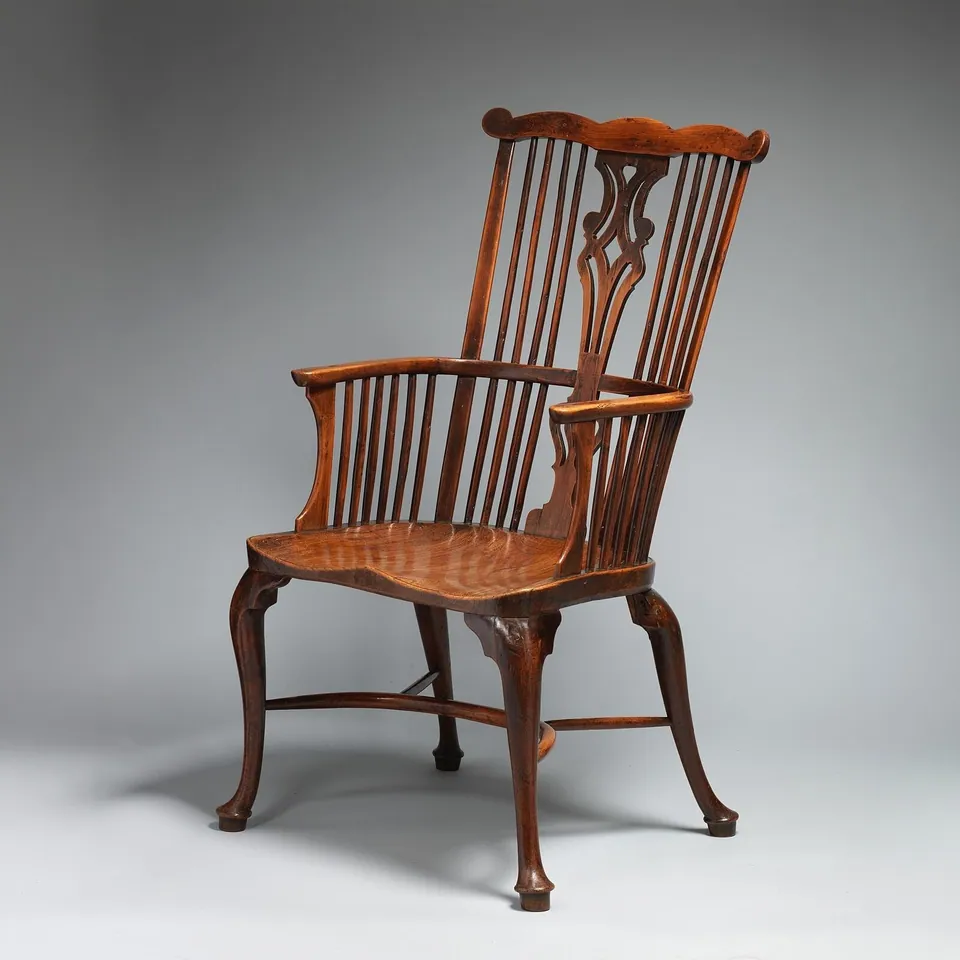
A Windsor is built on a thick solid seat: the legs are socketed into it from below and the spindles of the back and arms from above, held with wedges and pegs. Supplies of these chairs, then also called Forest chairs, are first documented in the 1720s, and the name probably comes from Windsor, a distribution point on the Thames. English makers usually shaped the seat from elm and used ash, beech or yew for the other parts, and in the nineteenth century High Wycombe became the main centre of the trade. The chair shown, at the Met, is a British comb-back armchair of about 1770 in yew and elm.
What to notice
- The solid seatOne thick plank, hollowed to a saddle shape, holds legs and spindles.
- The spindlesThin turned spindles rise from the seat to form back and sides.
- The arm bowThe arm rail is bent into a deep curve, a part the V&A notes was shaped by steaming.
- The pierced splatOn this chair a carved, pierced splat sits among the spindles, under a shaped top rail.
2 min read
The full story
Seats for the garden
No inventor is recorded for the Windsor. The Regional Furniture Society describes the type as a stool with a spindled back, and it was as outdoor seating that it first drew notice. The name was in print by 1718, when the garden writer Stephen Switzer described “a large Seat, call’d a Windsor Seat” that could be turned to face the view or away from the wind and sun.
In this story
- Seats for the garden
- Elm, an adze, a bow
- From lawn to hall
- Bodgers in the beech woods

The story continues in the app
- Construction
- Legs and spindles socketed into a solid wooden seat
- Materials
- English: elm seat, ash, beech or yew; the Met example is yew and elm
- Dimensions
- 112 × 60 × 67 cm, seat height 46 cm (Met 2015.501)
- Also called
- Forest chair, in eighteenth-century England
- In collection
- The Met · Victoria and Albert Museum · Auckland War Memorial Museum
Connections
- Early modern period
- Furniture design
- Wood
- Windsor
Nearby in the archive
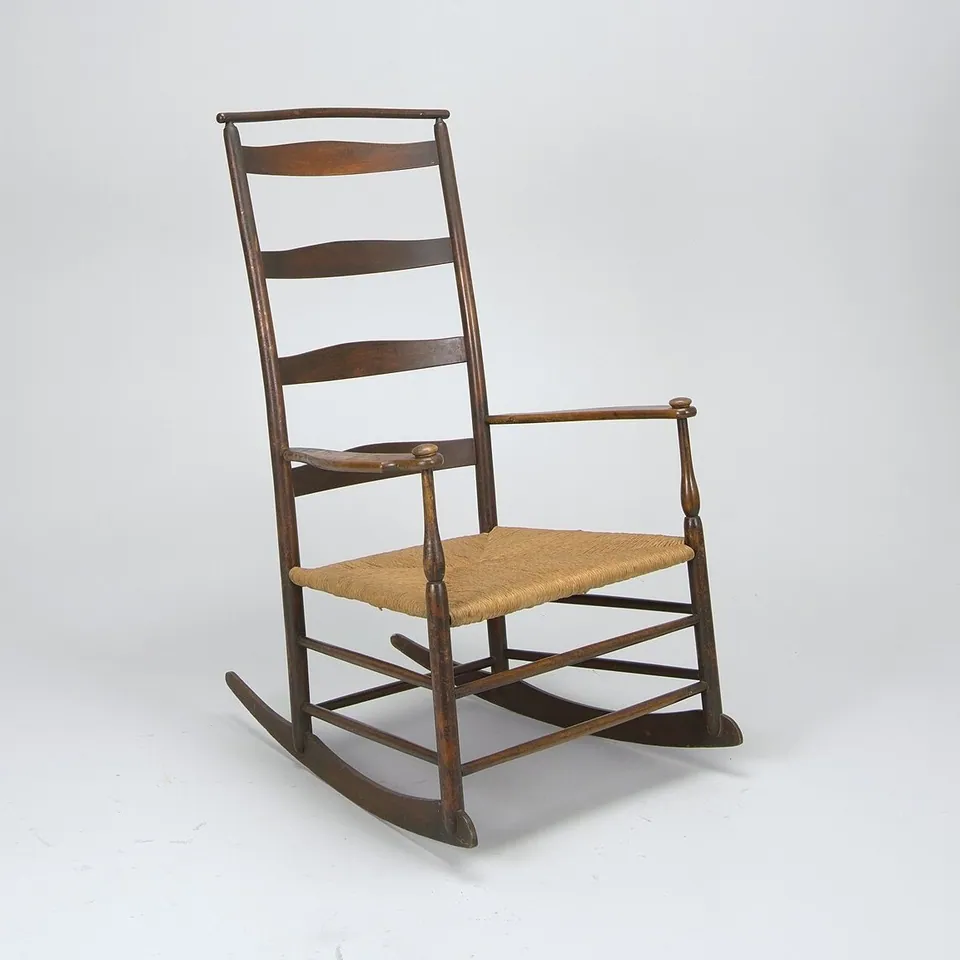 Shaker No. 7 rocking chairMount Lebanon Shakers · 1870s · turned-wood chairs made in series
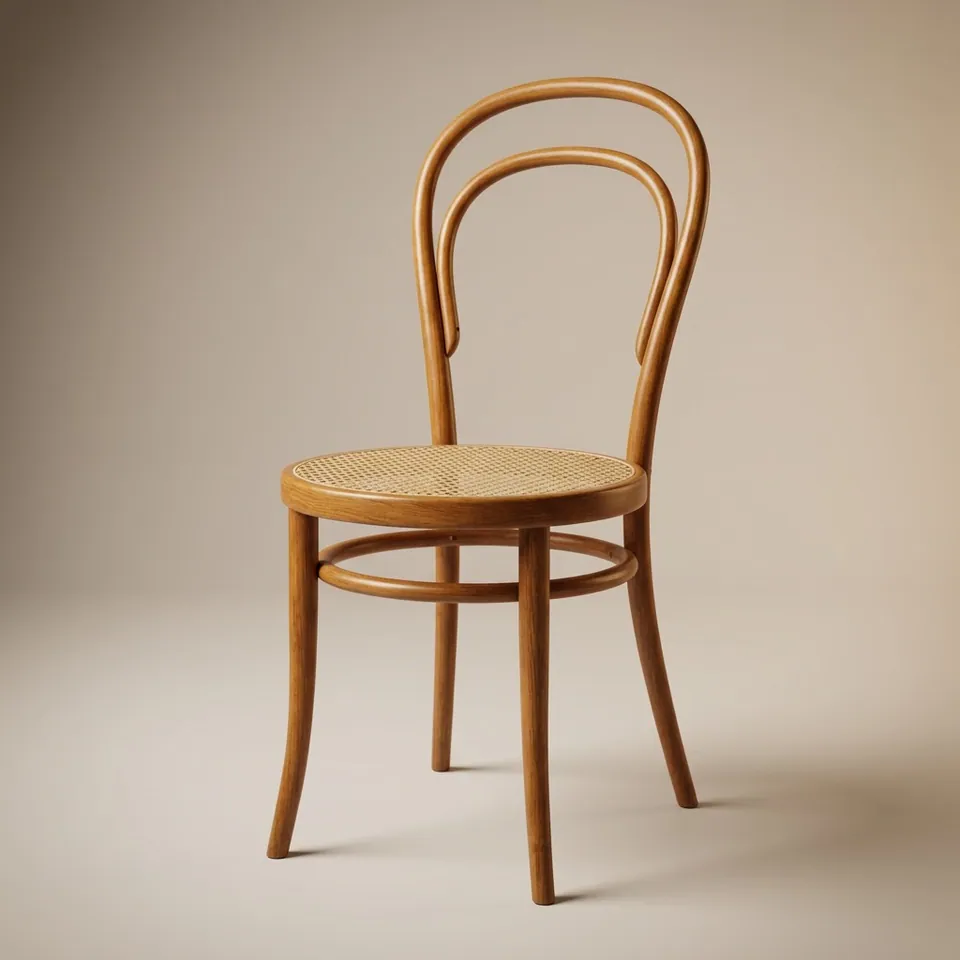 Thonet No. 14Thonet · 1859 · a wooden chair built from a few standard parts
In collections
Go further
- American Windsor Chairs, Nancy Goyne Evans (1996)The standard study of the American branch, 744 pages published with the Winterthur Museum, region by region and maker by maker.
- The English Windsor Chair, Thomas Crispin (1992)A survey of English Windsors and the regions that made them.
- The Windsor Chair, Regional Furniture SocietyA short illustrated account of the type, its garden origins and its regional variants in England.
- Windsor armchair, W.34-1976, Victoria and Albert MuseumThe museum record for the painted Enmore Castle chair of 1756, with its history and a reading list.
- Comb-back Windsor armchair, 2015.501, The Metropolitan Museum of ArtThe record and photographs for the yew and elm armchair of about 1770 shown on this page.
Sources
- The Windsor Chair (full article), Regional Furniture Society
- Windsor armchair, W.11-1969, Victoria and Albert Museum
- Windsor armchair, W.34-1976, Victoria and Albert Museum
- Comb-back Windsor armchair, 2015.501, The Metropolitan Museum of Art
- Windsor Armchair, 52.195.11, The Metropolitan Museum of Art
- Wikipedia (English), Wikimedia Foundation

