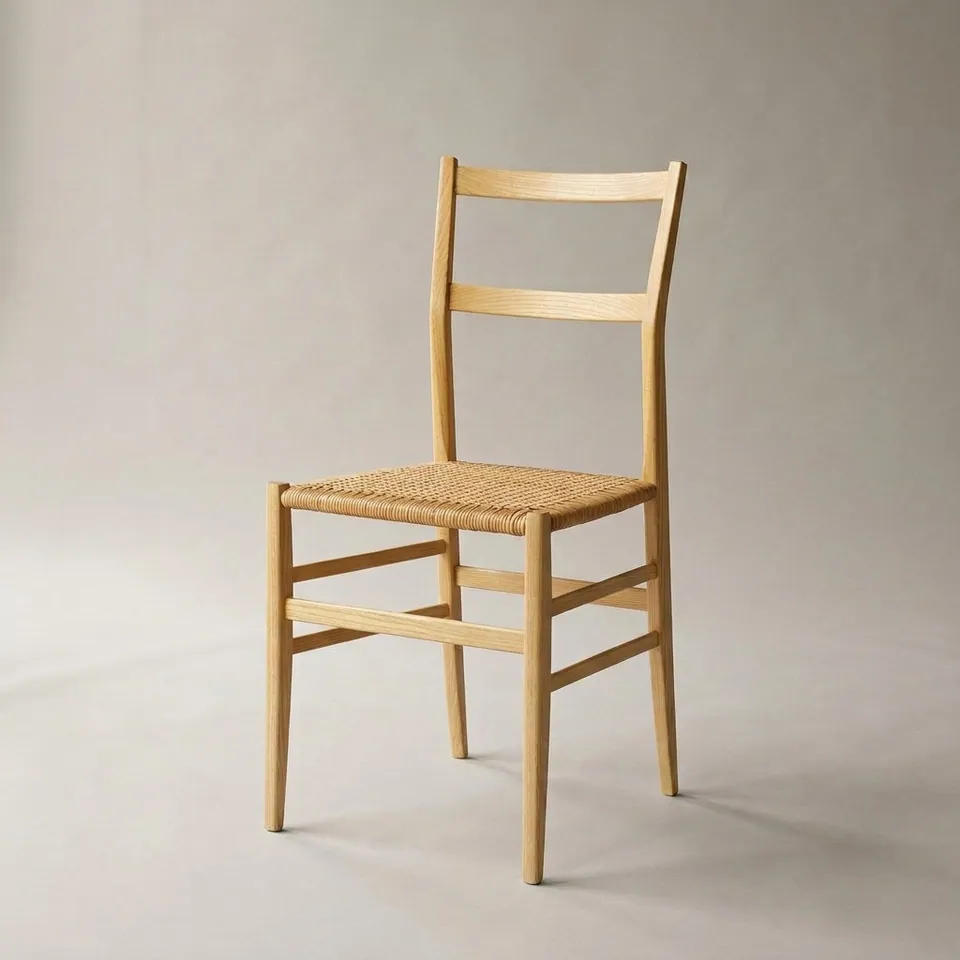
Nº 0229 · Side chair
Superleggera
Ash and cane, about 1.7 kilograms.
Why it matters
Ponti took the Chiavari chair, a light ladderback that the V&A notes is itself a nineteenth-century invention, and reduced it over eight years to a frame made in series. The step from the earlier Leggera came from giving the legs a triangular section, which let Cassina cut the wood thinner.
The chair began in 1949 as a painted ash chair with a cane seat, made by Cassina as model 504 for the ocean liner Conte Grande, and became the Leggera, model 646, at the 1951 Milan Triennale. When Ponti asked for it to be sliced thinner, Cassina’s head carpenter Fausto Redaelli made the legs triangular in section, at most 18 mm across. Cassina put the result into production in 1957 as model 699 and still makes it. The frames were made at the Cassina factory in Meda and the seats woven by hand near Chiavari.
What to notice
- Triangular legsThe legs are triangular in section and taper toward the floor.
- The ladderbackTwo slim crossbars between the uprights form the whole back.
- The cane seatA hand-woven cane seat that widens toward the front edge.
- Low stretchersA single rail low between the front legs, with thinner rails at the sides.
3 min read
The full story
From liner to Triennale
Gio Ponti had been designing furniture in Milan since the 1920s, and by the 1940s he was working regularly with Cassina, a family firm in Meda, north of the city. In 1949 he drew a painted ash chair with brass-tipped legs, a back that leaned away from the seat and a woven cane seat. A Milanese cabinet maker, Giordano Chiesa, made it, and Cassina developed it into model 504, a small armchair with brass feet, for the first-class dining rooms of the liner Conte Grande.
In this story
- From liner to Triennale
- Sliced to eighteen millimetres
- Without adjectives
- Still made in Meda

The story continues in the app
- Materials
- Ash frame with dowel joints; woven cane seat
- Dimensions
- About 83 × 40 × 45 cm, seat height 43.5 cm (V&A)
- Weight
- About 1.7 kg
- Model
- Cassina 699, after the Leggera 646 of 1951
- In collection
- Victoria and Albert Museum (CIRC.325-1970) · Vitra Design Museum · Nasjonalmuseet, Oslo · MoMA
Connections
Nearby in the archive
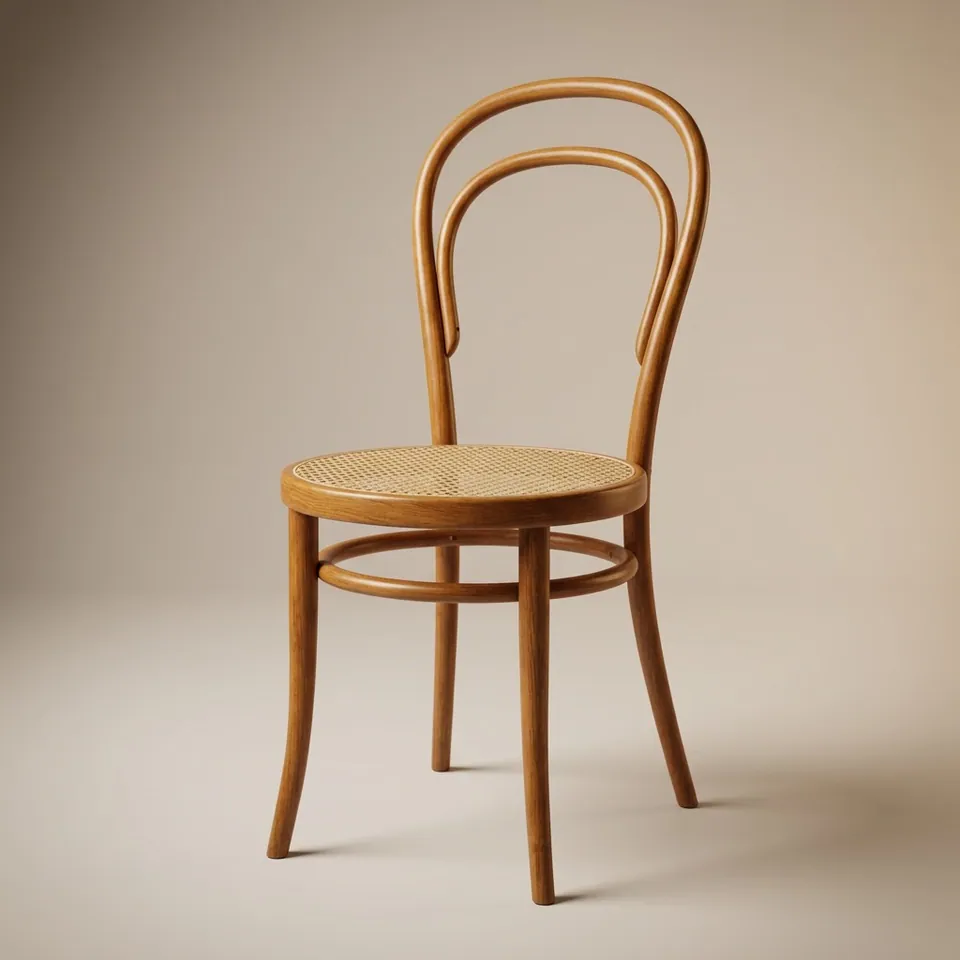 Thonet No. 14Thonet · 1859 · a light chair with a cane seat, made in series
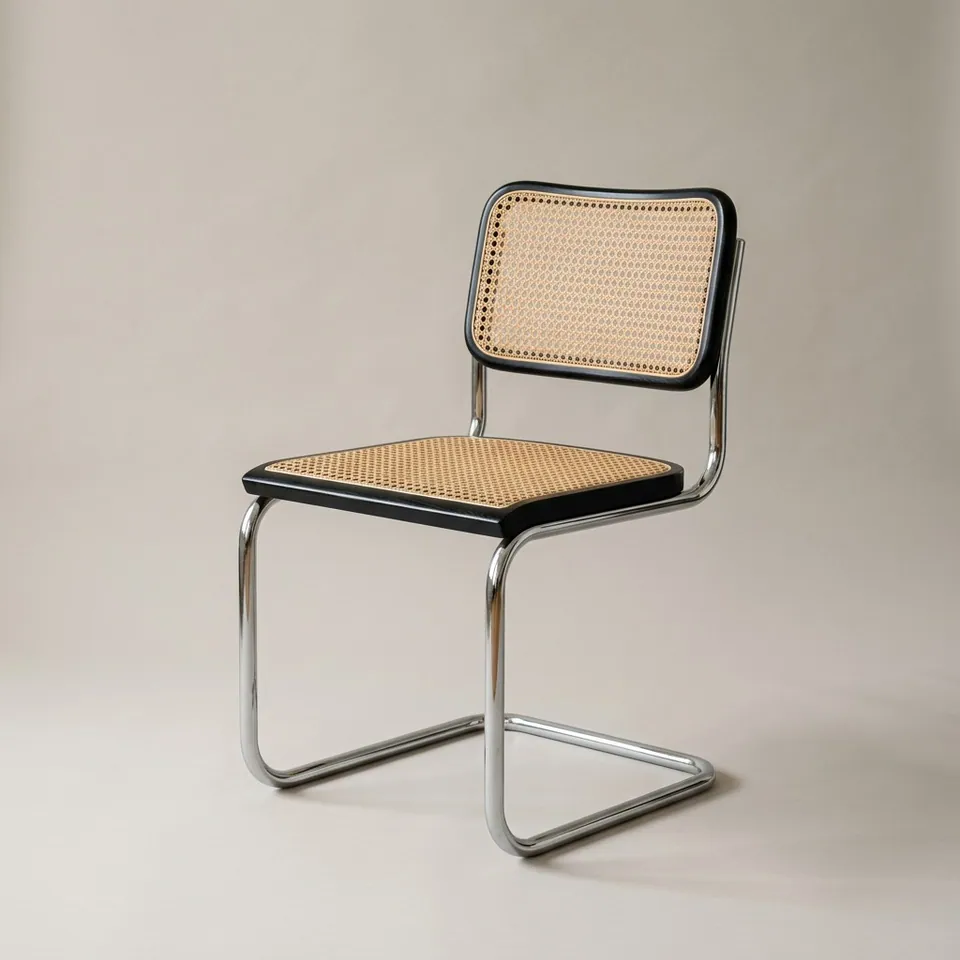 Cesca ChairBreuer · 1928 · a cane seat on a frame cut to the minimum
In collections
Go further
- Gio Ponti: The Complete Work, 1923-1978, Lisa Licitra Ponti (1990)A survey of Ponti's buildings, furniture and objects by his daughter, with a foreword by Germano Celant.
- Gio Ponti, Ugo La Pietra (ed.) (2009)A large illustrated monograph on Ponti's work across architecture, furniture and the decorative arts.
- Superleggera, CIRC.325-1970, Victoria and Albert MuseumThe museum record, with a detailed physical description and the story of the chair's development at Cassina.
- 'Leggera' Chair, W.4-2011, Victoria and Albert MuseumThe record for the 1951 predecessor, useful for comparing the rounded legs and seagrass seat with the later chair.
- La Superleggera di Gio Ponti: un nome, una garanzia, Maria Chiara Virgili, Dannati Architetti (2023)A short Italian article on the chair's name and the advertising that sold its weight.
Sources
- Superleggera, CIRC.325-1970, Victoria and Albert Museum
- 699 Superleggera, MIT-1088-1, Vitra Design Museum
- Superleggera, NMK.2008.0111, Nasjonalmuseet, Oslo
- Superleggera Chair (model 699), The Museum of Modern Art
- 699 Superleggera, Cassina

