Nº 0087 · Chair
Tulip Chair
One stem where four legs used to be.
Why it matters
Saarinen said he wanted to clear up the slum of legs under chairs and tables, and the Pedestal Collection replaced them with a single stem on a round foot. He also wanted the chair to be all one thing; fibreglass could not carry the load, so the stem is cast aluminium, coated to match the shell.
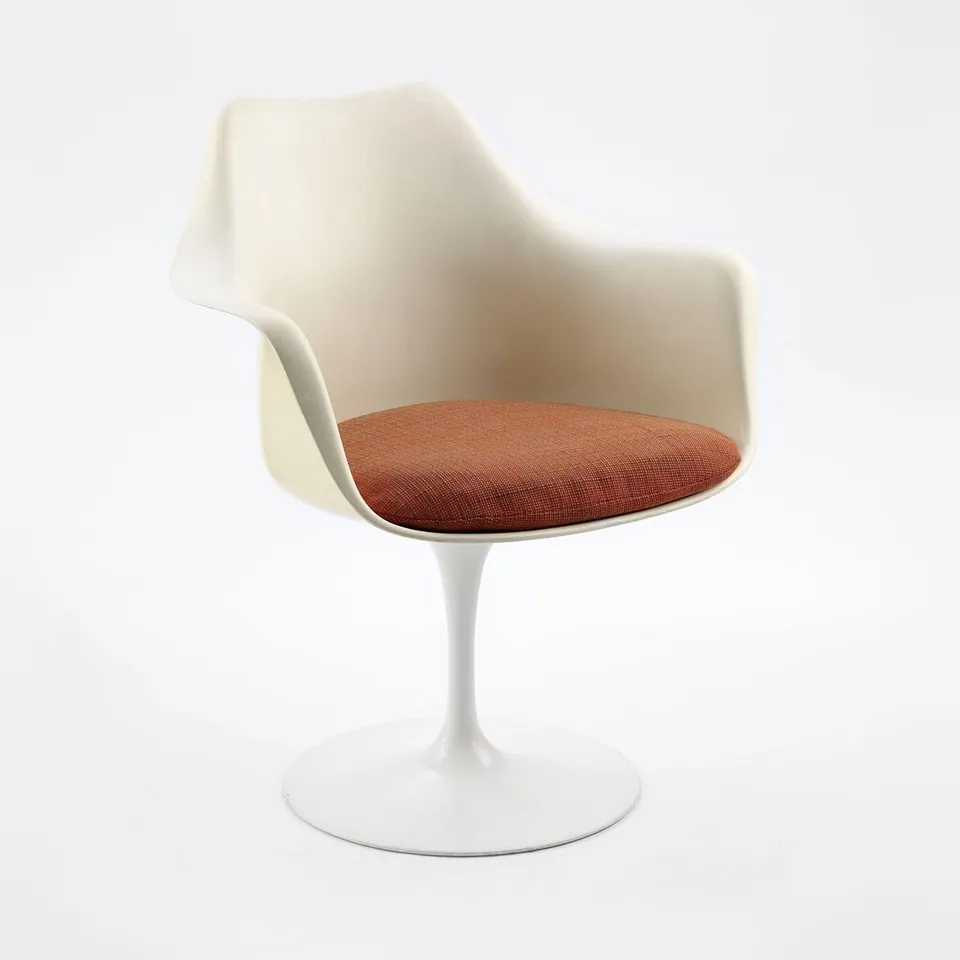
Saarinen designed the series in Bloomfield Hills, Michigan, after four to five years of drawings, quarter-scale models and full-size prototypes, and Knoll put it into production in 1957. A 1957 Design magazine article reports that the prototypes were tested by family and friends in his house there. The shell is moulded fibreglass, the base cast aluminium, and a loose cushion sits on the seat. The armchair in the main photograph is in the Nasjonalmuseet, Oslo; the armless side chair with the patterned cushion is in the Indianapolis Museum of Art.
What to notice
- The stemA single tapered stem rises from the round foot into the shell, in the same white.
- The cushionThe loose seat cushion is the only part in another colour; this one has a patterned cover.
- The shell and armsThe fibreglass shell rises in one piece from the seat into the back and the arms.
3 min read
The full story
Legs as metal plumbing
Eero Saarinen had designed furniture for Knoll since 1946, and he had known Florence Knoll since their years at Cranbrook, in Bloomfield Hills. By the early 1950s a moulded shell chair usually meant a plastic seat bolted to a separate frame of metal rods. Saarinen disliked the result. The legs, he said, “become a sort of metal plumbing”, and the seat and its support read as two unrelated things.
In this story
- Legs as metal plumbing
- One bolt, two materials
- Columbus, then the museums
- Pedestal becomes Tulip

The story continues in the app
- Materials
- Moulded fibreglass shell, coated cast aluminium base, loose cushion
- Dimensions
- About 81 × 66 × 60 cm (armchair)
- Maker
- Knoll, since 1957
- In collection
- V&A · Brooklyn Museum · Indianapolis Museum of Art
- Status
- Real · still in production
Connections
- Eero Saarinen
- Knoll
- Postwar era
- Furniture design
- Plastic
- Aluminium
- Bloomfield Hills, Michigan
Nearby in the archive
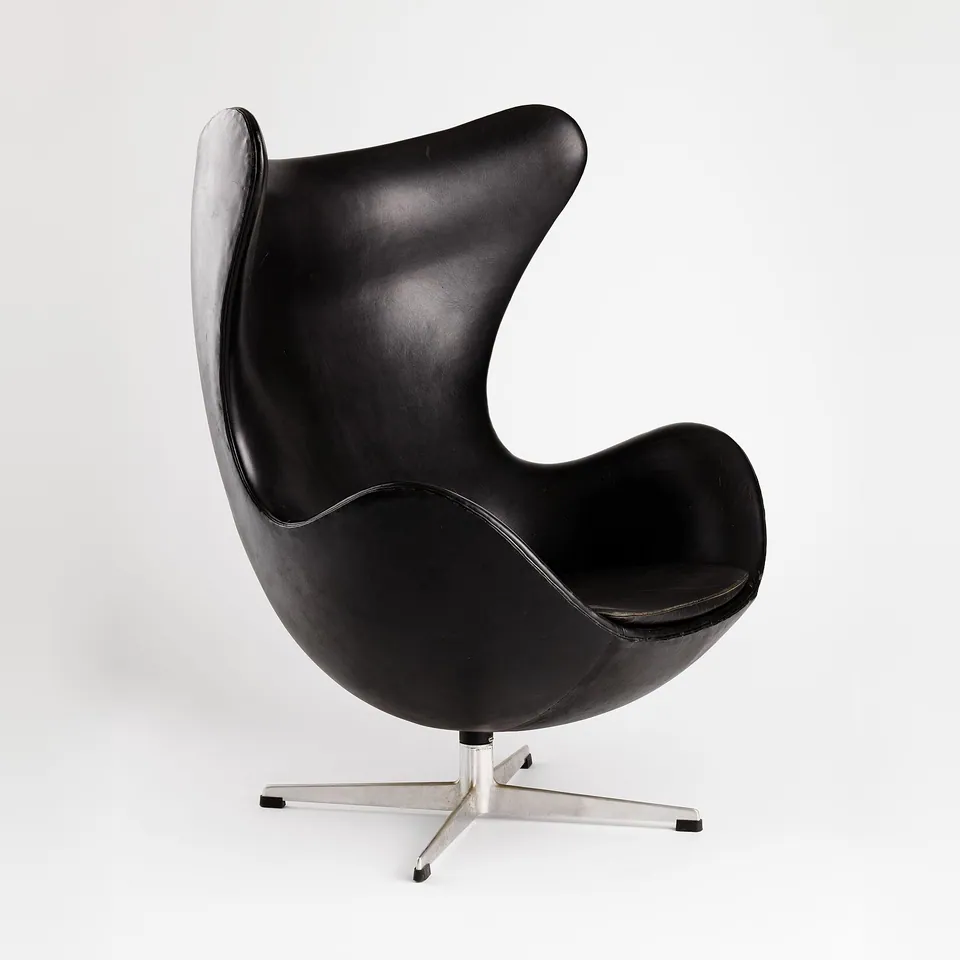 EggJacobsen · 1958 · a shell on one cast aluminium base
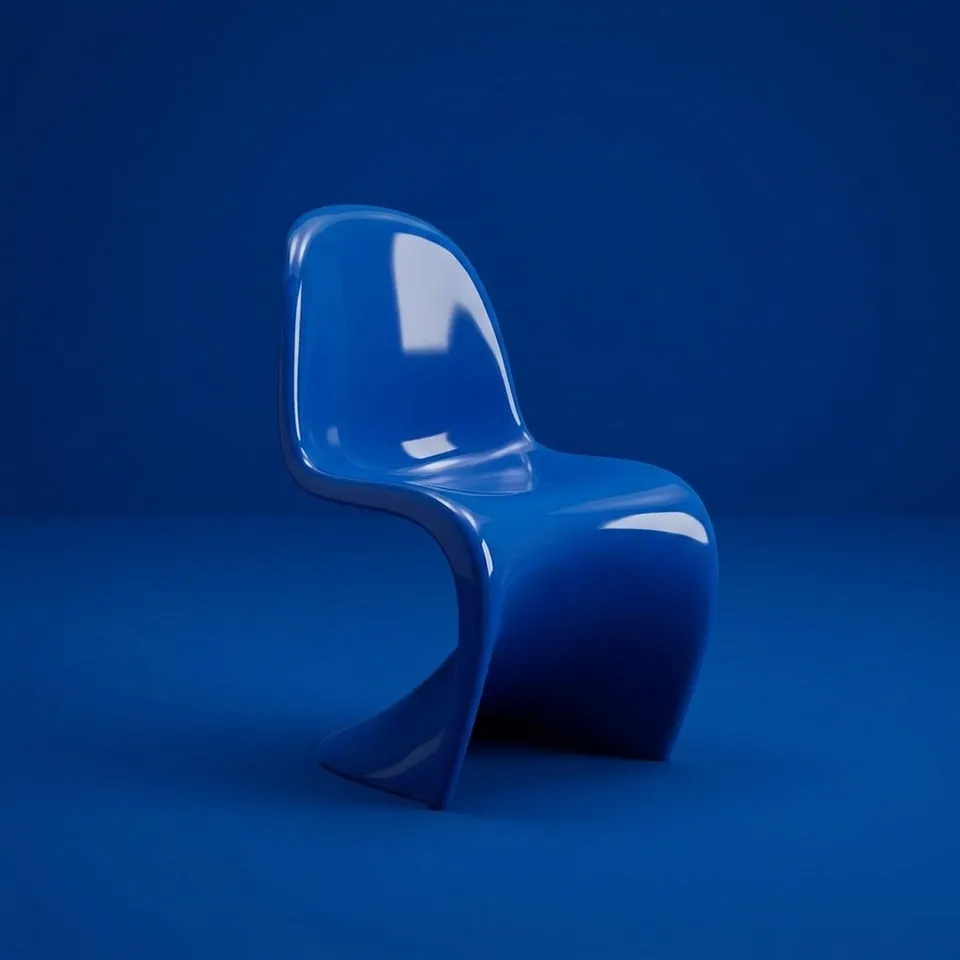 Panton ChairPanton · 1967 · the one-material chair Saarinen wanted
In collections
Go further
- Eero Saarinen: Furniture for Everyman, Brian Lutz (2012)A study of Saarinen’s furniture for Knoll, from the early shell chairs to the Pedestal Collection.
- Eero Saarinen: Shaping the Future, Eeva-Liisa Pelkonen and Donald Albrecht (eds), Yale University Press (2006)The catalogue of the travelling retrospective, which sets the furniture beside the buildings.
- Tulip armchair, CIRC.86:1, 2-1969, Victoria and Albert MuseumThe museum record, which quotes at length the 1957 Design magazine article on the prototypes and their testing.
- Articles of Furniture and Supports Therefor, US Patent 2,939,517, Eero Saarinen (1960)Saarinen’s patent, with section drawings of the hollow stem and the bolt that fixes the shell to it.
- The Story of Eero Saarinen’s Famous Tulip Chair, Alex Ronan, Dwell (2015)A short illustrated history that places the chair in Saarinen’s career and shows the patent drawing.
Sources
- Tulip, CIRC.86:1, 2-1969, Victoria and Albert Museum
- Tulip Arm Chair, Knoll
- The Story of Eero Saarinen's Famous Tulip Chair, Dwell