Nº 0061 · Motor scooter
Vespa
Enrico Piaggio looked at it and saw a wasp.
Why it matters
An aircraft engineer put the engine inside a steel shell with a step-through floor, so the rider stayed clean and there was no chain to oil. Piaggio filed the patent on 23 April 1946.
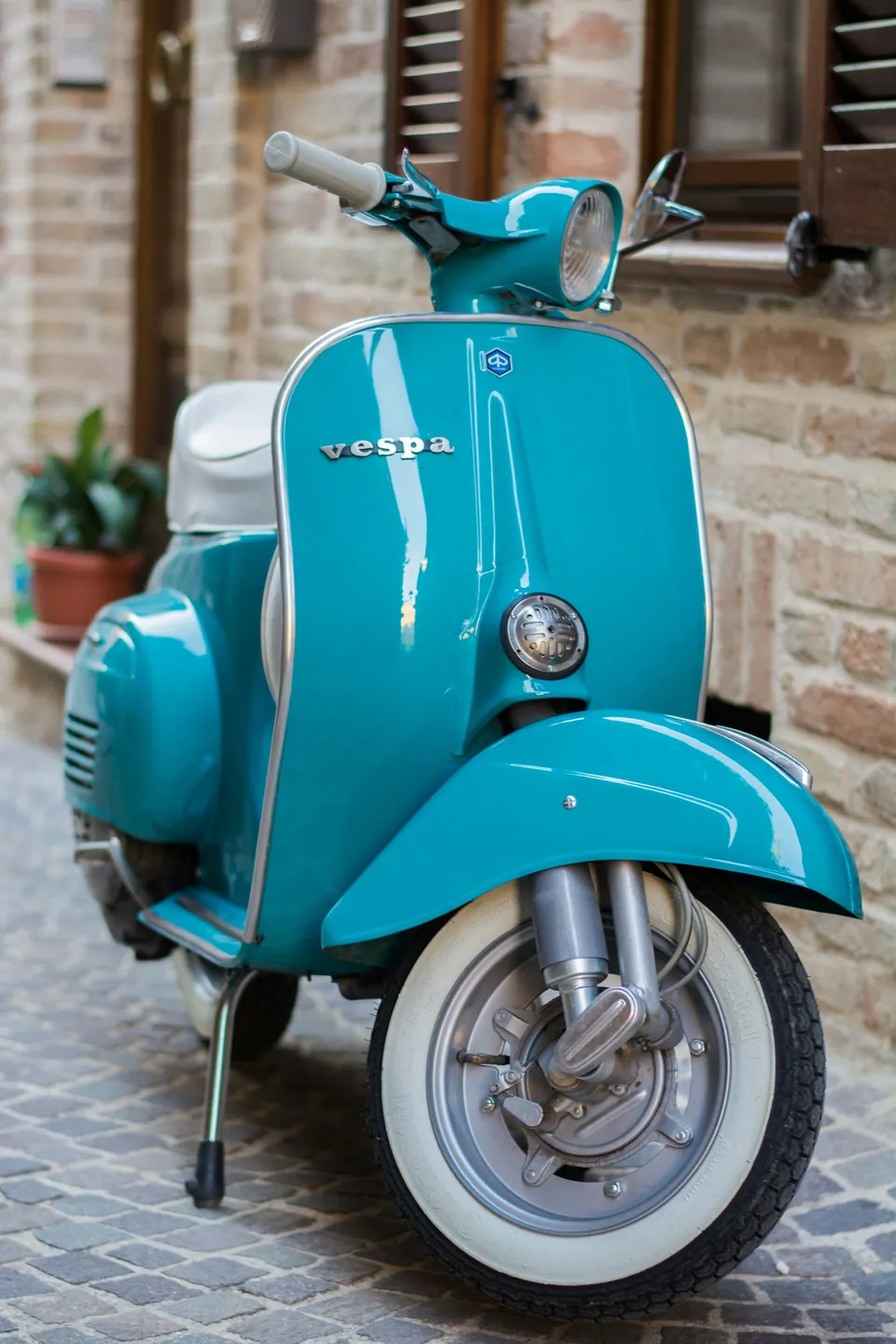
Corradino D’Ascanio, who had built helicopters, designed it for Piaggio. Enrico Piaggio saw the MP6 prototype in 1945 and said it looked like a wasp, vespa in Italian. The first model, the 98 cc Vespa 98, went into production in Pontedera in 1946. The scooter in this photograph is a later Vespa 125 of 1949, in a museum in Genoa.
What to notice
- The waistThe narrow waist between the rear cowl and the leg shield gave it the name.
- The front wheelThe front wheel hangs from one side only.
- The rear cowlThe engine hides under the rear cowl, beside the wheel.
2 min read
The full story
A duck before the wasp
Piaggio, founded in Genoa in 1884, had been building aircraft since 1916. The war left its plant at Pontedera, in Tuscany, badly damaged, and production had been moved north to Piedmont. There, at Biella, Enrico Piaggio had his engineers work on a cheap vehicle for a country short of transport. Renzo Spolti drew a small scooter, the MP5, which the workers nicknamed Paperino, the Italian name for Donald Duck. About a hundred were made.
In this story
- A duck before the wasp
- Landing gear for the road
- Sold through Lancia showrooms
- Pontedera, eighty years on

The story continues in the app
- Engine
- 98 cc, two-stroke (first model)
- Body
- Self-supporting steel shell, no chain
- Maker
- Piaggio, Pontedera
- Patent
- Filed 23 April 1946, Florence
- Status
- Real · the Vespa is still made
Connections
- Corradino D’Ascanio
- Piaggio
- Postwar era
- Automotive design
- Steel
- Pontedera
Nearby in the archive
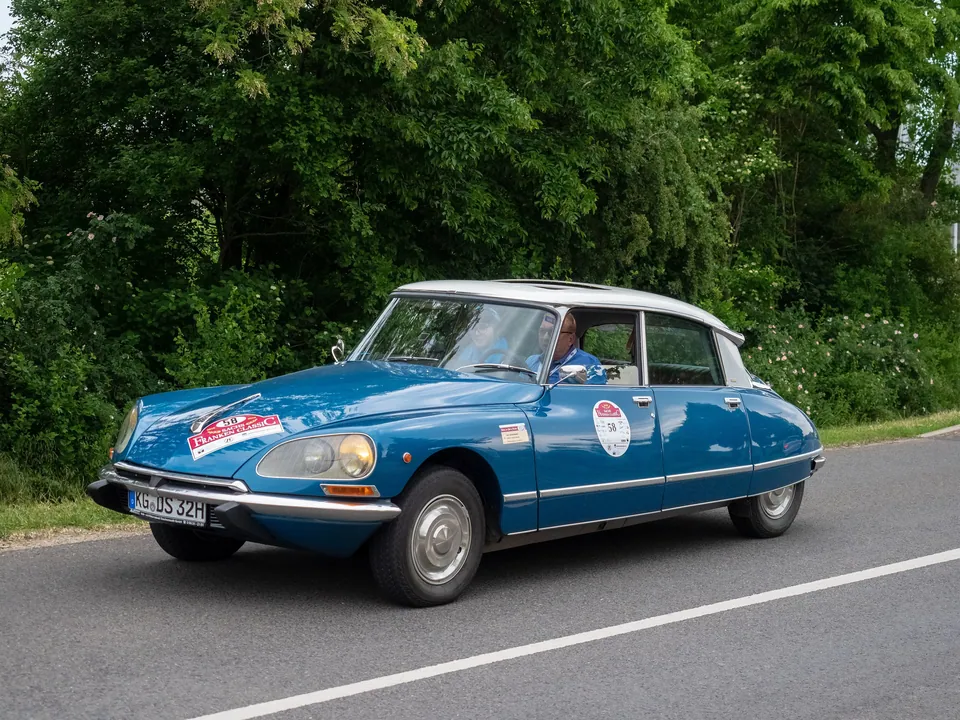 Citroën DSBertoni and Lefèbvre · 1955 · aircraft thinking on four wheels
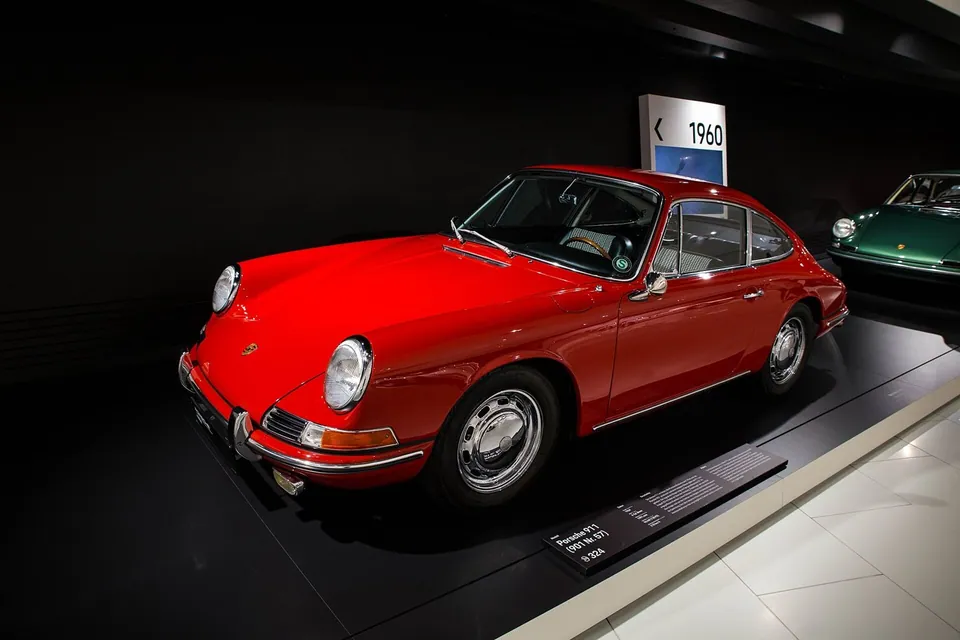 Porsche 911Porsche · 1963 · another shape still made
In collections
Go further
- Vespa: 1946-2006: 60 Years of the Vespa, Giorgio Sarti (2006)A model-by-model history from the prototypes onward, with production data for each version.
- Hiding in the Light: On Images and Things, Dick Hebdige (1988)Contains the essay “Object as Image: the Italian Scooter Cycle”, a cultural study of how the scooter was designed, sold and used.
- Vespa 98, Museo PiaggioThe factory museum’s record of the first production model, with its price, first-year output and specifications; neighbouring pages cover the MP5 and MP6 prototypes.
- D’Ascanio, Corradino, Alberto Mondini, Dizionario Biografico degli Italiani (1987)The standard Italian biographical entry on the designer, strongest on his helicopter work before and after the Vespa.
- Corradino D’Ascanio: True Genius!, Piaggio GroupThe maker’s own short account of D’Ascanio’s life and of the aircraft ideas he carried into the scooter.
Sources
- Corradino D’Ascanio, true genius, Piaggio Group
- Wikipedia (English), Wikimedia Foundation
- Vespa, Wikipedia