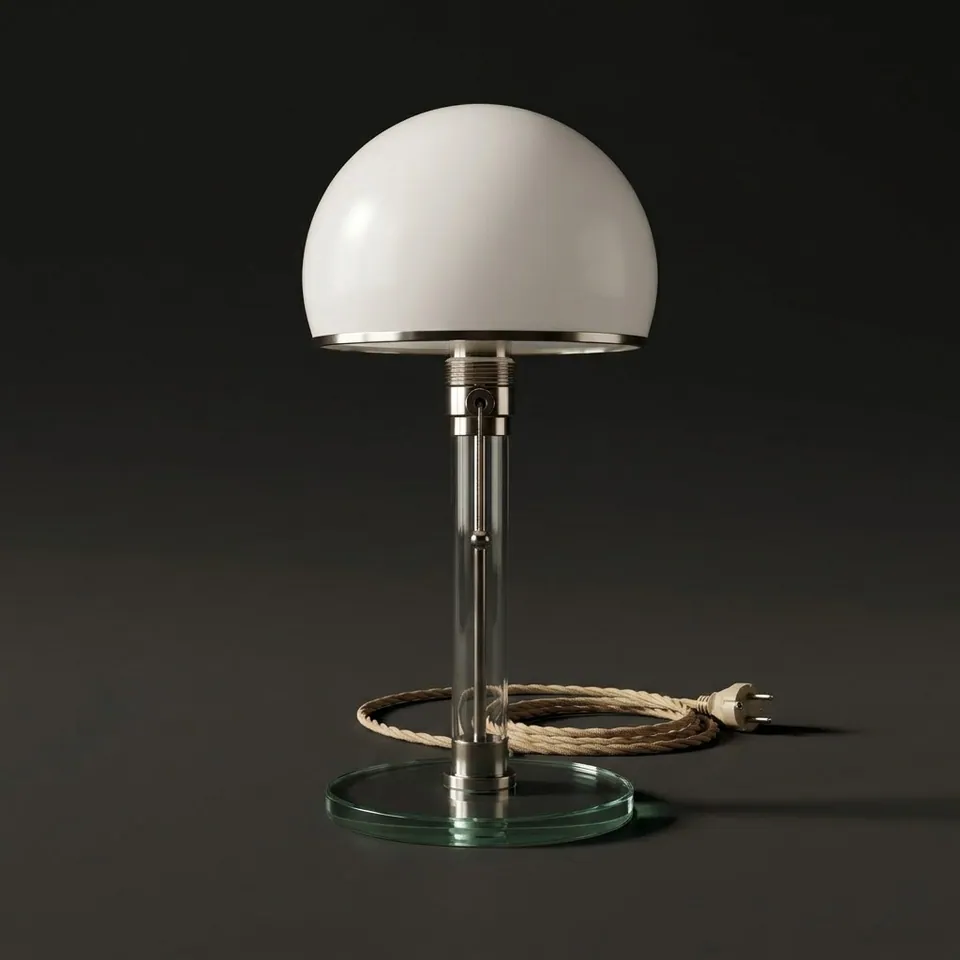
Nº 0154 · Table lamp
Bauhaus Table Lamp
A round base, a column, a glass dome.
Why it matters
It reduces a table lamp to a round base, a straight column and a hemispherical opal glass shade, and it was meant to be made industrially. The early lamps were in fact largely assembled by hand in the Bauhaus workshop, and industrial production came only in 1928, under licence in Berlin.
Two versions came out of the Bauhaus metal workshop in Weimar from spring 1924: one with a metal base and column by Wilhelm Wagenfeld, and one with a glass base and glass column that the V&A credits to Carl Jakob Jucker and Wagenfeld together. By autumn 1924 at least 80 metal-base and 45 glass-base lamps had been made. The V&A’s metal example is believed to have stood in the office of Carl Benscheidt, owner of the Fagus factory at Alfeld. The photograph shows both versions, the glass one on the left, in the Bauhaus-Museum Weimar.
What to notice
- The glass versionA clear glass disc and a glass tube, with the wire visible inside.
- The pull cordA thin cord ending in a small ball switches the lamp on.
- The shadeAn opal glass half-sphere rests on a flat metal rim.
3 min read
The full story
A workshop told to change
In 1923 Walter Gropius put the Hungarian artist László Moholy-Nagy in charge of form in the Bauhaus metal workshop at Weimar, with a brief to run it “as a workshop for industrial design”. Until then it had been a gold, silver and copper smithy making one-off pieces. Moholy-Nagy set its students geometric problems and pointed them at glass, plain metal and electric light.
In this story
- A workshop told to change
- Parts left in view
- Too dear to be modern
- Numbered, licensed, copied

The story continues in the app
- Materials
- Nickel-plated brass and opal glass (metal version)
- Dimensions
- 35.5 cm high, 17.8 cm across (V&A example)
- Maker
- Bauhaus metal workshop, Weimar; from 1928 Schwintzer & Graff, Berlin
- In collection
- V&A (M.28&A-1989) · Bauhaus-Museum Weimar
- Status
- Real · reissued by Tecnolumen, Bremen
Connections
- Wilhelm Wagenfeld
- Carl Jakob Jucker
- Bauhaus
- Schwintzer & Graff
- Era of the World Wars
- Industrial design
- Copper, brass and bronze
- Glass
- Weimar
Nearby in the archive
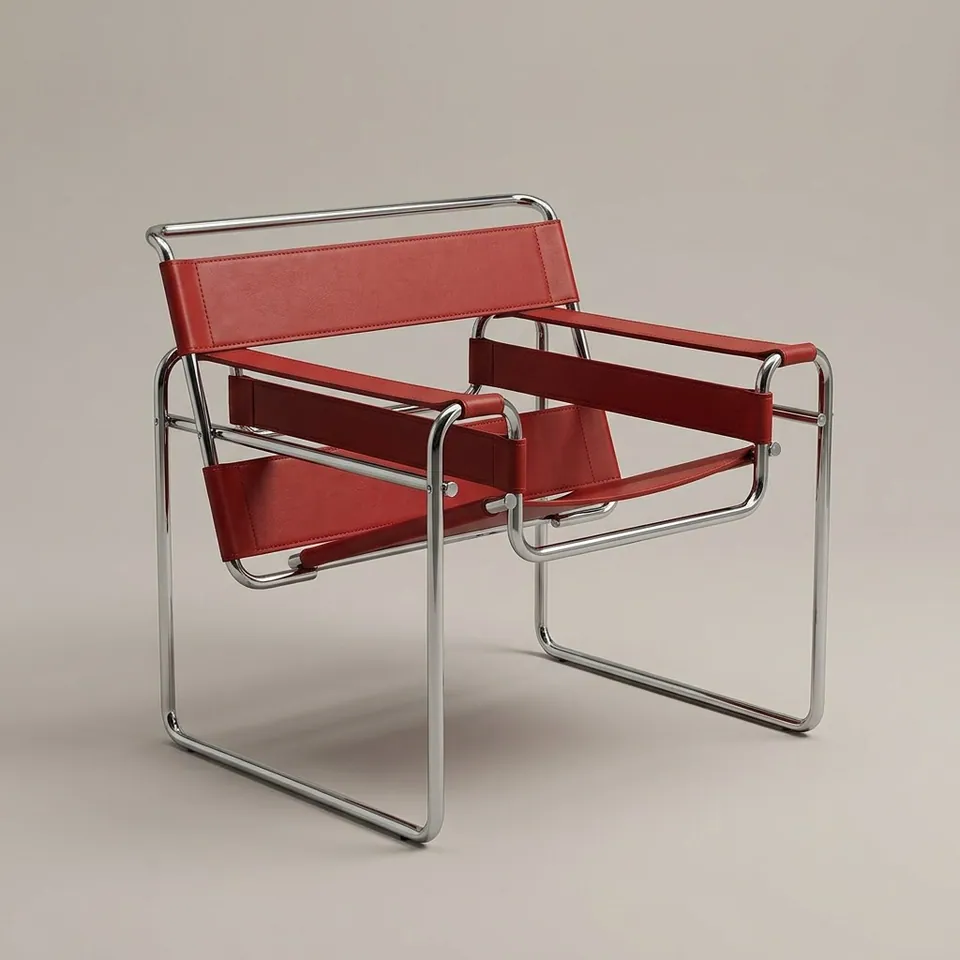 Wassily ChairBreuer · 1925 · the Bauhaus a year later, in tubular steel
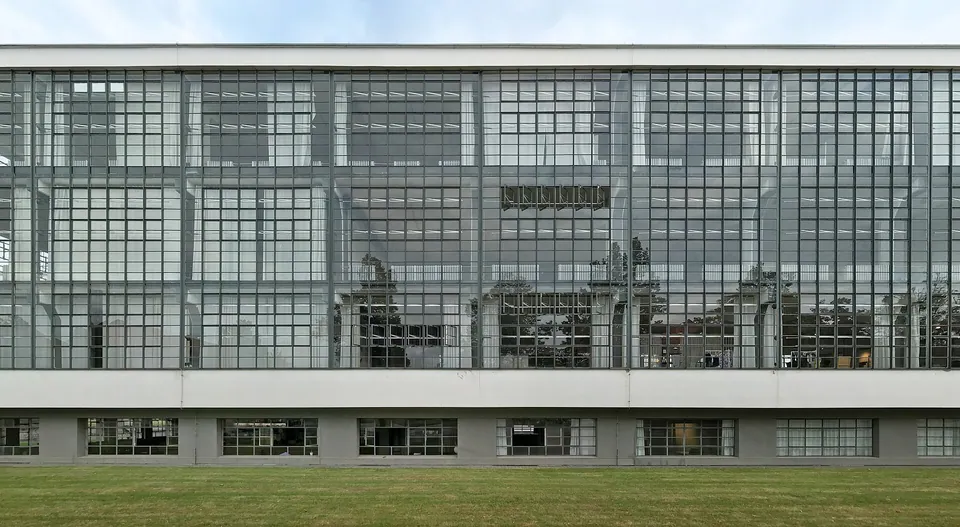 Bauhaus Building, DessauGropius · 1926 · where the school went after Weimar
In collections
Go further
- Die Bauhauslampe: Zur Karriere eines Klassikers, Thomas Heyden (1992)A German-language study of how one workshop lamp came to be treated as a classic.
- Wilhelm Wagenfeld (1900-1990), Beate Manske (ed.) (2000)A collection of essays on Wagenfeld’s whole career, from the Bauhaus to his work for glass and metal manufacturers.
- MT8 table lamp, museum number M.28&A-1989, Victoria and Albert MuseumThe museum record, with a close physical description, production figures from the Bauhaus-Archiv and the provenance of this example.
- Wilhelm Wagenfeld, Carl Jakob Jucker, Table lamp, 1923 to 1924, The Museum of Modern ArtThe record for the example given by Philip Johnson, with a short text on why early sales failed.
- Interview with TECNOLUMEN Founder Walter Schnepel, TecnolumenThe man behind the 1980 re-edition describes meeting Wagenfeld and the first production run.
Sources
- ‘MT8’ table lamp, M.28&A-1989, Victoria and Albert Museum
- Table lamp, P 1984-1, Kunstpalast, Düsseldorf
- Wikipedia (English), Wikimedia Foundation

