Nº 0197 · Personal workstation
Xerox Alto
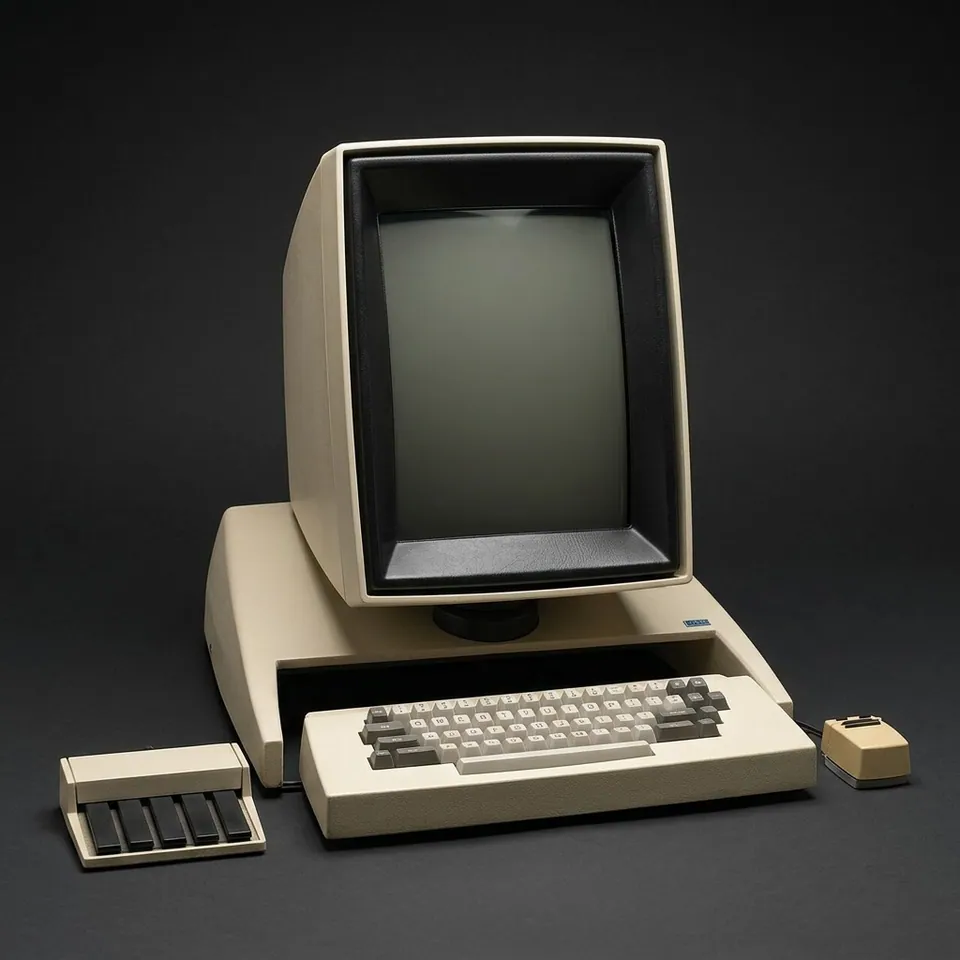
A portrait screen, a mouse and Ethernet, 1973.
Why it matters
The Alto set the model for personal computing: one person at a bitmap screen, with a mouse and a network, according to the IEEE milestone for it. In 2009 the ACM gave Chuck Thacker the Turing Award for the pioneering design and realisation of the Alto as the first modern personal computer.
Thacker led the hardware design at Xerox PARC in Palo Alto, and the first machine worked in 1973. It paired a portrait bitmap display of 606 by 808 pixels with a keyboard, a three-button mouse and an optional five-key chord keyset, and linked machines through PARC’s Ethernet. Programs written for it included the Bravo and Gypsy editors, Smalltalk and the Laurel email program. Xerox never sold it as a mass product, but in 1978 it gave fifty Altos to Stanford, Carnegie-Mellon and MIT.
What to notice
- The portrait screenThe screen stands taller than it is wide, like a sheet of paper.
- The mouseA small mouse with three buttons on top, on a cable.
- The chord keysetFive long keys, one for each finger, pressed in combinations.
3 min read
The full story
A memo called Why Alto
Xerox opened its Palo Alto Research Center in 1970. One of its teams, Alan Kay’s Learning Research Group, wanted a dozen or so small machines for writing software and for learning experiments with children. Butler Lampson and Chuck Thacker proposed a small computer that could be built quickly and fairly cheaply, and be ready within a couple of months.
In this story
- A memo called Why Alto
- Every dot on the screen
- An office tool inside Xerox
- From the Star to the archive

The story continues in the app
- Display
- Bitmap, 606 × 808 pixels, portrait
- Input
- Keyboard, three-button mouse, five-key chord keyset
- Dimensions
- Processor cabinet about 56 × 51 × 71 cm (CHM Alto I)
- In collection
- Computer History Museum, Mountain View
- Status
- Real · a research machine, never sold as a mass product
Connections
Nearby in the archive
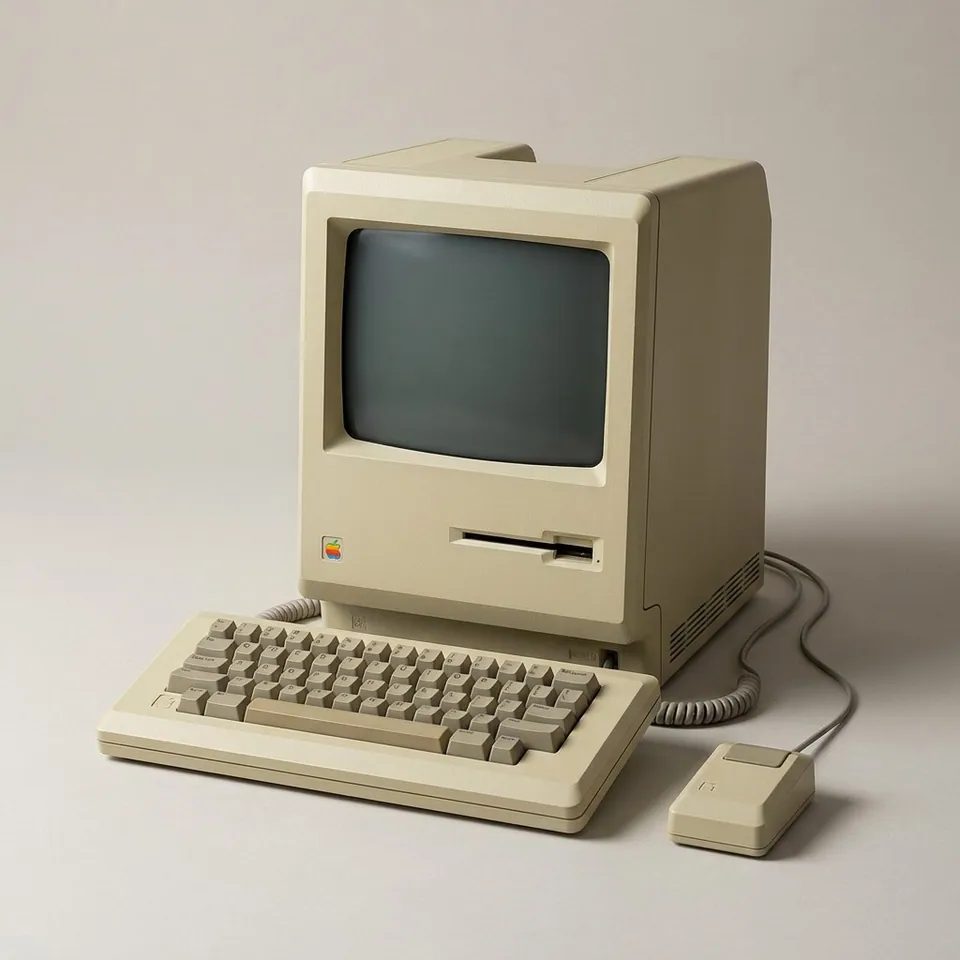 Macintosh 128KApple · 1984 · a mouse and a bitmap screen, sold in shops
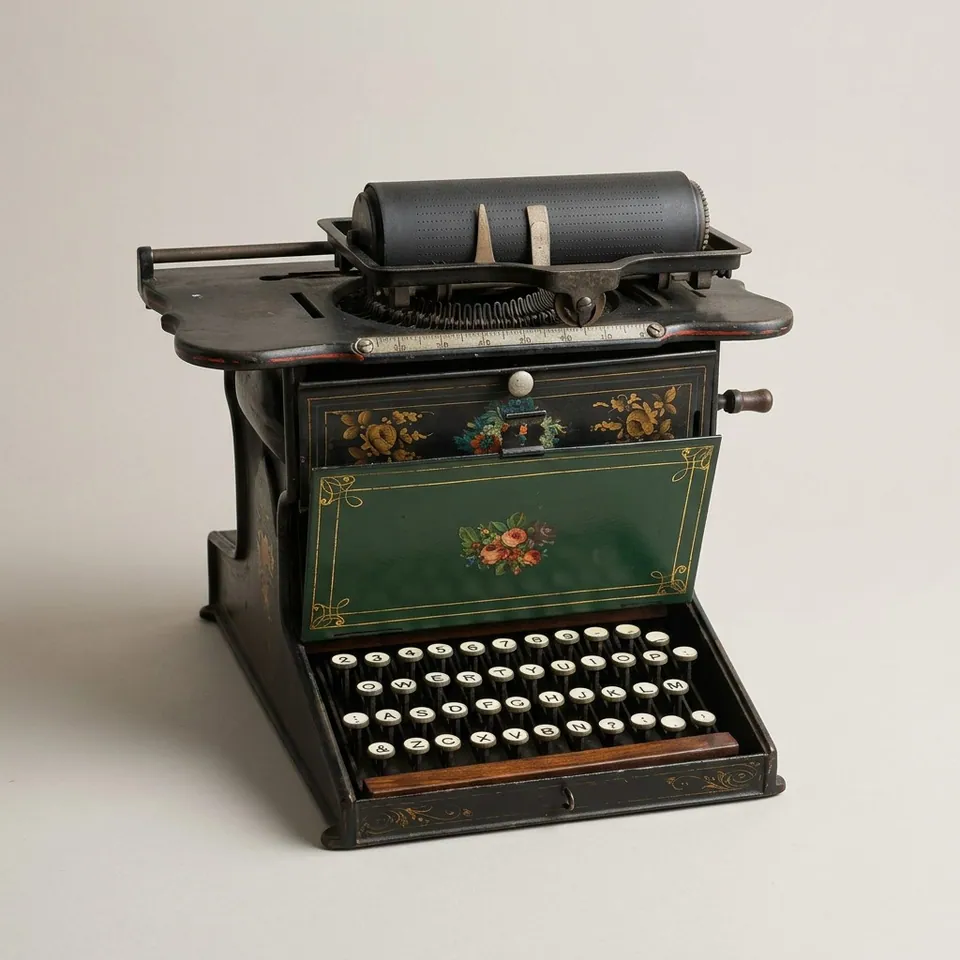 Sholes and Glidden Type-WriterSholes and Glidden · 1873 · the letter order the Alto keyboard still uses
In collections
Go further
- Dealers of Lightning: Xerox PARC and the Dawn of the Computer Age, Michael A. Hiltzik (1999)A journalist’s history of PARC in the 1970s, with the Alto, Ethernet and the laser printer at its centre.
- 50 Years Later, We’re Still Living in the Xerox Alto’s World, David C. Brock, IEEE Spectrum (2023)A Computer History Museum historian traces the machine from Lampson’s memo to the Star and Apple.
- Xerox Alto Source Code, Paul McJones, Computer History Museum (2014)The museum’s introduction to its archive of Alto programs, written by someone who used the machine from 1976.
- The Xerox Alto Establishes Personal Networked Computing, 1972-1983, IEEE Milestones, Engineering and Technology History WikiThe milestone citation and the supporting case, with the hardware, the software and the people listed.
- Xerox Alto, Revolution: The First 2000 Years of Computing, Computer History MuseumThe museum’s exhibition page on the Alto, with photographs of its own machines and Thacker’s cost figures.
Sources
- Milestones: The Xerox Alto Establishes Personal Networked Computing, 1972-1983, IEEE, Engineering and Technology History Wiki
- Alto I CPU with monitor, mouse, keyboard and 5-key chording keyset (Revolution exhibition), Computer History Museum
- Alto I CPU, catalog 102626737, Computer History Museum
- In Memoriam: Charles P. (Chuck) Thacker, 1943-2017, Communications of the ACM
- Wikipedia (English), Wikimedia Foundation

