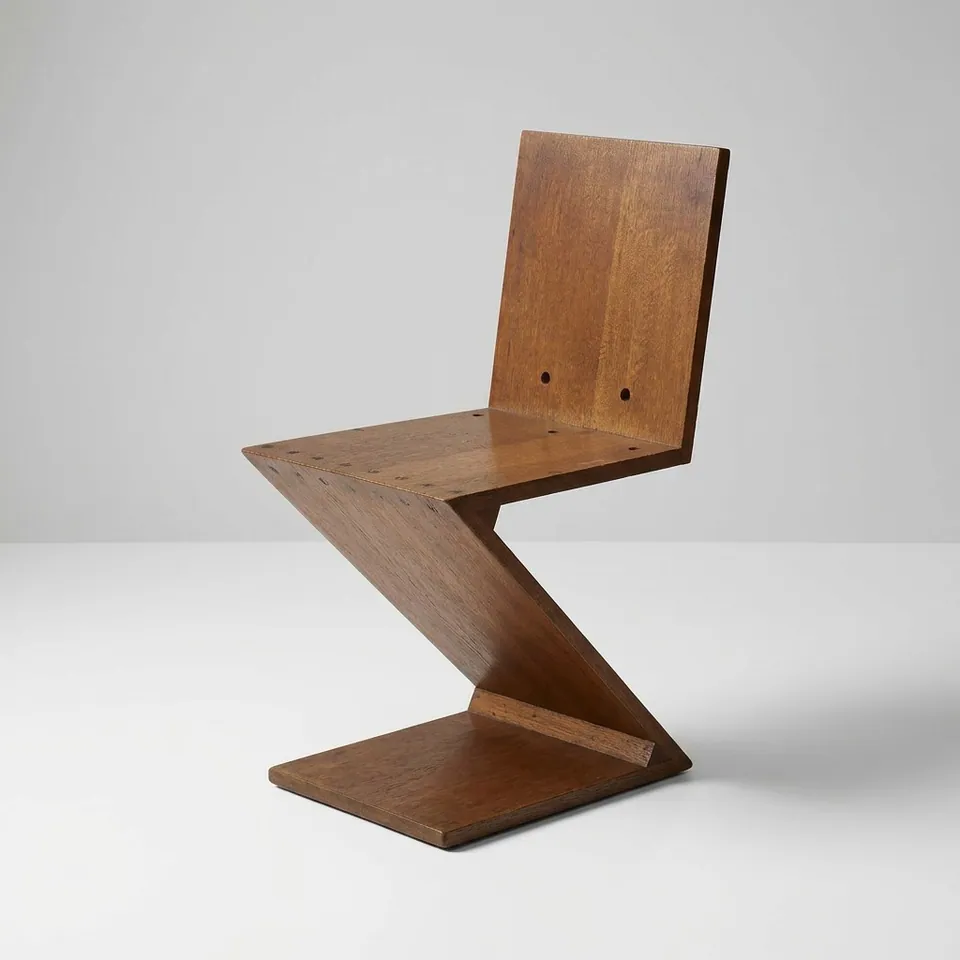
Nº 0089 · Chair
Zig-Zag Chair
Four flat boards, bolted into a Z.
Why it matters
Rietveld set out to make a chair from a single piece of material; when that proved impossible he joined four boards so that they read as one continuous form. With no legs, the seat is carried on a diagonal, and the V&A says the chair typified the uncompromising modernist furniture of the inter-war years.
Rietveld made the first prototypes about 1932 to 1933, and the four-board wooden version was introduced in 1934 for the Amsterdam store Metz & Co, which produced it from 1935. The boards are mitred and bolted, with triangular blocks glued into the inner angles for strength. About a dozen versions followed, including three for children, and Cassina has made the chair since 1971. The one in this photograph is in the Kunstmuseum Den Haag.
What to notice
- The ZNo legs: the foot board stands on the floor and the diagonal board carries the seat.
- The boltsBolt heads run along the front edge of the seat, where two boards meet.
- Holes in the backTwo small round holes near the bottom of the back board.
3 min read
The full story
A chair from one piece
Gerrit Rietveld learned cabinet-making in his father’s workshop in Utrecht and ran his own architectural office there from 1919. By the early 1930s he was trying out industrial materials that were not meant for furniture, among them fibreboard, aluminium and glass. The Stedelijk Museum calls the years 1932 to 1934 one of his most productive periods. In them he set himself a problem: a chair made from a single piece of material.
In this story
- A chair from one piece
- Mitres, bolts and a dovetail
- Stronger than it looks
- After the Utrecht workshop

The story continues in the app
- Materials
- Solid wood boards and bolts (elm in early examples)
- Dimensions
- About 74 × 37 × 43 cm
- Maker
- Metz & Co, Amsterdam; Cassina since 1971
- In collection
- V&A · The Met · Rijksmuseum · SFMOMA
- Status
- Real · still in production
Connections
Nearby in the archive
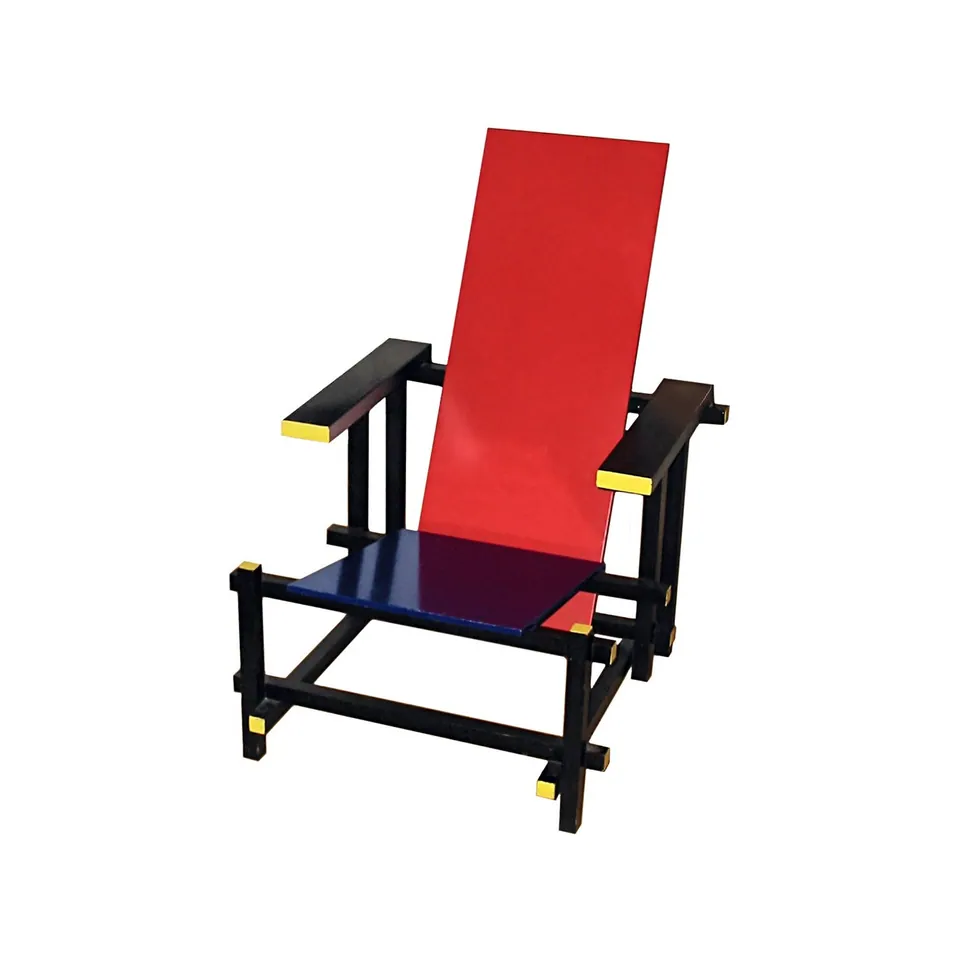 Red Blue ChairRietveld · 1918 · the same designer, sticks and boards
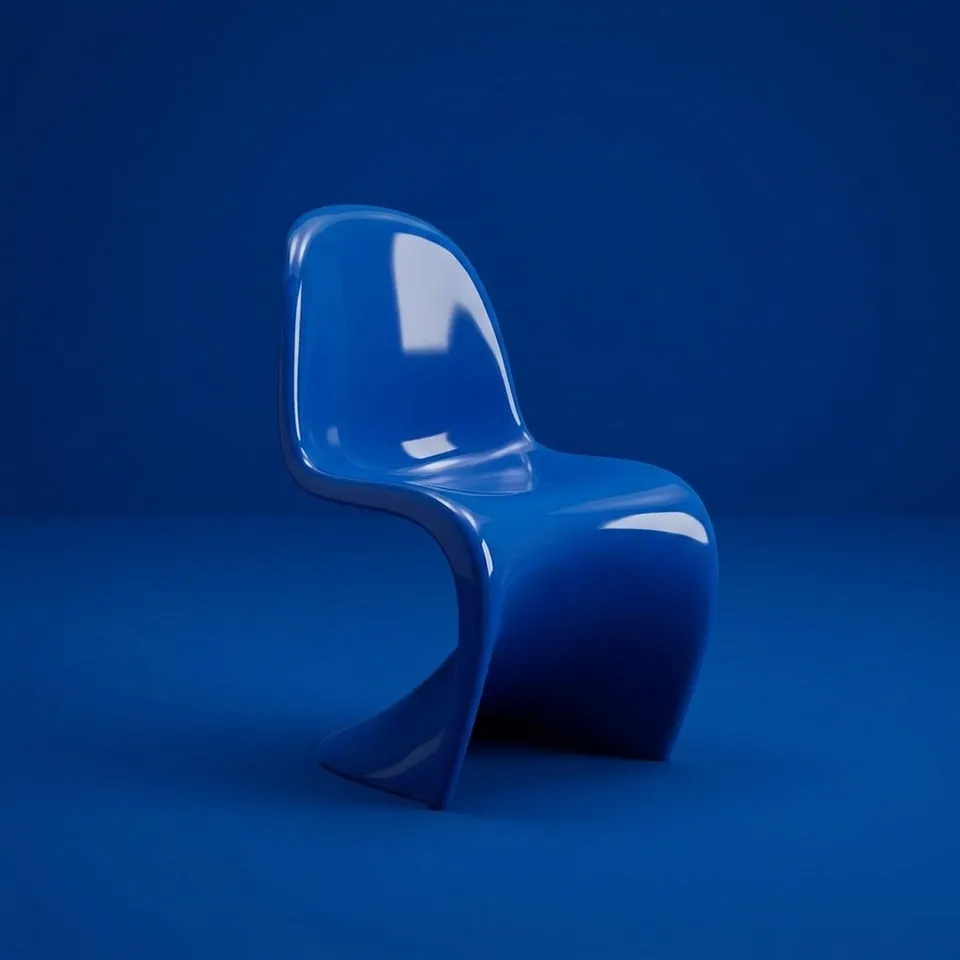 Panton ChairPanton · 1967 · a cantilever finally in one piece
In collections
Go further
- Gerrit Th. Rietveld, 1888-1964: The Complete Works, Marijke Küper and Ida van Zijl (1992)The Centraal Museum’s catalogue of all of Rietveld’s furniture and buildings, published for its 1992 exhibition in Utrecht.
- The Complete Rietveld Furniture, Peter Vöge (1993)A survey of the furniture alone, model by model, with an introduction by Paul Overy.
- Zig-Zag Chair, CIRC.368-1970, Victoria and Albert MuseumThe museum record, with a joint-by-joint description and a long passage from Theodore M. Brown’s 1958 study.
- Zigzagstoel (prototype, eerste versie), KNA 2962, Stedelijk Museum AmsterdamThe record for the first prototype in iron strip and fibreboard, with a short account of how the design moved to wood.
- Zigzag Chair, BK-C-2014-4, RijksmuseumThe record for the spruce chair that Rietveld made for himself from a Bruynzeel cabinet shelf.
Sources
- Zig-Zag Chair, CIRC.368-1970, Victoria and Albert Museum
- Zigzagstoel, BK-C-2014-4, Rijksmuseum
- Zig Zag Stoel, 2007.11, The Metropolitan Museum of Art
- Zig-Zag Chair, 96.609, San Francisco Museum of Modern Art

