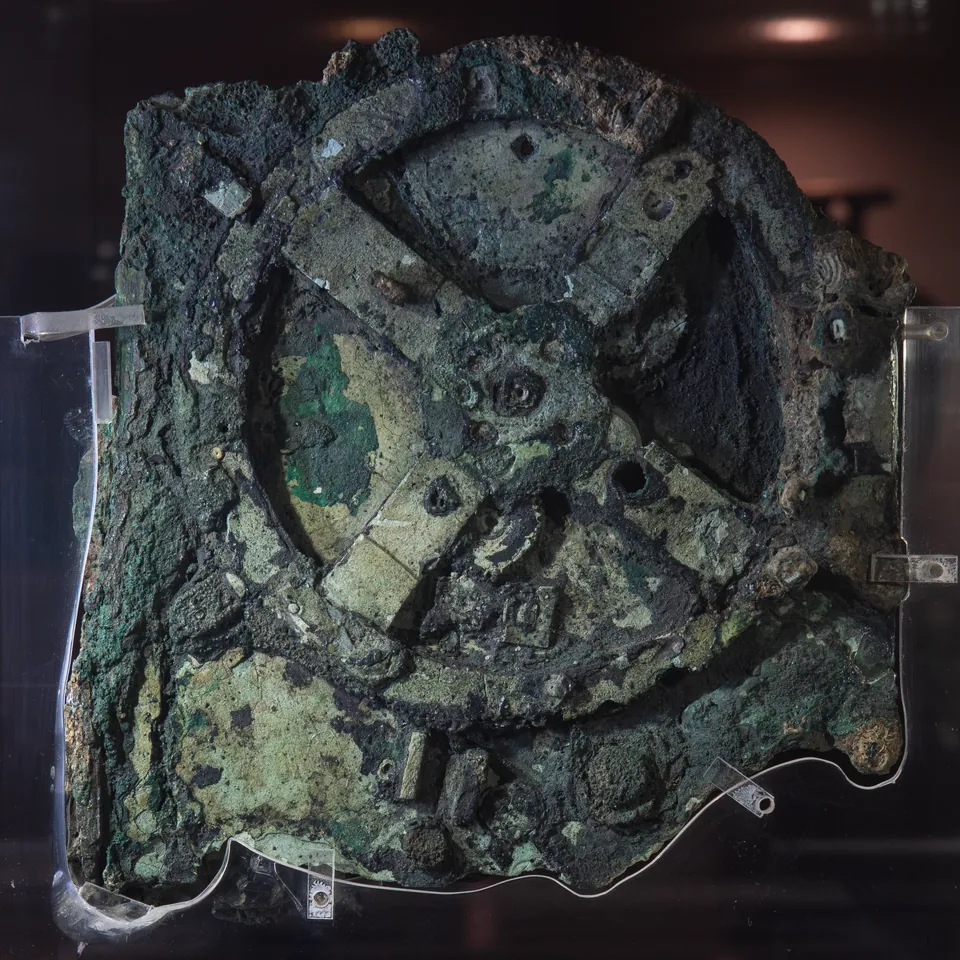
Nº 0178 · Geared astronomical instrument
Antikythera mechanism
Thirty surviving bronze gears, raised from a shipwreck.
Why it matters
It turned Greek astronomy and calendar cycles into a hand-cranked train of gears, with dials for the sun and moon, eclipse cycles and the four-year cycle of athletic games. Alexander Jones calls it the most complex scientific instrument from the ancient world.
Sponge divers from Symi raised it in 1901 from a wreck off the island of Antikythera, between the Peloponnese and Crete, during salvage work of 1900 to 1901; the National Archaeological Museum dates the wreck to about 60 to 50 BC. In May 1902 two corroded slabs showing gear teeth and Greek letters were noticed among the bronzes from the wreck at the museum in Athens. The remains now number 82 fragments with 30 surviving gears; reconstructions give it bronze dial faces about 17 by 32 cm in a wooden case, turned by a crank on the side. Its inscriptions are cut in letters about 2 to 2.5 mm high, and its date of manufacture is put in the second or first century BC.
What to notice
- The large gearThe largest wheel, with four spokes, fills most of fragment A.
- Small gearsSmaller toothed wheels sit inside the large one, fused by corrosion.
- Corroded bronzeTwo thousand years under the sea turned the bronze green and black.
3 min read
The full story
Scraps among the statues
Nobody knows who made the mechanism, or where. What is known begins with its loss. It went down with a ship carrying bronze and marble statues, glassware and furniture, and the divers who worked the wreck under the supervision of Greek ministry archaeologists were there for the statues. The mechanical pieces are reported to have come up late in the campaign, perhaps in June 1901, and lay for nearly a year among small unidentified scraps of bronze.
In this story
- Scraps among the statues
- One crank, many cycles
- Ten days with cigar boxes
- A third of a machine

The story continues in the app
- Materials
- Bronze gears and dial plates, once in a wooden case
- Dimensions
- Dial faces about 17 cm wide, 32 cm tall (reconstructed); fragment A about 18 by 15 cm
- Survives
- 82 fragments, 30 gears
- In collection
- National Archaeological Museum, Athens (X 15087)
- Status
- Real · incomplete; maker and place of making unknown
Connections
- Antiquity
- Scientific instruments
- Copper, brass and bronze
- Antikythera
- Athens
Nearby in the archive
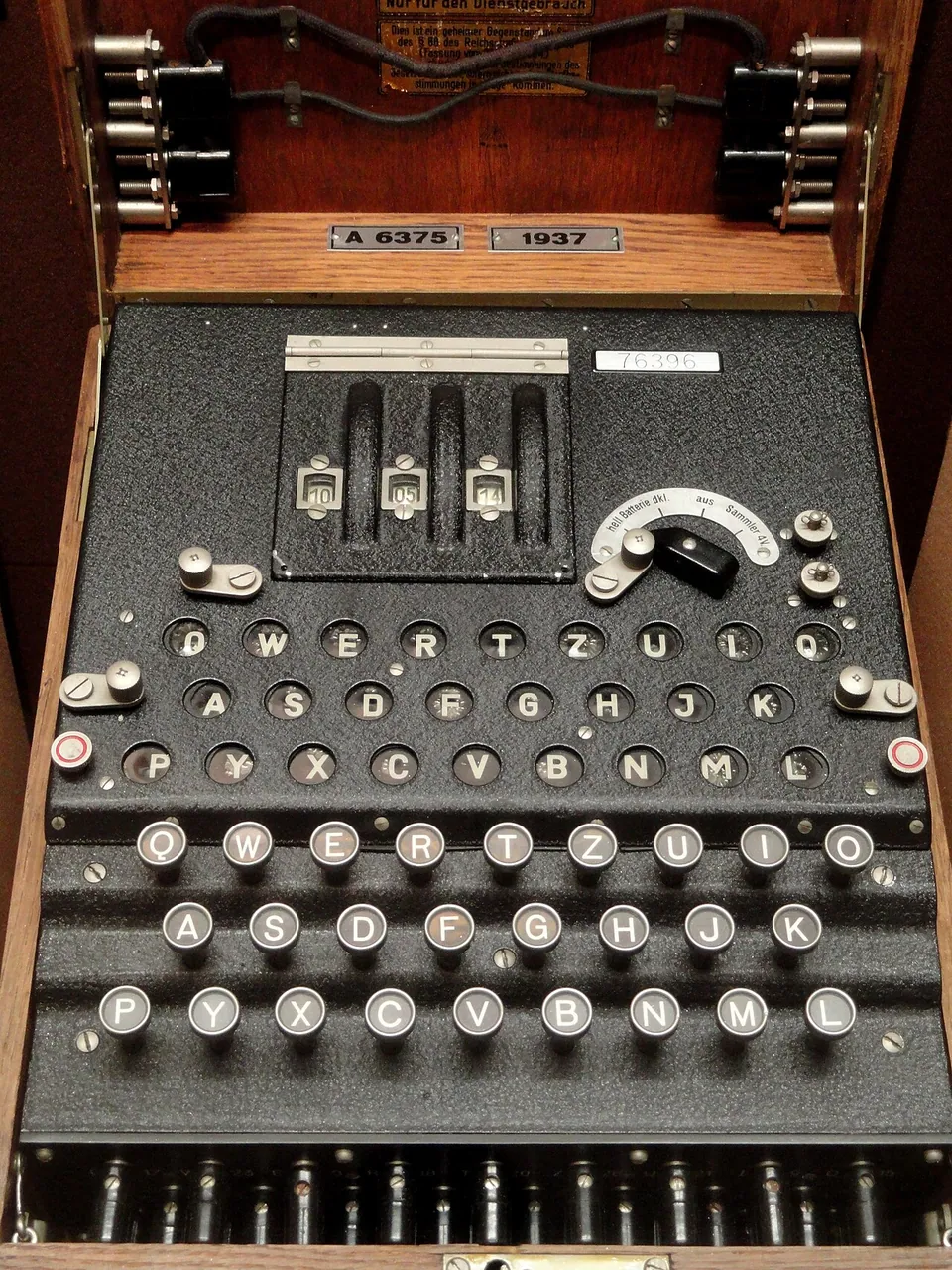 Enigma machineScherbius · 1918 · another machine that works through rotating wheels
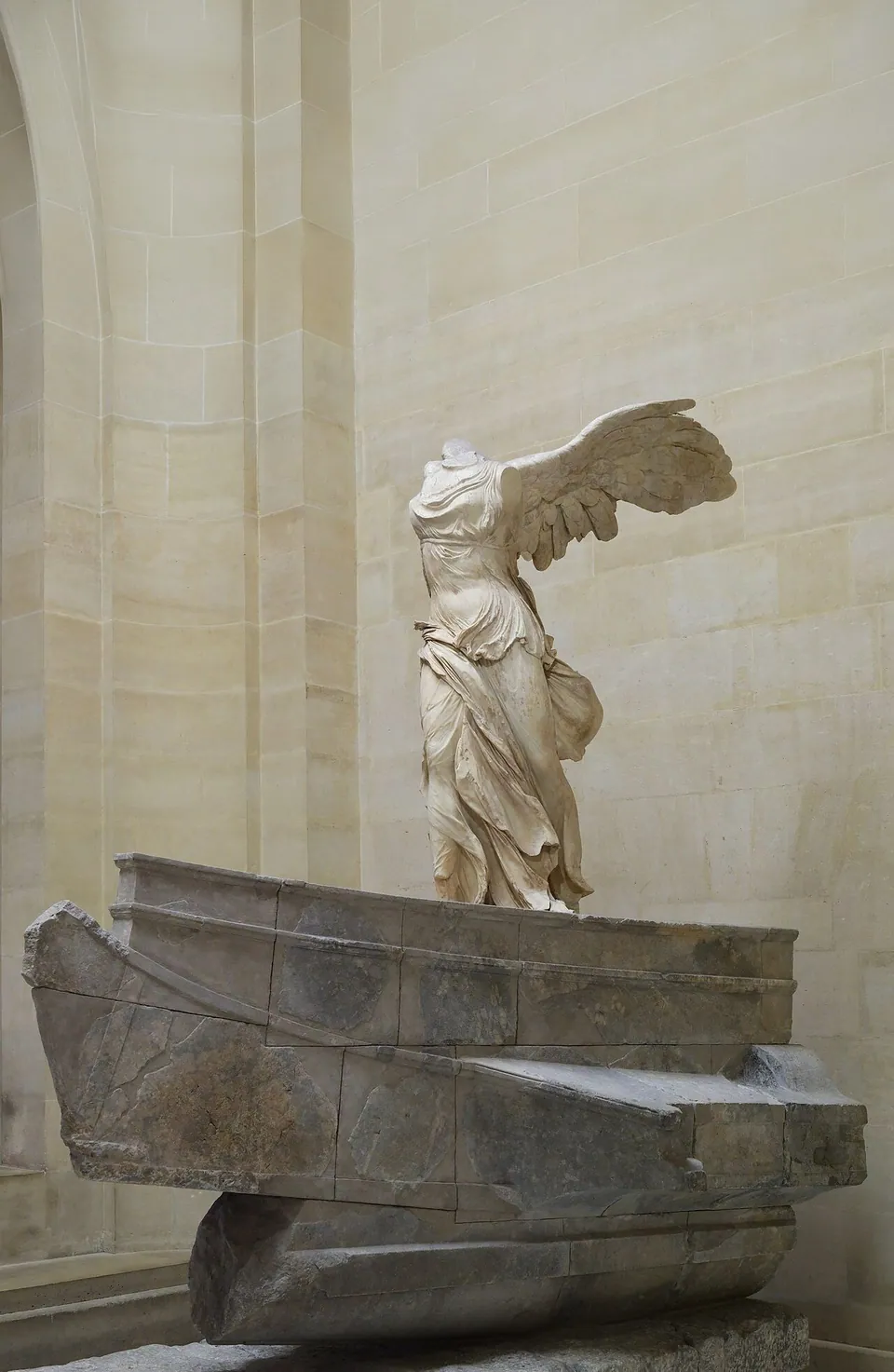 Winged Victory of SamothraceUnknown sculptor · c. 200 to 175 BC · Hellenistic Greece in the same centuries
In collections
Go further
- A Portable Cosmos: Revealing the Antikythera Mechanism, Scientific Wonder of the Ancient World, Alexander Jones (2017)A full account of the discovery, the research and the astronomy behind each dial, by a historian who edited the inscriptions.
- “Like Opening a Pyramid and Finding an Atomic Bomb”: Derek de Solla Price and the Antikythera Mechanism, Alexander Jones (2018)A paper in the Proceedings of the American Philosophical Society on Price’s work and what later research kept or corrected.
- A Model of the Cosmos in the ancient Greek Antikythera Mechanism, Tony Freeth and others, Scientific Reports (2021)The open-access paper that proposes a reconstruction of the lost planetary display, with CT images of the inscriptions.
- Antikythera Mechanism Research Project, Antikythera Mechanism Research ProjectThe research team’s site, with photographs of the fragments, radiographs, models and a list of publications.
- The Antikythera Shipwreck: The ship - the treasures - the Mechanism, National Archaeological Museum, AthensThe museum’s page for its 2012 to 2014 exhibition of the finds from the wreck, including the mechanism.
Sources
- "Like Opening a Pyramid and Finding an Atomic Bomb": Derek de Solla Price and the Antikythera Mechanism, Proceedings of the American Philosophical Society 162(3), 2018
- The Antikythera Shipwreck: The ship, the treasures, the Mechanism, National Archaeological Museum, Athens
- The Antikythera Mechanism at the National Archaeological Museum, Antikythera Mechanism Research Project
- Wikipedia (English), Wikimedia Foundation
- Antikythera mechanism, Wikipedia

