Nº 0412 · Monument
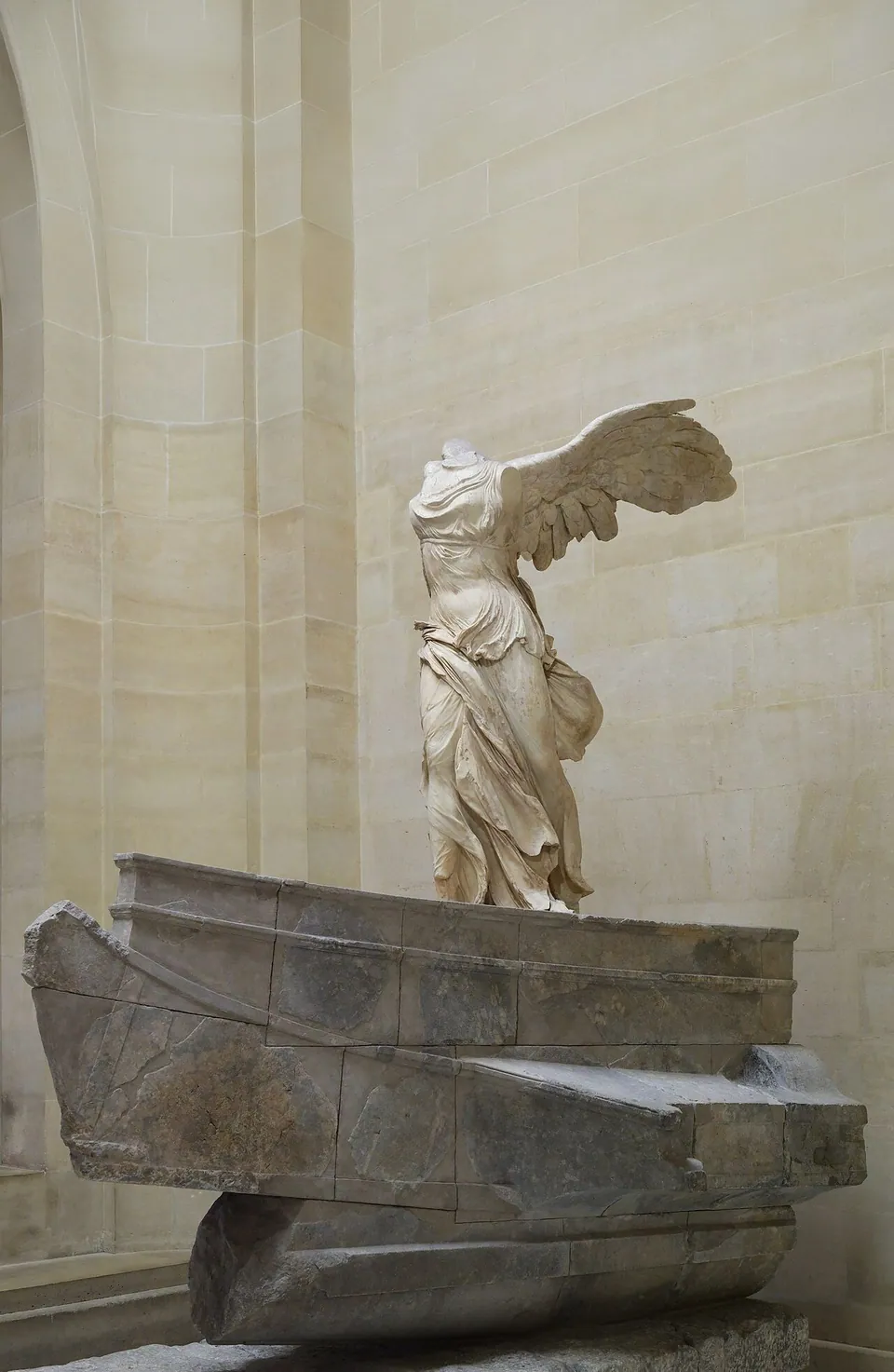
Winged Victory of Samothrace
Motion in marble, two thousand years before the Futurists.
Why it matters
A figure caught at the instant of landing: wind, weight and wet cloth carved in stone. Placed at the head of the Daru staircase, it became the Louvre's own emblem.
Found on Samothrace in 1863 by the French consul Charles Champoiseau, the figure was sent to Paris in fragments. The ship's prow she stands on was recovered and reassembled later, turning a statue back into the monument it was made to be.
3 min read
The full story
A niche above the theatre
The monument was made in the first quarter of the second century BC for the Sanctuary of the Great Gods on the Greek island of Samothrace. It stood at the highest point of the sanctuary’s western hill, in a rectangular niche cut into the slope above the theatre. It shows Nike, goddess of victory, coming down onto the prow of a warship. Most scholars read it as an offering after a sea battle, though they do not agree which one. The Louvre’s record gives the workshop as Rhodes, with a question mark.
In this story
- A niche above the theatre
- Two marbles, many blocks
- The ship comes later
- Still being pieced together

The story continues in the app
- Date
- c. 190 BC · approximate
- Height
- 2.44 m · 5.57 m with prow
- Period
- Hellenistic
- Status
- Original, partially restored
Connections
Nearby in the archive
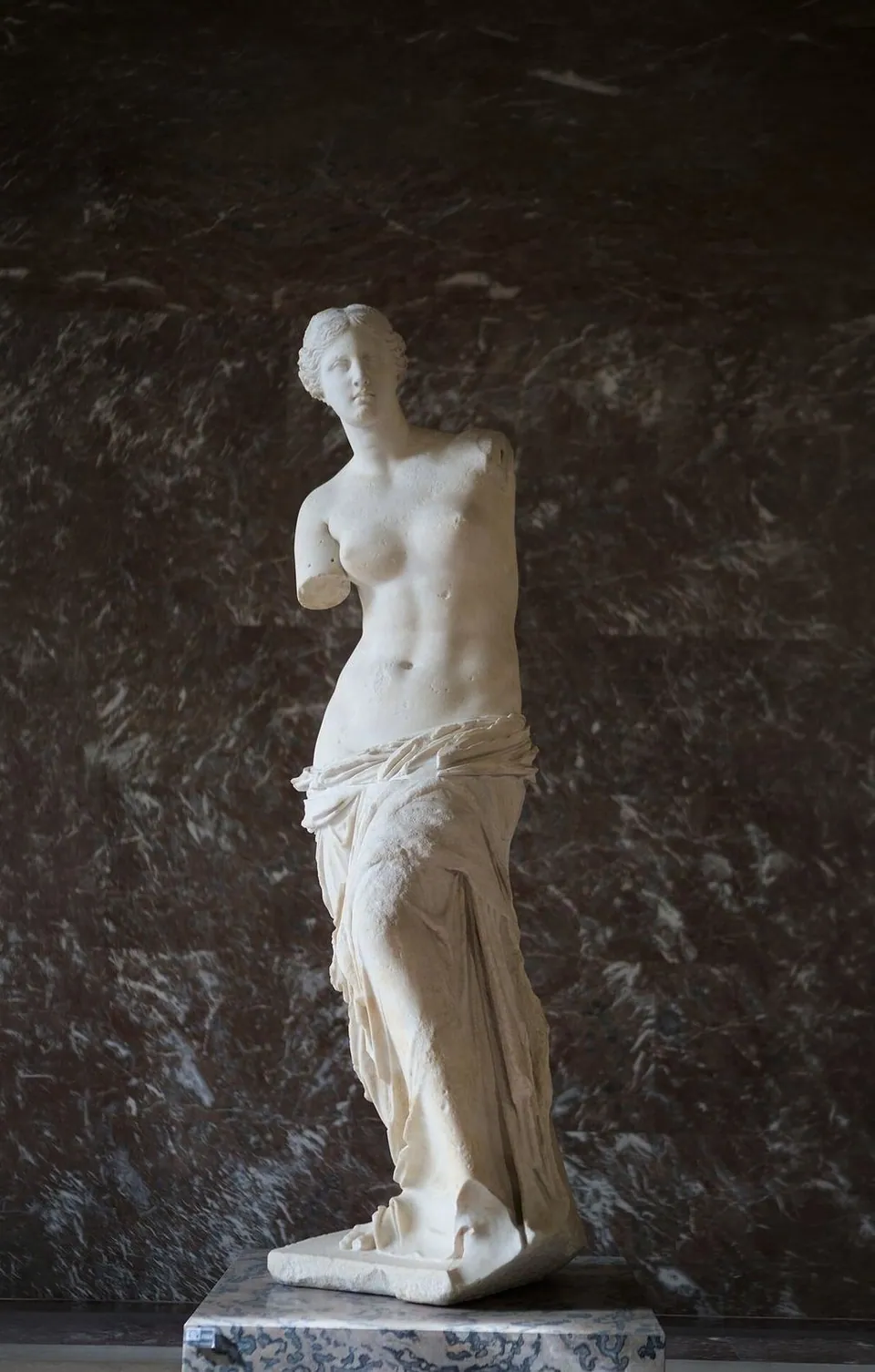 Venus de MiloHellenistic · the same rooms
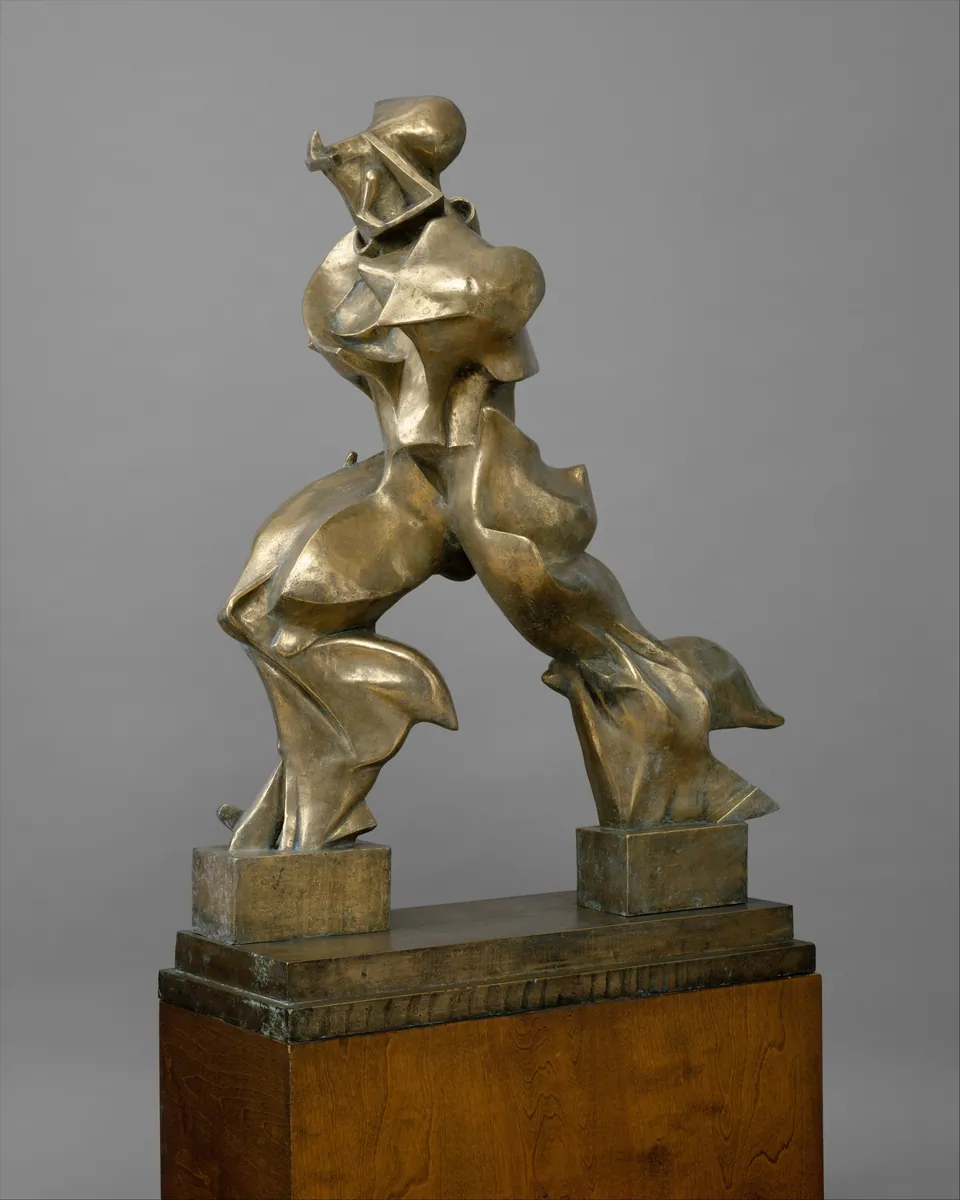 Unique Forms of Continuity in SpaceBoccioni · 1913 · her modern echo
In collections
Go further
- The Winged Victory of Samothrace: Rediscovering a Masterpiece, Marianne Hamiaux, Ludovic Laugier and Jean-Luc MartinezThe Louvre curators’ account of the monument and of what the 2013 to 2014 restoration found.
- Victoire de Samothrace, Ma 2369, Musée du LouvreThe collection record, with materials, measurements, estimated weight and a list of what is missing and what was restored.
- A Stairway to Victory, Musée du LouvreThe museum’s short history of the Daru staircase and of how the statue and its right hand came to be shown there.
- Nike Monument, American Excavations Samothrace, Emory UniversityThe excavators’ page on the niche where the monument stood, with its building history and the sequence of digs since 1863.
Sources
- Musée du Louvre, collection record, Musée du Louvre