Nº 0181 · Painted bust
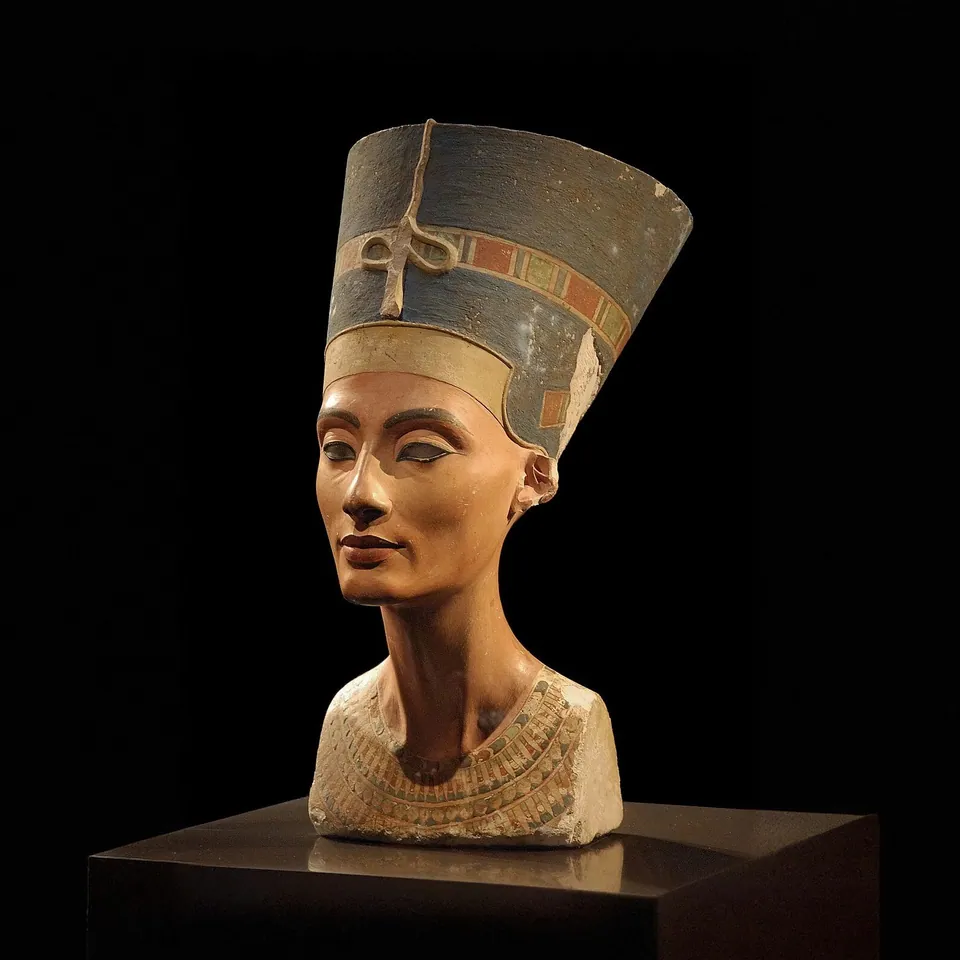
Bust of Nefertiti
Found in a sculptor’s workshop at Amarna, 1912.
Why it matters
Made in the reign of Akhenaten at his capital, Amarna, it is described by the Berlin museums as a masterpiece of the sculpture of its time. A CT study published in 2009 found a carved face in the limestone core under the painted stucco, with small differences at the cheeks and nose.
The German Oriental Society expedition led by Ludwig Borchardt and paid for by James Simon found it on 6 December 1912 at Tell el-Amarna, in the workshop of the chief sculptor Thutmose; the Berlin museums list the artist as unknown. It is painted limestone with stucco, about 49 cm high; the right eye holds an inlay of rock crystal set in black beeswax, and the left has none. After the division of finds in January 1913 it became Simon’s property; he gave it to the Berlin museums in 1920, and it was first shown in the Neues Museum on 1 April 1924. Egypt has asked for its return since that first display, and Germany points to the 1913 division as the basis of its ownership.
What to notice
- The crownA tall blue crown, ringed by a band of red, green and gold.
- The right eyeThe right eye has a rock crystal inlay; the left has none.
- The shouldersThe bust stops at the shoulders, painted with a broad collar.
3 min read
The full story
A sculptor’s storeroom
Around 1350 BC the pharaoh Akhenaten founded a new capital, Akhetaten, at the place now called Tell el-Amarna. Among its houses was a walled compound with living quarters and workshops, which an inscription found there later tied to a sculptor named Thutmose. The bust lay in one of its rooms, near a matching bust of the king and a store of plaster heads, and Borchardt believed it had stood on a shelf. He read it as a sculptor’s model. The Berlin museum now calls that question unsolved.
In this story
- A sculptor’s storeroom
- Limestone under thin plaster
- Eleven years out of sight
- Too fragile to travel

The story continues in the app
- Materials
- Painted limestone and stucco, rock crystal, black beeswax
- Dimensions
- 49 cm high, 24.5 cm wide, 35 cm deep
- Found
- 6 December 1912, workshop of Thutmose, Tell el-Amarna
- In collection
- Egyptian Museum and Papyrus Collection, Neues Museum, Berlin (ÄM 21300)
- Status
- Real · Egypt has asked for its return
Connections
- Amarna art
- Antiquity
- Sculpture
- Stone
- Tell el-Amarna
- Berlin
Nearby in the archive
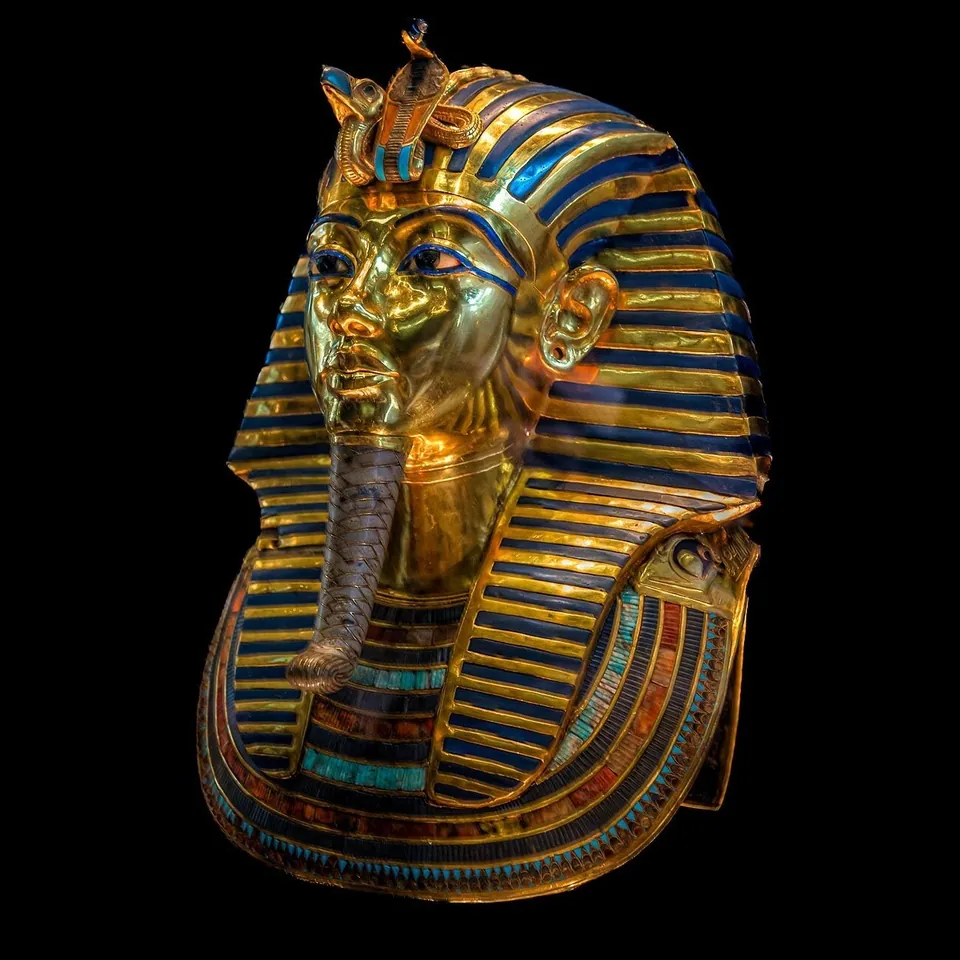 Mask of TutankhamunMakers unknown · c. 1323 BC · the same dynasty, in gold
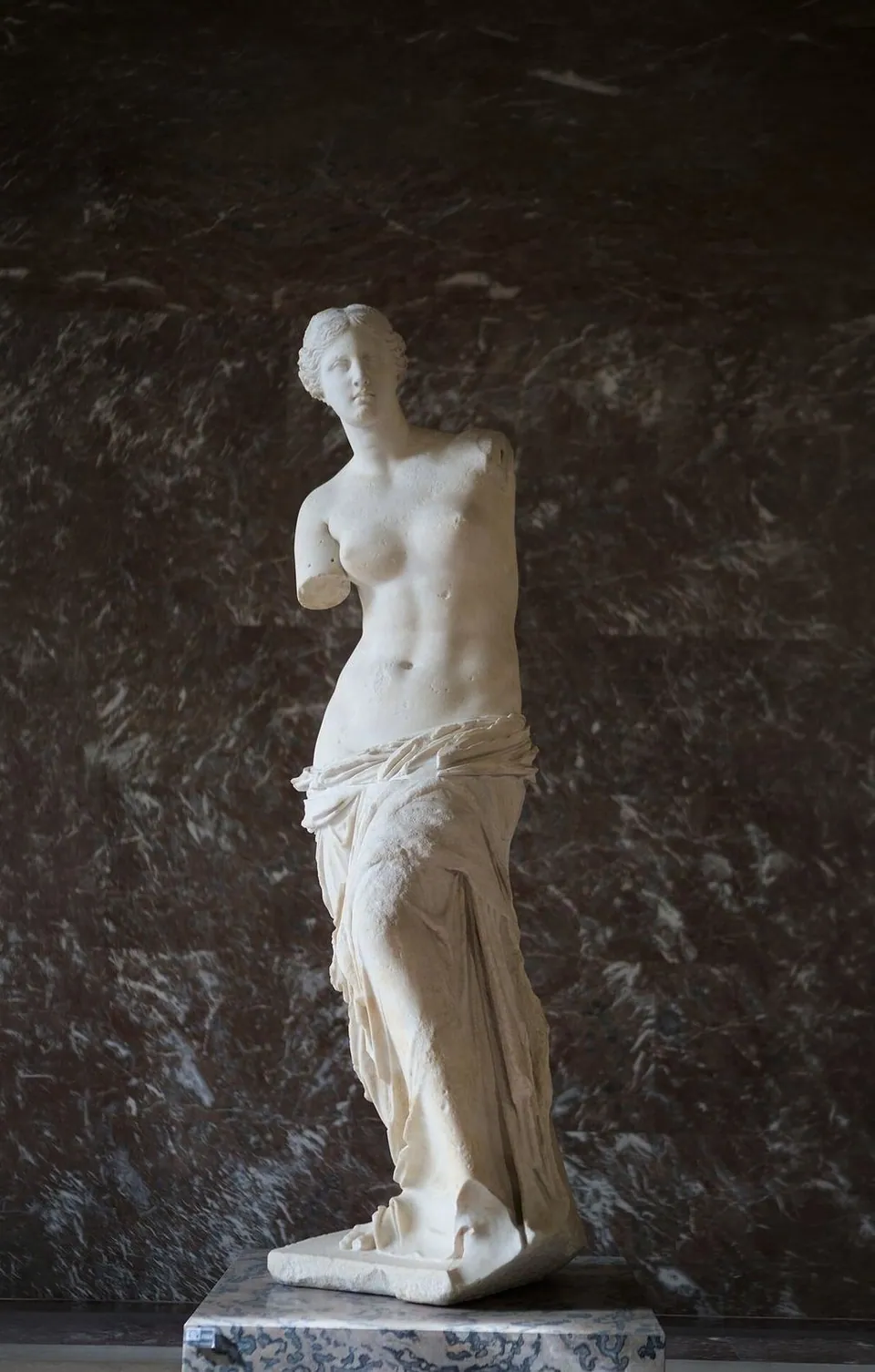 Venus de MiloUnknown sculptor · c. 150 to 125 BC · another ancient figure now far from where it was found
In collections
Go further
- Nefertiti’s Face: The Creation of an Icon, Joyce Tyldesley (2018)A history of the bust from Thutmose’s workshop to its discovery, its copies and its fame in Berlin.
- In the Light of Amarna: 100 Years of the Nefertiti Discovery, Friederike Seyfried (ed.)The Berlin exhibition catalogue, with essays on the excavation, the workshop of Thutmose and the dealings of Borchardt and Simon.
- The Bust of Nefertiti, Staatliche Museen zu BerlinThe museum’s own pages on the find, the materials, the display history and the reception, with diary extracts and archive photographs.
- Nefertiti: recreating an icon, Joyce Tyldesley (2018)A magazine article on Thutmose’s workshop and on the replicas through which most people came to know the bust.
- First exhibition of the bust of Nefertiti 100 years ago, Stiftung Preußischer Kulturbesitz (2024)The holding foundation’s account of the 1913 division, Simon’s gift and the 1924 display, with its position on ownership.
Sources
- Bust of Nefertiti, ÄM 21300 (record reproduced by European History Online), Staatliche Museen zu Berlin, Egyptian Museum and Papyrus Collection
- First exhibition of the bust of Nefertiti 100 years ago, Stiftung Preussischer Kulturbesitz
- Im Licht von Amarna. 100 Jahre Fund der Nofretete, Land Berlin (berlin.de)
- Hidden face in Nefertiti bust examined with CT scan, ScienceDaily
- Wikipedia (English), Wikimedia Foundation
- Nefertiti Bust, Wikipedia