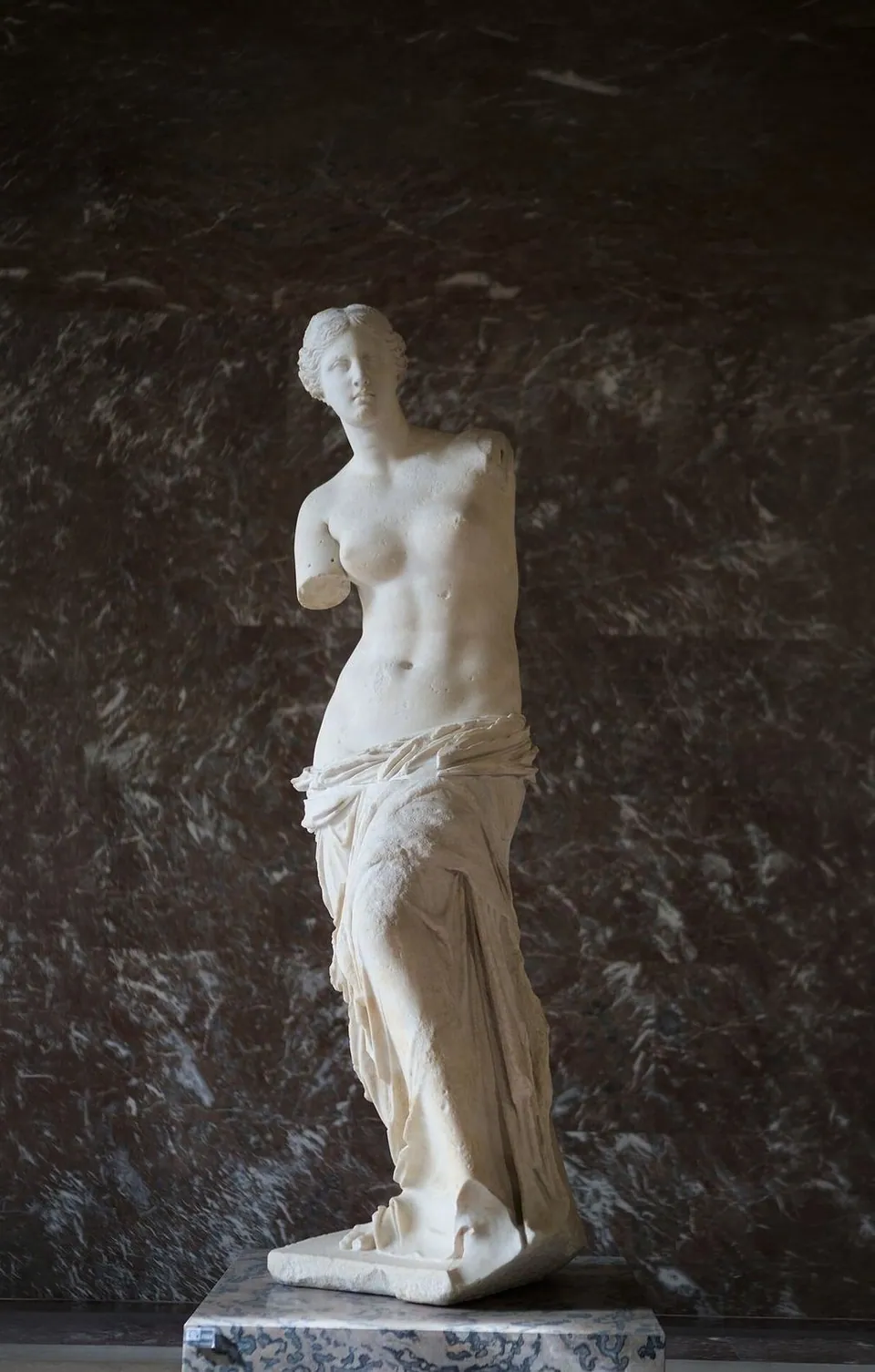
Nº 0055 · Statue
Venus de Milo
A goddess in marble, found on Melos in 1820.
Why it matters
It has stood in the Louvre since 1821 and became, for a wide public, the image of ancient Greek sculpture. The missing arms have become part of how it is seen.
It was found on the island of Melos in 1820 and entered the Louvre the next year. The Louvre dates it to about 150 to 125 BC and names no sculptor. It is carved from Parian marble in two blocks joined at the hips, and it depicts Aphrodite, the goddess the Romans called Venus.
What to notice
- The left shoulderWhere the left arm was, only the shoulder remains.
- The hipsTwo blocks of marble meet here, at the hips.
- The draperyHeavy drapery slips down over the hips and legs.
3 min read
The full story
A farmer’s field, 1820
The statue came out of the ground on 8 April 1820 on Melos, a Cycladic island then under Ottoman rule. A Greek farmer struck it while digging. Olivier Voutier, a French sailor with an interest in archaeology, was present and urged him to go on. They uncovered two large pieces of a female figure and a third, smaller one, and with them a fragment of an arm, a hand holding an apple and two herms.
In this story
- A farmer’s field, 1820
- Two blocks and a tenon
- Shown as she was found
- A later date, a room alone

The story continues in the app
- Materials
- Parian marble, two blocks
- Dimensions
- 204 cm high
- Found
- Melos, 1820
- In collection
- Louvre, Paris (Ma 399)
- Status
- Real · fragmentary
Connections
Nearby in the archive
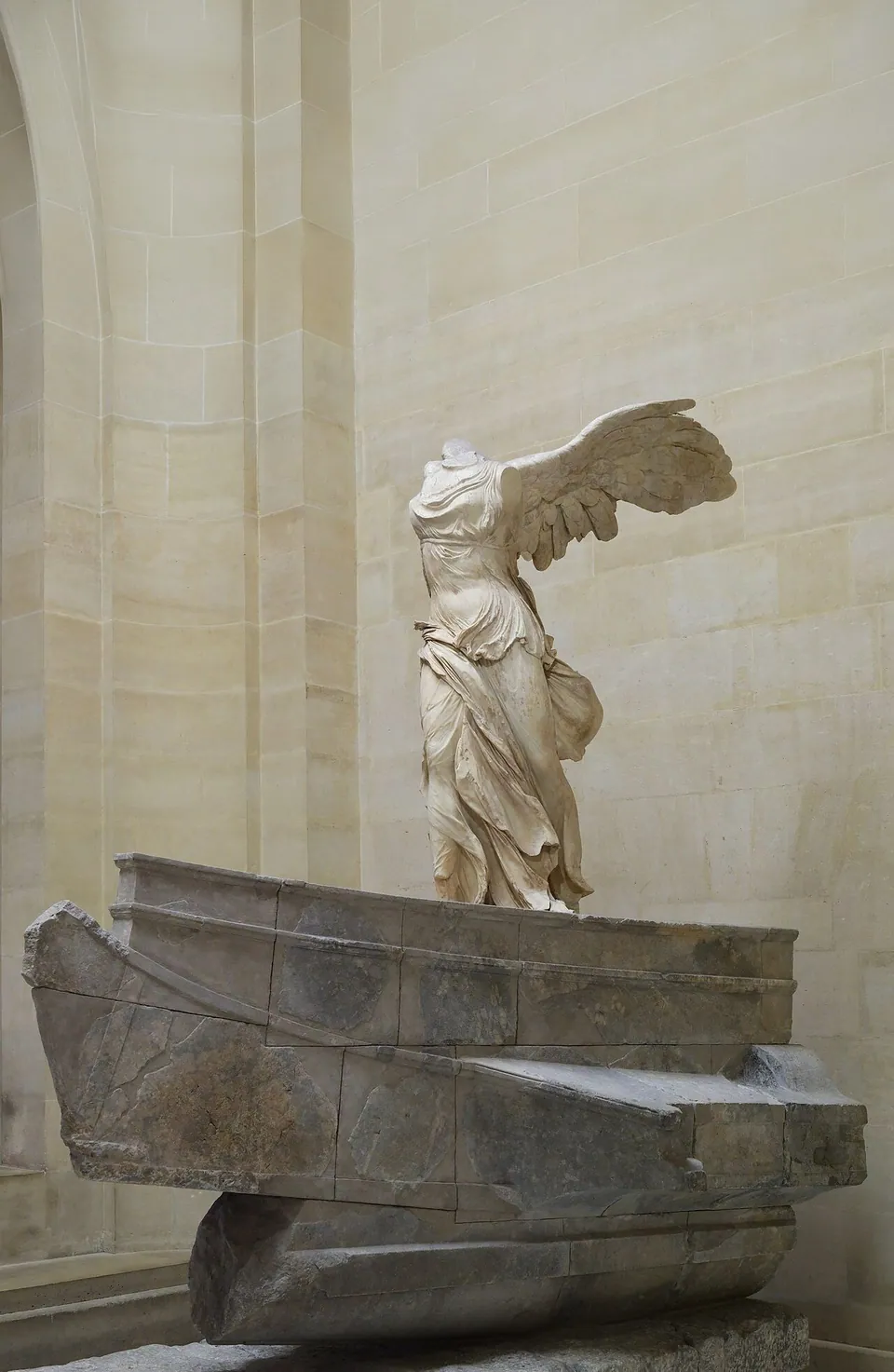 Winged Victory of SamothraceHellenistic · the same museum, the same age
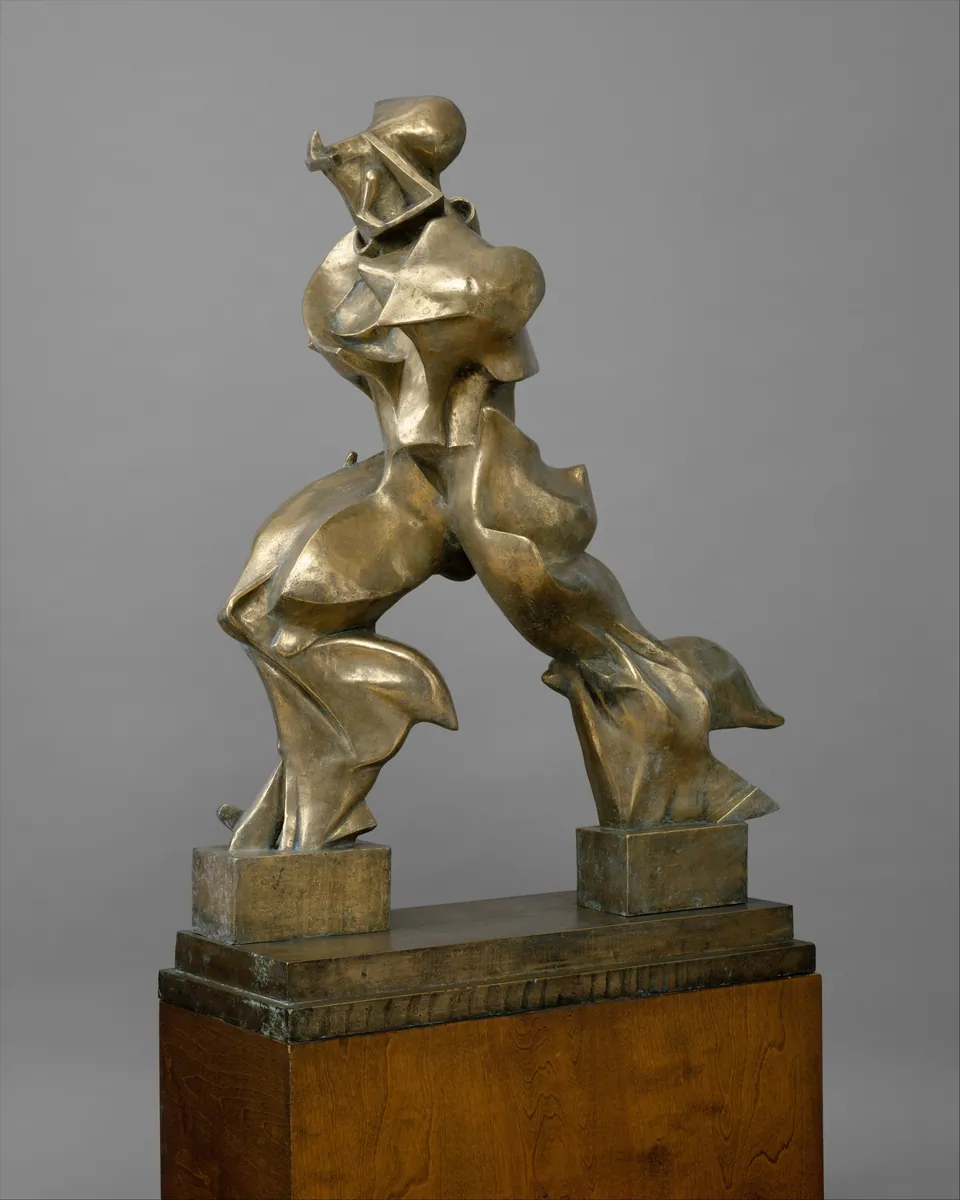 Unique Forms of Continuity in SpaceBoccioni · 1913 · another figure without arms
In collections
Go further
- Disarmed: The Story of the Venus de Milo, Gregory Curtis (2003)A narrative history of the discovery, the scramble to buy the statue and the long arguments over its date and its arms.
- Creating the Past: The Vénus de Milo and the Hellenistic Reception of Classical Greece, Rachel Kousser, American Journal of Archaeology (2005)A scholarly study of the statue in its setting on Melos and of how it reuses classical forms.
- Vénus de Milo (Aphrodite), Ma 399, Musée du LouvreThe museum’s collection record, with date, marble, measurements, condition and photographs.
- Ideal Greek Beauty: Venus de Milo and the Galerie des Antiques, Musée du LouvreThe Louvre’s account of the statue and of the gallery where it stands.
Sources
- Vénus de Milo (Aphrodite), Ma 399, Musée du Louvre
- Venus de Milo, Wikipedia

