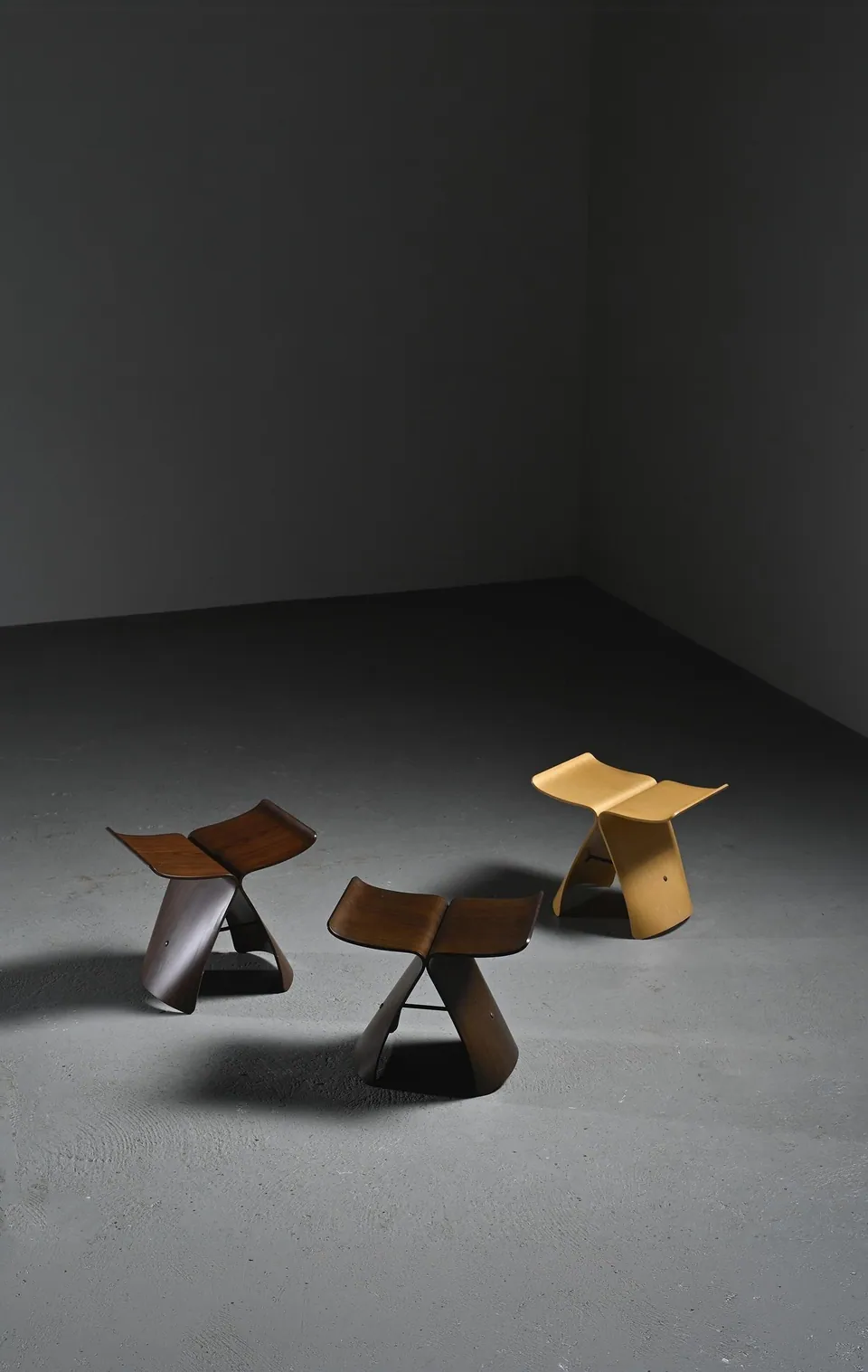
Nº 0050 · Stool
Butterfly Stool
Two pieces of plywood and one brass bar.
Why it matters
Yanagi joined two identical halves of moulded plywood with a single bar under the seat. It took the plywood moulding of Charles and Ray Eames into a form that reads as Japanese.
Tendo Mokko, a plywood maker in Tendo, developed it with Yanagi, and a research institute in Sendai that had moulded plywood for wartime aircraft built the prototype. Designed in 1954, it went into production in 1956. Tendo still makes it.
What to notice
- Where the halves meetTwo identical halves meet at the centre of the seat.
- The brass barOne bar between the legs holds the whole stool together.
- The seat edgeThe seat edge lifts at each end, the wing in the name.
3 min read
The full story
Paper before plywood
Sori Yanagi was born in Tokyo in 1915, the son of Soetsu Yanagi, who founded the Mingei folk craft movement. He studied painting at the Tokyo art school in the 1930s, and in the early 1940s he assisted the French designer Charlotte Perriand during her stay in Japan. In the early 1950s he set up his own industrial design office.
In this story
- Paper before plywood
- Beech, rosewood and steam
- Matsuya, then Milan
- Two makers, one form

The story continues in the app
- Materials
- Rosewood-faced plywood, brass
- Dimensions
- About 39 × 42 × 31 cm
- Made from
- 1956, by Tendo Mokko
- In collection
- The Met · MoMA · V&A
- Status
- Real · still in production
Connections
- Sori Yanagi
- Tendo Mokko
- Mingei
- Postwar era
- Furniture design
- Plywood
- Wood
- Tendo
Nearby in the archive
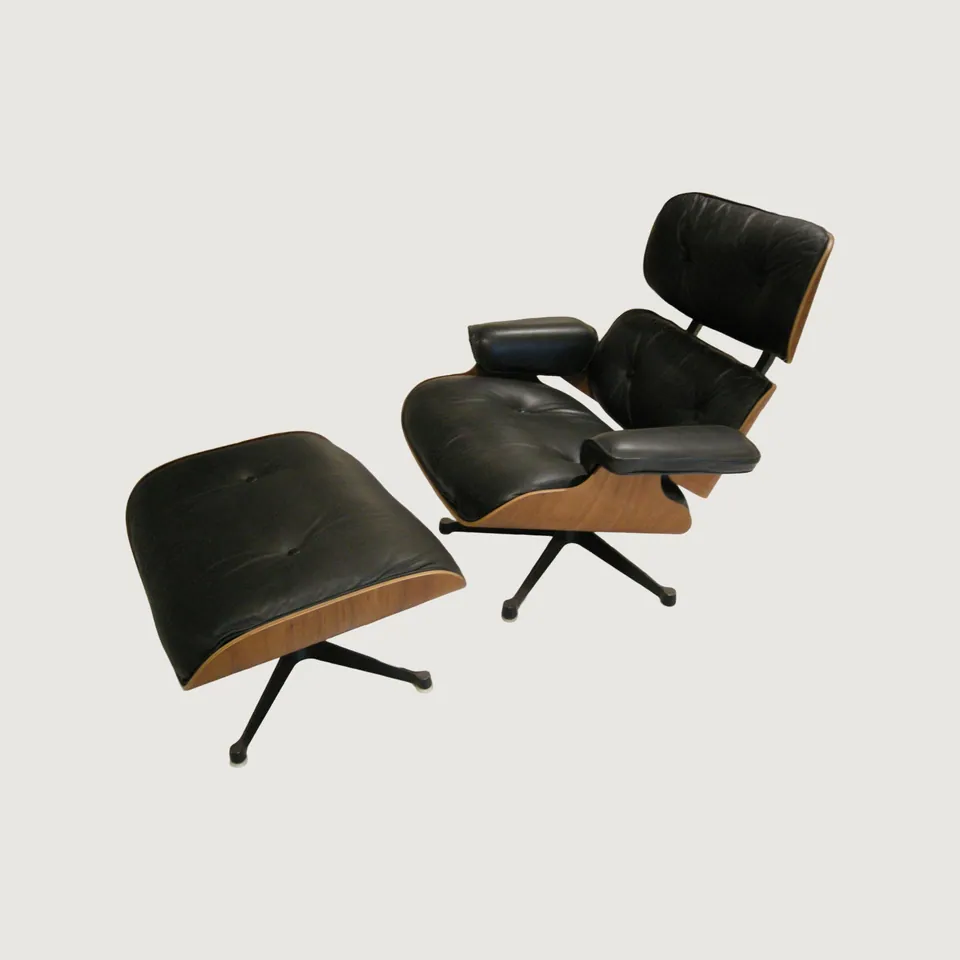 Eames Lounge ChairCharles and Ray Eames · 1956 · the plywood it learned from
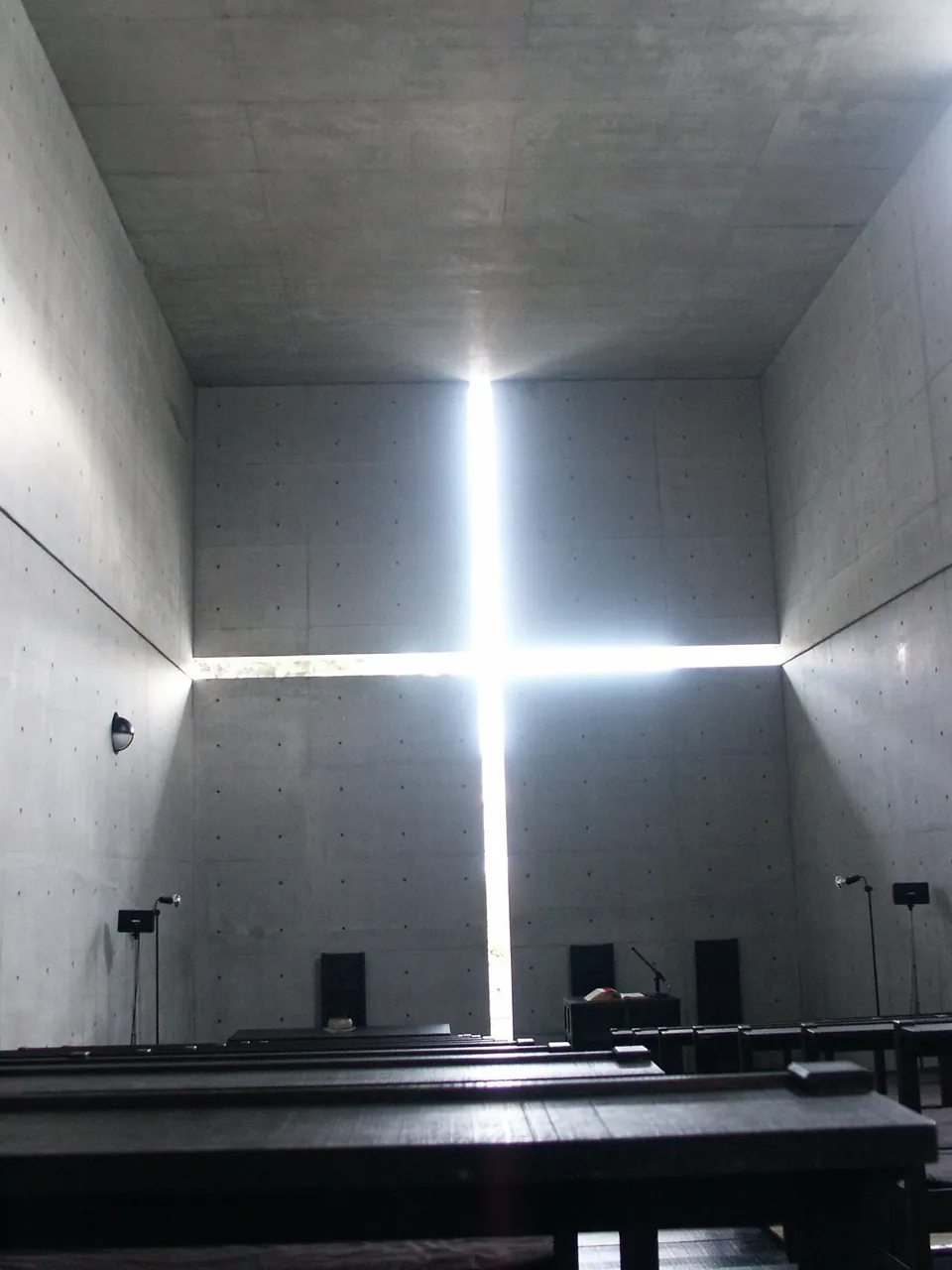 Church of the LightAndo · 1989 · Japanese, and one material only
In collections
Go further
- Japanese Design Since 1945: A Complete Sourcebook, Naomi Pollock (2020)A survey of Japanese product, furniture and graphic design after the war, with Yanagi and the stool among its subjects.
- Butterfly stool, object O1370748, Victoria and Albert MuseumThe museum record, with photographs, measurements and a note on the Sendai institute that helped build the prototype.
- Butterfly stool, JAPAN Design Resource DatabaseA record made with Japan’s Ministry of Economy, Trade and Industry, with dimensions, materials and downloadable 3D data of the stool.
- ビジネス・ケース (株)天童木工, 村山貴俊 (Takatoshi Murayama), Tohoku Gakuin University (2012)A business case study of Tendo Mokko, in Japanese, covering its wartime origins, its plywood moulding process and the making of the stool.
- Pair of Butterfly stools, accession 2021.297, National Gallery of VictoriaThe record for an early rosewood pair, with a short text on Yanagi and the two readings of the shape.
Sources
- The Met collection record 1988.195, The Metropolitan Museum of Art
- V&A collection record O1370748, Victoria and Albert Museum
- NGV collection record 2021.297, National Gallery of Victoria

