Nº 0221 · Modular storage
Componibili
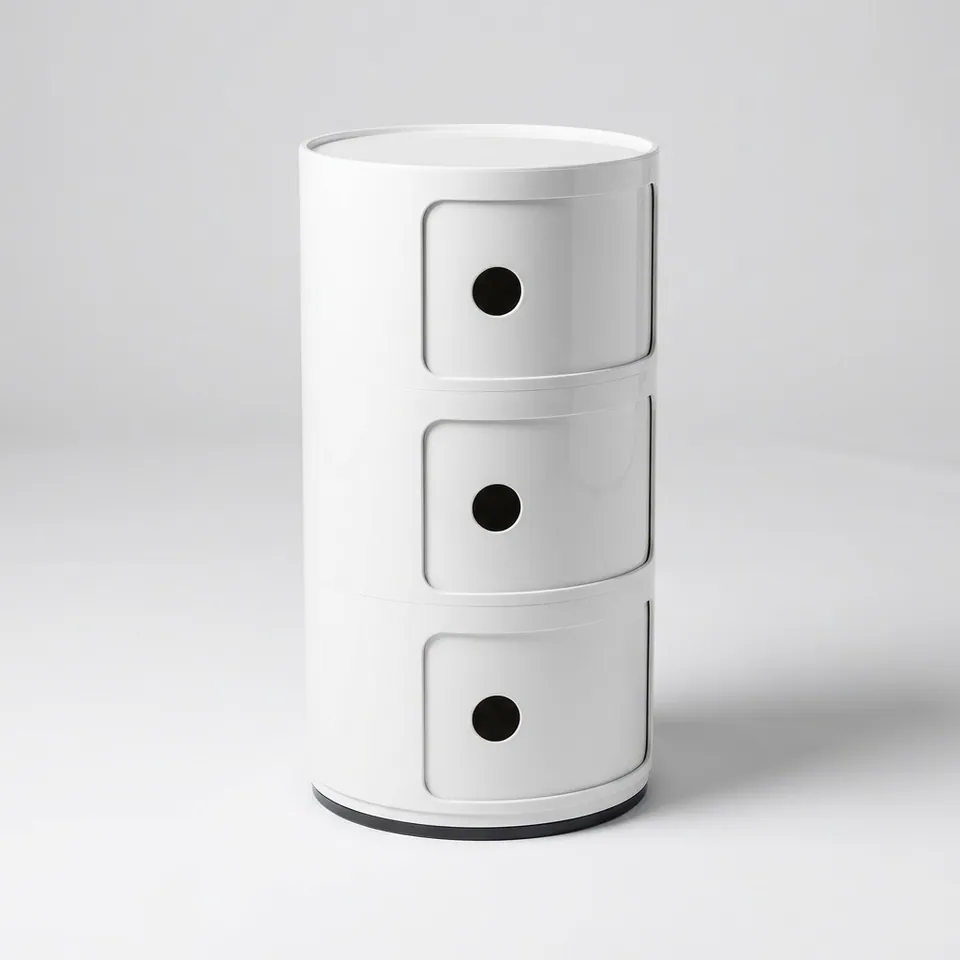
Stacked plastic drums, opened by a finger hole.
Why it matters
The Componibili made a whole piece of furniture from injection-moulded ABS: round modules that stack without screws or pins and open without a handle. Salone del Mobile and Cose di Casa report it still in production, and among Kartell’s best sellers, after more than fifty years.
Anna Castelli Ferrieri, who had founded Kartell in Milan in 1949 with her husband, the chemical engineer Giulio Castelli, designed the units; the round version was shown at the Milan furniture fair in 1967. Each element has an interlocking profile, so the modules stack without fixings, and a curved front panel slides open by a round hole cut in it. One element makes a stool, two a nightstand, three a small cabinet and four a shelf, and the lids can be lifted off and used as trays. The unit shown is a current white one with three elements.
What to notice
- The finger holeA round hole cut in the sliding front serves as the handle.
- Where modules meetA thin line marks each join; the elements lock together without screws.
- The curved frontEach front panel follows the curve of the cylinder and slides round it to open.
2 min read
The full story
A chemist and an architect
Kartell was founded in Milan in 1949 by Giulio Castelli, a chemical engineer, and his wife Anna Castelli Ferrieri. Its first product, released that year, was a ski rack for cars, and household objects in plastic followed. Castelli Ferrieri, born in Milan, had graduated in architecture from the Politecnico, one of the first women in Italy to do so, with a thesis on the Galleria Vittorio Emanuele II. She trained under Franco Albini and worked with the architect Ignazio Gardella, first as an intern and later as a partner.
In this story
- A chemist and an architect
- One material, no fittings
- Stool, nightstand, cabinet
- Fifty years on the line

The story continues in the app
- Materials
- Injection-moulded ABS plastic, coloured in the mass
- Dimensions
- About 58.5 cm high and 32 cm across with three elements (retail figure)
- Configurations
- One to four elements; the lids double as trays
- Maker
- Kartell, Milan; metal finishes added in 2014
- Status
- Real · shown 1967, still in production
Connections
Nearby in the archive
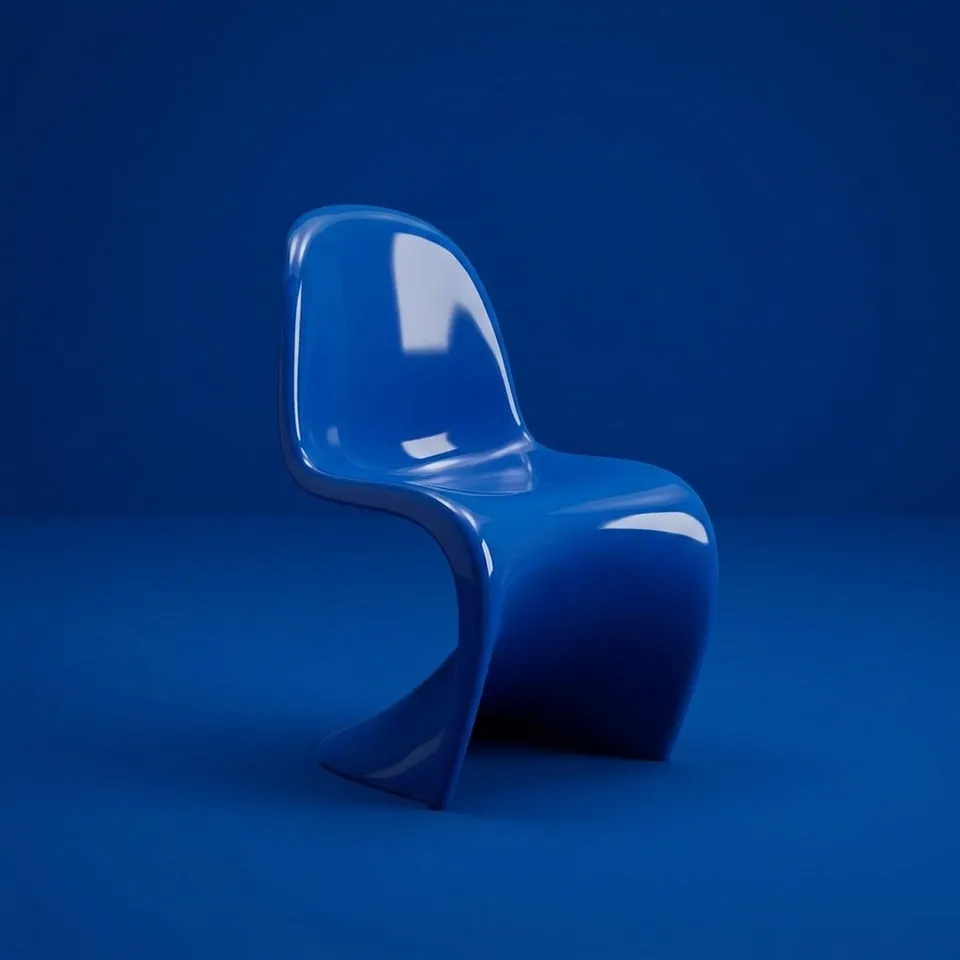 Panton ChairVerner Panton · 1967 · a chair moulded in plastic in the same year
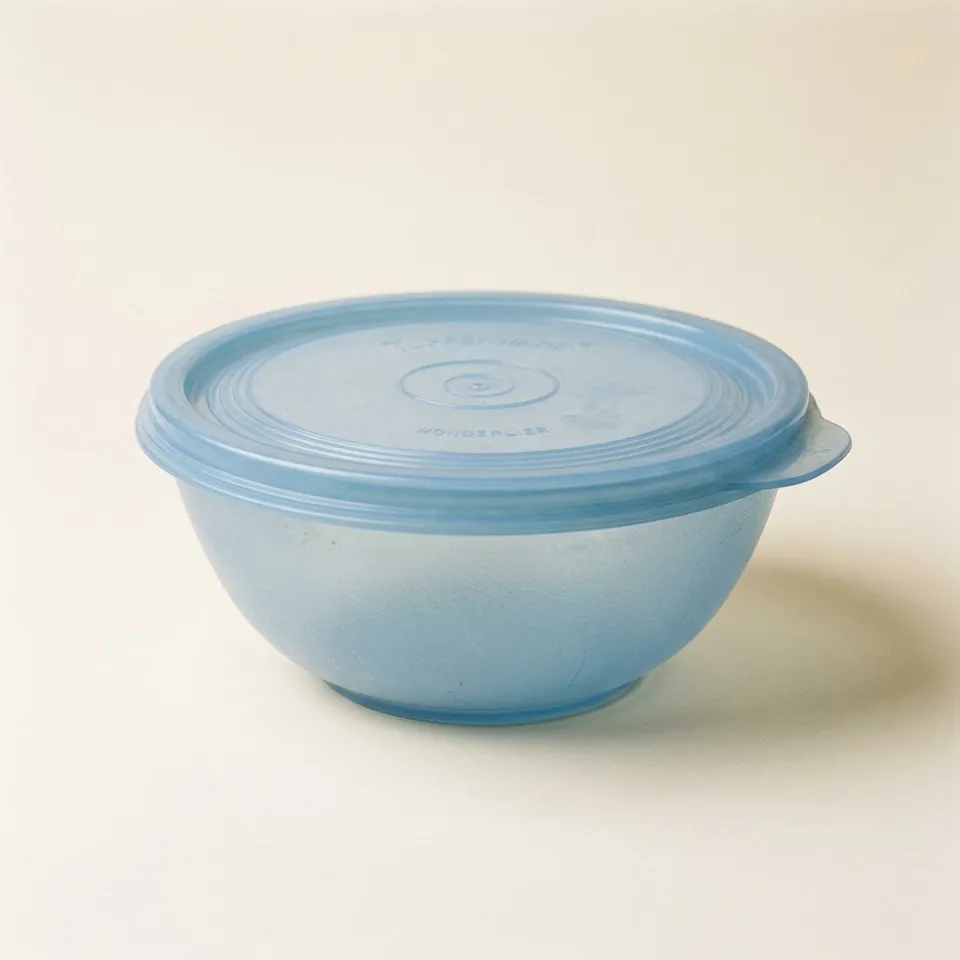 Wonderlier bowlEarl Tupper · 1946 · household plastic made for everyday use
In collections
Go further
- Anna Castelli Ferrieri, Cristina Morozzi (1993)An Italian monograph on the designer, published by Laterza.
- Italy: The New Domestic Landscape, Emilio Ambasz (1972)The catalogue of MoMA's 1972 survey of Italian design for the home, the period in which the Componibili were new.
- Anna Castelli Ferrieri: form, material, and a democratic vision, Salone del Mobile.MilanoA short profile from the Milan fair where the round units were first shown, covering the square and round versions.
- Anna Castelli Ferrieri's Plastic Fantastic, Rebecca Veit, Core77 (2015)A career sketch that places the Componibili among her other work for Kartell.
- I Componibili di Kartell festeggiano mezzo secolo, Cose di Casa (2017)An Italian article for the fiftieth anniversary, with the original product code and the stool to shelf configurations.
Sources
- Anna Castelli Ferrieri: form, material, and a democratic vision, Salone del Mobile.Milano
- I Componibili di Kartell festeggiano mezzo secolo, Cose di Casa
- History of design: Kartell Componibili storage module, Interior Notes
- Kartell Componibili 3-Tier Storage, MoMA Design Store
- Wikipedia (English), Wikimedia Foundation

