Nº 0105 · Exhibition building
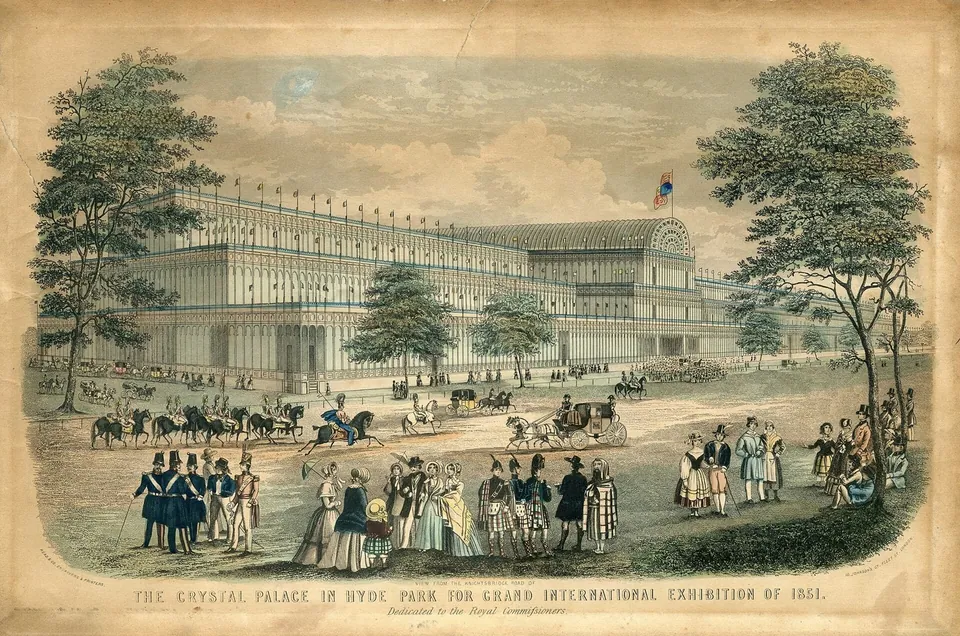
Crystal Palace
Sketched on blotting paper in June 1850.
Why it matters
Paxton turned what he had learned building glasshouses at Chatsworth into a hall of prefabricated cast iron and glass, about 563 m long, that went up in months and could be taken down again. The V&A calls it the first structure to use iron on such a scale.
Joseph Paxton, head gardener at Chatsworth, drew the first design in pen and ink on pink blotting paper on 11 June 1850, at a railway board meeting in Derby. Fox, Henderson and Co built it in Hyde Park for the Great Exhibition, which ran from 1 May to 15 October 1851. It was taken down and rebuilt, enlarged, at Sydenham, where it reopened in 1854, and fire destroyed it in November 1936. The main photograph, a calotype of 1851, looks west along the nave from the transept.
What to notice
- The roofA glazed roof on a grid of slim iron members lights the whole nave.
- The galleriesA painted sign points to the galleries, carried on iron columns along both sides.
- The exhibitsSculpture and exhibits stand in the nave, some still wrapped in cloth.
3 min read
The full story
A gardener’s late entry
The idea of a great exhibition in London took shape in 1849 at the Society of Arts, under its president, Prince Albert. A Royal Commission was formed to run it, and a building committee held a competition for designs. It received 245 entries and could not settle on any of them. The committee then drew up its own scheme, a brick hall that was ridiculed when it was published.
In this story
- A gardener’s late entry
- Built around one pane
- Shilling days
- After Hyde Park

The story continues in the app
- Materials
- Cast iron, wood and about 300,000 panes of glass
- Dimensions
- About 563 m long
- Maker
- Fox, Henderson and Co
- In collection
- Paxton’s first sketch: V&A, London (E.575-1985)
- Status
- Lost · burned in 1936
Connections
- Joseph Paxton
- Fox, Henderson and Co
- Royal Commission for the Exhibition of 1851
- Age of Industry
- Architecture
- Iron
- Glass
- Wood
- London
Nearby in the archive
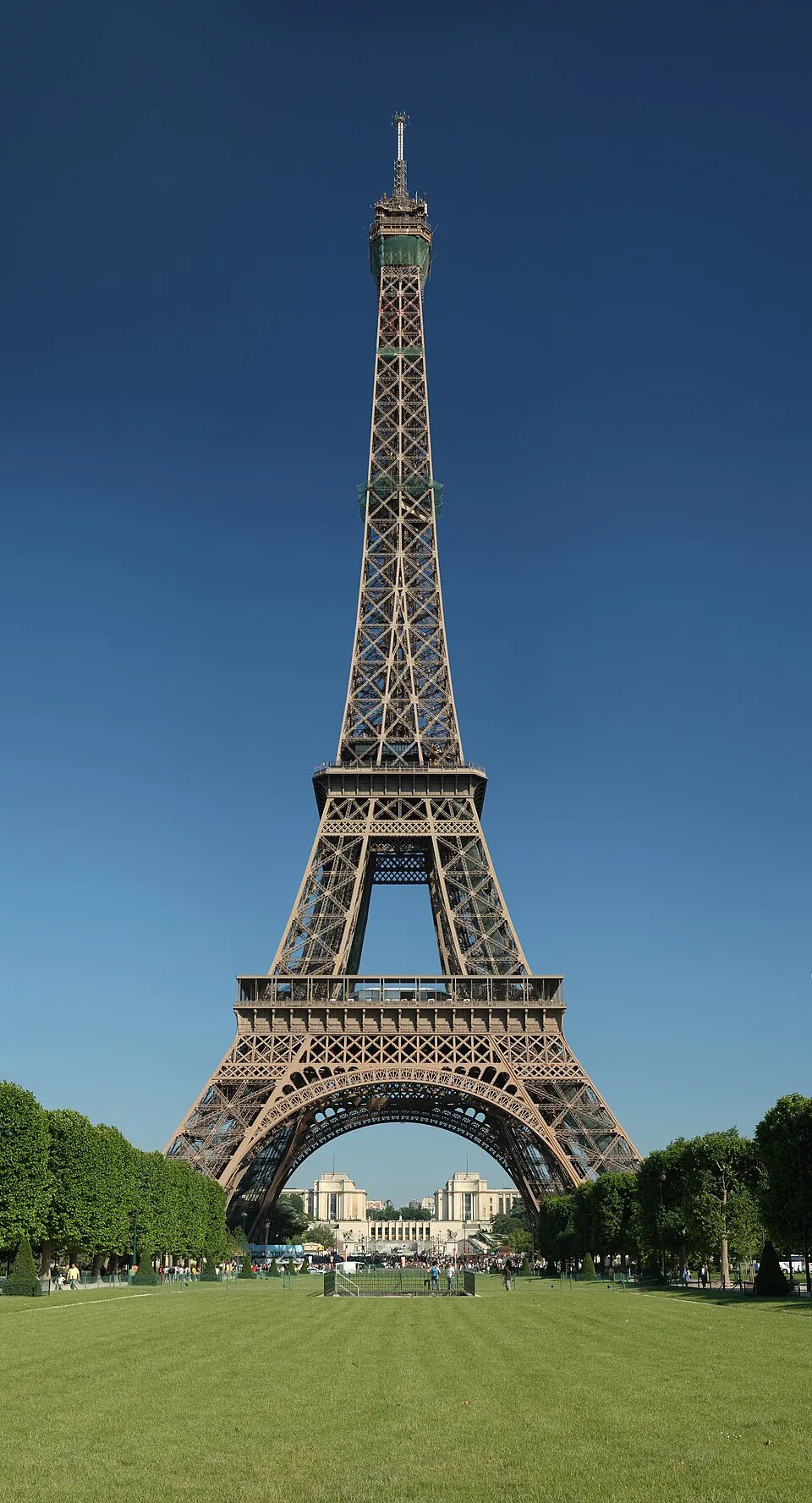 Eiffel TowerEiffel and Sauvestre · 1889 · iron built for a later exhibition
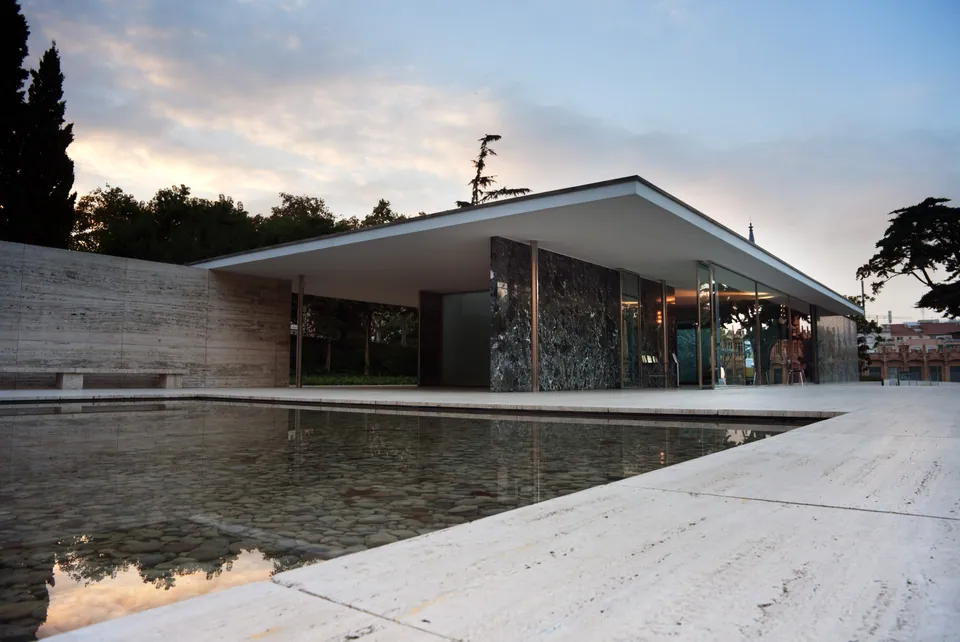 Barcelona PavilionMies and Reich · 1929 · an exhibition building taken down after its show
Go further
- Crystal Palace: Joseph Paxton and Charles Fox, John McKean (1994)A Phaidon study of the building as a piece of prefabricated construction, with drawings and period photographs.
- A Thing in Disguise: The Visionary Life of Joseph Paxton, Kate Colquhoun (2003)A biography that follows Paxton from the gardens at Chatsworth to the Great Exhibition and the move to Sydenham.
- The Great Exhibition building, architectural sketch (E.575-1985), Victoria and Albert MuseumThe museum record for the blotting-paper sketch of 11 June 1850, with an image and an account of how it was accepted.
- The Great Exhibition of 1851 in Hyde Park, The Royal ParksA short history of the exhibition from the body that looks after the site, with figures for the building and its visitors.
- Crystal Palace Park, register entry 1000373, Historic EnglandThe official register entry for the Sydenham park where the rebuilt palace stood and its terraces survive.
Sources
- The Great Exhibition building, Joseph Paxton, 11 June 1850, E.575-1985, Victoria and Albert Museum
- Model of the Crystal Palace, Richard Armiger, 2001, E.3836-2004, Victoria and Albert Museum
- Joseph Paxton 1803 to 1865, Science Museum Group
- The Great Exhibition of 1851 in Hyde Park, The Royal Parks
- Wikipedia (English), Wikimedia Foundation

