Nº 0049 · Exhibition pavilion
Barcelona Pavilion
It stood for less than a year and came back 56 years later.
Why it matters
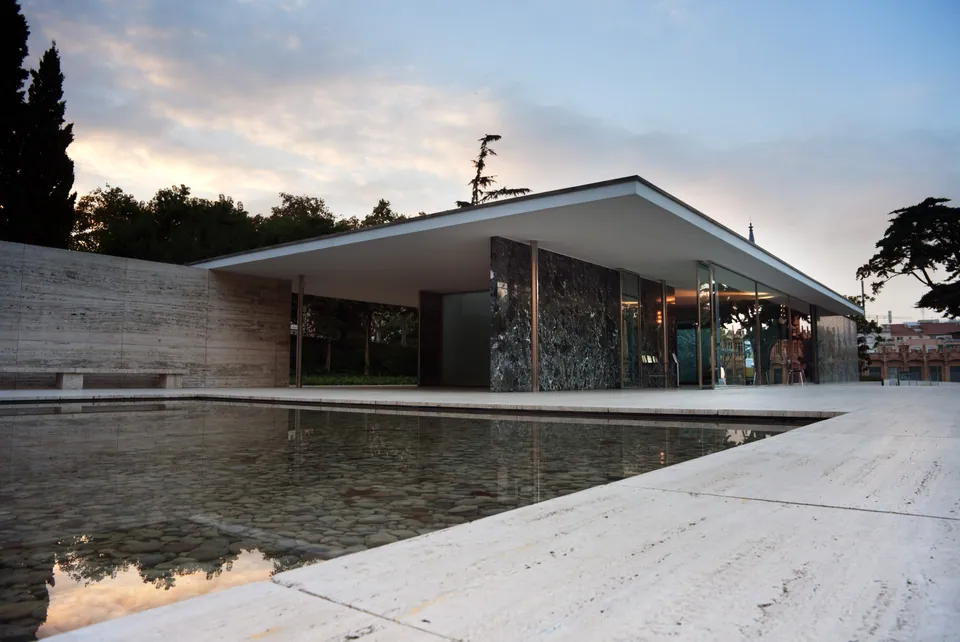
The pavilion showed nothing. The building was the exhibit: free-standing walls of stone and glass under a flat roof on thin steel columns. It became a fixed point of modern architecture.
Mies van der Rohe and Lilly Reich built it for the 1929 International Exposition on Montjuïc, as the German Pavilion. It was taken down in 1930. Ignasi de Solà-Morales, Cristian Cirici and Fernando Ramos rebuilt it on the same site from 1983 to 1986, in stone of the same kinds as the original.
What to notice
- Kolbe’s AlbaA bronze figure at the end of the small pool, seen through glass.
- Marble wallThe walls are slabs of veined stone that stop short of carrying anything.
- The flat roofA thin flat roof on slim steel columns, over walls that carry nothing.
2 min read
The full story
A reception room for Germany
In 1928 the Weimar Republic put Ludwig Mies van der Rohe and Lilly Reich in artistic charge of every German display at the coming Barcelona exposition. The two had worked together on the Werkbund exhibition in Stuttgart the year before. The national pavilion was the one building with nothing to show. It was needed for a ceremony: the reception at which King Alfonso XIII and Queen Victoria Eugenia would meet the German authorities and open the German section.
In this story
- A reception room for Germany
- Eight columns, four stones
- Praised, then taken apart
- Rebuilt on its site

The story continues in the app
- Materials
- Travertine, green marble, golden onyx, glass, steel
- Opened
- 27 May 1929
- Taken down
- 1930
- Rebuilt
- 1983 to 1986, on the original site
- Status
- Real · reconstruction
Connections
- Ludwig Mies van der Rohe
- Lilly Reich
- Fundació Mies van der Rohe
- Era of the World Wars
- Architecture
- Marble
- Stone
- Glass
- Steel
- Barcelona
Nearby in the archive
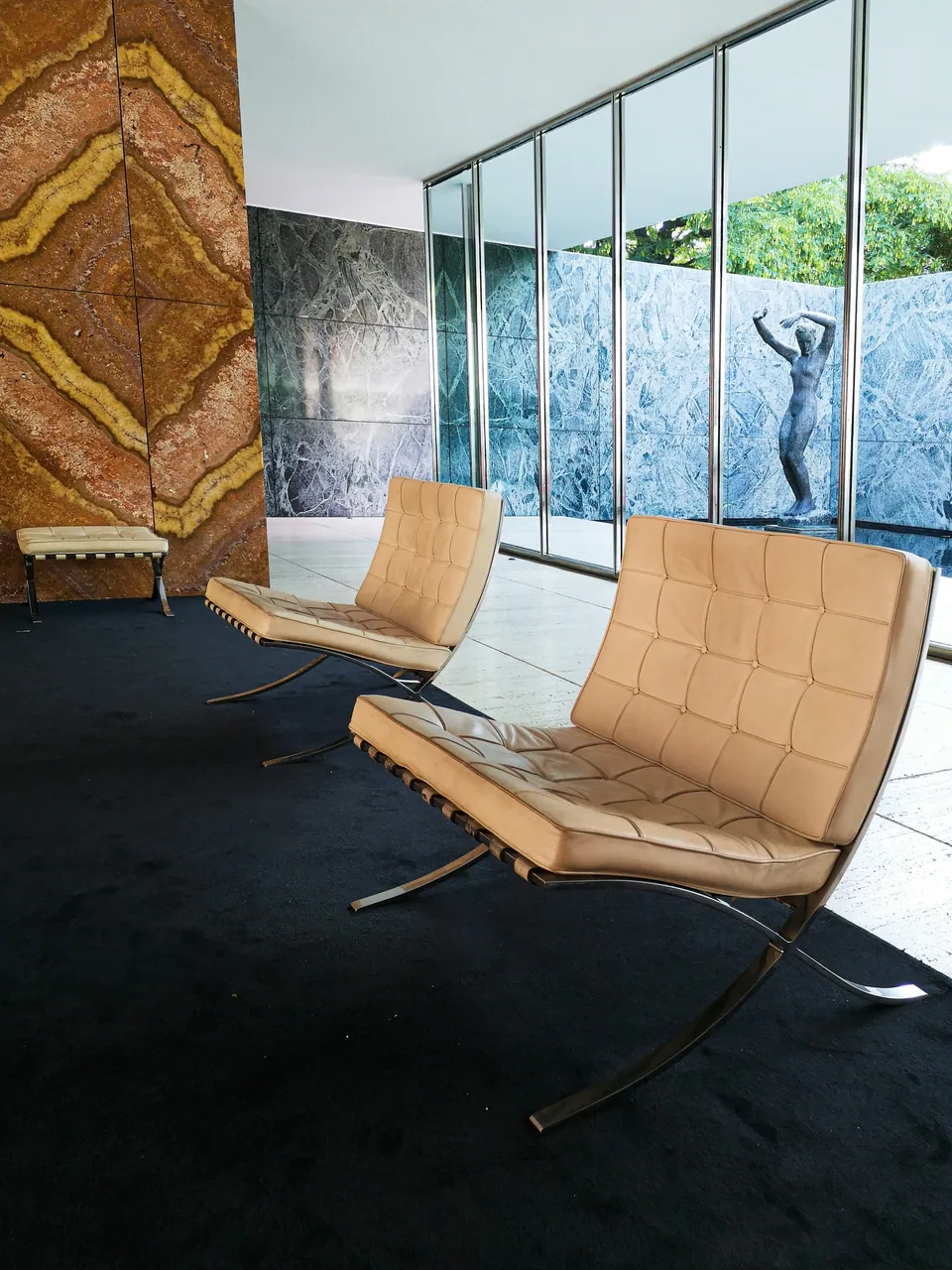 Barcelona ChairMies and Reich · 1929 · the chair made for this room
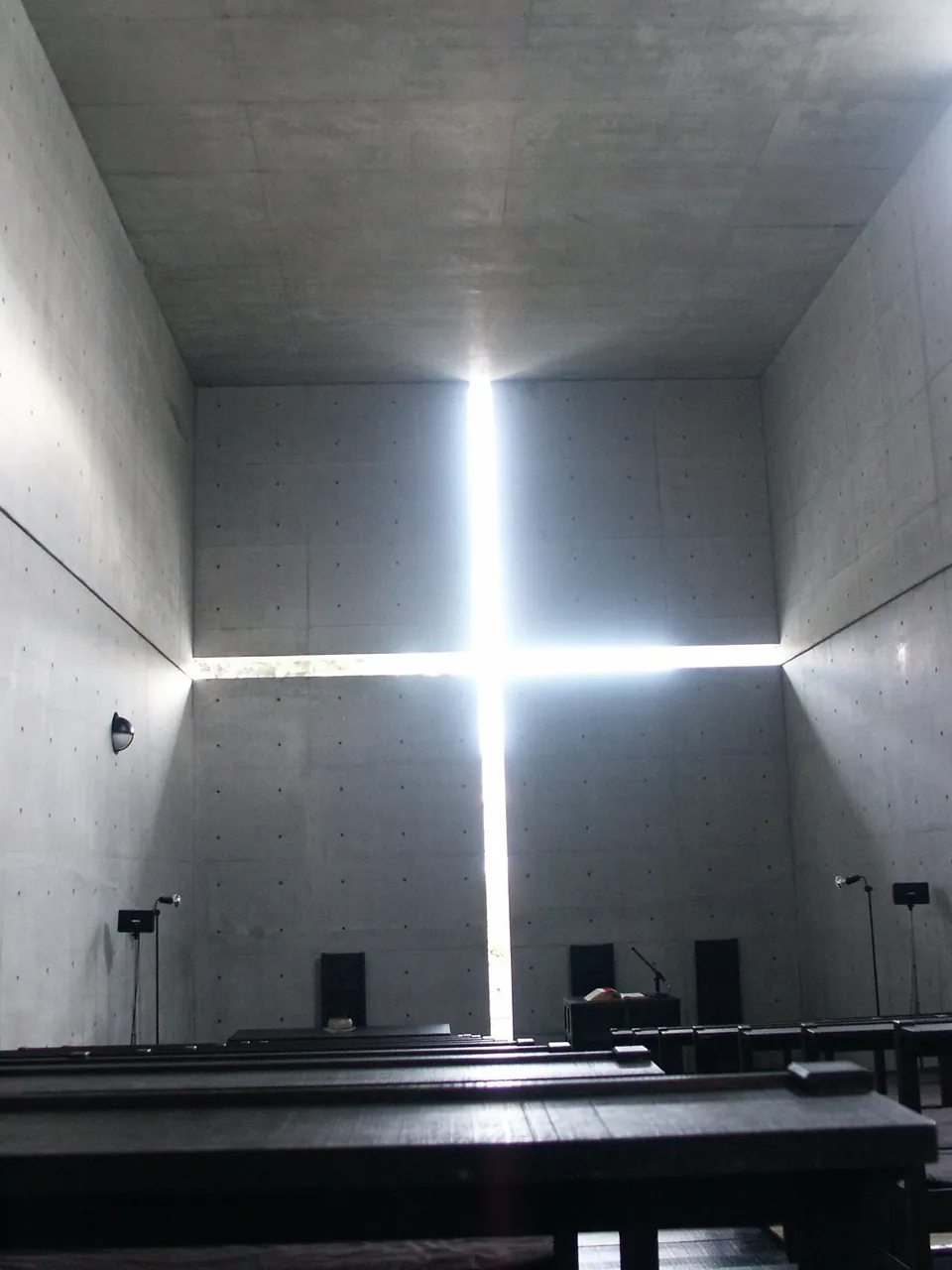 Church of the LightAndo · 1989 · another room made of one material
In collections
Go further
- An Accidental Masterpiece: Mies van der Rohe's Barcelona Pavilion, Dietrich Neumann (2020)A researched history of the commission, the building, its politics and its reconstruction, with archive photographs.
- The Barcelona Pavilion by Mies van der Rohe: One Hundred Texts since 1929, Dietrich Neumann (2020)A hundred texts on the pavilion, from the opening speeches and first reviews to later architects and critics.
- Fear of Glass: Mies van der Rohe's Pavilion in Barcelona, Josep Quetglas (2001)A Catalan critic’s close reading of the 1929 building through its photographs.
- The Pavilion, Fundació Mies van der RoheThe foundation’s own account of the building and its reconstruction, with plan drawings to download.
- Art Interventions, Fundació Mies van der RoheThe archive of temporary works that artists and architects have made in the rebuilt pavilion.
Sources
- The Pavilion, Fundació Mies van der Rohe

