Nº 0100 · Solar observatory
Einstein Tower
A working solar telescope inside a curved tower.
Why it matters
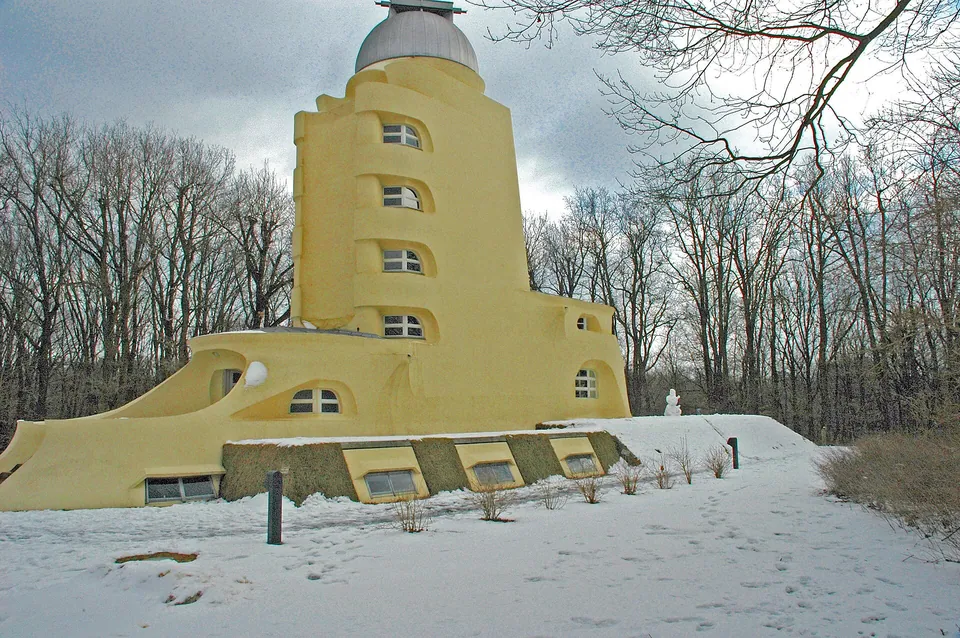
Mendelsohn gave a scientific instrument a flowing, rounded form, which the Leibniz Institute for Astrophysics calls the main example of architectural expressionism. The building reads as one cast mass of concrete, though much of it is brick masonry under sprayed plaster.
The astronomer Erwin Finlay Freundlich planned the observatory to test a prediction of Einstein’s general theory of relativity, a red shift in the spectrum of sunlight. Mirrors under the dome send sunlight down the tower to spectrographs in the basement. The structural shell was finished in 1921 and observations began in December 1924; cracks and damp appeared early, and the first repairs came in 1927. Restored from 1997 to 1999 and again from 2021 to 2023, it is still used as a solar telescope.
What to notice
- The windowsWindows sit in deep, rounded recesses cut into the smooth surface.
- The annexThe low annex sweeps out from the base in one curve, with no straight ridge line.
- The domeThe metal dome at the top holds the mirrors that send sunlight down the tower.
- The entranceSeen head-on, the entrance stair is set into the curved, flaring base.
3 min read
The full story
A sketch from the front
Erwin Finlay Freundlich, an assistant at the Berlin Observatory from 1910, had spent years looking for a way to check Einstein’s general theory by observation. In 1918 he became the first member of staff at Einstein’s Kaiser Wilhelm Institute for Physics. His friend Erich Mendelsohn, then a soldier on the Russian front, had already drawn a tower telescope for him: the first freehand sketches went home to his wife Luise in June 1917. In July 1918 Freundlich wrote out what he needed, a concrete tower 15 metres high over an underground laboratory held at constant temperature.
In this story
- A sketch from the front
- A tower inside a tower
- Visitors came for the building
- Repaired in small patches

The story continues in the app
- Materials
- Brick and concrete under sprayed plaster
- Instrument
- 60 cm telescope with a long-focus spectrograph
- Site
- Telegrafenberg, Potsdam
- Restored
- 1997 to 1999 · 2021 to 2023
- Status
- Real · in use as a solar telescope
Connections
- Erich Mendelsohn
- Leibniz Institute for Astrophysics Potsdam
- Expressionist architecture
- Era of the World Wars
- Architecture
- Brick
- Concrete
- Potsdam
Nearby in the archive
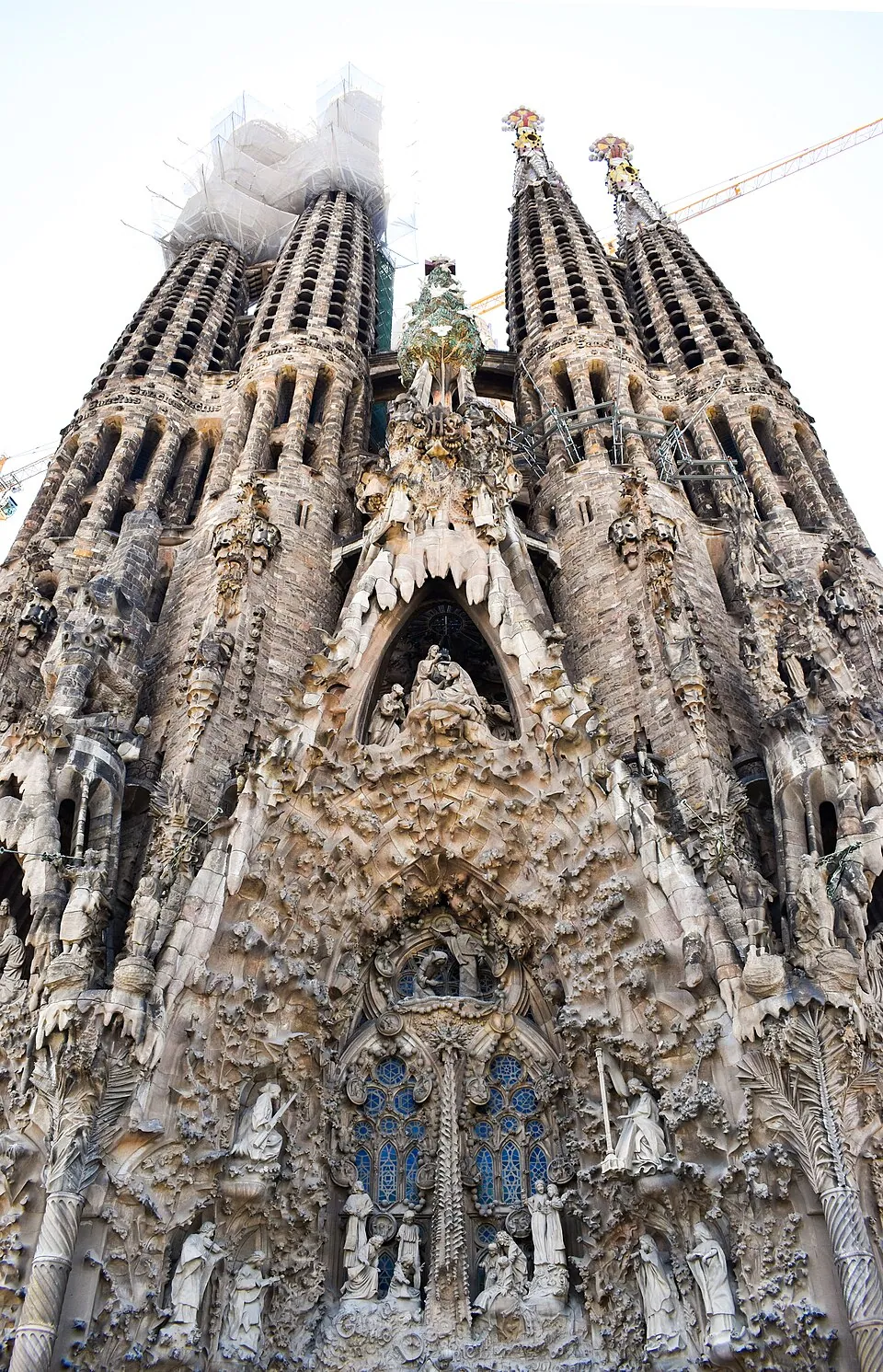 Sagrada FamíliaGaudí · from 1882 · another building modelled rather than assembled
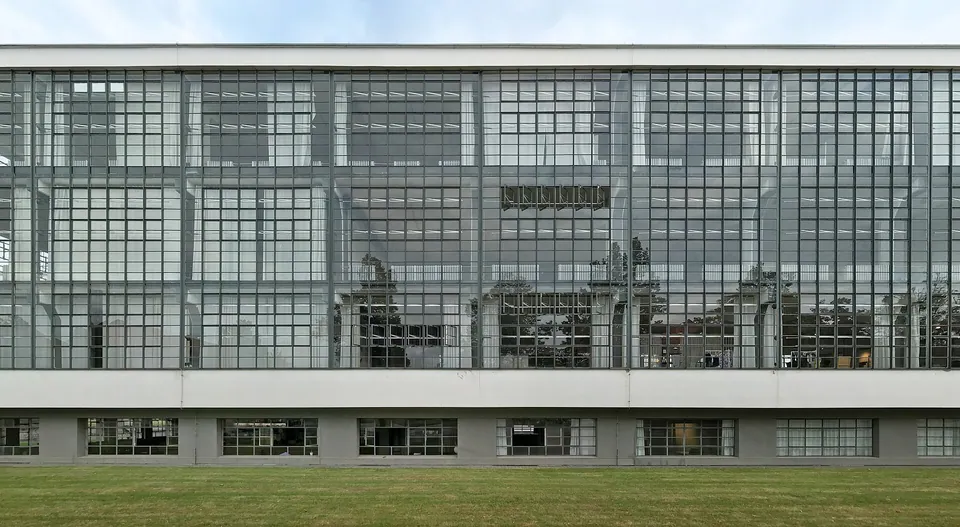 Bauhaus Building, DessauGropius · 1926 · Germany in the same decade, at right angles
In collections
Go further
- The Einstein Tower: An Intertexture of Dynamic Construction, Relativity Theory, and Astronomy, Klaus Hentschel (1997)A historian of science follows Freundlich, Einstein and Mendelsohn through the planning, building and scientific use of the tower.
- Einsteinturm Revisited, Wüstenrot StiftungA digital exhibition that goes through the tower’s history year by year, from the 1917 sketches to the latest restoration, with letters, drawings and photographs.
- Einstein Tower, Leibniz-Institut für Astrophysik PotsdamThe operating institute describes the telescope and spectrograph and the solar research done with them today.
- Potsdam: Einstein Tower, Vielfalt der ModerneA short building record that sets out which parts are concrete and which are brick, and how the project was funded.
Sources
- Einstein Tower, Leibniz-Institut für Astrophysik Potsdam
- Einstein Tower, Wüstenrot Stiftung
- Potsdam: Einstein Tower, Vielfalt der Moderne
- Wikipedia (English), Wikimedia Foundation

