Nº 0205 · Imperial palace
Forbidden City
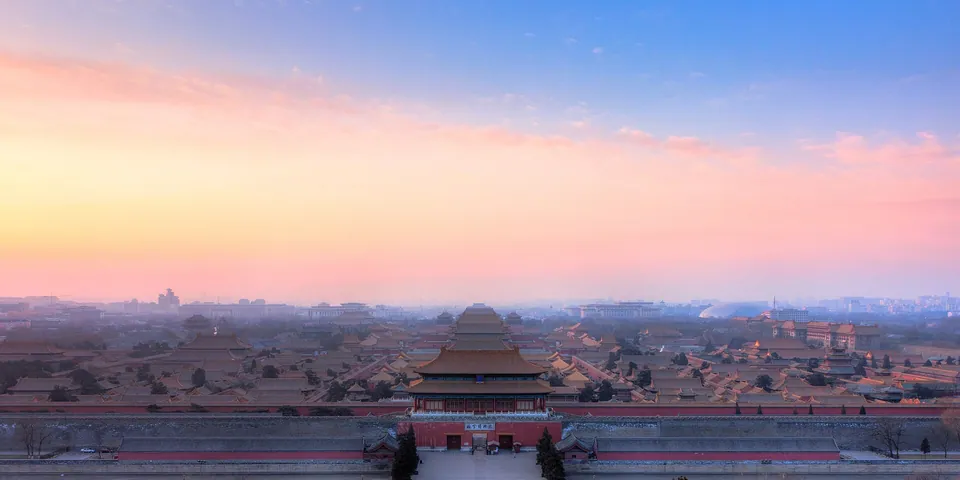
Its yellow roof tiles were the emperor’s colour.
Why it matters
The palace sets the halls of state and the emperors’ living quarters along one straight axis of gates and courtyards, inside a walled rectangle nearly a kilometre long. Ming and then Qing emperors ruled from it until 1911.
The Yongle Emperor, who moved the Ming capital from Nanjing to Beijing, had the palace built between 1406 and 1420; the carpenter Kuai Xiang is credited with its design and took the palace in Nanjing as a model. It covers 72 hectares inside a wall 7.9 m high and a moat, and 980 of its buildings survive. Most roofs are laid with yellow glazed tile, the colour reserved for the emperor, and the floors of the main halls with bricks made in Suzhou. After the last emperor, Puyi, was expelled in 1924, it became the Palace Museum, which opened in 1925.
What to notice
- The axisGates and halls line up on one straight axis running away from the viewer.
- The wallThe outer wall, 7.9 m high, runs across the whole foreground.
- The yellow roofThe Hall of Supreme Harmony has a double roof of yellow glazed tile, the emperor’s colour.
- The terracesThe hall stands on three tiers of white stone terraces with carved balustrades.
2 min read
The full story
A capital moved north
Under the Mongol Yuan dynasty the ground lay inside the imperial city of their capital. The first Ming emperor, Hongwu, ruled from Nanjing in the south and sent his fourth son, Zhu Di, north to Beijing as Prince of Yan. In 1402 Zhu Di took the throne by force and became the Yongle Emperor. He brought the capital, and his army, to his own base, and work on a new palace there began in 1406.
In this story
- A capital moved north
- Stone dragged over ice
- Audiences before dawn
- Crates sent south

The story continues in the app
- Area
- 72 hectares; 961 × 753 m
- Buildings
- 980 surviving
- Wall
- 7.9 m high, with a moat outside
- Museum
- Palace Museum since 1925; more than 1.8 million objects
- Status
- Real · World Heritage since 1987
Connections
Nearby in the archive
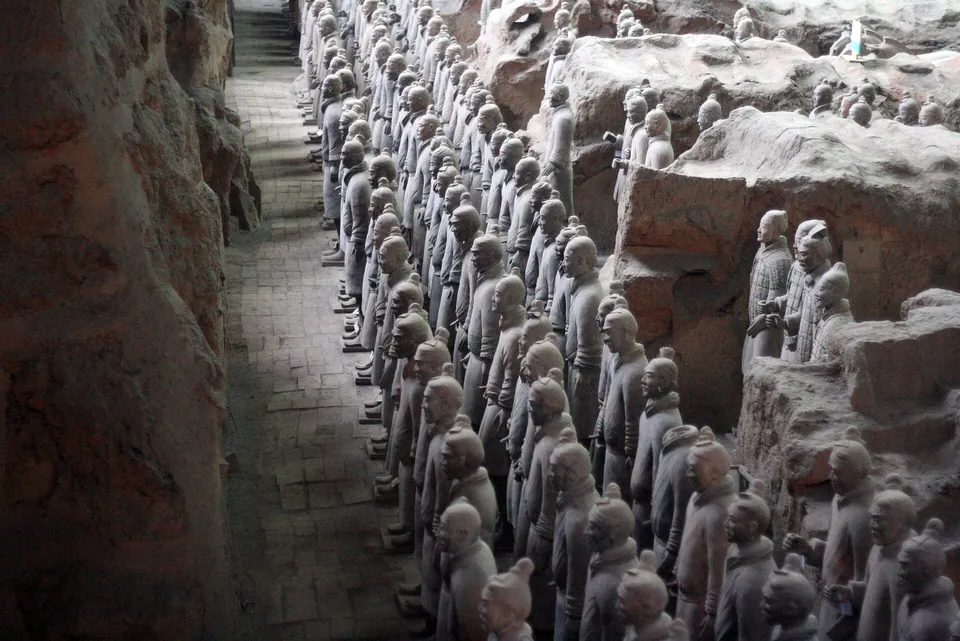 Terracotta ArmyQin state workshops · c. 210 BC · an earlier Chinese imperial project on a vast plan
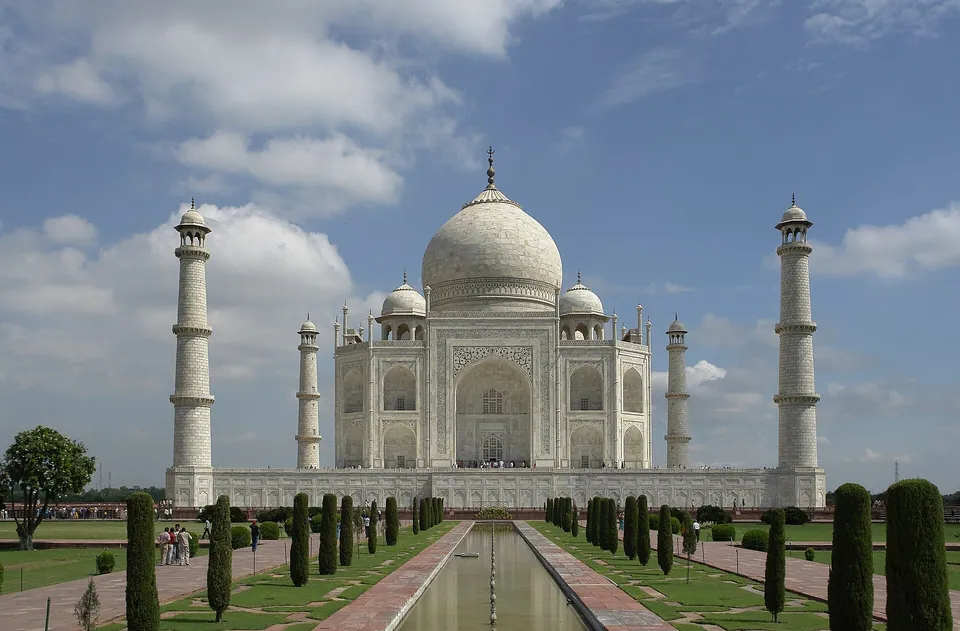 Taj MahalUstad Ahmad Lahori · 1632 to 1653 · another imperial commission laid out on one axis
In collections
Go further
- The Forbidden City, Geremie R. Barmé (2008)A short history of the palace and the people who lived in it, from the Ming court to the present museum.
- Palaces of the Forbidden City, Yu Zhuoyun, chief compiler (1984)A large illustrated survey of the buildings, their construction and decoration, compiled at the Palace Museum.
- The Forbidden City, Ying-chen Peng, Smarthistory (2015)An art historian’s essay on how the plan separates public and private life, with photographs and a plan.
- Ice lubrication for moving heavy stones to the Forbidden City in 15th- and 16th-century China, Jiang Li, Haosheng Chen and Howard A. Stone (2013)An engineering paper that tests how sledges on ice roads could carry the palace’s largest stones.
- Imperial Palaces of the Ming and Qing Dynasties in Beijing and Shenyang, UNESCO World Heritage CentreThe World Heritage record, with the statement of why the palace was listed and how it is protected.
Sources
- The Palace Museum, The Palace Museum, Beijing
- Wikipedia (English), Wikimedia Foundation
- Wikimedia Commons