Nº 0192 · Box camera
Brownie
A one dollar box camera, built to sell film.
Why it matters
The Brownie made photography affordable for children and ordinary families, because Kodak meant to earn its money from film and processing, not from the camera. The Science and Media Museum calls it the camera that democratised photography.
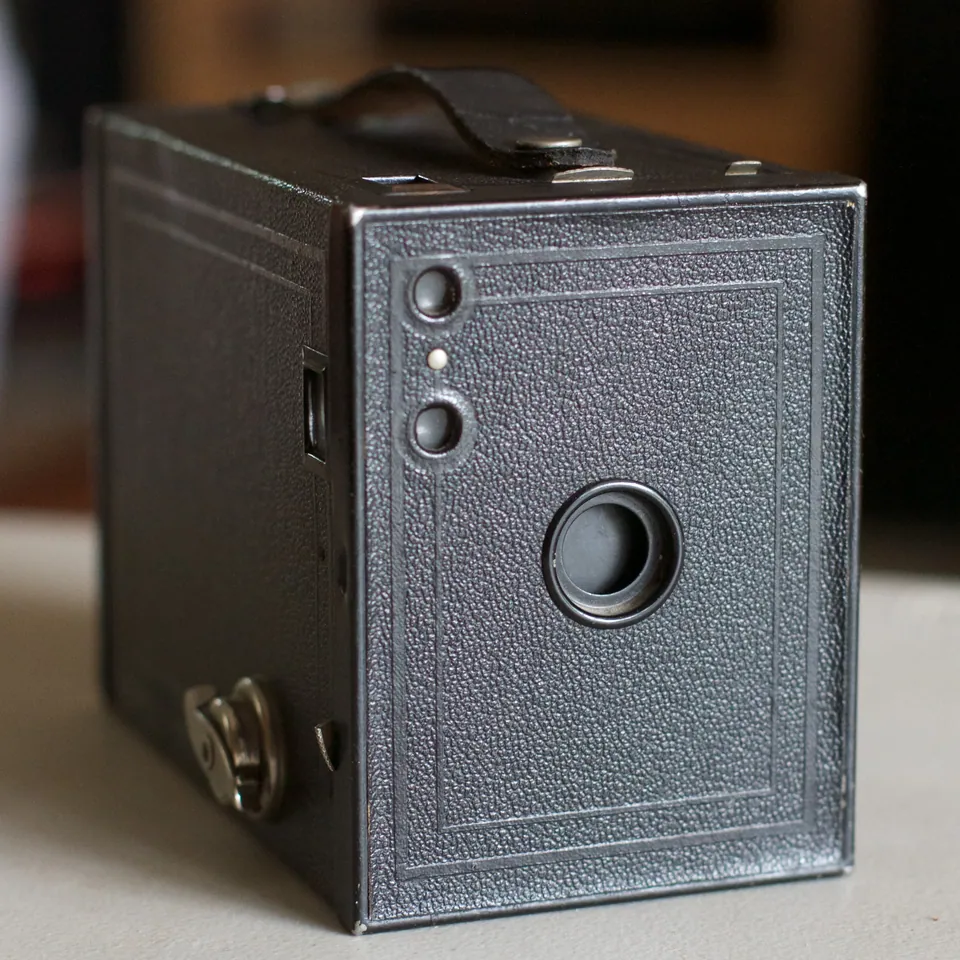
George Eastman asked Frank Brownell, who designed and made cameras for Kodak, for a camera as cheap as possible that could still take good photographs. The Brownie went on sale in 1900 for one dollar, or five shillings in Britain, and was named after Palmer Cox’s Brownie characters, popular with children. It took six square exposures on 117 roll film through a fixed-focus meniscus lens, and a reflecting viewfinder was sold separately to clip on top. The camera photographed, with its viewfinder fitted, is captioned by its photographer as the one dollar model of 1900.
What to notice
- The lensA single fixed-focus lens behind a plain round opening; there is nothing to focus or set.
- The viewfinderA small reflecting viewfinder, sold separately, clips to the top edge.
- The winding keyA metal key winds the roll film on to the next exposure.
3 min read
The full story
A camera to sell film
George Eastman’s first Kodak camera went on sale in 1888 at 25 dollars, loaded with enough film for 100 pictures. When the roll was finished, the whole camera went back to the company to be developed. The price kept it among the well off. By the late 1890s Kodak had identified film as the main source of its profits, and every new photographer was a new customer for it.
In this story
- A camera to sell film
- Jute-board, wood and leatherette
- Bought by the parents
- Nearly a hundred Brownies

The story continues in the app
- Materials
- Board and wood body covered in leatherette
- Dimensions
- About 13 × 8 × 8 cm (Science Museum Group examples)
- Film
- 117 roll film, six exposures about 5.7 cm square
- Maker
- Eastman Kodak Company, Rochester, New York
- In collection
- Science Museum Group, including the Kodak Collection in Bradford
Connections
Nearby in the archive
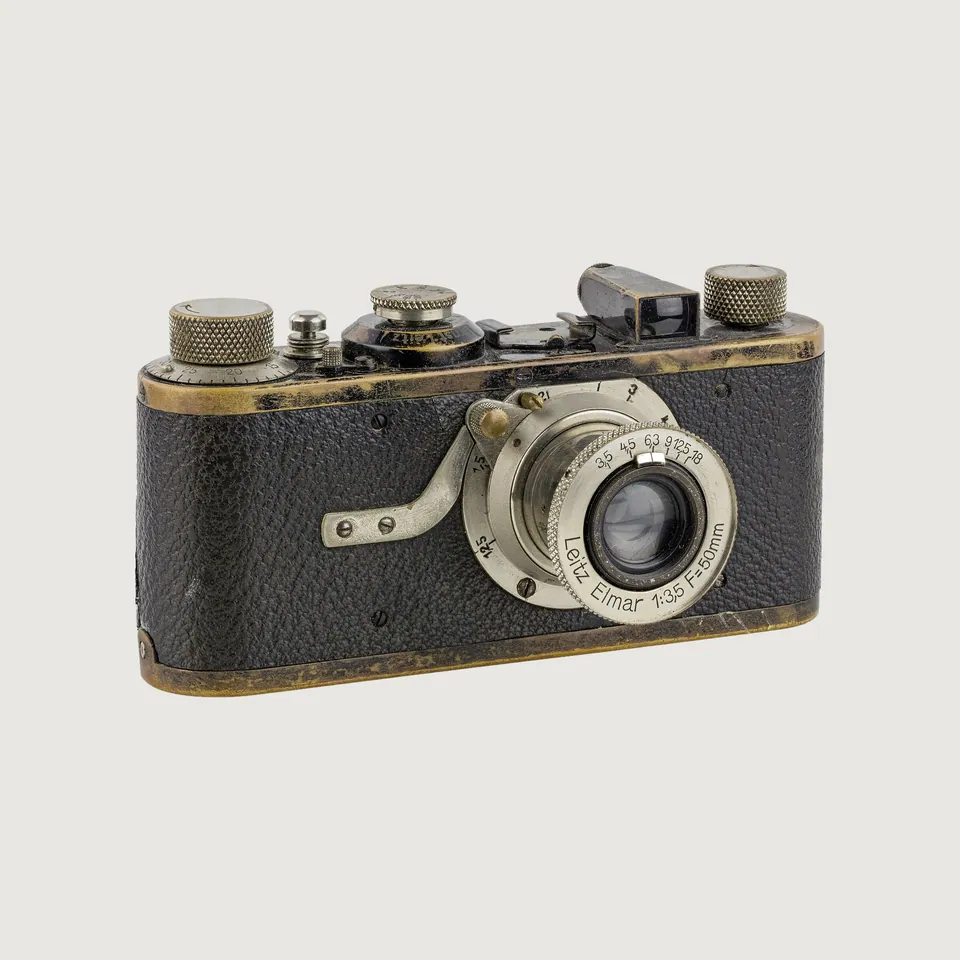 Leica IBarnack · 1925 · a small roll-film camera made for adults
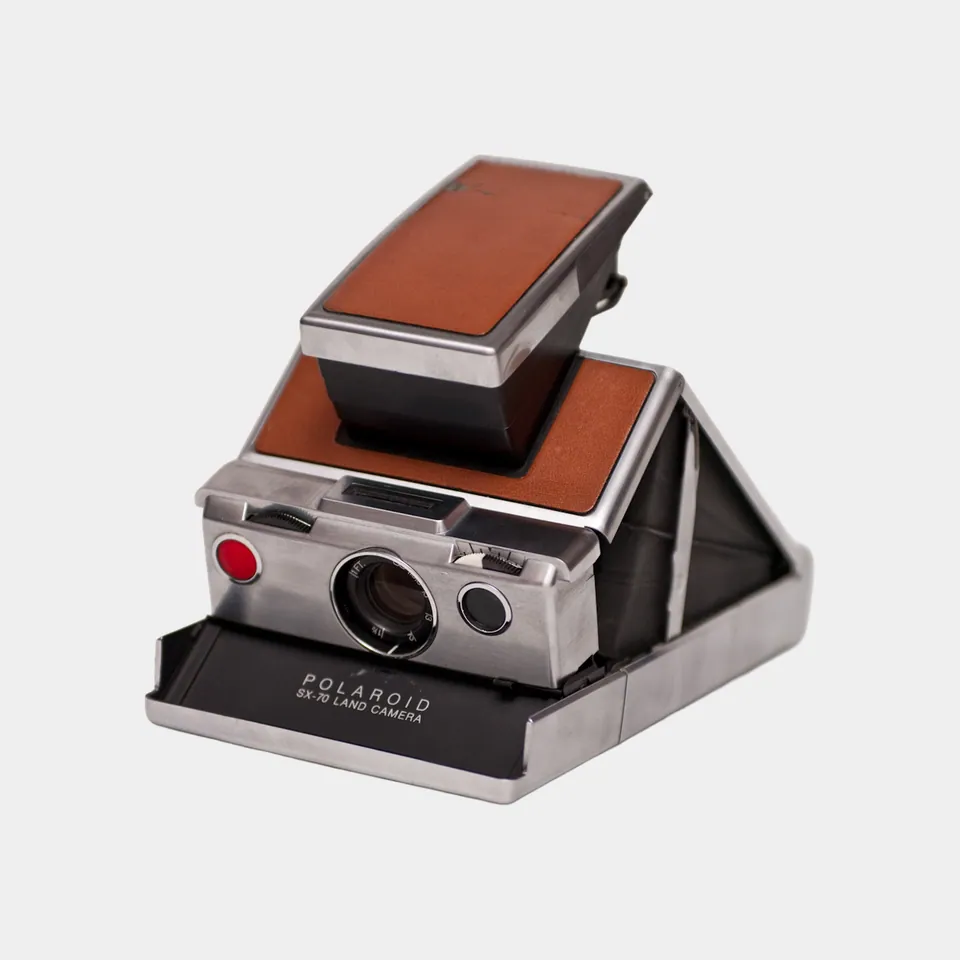 Polaroid SX-70Land · 1972 · a camera sold to use its maker’s own film
In collections
Go further
- A History of Photography in 50 Cameras, Michael Pritchard (2014)A history of photography told through fifty cameras, by the historian quoted in the BBC’s account of the Brownie.
- Camera: A History of Photography from Daguerreotype to Digital, Todd Gustavson (2009)A general history of the camera that sets Kodak’s roll-film cameras among what came before and after.
- B is for… Brownie, the camera that democratised photography, Colin Harding, National Science and Media Museum (2012)A curator’s short history of the first Brownie, with packaging, advertisements and later models from the museum’s collection.
- The most important cardboard box ever?, Stephen Dowling, BBC News (2015)An account of the Brownie’s long life in use, with Bernice Palmer’s Titanic pictures and photographers who still shoot with one.
- Kodak Brownie Box Camera, object 1928-667, Science Museum GroupThe museum record for a Brownie made in 1900, kept with its original cardboard carton.
Sources
- The Brownie Camera, 1990-5036/1630, Science Museum Group
- The Brownie camera, 1990-5036/1444, Science Museum Group
- Kodak Brownie Box Camera, 1928-667, Science Museum Group
- A to Z of the photography collection: B is for Brownie, Science and Media Museum
- Wikipedia (English), Wikimedia Foundation

