Nº 0111 · Folding instant camera
Polaroid SX-70
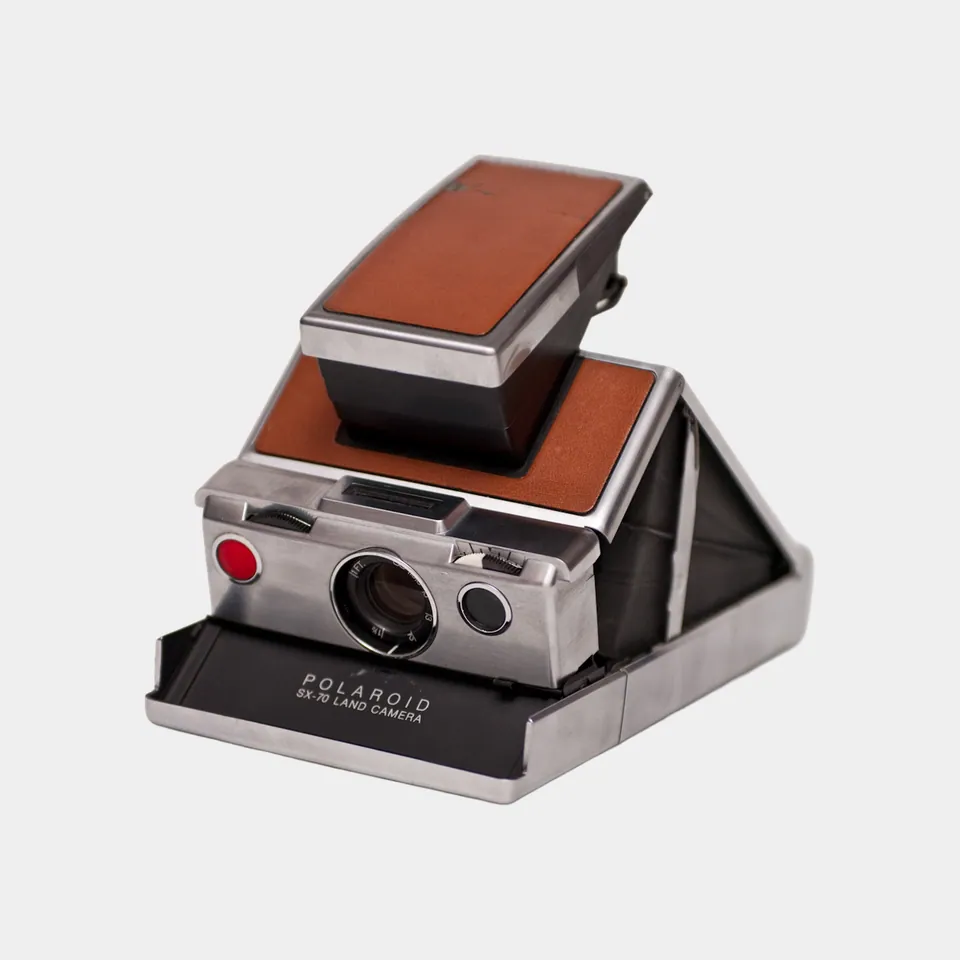
A reflex camera that folds flat into a pocket.
Why it matters
It is a single-lens reflex camera that folds to about 4.4 cm thick and ejects a print that develops in daylight, with no negative to peel away. Edwin Land called SX-70 his crowning achievement, and LACMA, Cooper Hewitt and the Science Museum Group hold the camera.
Edwin Land showed the camera at Polaroid’s annual meeting in April 1972; it went on sale in Miami late that year and across the United States from 1973. The industrial design was by James M. Conner of Henry Dreyfuss Associates, the firm founded by Henry Dreyfuss, who died in October 1972. The body is polysulfone plastic with a layer of copper, nickel and chromium alloy and applied leather, and each film pack carries its own battery for the camera’s motor and electronics. It sold for US$180, with a ten-print film pack at US$6.90.
What to notice
- The panelsTan leather panels set into a metal-finished frame, which LACMA records as plated plastic.
- The foldThe body is a set of hinged panels that collapse flat when the camera is closed.
- The viewfinder hoodThe viewfinder hood rises from the top when the camera is opened.
3 min read
The full story
A print with nothing to peel
Edwin Land put his first instant camera on sale in 1948. By his own account the idea dated from 1943, when his young daughter Jennifer asked why she could not see a holiday photograph at once. For the next two decades Polaroid pictures were peel-apart prints: the user timed the development, pulled the print from its negative and threw the chemical-coated waste away.
In this story
- A print with nothing to peel
- Mirrors, a motor, a pod
- Miami first, then artists
- After the folding camera

The story continues in the app
- Materials
- Polysulfone plastic, copper-nickel-chromium alloy layer, leather
- Dimensions
- About 4.4 cm thick folded, 12.5 cm high open
- Film
- Integral prints, 79 × 79 mm, battery in each pack
- In collection
- LACMA · Cooper Hewitt · Science Museum Group
- Status
- Real · production ended
Connections
- James M. Conner
- Henry Dreyfuss
- Edwin H. Land
- Henry Dreyfuss Associates
- Polaroid Corporation
- Information Age
- Industrial design
- Plastic
- Leather
- Cambridge, Massachusetts
Nearby in the archive
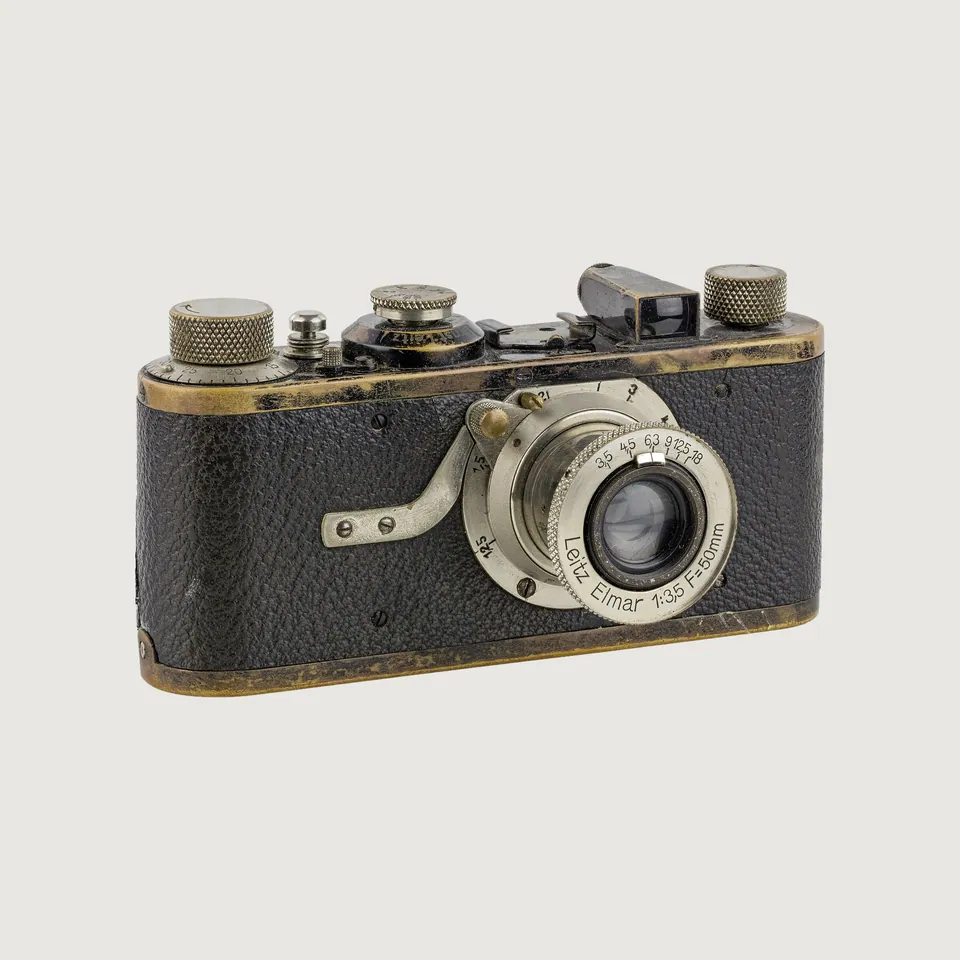 Leica ILeitz · 1925 · another camera made to fit a pocket
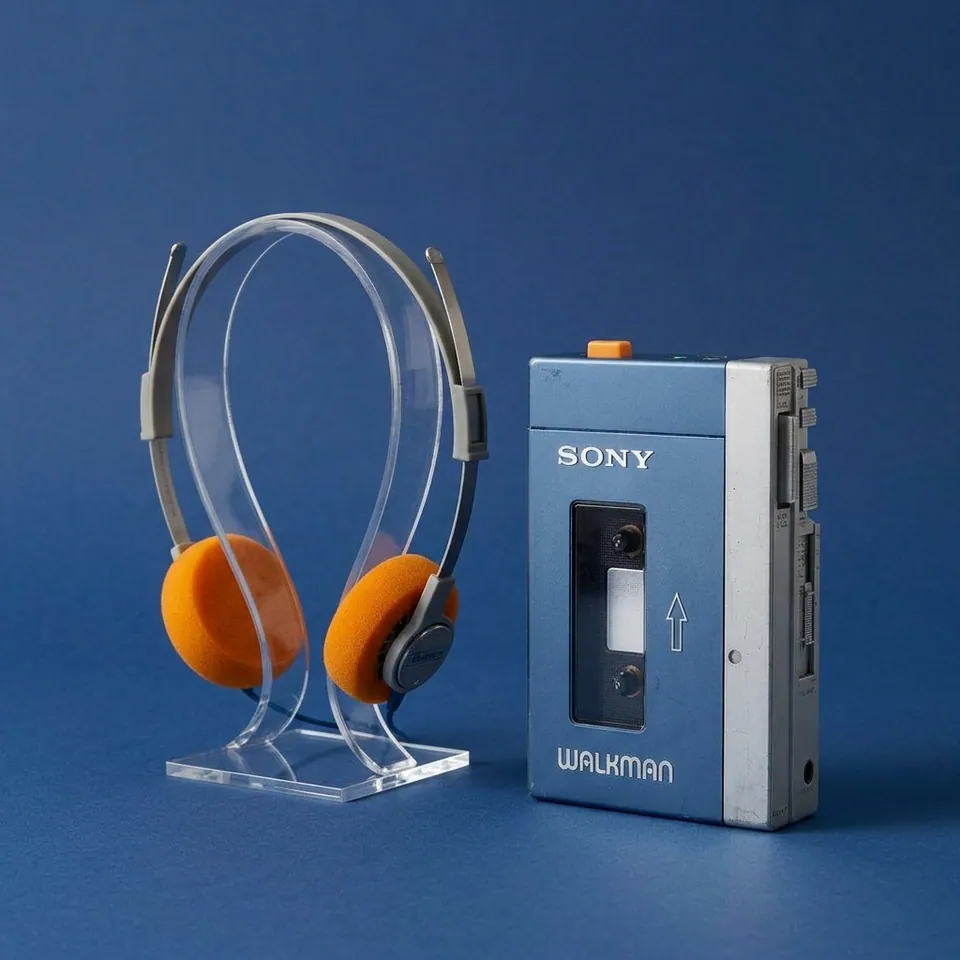 Walkman TPS-L2Sony · 1979 · another machine that went with its owner
In collections
Go further
- Instant: The Story of Polaroid, Christopher Bonanos (2012)An illustrated history of the company and of Edwin Land, with the SX-70 at its centre.
- Polaroid’s SX-70: The Art and Science of the Nearly Impossible, Harry McCracken, Technologizer (2011)A long account of the camera’s development, launch problems, advertising and successors.
- SX-70 Camera, M.2019.351.1, Los Angeles County Museum of ArtThe museum record, with design credits, materials and measurements open and closed.
- Polaroid SX-70 Land Camera, 2002.0154.001, IngeniumThe Canadian record, which sets out Land’s brief for the camera and credits James M. Conner.
Sources
- SX-70 Camera, M.2019.351.1, Los Angeles County Museum of Art
- SX-70 Camera And Case, 1999-2-2-a,b, Cooper Hewitt, Smithsonian Design Museum
- Polaroid SX-70 Land Camera, 2002.0154.001, Ingenium
- Polaroid Land SX-70 camera, 1990-5036/7104, Science Museum Group
- Who Designed the SX-70?, OpenSX70
- Wikipedia (English), Wikimedia Foundation