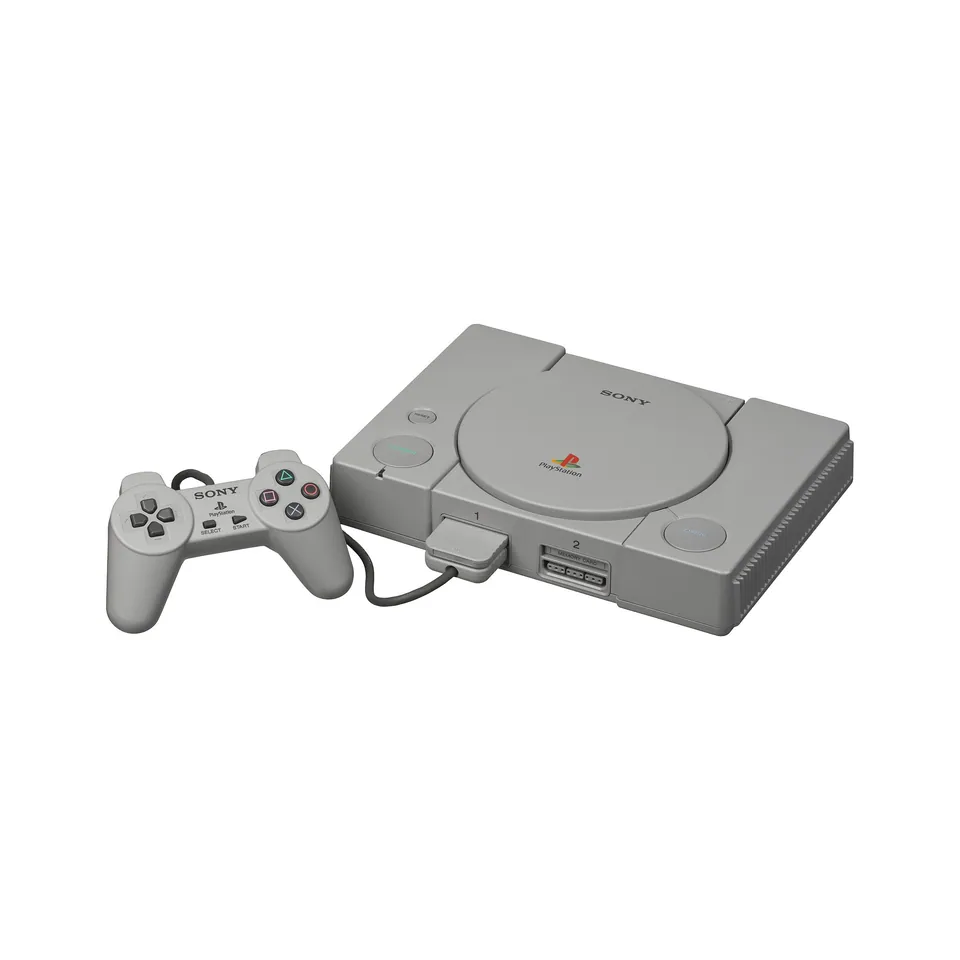
Nº 0201 · Home video game console
PlayStation
Games on CD, and four shapes for buttons.
Why it matters
It ran its games from CD-ROM rather than cartridges, and the V&A records it as the first video games console to sell a hundred million units. Teiyu Goto gave the controller four symbols in place of letters: a triangle for a viewpoint, a square for a sheet of paper, and a circle and a cross for yes and no.
Sony Computer Entertainment launched it in Japan on 3 December 1994, and in North America and Europe in September 1995. Ken Kutaragi led the project, which grew out of a CD-ROM add-on that Sony had planned with Nintendo from 1988 to 1991, and Goto led the industrial design of the console and its controller. The pale grey box has a round lid on top that opens at the touch of a large button, and inside a MIPS R3000 processor runs at 33.8688 MHz. The V&A says the name was chosen as the opposite of work station.
What to notice
- The power and reset buttonsA large round power button, with a smaller reset button behind it.
- The disc lidA round lid on top, where the CD goes in.
- The second portEach numbered port pairs a memory card slot with a controller socket below it.
3 min read
The full story
A deal Nintendo dropped
Ken Kutaragi, a Sony engineer, has said he saw what video games could become while watching his daughter play Nintendo’s Famicom. He went on to design the sound chip for Nintendo’s 16-bit console. Sony’s executives were furious when they learned of the work, and he was able to finish it because the president, Norio Ohga, stood by him. In 1988 the two firms agreed that Sony would develop a CD-ROM drive for that console, and Sony planned a machine of its own, the Play Station, to take both the discs and Nintendo’s cartridges.
In this story
- A deal Nintendo dropped
- Built for polygons
- Two ninety-nine
- A hundred million shipped

The story continues in the app
- Materials
- Injection-moulded plastic (V&A example)
- Dimensions
- Console 5 × 26.8 × 18.3 cm; 1.55 kg (V&A example)
- Model
- SCPH-1000, the first Japanese model, as photographed
- In collection
- V&A (B.31:1, 2-2004) · Science Museum Group
- Status
- Real · discontinued in March 2006
Connections
- Ken Kutaragi
- Teiyu Goto
- Sony Computer Entertainment
- Information Age
- Industrial design
- Game design
- Plastic
- Tokyo
Nearby in the archive
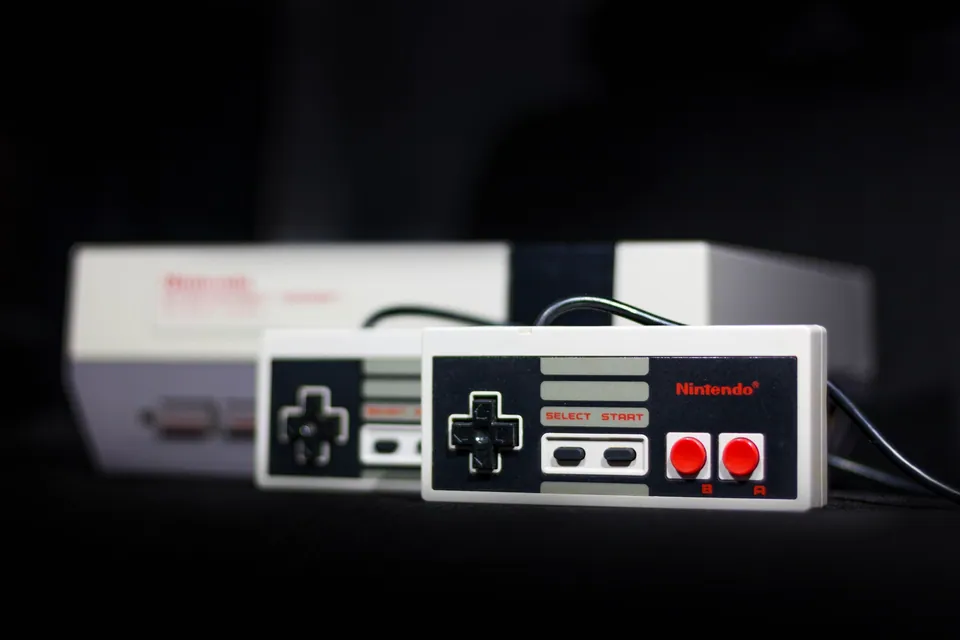 Nintendo Entertainment SystemNintendo · 1985 · games on cartridges, before the disc
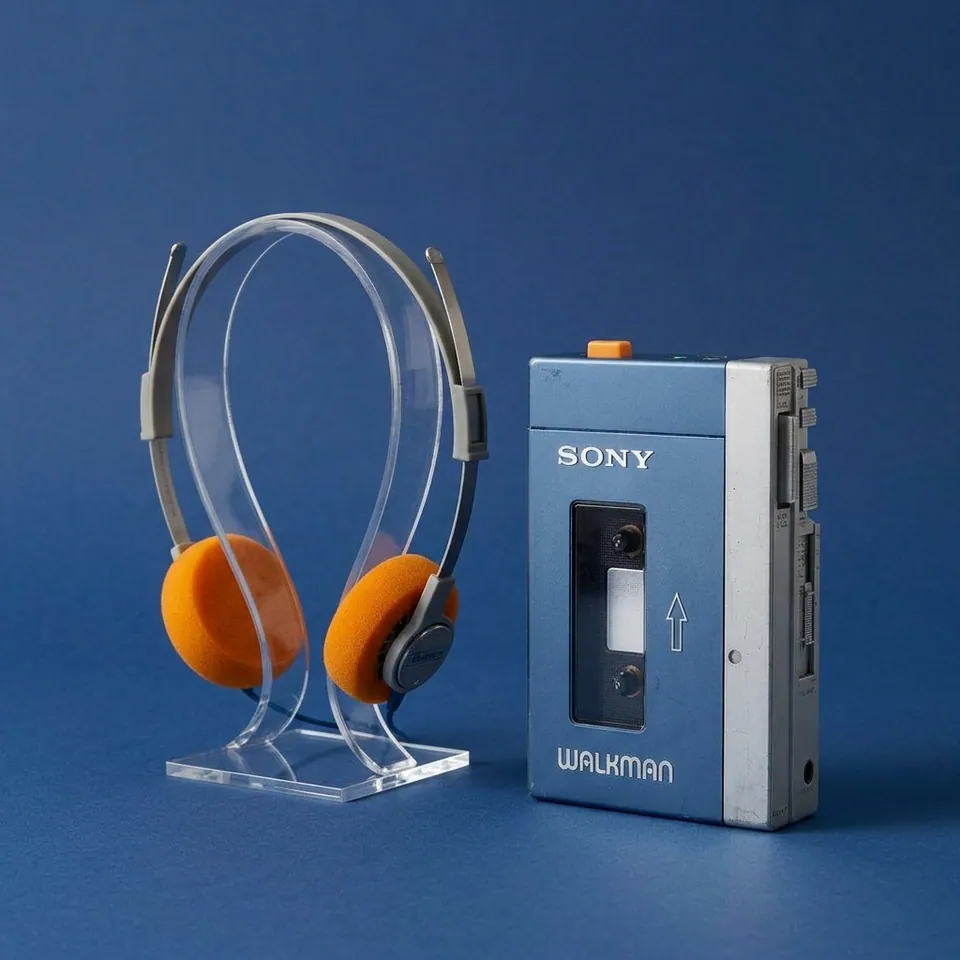 Walkman TPS-L2Sony · 1979 · the same parent company, fifteen years earlier
In collections
Go further
- Revolutionaries at Sony: The Making of the Sony PlayStation and the Visionaries Who Conquered the World of Video Games, Reiji Asakura (2000)A book-length account of Kutaragi’s team and of how the project survived inside Sony.
- PlayStation, B.31:1, 2-2004, Victoria and Albert MuseumThe museum record for a 1995 console and controller, with measurements, a description and where it is on display.
- Expanded Company Timeline, Sony Interactive EntertainmentSony’s own dated list of launches and shipment milestones from 1993 onwards.
- How Virtua Fighter Saved PlayStation's Bacon, Daniel Feit, Wired (2012)Two former Sony Computer Entertainment staff recall how close the console came to being a 2D machine.
- Teiyu Goto: The Unsung Genius Behind the PlayStation, Chris Kernaghan, SUPERJUMP (2023)A profile of the industrial designer, covering the console shell, the controller grips and the four button symbols.
Sources
- PlayStation, B.31:1, 2-2004, Victoria and Albert Museum
- Collection of Computer Gaming Equipment and Games (includes a PlayStation SCPH-102), Science Museum Group
- Teiyu Goto: The Unsung Genius Behind the PlayStation, Super Jump Magazine
- Wikipedia (English), Wikimedia Foundation

