Nº 0054 · Sculpture
Unique Forms of Continuity in Space
A striding figure shaped by its own speed.
Why it matters
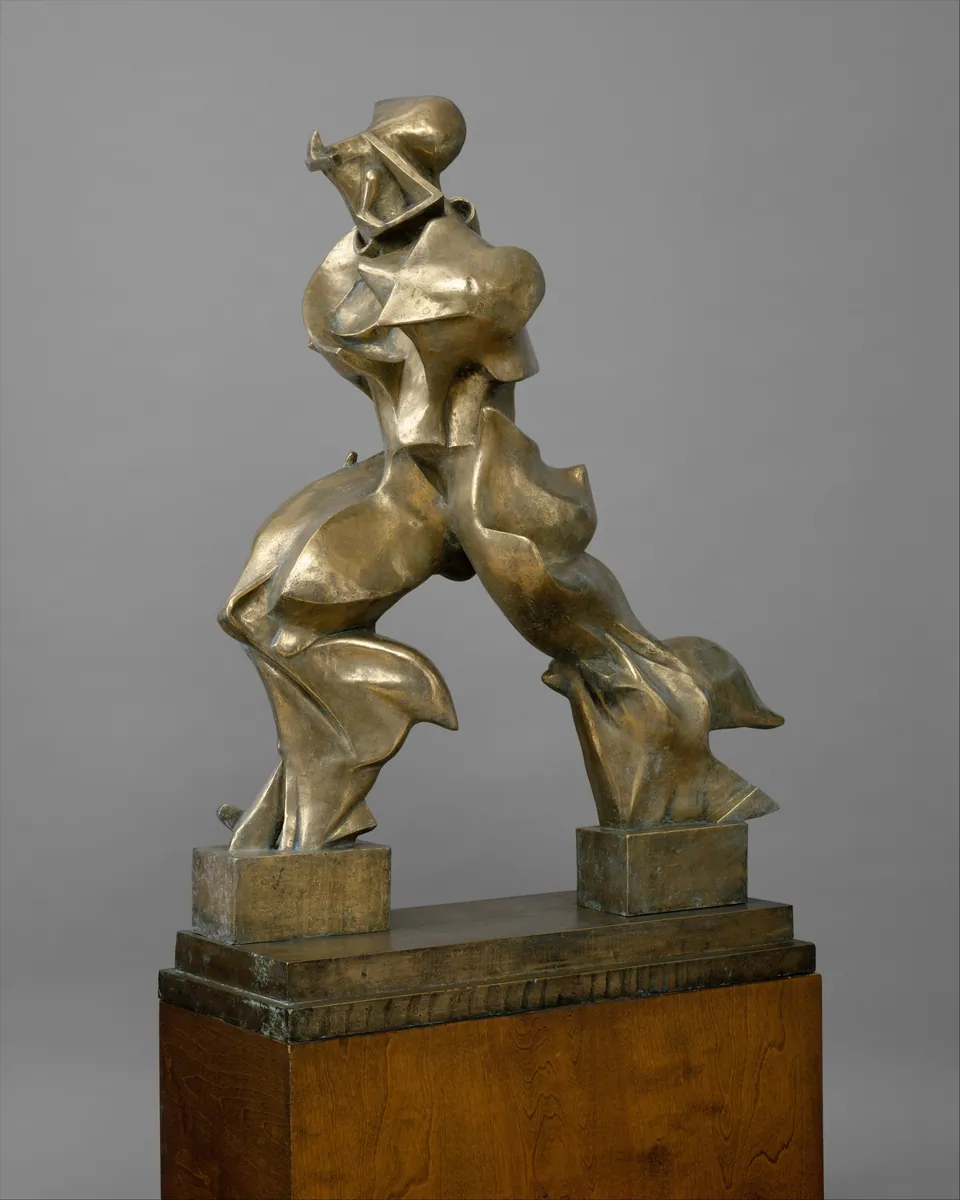
Boccioni, a leading Futurist, made a striding figure with no arms and no face, its surface pulled back as if by the air. He wanted to show motion itself, not a pose.
Boccioni modelled it in plaster in 1913, and the plaster is now at the Museu de Arte Contemporânea in São Paulo. He died in 1916, and every bronze was cast after his death: the Met labels its cast 1950, and MoMA, Tate and the Museo del Novecento in Milan hold others. The cast in this photograph is MoMA’s.
What to notice
- The headNo arms and no real face, only a head shape leaning into the stride.
- Blocks under the feetTwo blocks under the feet join the figure to its base.
- Trailing planesPlanes stream back from the calves, like air cut by the body.
3 min read
The full story
A painter takes up plaster
Umberto Boccioni was a painter until 1912. That year he went round the Paris studios of Braque, Archipenko, Brancusi and Duchamp-Villon, and wrote to a friend that he was “obsessed with sculpture”. His Technical Manifesto of Futurist Sculpture is dated 11 April 1912. It told sculptors to give up marble and bronze, to mix materials, and to model the space around a figure along with the figure.
In this story
- A painter takes up plaster
- One body, several positions
- Broken up and glued
- Casts of casts

The story continues in the app
- Materials
- Plaster original, bronze casts
- Dimensions
- About 1.1 to 1.2 m high, by cast
- Original
- Plaster, MAC USP, São Paulo
- In collection
- The Met · MoMA · Tate
- Status
- Real · bronzes cast after 1916
Connections
- Umberto Boccioni
- Futurism
- Age of Industry
- Sculpture
- Copper, brass and bronze
Nearby in the archive
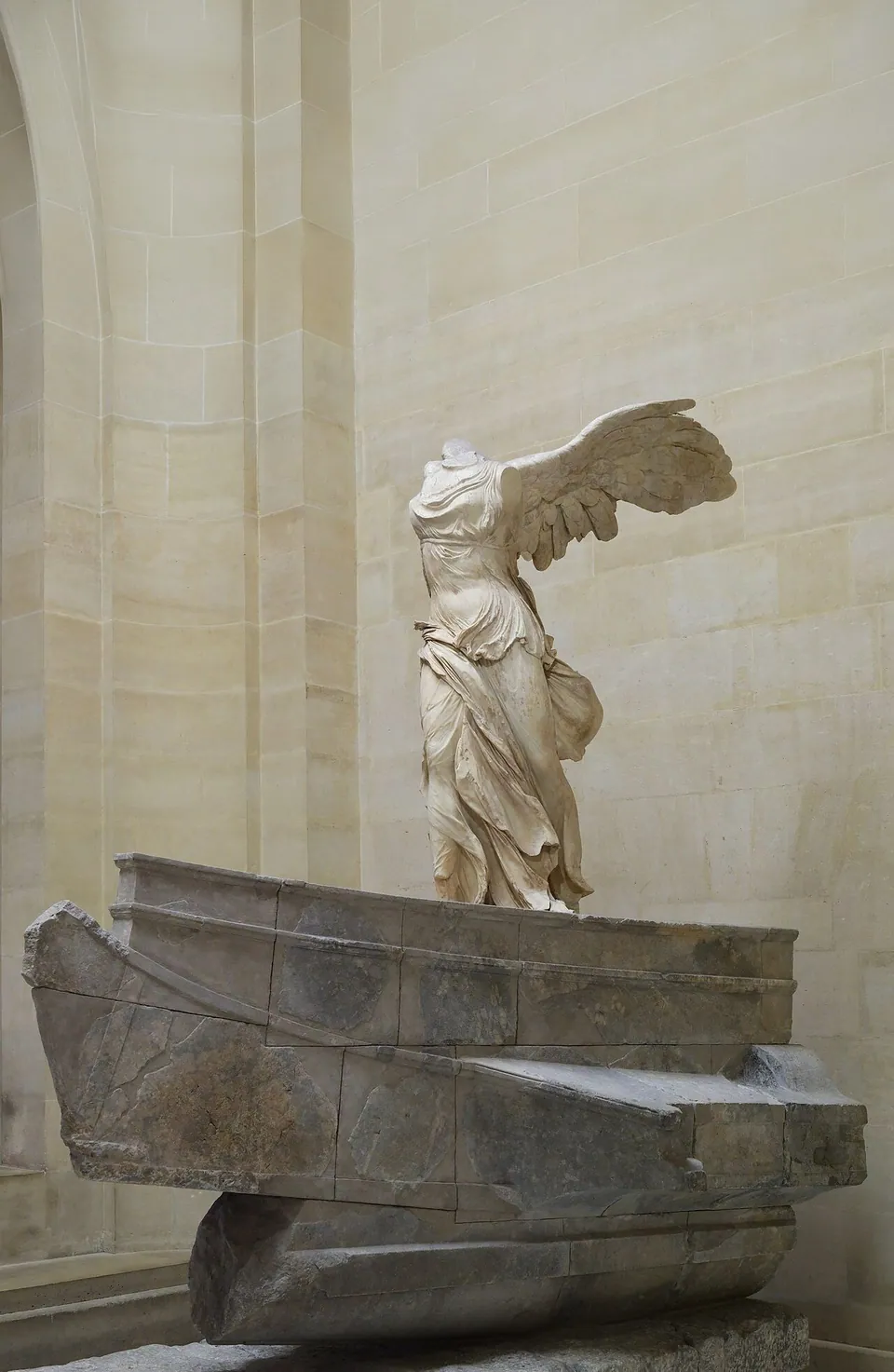 Winged Victory of SamothraceHellenistic · another body in forward motion
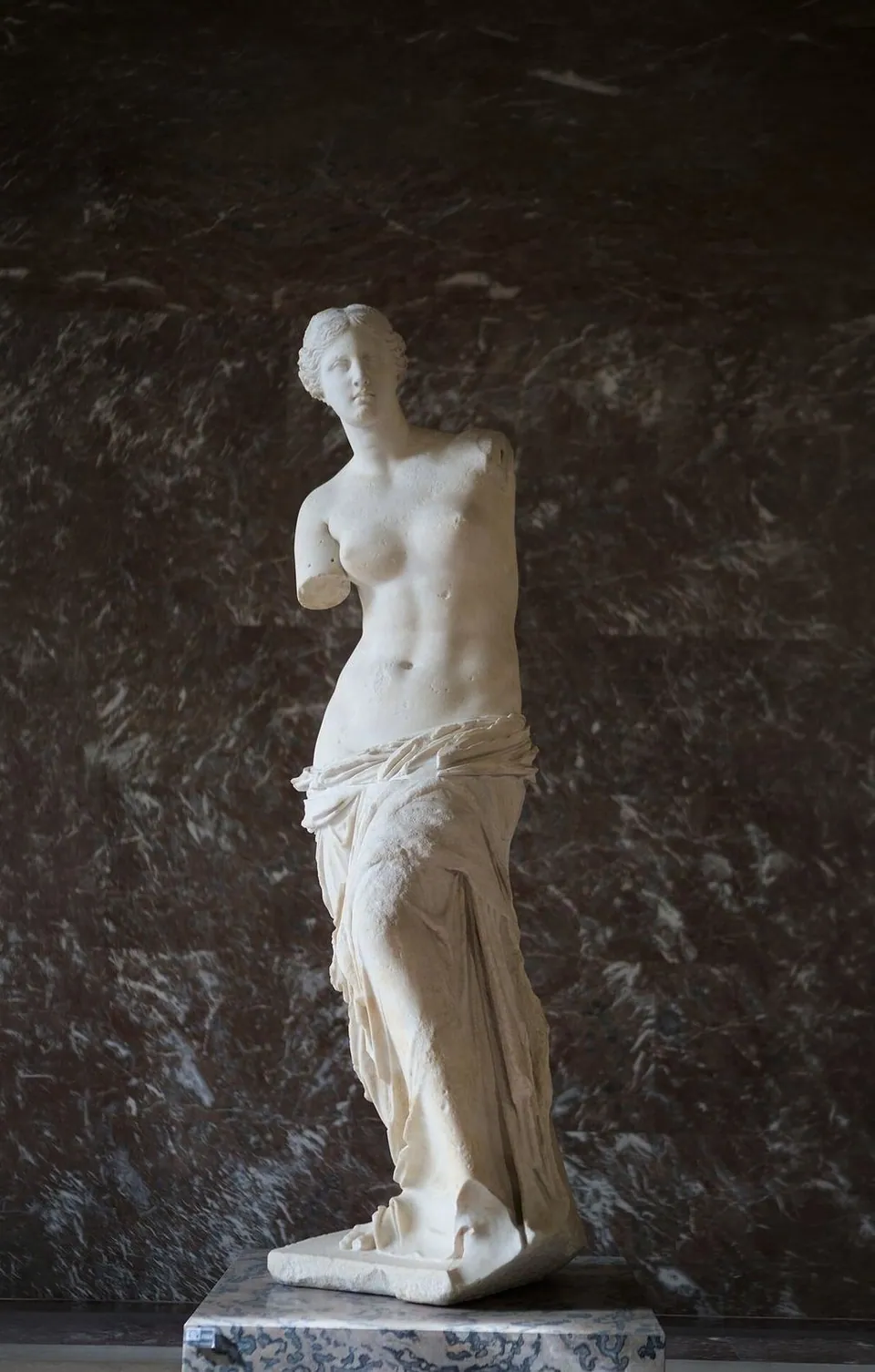 Venus de MiloHellenistic · the other famous figure without arms
Go further
- Umberto Boccioni, Ester Coen (1988)The Metropolitan Museum of Art’s catalogue of its Boccioni retrospective, covering the paintings, drawings and sculpture.
- Unique Forms of Continuity in Space, T01589, TateThe collection record for the bronze cast from the original plaster in São Paulo in 1972.
- Umberto Boccioni, Unique Forms of Continuity in Space, Rosalind McKever, Smarthistory (2015)A short essay on how the figure was modelled and where it departs from Boccioni’s own manifesto.
- Unique Forms of Continuity in Space, 1990.38.3, The Metropolitan Museum of ArtThe record for the cast bequeathed by Lydia Winston Malbin, with provenance, exhibition history and an audio commentary.
- Umberto Boccioni: Recreating the Lost Sculptures, Estorick Collection of Modern Italian Art (2019)The page for the 2019 exhibition of the three destroyed striding figures, rebuilt from photographs and 3D printed.
Sources
- The Met collection record 1990.38.3, The Metropolitan Museum of Art
- Tate collection record T01589, Tate
- MoMA collection record, The Museum of Modern Art

