Nº 0206 · Temple
Angkor Wat
It faces west, unlike most Khmer temples.
Why it matters
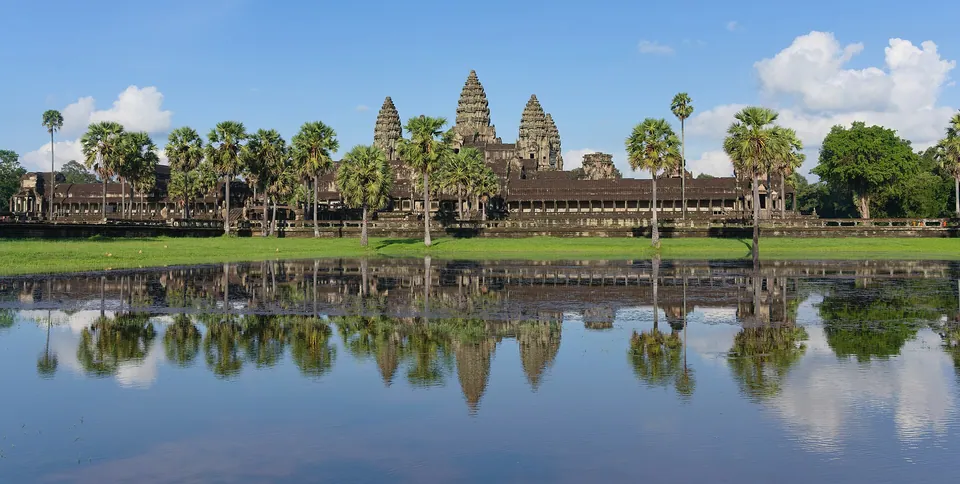
The temple builds a mountain of stone, its five towers representing the peaks of Mount Meru, inside a moat about 190 m wide, and its outer galleries carry long carved reliefs, among them the Churning of the Ocean of Milk. It appears on the national flag of Cambodia.
Angkor Wat was built for the Khmer king Suryavarman II, who reigned from 1113 to 1150, and dedicated to Vishnu; it was probably also meant as his funerary temple and may have been finished only after his death. Its towers stand on stepped terraces ringed by galleries, and the central tower rises about 65 m. The sandstone was quarried in the Kulen hills, tens of kilometres away, and brought in along canals. Unlike most Khmer temples it faces west, and it later became a Buddhist site.
What to notice
- The towersTiered towers rise over the temple; the central one reaches about 65 m.
- The galleryA long gallery on square columns runs across the front of the temple.
- The poolA pool in front of the temple reflects the towers and the palms.
3 min read
The full story
A temple for Vishnu
Suryavarman II became king of the Khmer in 1113 and ruled until about 1150. The temple he ordered at Angkor, his capital, was dedicated to Vishnu, and its first name was probably Vrah Vishnuloka, the sacred dwelling of Vishnu. His priest Divakarapandita is said to have urged him to build it. “Angkor Wat”, Khmer for temple city, is a later name.
In this story
- A temple for Vishnu
- Stone floated from Kulen
- Never quite abandoned
- A century of repairs

The story continues in the app
- Materials
- Sandstone from the Kulen hills; laterite
- Central tower
- About 65 m high
- Moat
- About 190 m wide
- Site
- 162.6 hectares
- Status
- Real · a Buddhist site; Angkor, World Heritage since 1992
Connections
- Middle Ages
- Architecture
- Stone
- Angkor, Siem Reap
Nearby in the archive
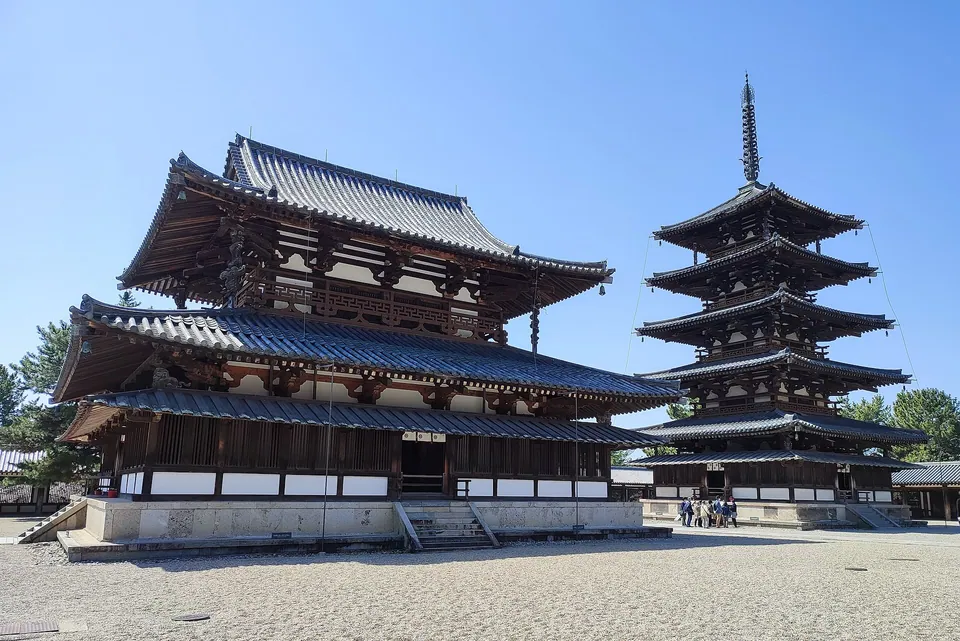 Hōryū-jiBuilders unknown · c. 670 to 711 · an older religious precinct, built in timber
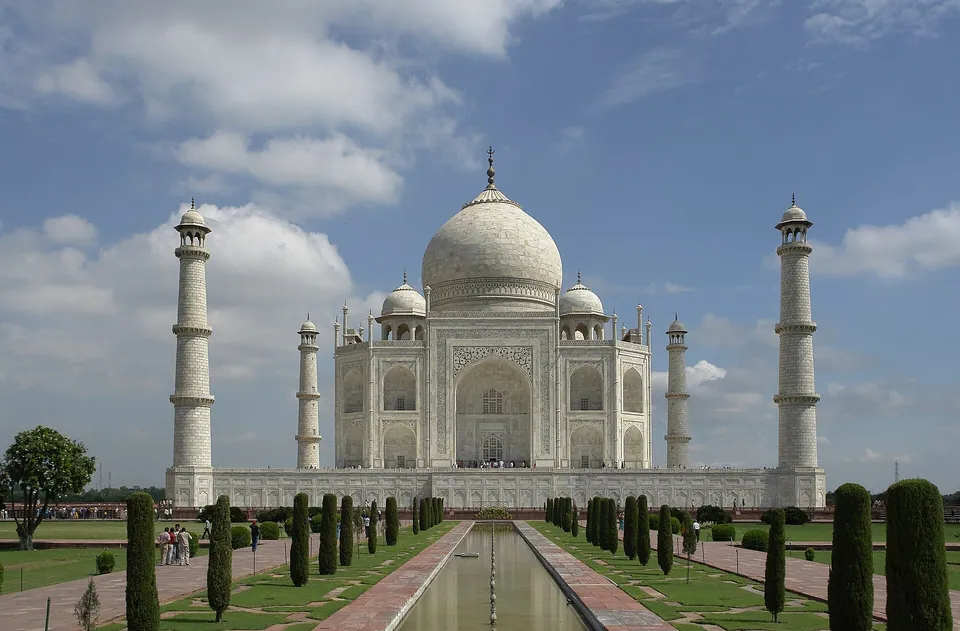 Taj MahalUstad Ahmad Lahori · 1632 to 1653 · a ruler’s tomb set among water and gardens
In collections
Go further
- Angkor Wat: Time, Space, and Kingship, Eleanor Mannikka (1996)A study of the temple’s measurements and what they may say about its calendar, its cosmology and its king.
- Angkor and the Khmer Civilization, Michael D. Coe (2003)A general history of the Khmer empire that sets the temple among the city, kings and waterworks around it.
- Angkor Wat: an introduction, Roland Fletcher, Damian Evans, Christophe Pottier and Chhay Rachna (2015)The opening paper of the Antiquity section on what laser survey, radar and excavation found in and around the temple.
- Angkor, UNESCO World Heritage CentreThe World Heritage record for the whole Angkor site, with its description, maps and conservation reports.
- Churning of the Ocean of Milk Gallery Conservation Project, World Monuments FundThe project page for the roof repair that protects the temple’s best-known relief.
Sources
- Angkor Wat, World History Encyclopedia
- Canal highway for construction material found in Angkor, Southeast Asian Archaeology
- Wikipedia (English), Wikimedia Foundation
- Wikimedia Commons

