Nº 0099 · Office tower
Chrysler Building
A spire assembled inside, raised in 90 minutes.
Why it matters
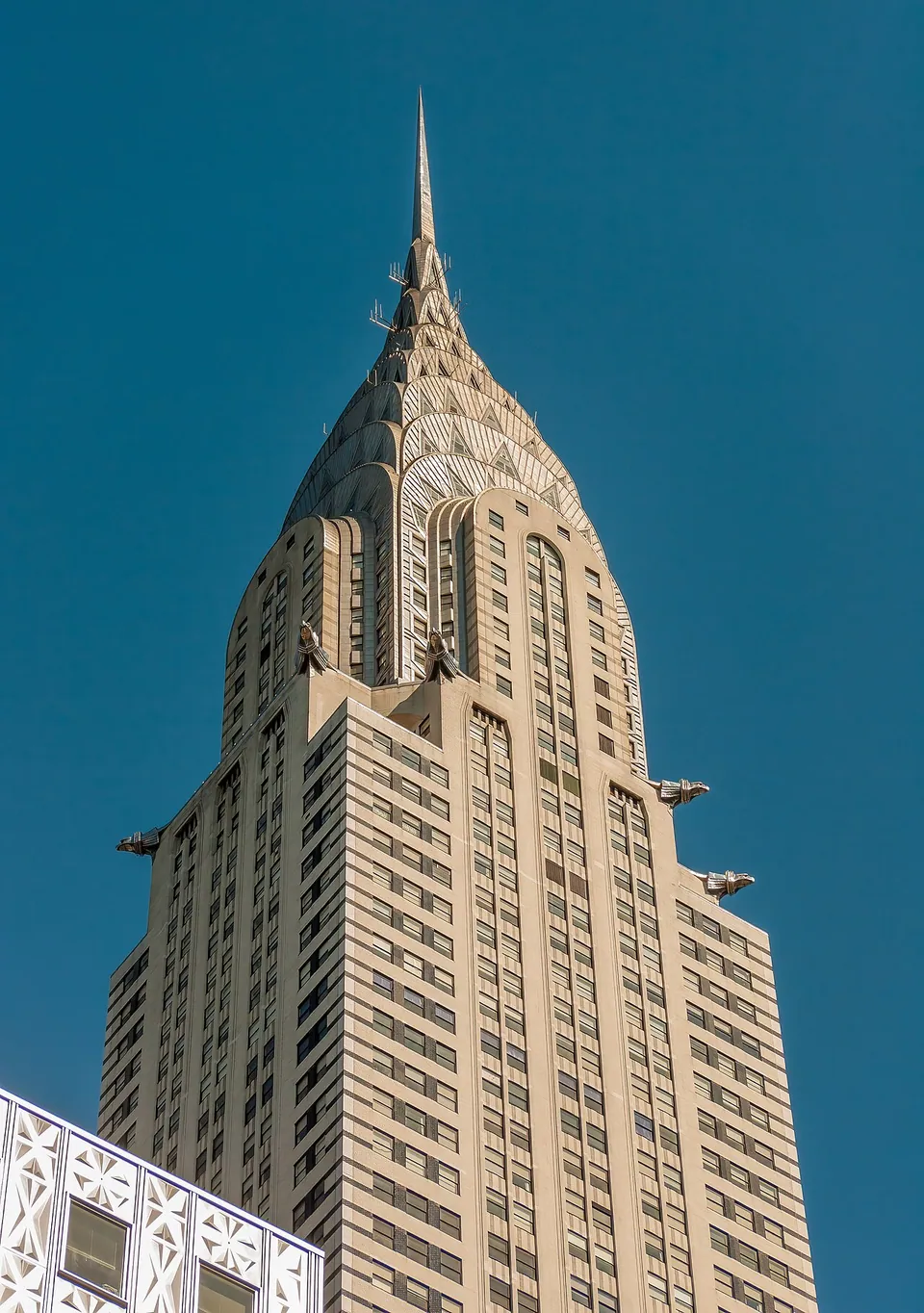
Van Alen gave a 77-storey office tower a crown of stacked steel arches and ornament drawn from the car, with eagle-head gargoyles and friezes of stylised racing cars. When its spire went up in November 1929, it became the tallest building in the world at 1,046 feet, until the Empire State Building in 1931.
Walter P. Chrysler paid for the building himself, and the New York landmarks report says no corporate funds were used. Work began in October 1928, the steel frame was complete by the end of September 1929, and the building opened on 27 May 1930. The crown, spire and gargoyles are clad in Nirosta, a chromium-nickel steel made in the United States for the first time for this building, to a formula from Krupp. The 185-foot spire was assembled in five sections inside the top of the tower and lifted out with a derrick, to pass 40 Wall Street, by Van Alen’s former partner H. Craig Severance.
What to notice
- The crownStacked steel arches, each pierced by triangular windows, narrow toward the spire.
- The spireThe spire was assembled inside the crown and raised into place in November 1929.
- The eagle headsSteel eagle heads project from the corners of an upper setback.
3 min read
The full story
A lease changes hands
The project began as a speculation by William H. Reynolds, a developer and former New York State senator. In 1921 he took a long lease on a plot at Lexington Avenue and 42nd Street owned by the Cooper Union. In 1927 he hired William Van Alen to design a 67-storey office tower, 808 feet high, to be topped by a glass dome lit from within.
In this story
- A lease changes hands
- Brick, granite and Nirosta
- Praise, and Mumford’s scorn
- Landmark on rented ground

The story continues in the app
- Height
- 77 storeys, 1,046 ft (about 319 m) with the spire
- Materials
- Steel frame, brick, Nirosta chromium-nickel steel
- Address
- 405 Lexington Avenue, New York
- Client
- Walter P. Chrysler
- Designation
- National Historic Landmark, 1976 · New York City Landmark, 1978
Connections
- William Van Alen
- Art Deco
- Era of the World Wars
- Architecture
- Steel
- Brick
- New York
Nearby in the archive
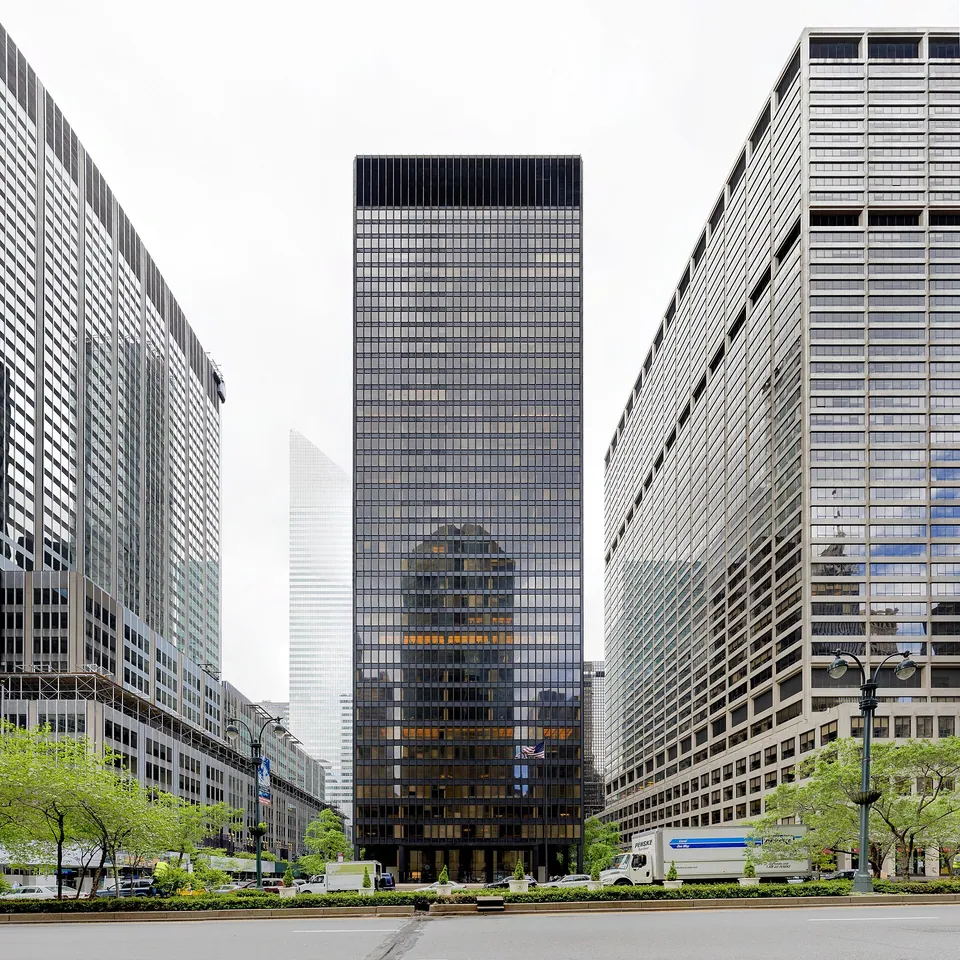 Seagram BuildingMies van der Rohe · 1958 · Midtown Manhattan, ornament removed
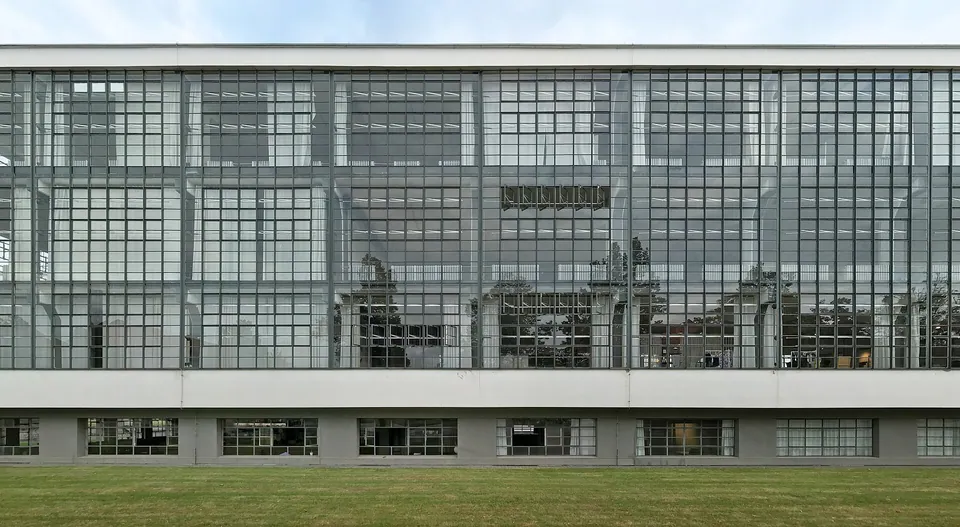 Bauhaus Building, DessauGropius · 1926 · the same decade, without ornament
In collections
Go further
- Higher: A Historic Race to the Sky and the Making of a City, Neal Bascomb (2003)A narrative history of the contest between Van Alen, Severance and the Empire State Building’s backers to build the tallest tower.
- The Chrysler Building: Creating a New York Icon, Day by Day, David Stravitz (2002)A book of photographs that follows the construction of the building.
- Chrysler Building, designation report LP-0992, New York City Landmarks Preservation Commission (1978)The city’s landmark report, with a construction history and a storey-by-storey description of the exterior.
- Chrysler Building, ground floor interior, designation report LP-0996, New York City Landmarks Preservation Commission (1978)The companion report on the lobbies, the Trumbull ceiling mural and the lift cabs.
- Ten Tops: Chrysler Building, The Skyscraper MuseumAn exhibition page on the crown, the Cloud Club and the observatory that once occupied the 71st floor.
Sources
- Chrysler Building (Designation Report LP-0992), New York City Landmarks Preservation Commission
- Chrysler Building, ground floor interior (Designation Report LP-0996), New York City Landmarks Preservation Commission
- Wikipedia (English), Wikimedia Foundation

