Nº 0191 · Art museum
Guggenheim Museum Bilbao
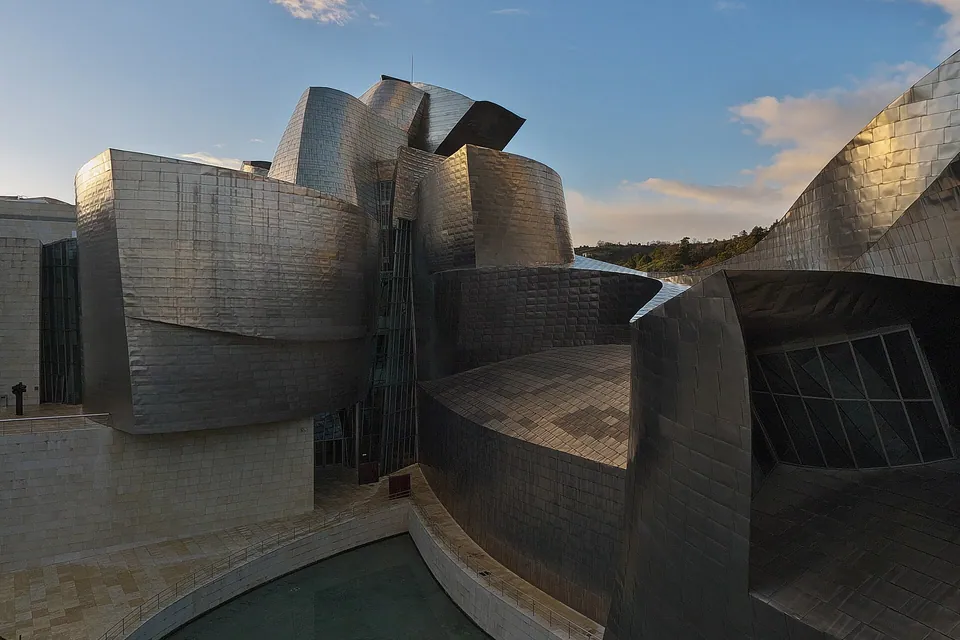
Titanium, chosen after watching a sample in the weather.
Why it matters
CATIA, software first made for the aerospace industry, was used to translate Gehry’s curved design into a structure that could be built, according to the museum’s own account of the construction. It stands on a former wharf on a bend of the Nervión, where galleries on three levels are joined around a central atrium by curved walkways, glass lifts and stairs.
Frank Gehry’s museum was built between October 1993 and October 1997, and opened that October. The museum gives 24,000 m² for the building and 9,000 m² of exhibition space. Its three main materials are titanium, limestone and glass; Gehry chose titanium after ruling out other materials and watching how a sample pinned up outside his office behaved. The titanium skin is made of about 33,000 very thin sheets.
What to notice
- The titaniumSmall titanium sheets overlap in rows and pick up the light.
- The limestoneBlocks clad in pale limestone sit beside the metal.
- The walkway and poolA walkway and a pool of water curve round the foot of the building.
3 min read
The full story
A port city’s offer
In 1991 the Basque Government approached the Solomon R. Guggenheim Foundation in New York with a proposal for a museum in Bilbao’s run-down port district, once the city’s main source of income. The terms put nearly all the cost on the Basque side: 100 million US dollars for construction, 50 million for acquisitions, a single fee of 20 million to the foundation and a subsidy for the museum’s annual budget of 12 million. In return the foundation would manage the museum, lend from its collection and organise exhibitions.
In this story
- A port city’s offer
- Aircraft software, thin metal
- Opening week, October 1997
- The Bilbao effect, questioned

The story continues in the app
- Materials
- Titanium, limestone, glass
- Titanium skin
- About 33,000 thin sheets
- Area
- 24,000 m² built; 9,000 m² of exhibition space
- Construction
- October 1993 to October 1997
- Design software
- CATIA, first made for aerospace
Connections
Nearby in the archive
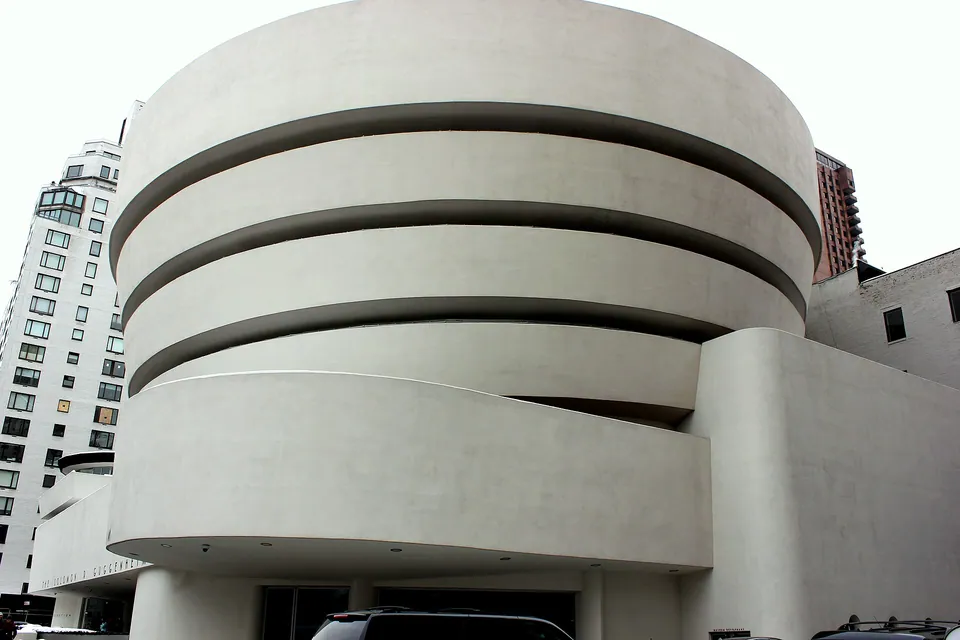 Solomon R. Guggenheim MuseumFrank Lloyd Wright · 1959 · the Guggenheim’s museum in New York
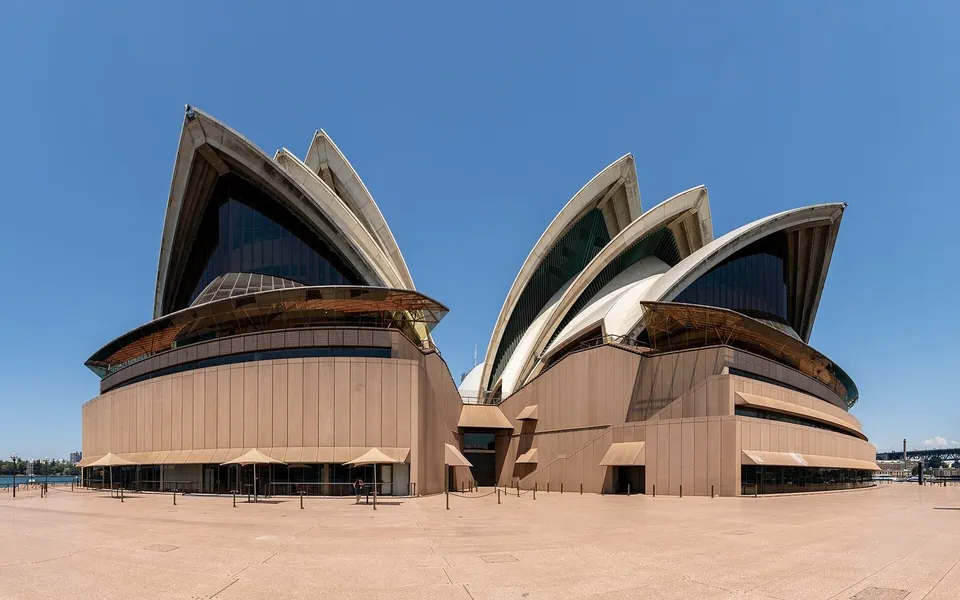 Sydney Opera HouseUtzon · 1957 · curves that had to be made buildable
In collections
Go further
- Frank O. Gehry: Guggenheim Museum Bilbao, Coosje van Bruggen (1997)The Guggenheim’s own book on the building, which follows the design process through Gehry’s drawings, models and working photographs.
- Building Art: The Life and Work of Frank Gehry, Paul Goldberger (2015)A full critical biography of Gehry that sets Bilbao within the rest of his career.
- The Construction of the Building, Guggenheim Museum BilbaoThe museum’s account of the site, the three materials, the titanium sample and the use of CATIA.
- AD Classics: The Guggenheim Museum Bilbao / Gehry Partners, Brian Pagnotta (2013)A short illustrated study of the plan, the galleries and the cladding, with drawings and photographs.
Sources
- The Building, Guggenheim Museum Bilbao
- The construction of the Building, Guggenheim Museum Bilbao
- Obituary: Frank O. Gehry (1929-2025), Society of Architectural Historians
- Wikipedia (English), Wikimedia Foundation
- Wikimedia Commons

