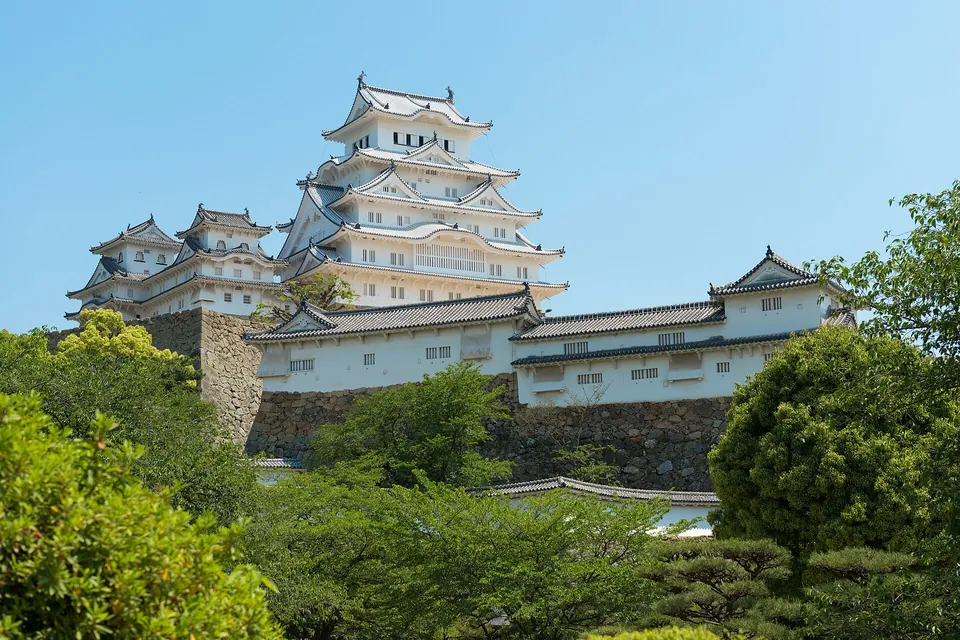
Nº 0184 · Castle
Himeji Castle
Many roofs, white plaster, and a stone base.
Why it matters
It is the finest surviving example of early 17th century Japanese castle architecture, in UNESCO's words: 83 buildings with developed defences, in wood construction that joins function with aesthetic appeal. It came through the military use of the late 19th century and the air raids of 1945 largely intact.
Toyotomi Hideyoshi enlarged an earlier castle on the site in the late 16th century. Ikeda Terumasa, lord of Himeji from 1600, rebuilt and expanded it from 1601 to 1609, adding three moats, and Honda Tadamasa remodelled the west compound in 1617. The main keep was taken apart and reassembled in the restoration of 1956 to 1964, and repaired again from 2009 to 2015, when its roofs and plaster were renewed and about 80 percent of the roof tiles were reused. It was made a National Treasure in 1931 and a UNESCO World Heritage Site in 1993.
What to notice
- The roofs of the keepRoofs of different heights stack up the main keep, with gables in several shapes.
- White plasterWhite plaster over earthen walls, pierced by small barred windows.
- The stone baseSloping stone walls lift the buildings above the grounds.
3 min read
The full story
A hill given to a son-in-law
Himeyama is a low hill in the middle of the Harima Plain, on the main road through western Japan. The earliest surviving record of a fortress there dates from 1561, when the Kuroda clan held it. Toyotomi Hideyoshi made it his base in the late 16th century and built a three-storey keep on stone walls.
In this story
- A hill given to a son-in-law
- Two pillars, six floors
- From domain seat to barracks
- Replastered every half century

The story continues in the app
- Materials
- Timber frame, plastered earthen walls, tiled roofs, stone base
- Plaster
- Hemp fibre, lime and seaweed paste
- Dimensions
- Main keep about 46 m high, stone base included
- Designations
- National Treasure 1931 · UNESCO World Heritage 1993
- Status
- Real · open to visitors
Connections
- Ikeda Terumasa
- Early modern period
- Architecture
- Wood
- Stone
- Himeji
Nearby in the archive
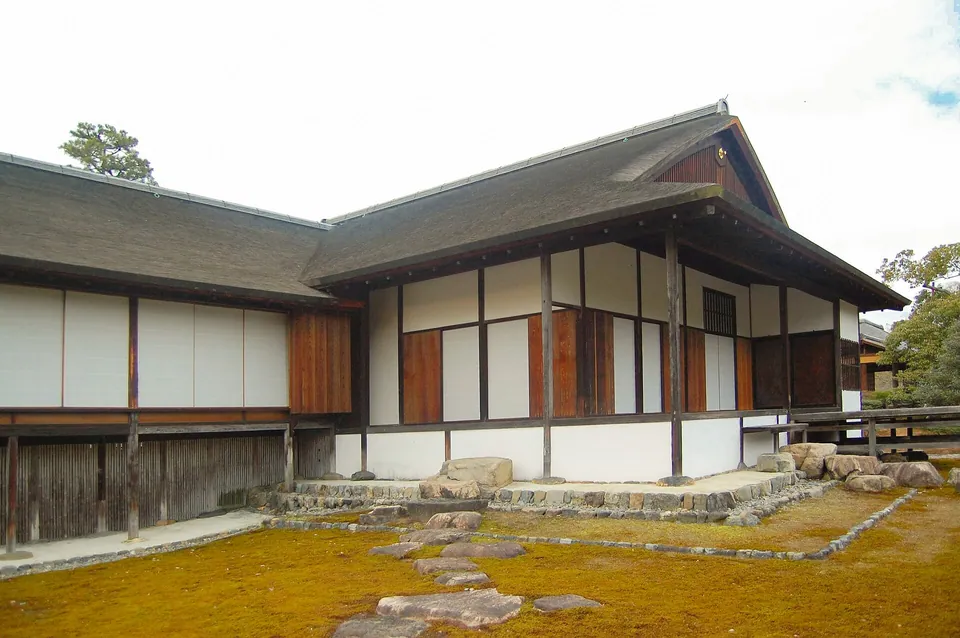 Katsura Imperial VillaPrince Toshihito · early 17th century · a retreat of the same decades
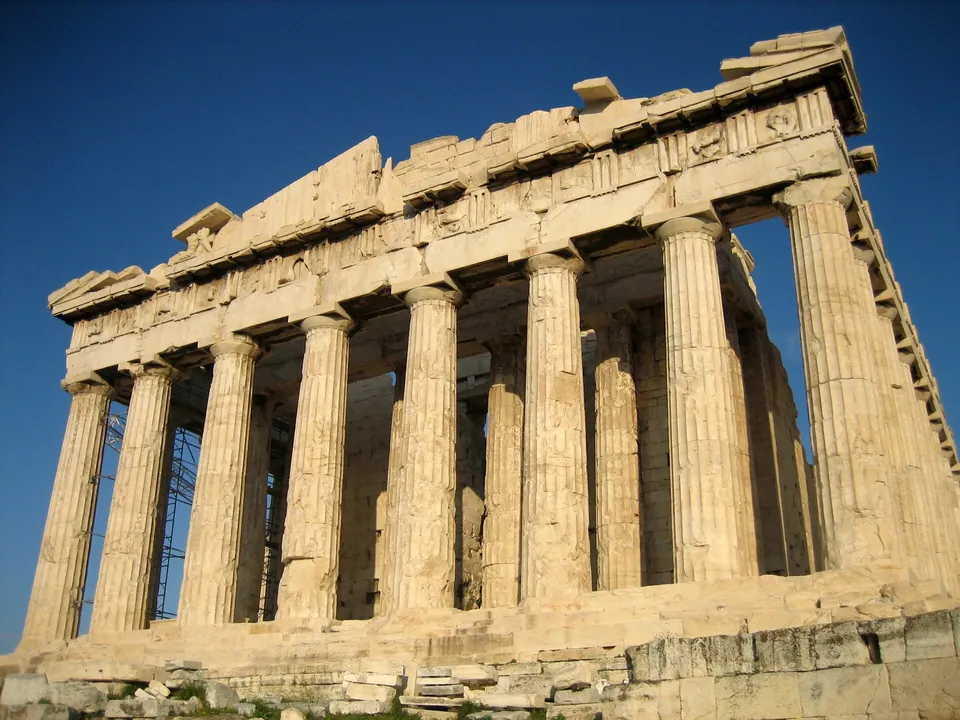 ParthenonIktinos and Kallikrates · 447 to 432 BC · another hilltop citadel crowned by one building
In collections
Go further
- Japan's Castles: Citadels of Modernity in War and Peace, Oleg Benesch and Ran Zwigenberg (2019)A history of what happened to Japan’s castles after 1868, as army bases, preservation causes and public monuments.
- Himeji Castle, Irmtraud Schaarschmidt-Richter, photographs by Mo Nishikawa (1998)A monograph on the castle alone, with an essay and a set of architectural photographs.
- Himeji-jo, UNESCO World Heritage CentreThe World Heritage listing, with the statement of value and notes on integrity, authenticity and management.
- History of Himeji Castle, Himeji Castle visitor siteThe castle’s own guide to its lords, its structure and its repairs, from the 16th century to the 1960s.
- Heisei-era Restoration, Ministry of Land, Infrastructure, Transport and Tourism, JapanThe text of the on-site sign that gives the dates and measurements of the 2009 to 2015 repair of the main keep.
Sources
- Rebirth of the White Heron Castle, Ministry of Land, Infrastructure, Transport and Tourism, Japan
- Heisei-era Restoration, Ministry of Land, Infrastructure, Transport and Tourism, Japan
- Himeji-jo: 3. Identification, Agency for Cultural Affairs, Japan
- Himeji-jo, UNESCO World Heritage Centre
- History of Himeji Castle, Himeji Castle visitor site
- Wikipedia (English), Wikimedia Foundation